Did you know that disc golf is one of the fastest-growing sports in the world? For newcomers, choosing the right discs can make all the difference in enjoying and excelling at this engaging sport. Understanding the best discs for beginners is crucial, as they greatly influence performance, learning curve, and overall experience on the course. In this guide, we’ll explore essential starter sets designed to help you master your throws, improve your technique, and navigate the course with confidence. Whether you’re looking for distance drivers, versatile mid-range discs, or reliable putters, we’ll break down key considerations, making your first steps into the world of disc golf both accessible and exciting. Get ready to unleash your potential, connect with a thriving community, and embrace the joyous challenge of this dynamic game!
Best Disc Types for Beginners: Finding Your Fit
Choosing the right discs as a beginner can significantly enhance your experience in disc golf, making it essential to understand which types suit your needs best. Starters should look for discs that are versatile and forgiving, as these qualities will help foster confidence and development in your skills. Generally, a starter set should include a mix of a driver, a midrange, and a putter, allowing you to handle a variety of situations on the course.
Types of Discs
For beginners, the ideal driver is one that has a high glide and a low speed rating, which helps in achieving better distance without requiring advanced throwing techniques. Consider options like the Innova Leopard or the Discraft Buzzz; both are known for their ease of use and ability to produce straight flight paths. Midranges like the Axiom Prism Atom or the Dynamic Discs Truth are also excellent choices, offering control and stability to help beginners learn proper technique while providing some margin for error. Lastly, for putting, a disc like the Innova Aviar or the Discraft Magnet provides the required stability to hold a line and offers a comfortable grip for confident throws.
To ensure that you’re selecting discs that fit your hand size and throwing strength, it is crucial to pay attention to weight and grip. Beginners may find lighter discs (around 150-170 grams) easier to handle, as they require less force to throw. Ideally, a comfortable grip can make all the difference, so consider how the disc feels in your hand before making a decision. Visiting a local disc golf store to hold various discs or attending local disc golf events can provide insights into what feels right for you.
As you dive into the sport, remember that mastering the fundamentals will take time and practice. Start with a few essential discs in your bag and gradually expand as you gain experience and refine your throwing style. This approach will not only boost your skill set but also enhance your enjoyment of the game, allowing you to explore different techniques and discover your unique play style.
Essential Discs in a Starter Set

When embarking on your disc golf journey, selecting the right discs for your starter set is paramount to enhancing your experience on the course. A well-rounded starter set typically comprises three essential types of discs: a driver, a midrange, and a putter. This combination equips beginners with the versatility needed to tackle various throwing situations, helping to build confidence and skill behind the throw.
For the driver, look for options that are designed with stability and glide in mind. Lightweight drivers, like the Innova Leopard or the Discraft Buzzz, can be particularly effective for new players. These discs generally glide well and are forgiving on less-than-perfect throws, allowing for longer distances with ease. Midrange discs, such as the Dynamic Discs Truth, provide excellent control and a more accurate flight path, which is crucial as you learn the intricacies of throwing with precision. Finally, choosing a reliable putter, like the Innova Aviar, can make a significant difference when it comes to confidence at the basket. A good putter offers a stable and straight flight, making it easier for beginners to focus on technique rather than struggle with unpredictable discs.
Understanding how these discs work together is key. A driver will help you cover distance, while the midrange disc is ideal for shorter, more technical shots. The putter rounds out your set, ensuring you have what you need for those critical close-range throws. Start with lighter discs (around 150-170 grams), as they require less force and allow for smoother, more controlled tosses. Remember, the feel of each disc in your hand is equally important; finding the right grip can dramatically affect your throwing performance.
In conclusion, assembling a starter set with thoughtfully chosen discs makes all the difference as you begin your disc golf adventure. Invest time in understanding each disc’s characteristics and how they fit into your overall game strategy. This approach not only helps in developing essential skills but also ensures you enjoy the learning process, leading you to explore more about the sport and possibly even connecting with a community of fellow enthusiasts along the way.
Understanding Disc Flight Characteristics

Understanding the flight characteristics of discs is crucial for beginners stepping into the exciting world of disc golf. Every disc is engineered with specific designs that influence how they behave in the air. This knowledge can significantly enhance your performance on the course by allowing you to make informed choices about which discs to use for different situations.
At the core of a disc’s flight performance are four key attributes: speed, glide, turn, and fade. Each disc is rated on a scale that includes these factors, often seen as a four-number sequence (e.g., 13/5/-2/3). Here’s what each term means:
- Speed: This number indicates how fast the disc needs to be thrown to achieve its optimal flight. Higher numbers denote faster discs, which are typically drivers.
- Glide: Glide measures how long a disc will stay in the air. Discs with high glide (like a 5 rating or above) stay aloft longer, ideal for making long throws.
- Turn: This measures the disc’s tendency to turn right (for right-handed backhand throws) as it initially leaves the hand. A negative turn signifies a tendency to the right, which can be useful for shaping shots.
- Fade: Fade indicates how sharply the disc will finish its flight to the left. A higher fade rating means a more pronounced left finish (for right-handed backhanders), giving users better control over their landing.
For example, a disc rated 9/5/-1/3 would have a good balance of speed, excellent glide, slightly less turn (leading to a manageable right curve), and a strong finish to the left. This disc could perform well in various situations, such as long approaches or slightly curving drives.
As you experiment with different discs, pay attention to how they respond to your throws. Throwing mechanics play a significant role here-discs can behave quite differently based on your technique. Start off with slower, more stable discs in lighter weights, as they provide a better chance for success while you’re still developing your form. As your technique improves and you gain strength, you can transition to faster discs that offer more distance potential.
Ultimately, mastering disc flight characteristics not only helps improve your individual game but also deepens your appreciation for this remarkable sport. With practice and awareness of how each disc operates, you’ll find yourself more equipped to adapt your strategy during a round, making your experience more enjoyable and successful.
How to Choose the Right Weight and Grip
Choosing the correct weight and grip for your discs can profoundly impact your performance and enjoyment of disc golf. For beginners, these factors are crucial in feeling comfortable and confident on the course. One essential point to consider is the weight of the disc, which typically ranges between 150 and 175 grams. Lighter discs (around 150-160 grams) are easier to throw and can help you achieve greater distances, especially for players with less upper body strength. Conversely, heavier discs (170 grams and above) offer more stability in windy conditions and are less prone to flipping over, making them ideal for developing control as you gain experience.
Understanding your grip is equally important, as it directly influences how well you can release the disc. A comfortable grip allows you to execute your throws consistently and with confidence. There are three primary grip styles: the power grip, the fan grip, and the pinch grip. The power grip is most common for drives; it involves wrapping all four fingers under the disc, providing maximum grip and control. The fan grip, often used for putters and mid-range discs, spreads the fingers out for a controlled release and more finesse. Lastly, the pinch grip allows for a firmer hold, useful for shots that require precision and control in crowded situations.
As you embark on your disc golf journey, consider a practice session where you test various weights and grips. Bring along a few different discs and see how each weight feels during your throws. Additionally, experiment with different grips and pay attention to how each style affects your accuracy and distance. Remember, it’s not just about how the disc feels in your hand; how it performs in the air is equally essential. By starting with lighter weights and gradually increasing the weight as your technique and strength improve, you’ll find the right balance that suits your unique throwing style.
Ultimately, the journey of discovering your ideal disc weight and grip is individualized and part of the joy of learning the game. Take your time, enjoy the process, and don’t be afraid to ask for advice from more experienced players or community members. The disc golf community is known for its welcoming spirit, and you’ll likely find others happy to share their insights and experiences, helping you to progress in this exciting sport.
Key Features of Beginner-Friendly Discs
Finding the right discs as a newcomer can greatly enhance your enjoyment and success in disc golf. Beginner-friendly discs are designed specifically to accommodate those still mastering their throwing techniques and understanding flight dynamics, making it easier to achieve greater distances and control. Here are some key features to look for in beginner discs that will help you settle into the sport with confidence.
Weight and Stability
Most beginner discs tend to weigh between 150 and 165 grams, which facilitates easier throws and minimizes fatigue during play. Lighter discs are typically more forgiving for newer players, allowing for higher launch angles and increased distance on throws. Look for discs with a stability rating of negative to neutral, often characterized as “understable.” These discs tend to turn to the right (for right-hand backhand throws) during the initial part of their flight, making them easier to control and ideal for a variety of shots.
Grip and Feel
The feel of a disc in your hand can significantly affect your ability to throw accurately. Beginner-friendly discs often feature a slight edge bevel, providing a more comfortable grip that feels natural during both backhand and forehand throws. Additionally, opt for discs made of softer plastics or a grippy material that can help absorb bumps and stress from impacts, giving you a better overall handling experience on the course.
Design and Utility
When searching for beginner discs, consider those that are versatile in their design. Discs that serve multiple purposes-such as putters that can also stand in for mid-range throws-can reduce the number of discs you need to carry and simplify your game as you learn. Look for popular models known for their stability and reliability, which often receive high praise from seasoned players and newcomers alike. Discs like the Innova Leopard or the Discraft Buzzz are examples of great all-rounders suitable for players just starting out.
Affordability and Availability
Lastly, while enthusiasm for learning about disc golf is important, budget-conscious choices are also vital for beginners. Many manufacturers offer starter sets that include a selection of discs specifically curated for new players, often at a discounted rate compared to purchasing individually. This not only helps in saving money but also ensures that you have a well-rounded selection to start your disc golf journey.
By focusing on these features, you’ll be well on your way to choosing the right discs that encourage better throw mechanics, boost your confidence, and enhance your overall experience in the world of disc golf. Happy throwing!
Throwing Techniques for New Players
Mastering the fundamentals of throwing is essential for all newcomers to disc golf, as it lays the groundwork for becoming a skilled player. Every great player starts somewhere, and exploring the proper throwing techniques will elevate your game and enhance your enjoyment on the course. The key elements to focus on include grip, stance, and the mechanics of your throw, all of which contribute to a smooth and successful release.
A proper grip is critical to ensure control over the disc. For beginners, the most effective grips are the power grip and the fan grip.
- Power Grip: This grip involves placing all four fingers underneath the disc, with the thumb resting on top. This grip maximizes power and grip pressure, making it ideal for distance throws.
- Fan Grip: In this grip, the fingers are spread out on the underside of the disc. This grip is often used for more controlled, shorter throws, such as upshots or putts, as it allows for a smoother release.
Next, the stance you adopt can significantly impact your throwing potential. Start with your feet shoulder-width apart, ensuring a solid base. As you prepare to throw, lean slightly forward and align your shoulders towards your target. This posture allows for optimal weight transfer and stability, key components in generating power.
Once you’re set, focus on the mechanics of your throw. For a backhand throw, begin by bringing the disc across your body and rotating your hips and shoulders to generate torque. As you release the disc, ensure that your arm extends fully while your wrist flicks the disc off your fingers, imparting spin and stability. Practicing the follow-through is equally important; allow your arm to follow through naturally, which helps with accuracy and adds distance to your throw.
Lastly, practice is essential to mastering these techniques. Spend time at the field honing your throws with various discs from your starter set. Observing experienced players can also provide insights into throwing styles and strategies. By dedicating time to refine your technique, you will build muscle memory, increase your confidence, and enhance your overall performance as you embrace this exciting sport. Happy throwing!
Exploring Disc Golf Courses for Beginners
When venturing into the world of disc golf, discovering local courses tailored for beginners can dramatically enhance your learning experience. Not only are these courses designed with approachable hole layouts, but they also foster a welcoming atmosphere where newcomers can feel comfortable learning and practicing their skills alongside seasoned players. Whether you’re in a park, a community space, or a dedicated disc golf facility, choosing the right course can help you grasp the fundamentals more effectively and enjoyably.
Seek out courses that feature shorter tee pads and wider fairways, as these will allow you to focus on mastering your throwing techniques without the immediate pressure of distance or tight navigation. Many beginner courses utilize fewer hazards and obstacles, making it easier for new players to gauge disc flight characteristics and implement throwing mechanics without the fear of losing discs in dense foliage or water hazards. For example, a park with a nine-hole layout can be an ideal starting point, providing enough variety to help you explore different throwing angles and distances.
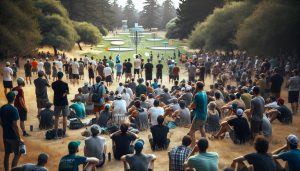
Additionally, take advantage of the community that surrounds disc golf. Engaging with local clubs or online forums often leads to discovering “beginner-friendly” meet-ups or events where you can connect with other novices and experienced players alike. This environment not only presents opportunities for practical advice and skill-sharing but also helps you understand course navigation and strategy in a low-pressure setting. Learning from others, discussing best practices, and even playing casual rounds with experienced players can accelerate your learning curve.
As you explore various courses, don’t hesitate to embrace the adventure of experimenting with different discs from your starter set. Each outing is an opportunity to observe how various disc types perform in real-world situations. Keep a journal of your experiences or use a mobile app to track your progress, noting the discs that work best for you in different scenarios. This hands-on learning will amplify your enjoyment and competence in the game, solidifying your passion for disc golf and paving the way for future experiences as you continue to develop your skills. Happy exploring!
Building Your Skills: Practice Tips and Drills
To excel in disc golf, consistent practice combined with effective drills can dramatically refine your skills and boost your confidence on the course. One of the most essential aspects for any beginner is mastering basic throwing techniques and understanding how different discs respond to those techniques. Did you know that even small adjustments in your grip or stance can lead to significant improvements in your throw accuracy and distance? Here are some practical tips and drills to help you build your skills effectively.
Begin by establishing a strong foundation with your throwing form. Focus on the following fundamental techniques:
- Stance: Start with your feet shoulder-width apart. Your non-throwing foot should be slightly ahead for balance.
- Grip: Hold the disc firmly, but not too tightly, allowing your fingers to grip the inside rim while your thumb applies pressure on the top.
- Throwing Motion: Initiate your throw with a coiling motion of your torso, followed by a smooth and controlled flick of your wrist as you release the disc. This technique will help generate spin and distance.
For on-the-field practice, try the following drills to enhance your skills:
Drills for Improving Your Game
- Target Practice: Set up targets at varying distances (like buckets or cones) and practice hitting them with your different discs. This drill enhances precision and helps you understand each disc’s flight path.
- Distance Throws: Find a safe, open space to practice your distance throws. Focus on your technique, aiming for a consistent release point. Start with lighter discs and gradually move to heavier ones as you become comfortable.
- Field Work: Create a makeshift course in a suitable area, marking spots on the ground where you’ll aim to land your disc. As you play through this course, concentrate on different throwing angles and adjusting your power.
- Field Goal Drill: Identify two objects (trees, poles, etc.) and practice throwing your disc through the imaginary goal between them, which will help with both accuracy and distance control.
Incorporating these practices into your routine will not only increase your skill but also make your learning process enjoyable. Remember, disc golf is as much about community and growth as it is about competition, so don’t hesitate to seek out local clubs or online groups where you can share experiences and learn from more experienced players. Embrace the journey, and soon enough, you’ll find that both your confidence and skills have soared, making your outings even more fulfilling.
Common Mistakes New Players Make
It’s easy for new players to fall into common pitfalls when starting their journey in disc golf. These mistakes can hinder progress and diminish the fun of the game. Understanding and avoiding these errors will not only enhance your game but also make your experience on the course more enjoyable.
One major mistake is choosing the wrong discs. Many beginners opt for discs that are too advanced or heavy for their skill level, which can lead to frustration rather than improvement. Starter sets typically include lighter and more forgiving discs that are easier to throw. New players should prioritize stability and grip rather than attempting to impress with flashy models. It’s essential to select discs that match your throwing style and skill level, ensuring that they provide an enjoyable experience while building your confidence.
Another common error involves a lack of focus on form and technique. Rushing to throw with power often results in poor mechanics, causing the disc to fly unpredictably. Instead, new players should concentrate on mastering their stance, grip, and throwing motion. Practicing these fundamentals will lead to more consistent throws and greater distance over time. Developing muscle memory starts with slow and deliberate practice, emphasizing technique over strength.
In addition, many beginners overlook the importance of course strategy. Entering a course without a plan can lead to poor decisions that affect your score and enjoyment. An effective approach involves assessing the layout, understanding obstacles, and identifying which discs to use for different situations. Spending time on this strategy can enhance overall performance and make the game much more engaging.
Lastly, beginners often neglect the value of community and feedback. Disc golf is a social sport, and connecting with local clubs or experienced players can provide invaluable insights and support. Joining a local league or attending clinics can introduce you to different techniques, disc recommendations, and etiquette, accelerating your learning curve and enriching your disc golf experience.
By being aware of these common mistakes and actively working to avoid them, new players can develop their skills more quickly and enjoy the rich community and athletic challenge that disc golf offers. Focus on finding the right discs, refining your technique, planning your course strategies, and engaging with the community, and you’ll be well on your way to becoming a confident and capable player.
The Role of Disc Styles in Your Game
In disc golf, the variety of disc styles available can profoundly influence your performance on the course, particularly for newcomers just starting their journey. Each disc is designed with specific characteristics that can either enhance or hinder your gameplay depending on your skill level and technique. Understanding the distinctions between disc types is crucial for selecting the right ones for your starter set and developing a solid foundation as you progress.
Choosing the right style of disc means considering the three main categories: drivers, mid-range discs, and putters. Drivers are typically used for long-distance throws and offer greater speed and less glide, making them ideal for achieving maximum distance on open holes. Beginners may benefit from using lighter, more stable drivers, which help in achieving straighter flights. On the other hand, mid-range discs provide a balance, allowing for more accuracy on shorter throws as they have a bit more glide, making them suitable for approach shots. Finally, putters are designed for short-range throws and offer the most stability and control, making them perfect for those critical shots near the basket.
Another vital aspect of disc selection is understanding the flight characteristics, which detail how the disc behaves in the air. Discs are rated based on their speed, glide, turn, and fade. For example, a disc with a higher glide rating will stay aloft longer before dropping, which can benefit beginner players still refining their throwing mechanics. Selecting discs that have appropriate stability for your throwing style will significantly enhance your experience. A disc that is too stable or too understable can lead to frustration, while a disc matched to your skill can produce smoother and more predictable throws.
As you become more familiar with disc golf, your preference will evolve. Many players develop a personal style that combines various types of discs for specific scenarios. For example, while starting with a set focused on stability and ease of use, advanced players often carry a range of drivers with differing stability levels to handle the diverse challenges presented by various courses. Recognizing how each disc fits into your game not only enhances your performance but also adds depth to your understanding of disc flight dynamics-transforming the way you approach strategy on the course. By thoughtfully considering disc styles and their roles in your game, you can build a versatile starter set that grows with you as you develop into a more skilled disc golfer.
Discs That Grow with You: From Starter to Advanced
As you embark on your disc golf journey, one of the most exciting aspects of the sport is how your equipment can evolve with your skill level. Beginners often start with a basic set of discs, but as you hone your skills and develop your throwing techniques, the right discs will help you tackle more challenging courses and improve your overall game. Selecting discs that provide a solid foundation and can transition with you into advanced levels of play is crucial for maintaining momentum in your growth as a disc golfer.
Best Options for Growth: When building your starter set, consider versatile discs that are not only user-friendly but also capable of performing well as your skills improve. Look for mid-range discs that offer a balance of stability and distance. Discs like the Innova Roc or Discraft Buzzz are excellent choices for newcomers, as they provide a forgiving flight path while still allowing for advanced techniques like hyzers and anhyzers as you progress. Similarly, starting with a lighter driver, such as the Latitude 64 Diamond, can help you achieve stability and distance without overwhelming you with speed. As you grow, you can slowly transition to more specialized drivers that offer varying stability ratings to match your developing style.
Understanding Flight Ratings
A crucial aspect of choosing discs that will grow with you involves understanding their flight ratings, which indicate how a disc will behave in the air. Most discs feature a four-digit flight rating system that delineates speed, glide, turn, and fade. For instance, a disc rated with a high glide will hang in the air longer, aiding beginners in achieving better distance and accuracy. As your skills develop and you become comfortable throwing with more power, you can explore discs with lower glide or higher speed ratings, which are essential for advanced techniques and achieving maximum distance on the course.
Creating a Diverse Disc Collection
Another important factor in your disc evolution is to ensure your collection includes a mix of different types for varied situations on the course. Beginners should focus on accumulating a balanced array of drivers, mid-range discs, and putters. Consider starting with one reliable putter for short-range accuracy, a mid-range disc for versatility, and a driver for longer throws. As you gain experience, infuse your bag with additional specialty discs tailored for specific course challenges. This progression not only enhances your skill set but also keeps the game engaging and encourages exploration of different throwing techniques and strategies.
In summary, choosing discs that can adapt with you as you elevate your game is vital for fostering growth in disc golf. By starting with versatile, user-friendly options and understanding how flight characteristics affect your throws, you position yourself to develop a deeper connection with the sport and improve your performance on the course. Welcome to the journey of becoming a well-rounded disc golfer,where each disc you select helps build the foundation for more advanced play in the future!
Community Resources and Local Clubs for Beginners
Finding a supportive community can significantly enhance your disc golf journey, especially as you start building your skills. Local clubs and online resources provide not only camaraderie but also valuable insights into the game, including the best discs for beginners. Engaging with the disc golf community can lead you to tips, drills, and friendly competition that will elevate your play while helping you gain confidence on the course.
Join local disc golf clubs to meet fellow players and participate in events that cater to beginners. Many clubs organize beginner-friendly tournaments and casual meet-ups where you can learn from more experienced players. This environment is perfect for asking questions about essential discs and practicing various throwing techniques in a supportive atmosphere. Clubs are often great resources for workshops or clinics, where you can receive direct instruction on improving your form and understanding disc flight characteristics, making your learning experience a lot richer.
In addition to local clubs, online platforms and social media groups serve as excellent resources. Websites like DiscGolfPark or the PDGA’s community resources page can provide information about local courses, upcoming events, and even reviews on disc types suitable for beginners. Engaging with experienced players through forums can give you personalized advice based on their experiences, helping you choose the right starter set.
Lastly, don’t underestimate the power of your local disc golf retailer. Many stores offer demo days where you can try out various discs before making a purchase. Staff are usually passionate about the sport and can guide you in selecting discs that suit your developing skills. Whether you’re browsing a pro shop or connecting with players in the park, putting yourself out there is essential for growth in this enjoyable and ever-evolving sport.
Frequently asked questions
Q: What is the best disc golf starter set for beginners?
A: The best disc golf starter sets include three essential discs: a driver, a mid-range, and a putter. Look for brands like Innova or Discraft, which offer beginner-friendly sets that provide a balanced mix of stability and ease of control. Check our section on Essential Discs in a Starter Set for more options.
Q: How do I choose my first disc golf discs?
A: When choosing your first disc golf discs, consider starting with lightweight options (around 150-170 grams) for easier throws. Look for discs labeled ” beginner” or “easy to throw.” Refer to our guide on How to Choose the Right Weight and Grip for detailed insights.
Q: What are the flight characteristics of beginner discs?
A: Beginner discs typically have a more stable flight path, making them easier to control and reducing the likelihood of unwanted fades or flips. Understanding disc flight ratings (speed, glide, turn, fade) is crucial for beginners; see our section on Understanding Disc Flight Characteristics for clarity.
Q: Should beginners use lighter or heavier discs?
A: Beginners should generally start with lighter discs, which are easier to throw and control. Discs weighing between 150-170 grams help new players develop their technique without straining their arms. Explore our advice in How to Choose the Right Weight and Grip for additional tips.
Q: Are all disc golf brands suitable for beginners?
A: Not all disc golf brands cater to beginners. Reputable brands like Innova, Discraft, and Latitude 64 offer starter sets specifically designed for ease of use. Investigate various brands and their disc options to find what suits you. Our Best Disc Types for Beginners section can assist in this choice.
Q: How many discs should I have as a beginner?
A: As a beginner, having a starter set of 3 to 5 discs is sufficient. This typically includes one driver, one mid-range, and one putter, which allows you to learn different throwing techniques effectively. For a comprehensive understanding, refer to our Essential Discs in a Starter Set section.
Q: What are common mistakes beginners make with disc golf?
A: Common beginner mistakes include using too heavy discs, improper grip techniques, and neglecting to understand disc flight paths. Focusing on skills development and practicing recommended drills can help avoid these pitfalls. Check out our Common Mistakes New Players Make for more insights.
Q: How can I practice disc golf at home?
A: Practicing disc golf at home can involve working on your throwing techniques, form drills, and even practicing your putting skills using a target. Setting up a practice space in your backyard or a local park can enhance your skills effectively. For detailed tips, see our Building Your Skills: Practice Tips and Drills.
Closing Remarks
Ready to take your first steps into the exciting world of disc golf? Choosing the right starter set is just the beginning! By selecting discs that offer the perfect combination of stability and distance, you’re setting yourself up for success on the course. Remember, practicing your throwing mechanics and understanding disc flight characteristics will enhance your game significantly.
Don’t miss out on exploring our additional resources, such as tips for improving your throwing technique and guidance on selecting the best bags for transporting your gear. It’s time to get started! Check out our comprehensive guides or join our community forum to connect with fellow beginners-ask questions, share experiences, and celebrate your victories.
Your journey in disc golf doesn’t stop here. Sign up for our newsletter for the latest tips, insights, and exclusive offers on all disc golf equipment you need as you continue to develop your skills. Embrace the excitement, keep practicing, and let’s grow your passion for disc golf together!