
Did you know that the official specifications for disc golf baskets, particularly chain length, can significantly impact gameplay? Understanding these specifications is crucial not only for players but also for course designers and enthusiasts seeking to elevate their game. The right basket configuration ensures fair competition and enhances the overall experience for players across all skill levels. In this article, we’ll dive deep into the chain length specifics, their implications for disc flight, and how these factors play a role in the sport’s integrity. Whether you’re a newcomer eager to learn or a seasoned competitor looking to refine your knowledge, grasping the nuances of basket specifications will empower you to appreciate the sport on a whole new level. Join us as we explore the importance of chain length in official basket specifications and discover how it can shape your disc golf journey.
Chain Length in Disc Golf: Understanding Specifications
Understanding the specifications for chain length in disc golf baskets is essential for both players and course designers, as it significantly influences gameplay. A typical disc golf basket features a series of chains designed to catch discs effectively. These chains, usually made from galvanized steel, vary in length and configuration, which can affect how well the basket performs in different conditions. For instance, longer chains may create a more forgiving catch, increasing the likelihood that a disc will sink into the basket rather than bounce out.
In official specifications, the chains should generally be positioned in a way that maximizes catch efficiency. This means considering not just the overall length of the chains but also their arrangement. Most standard baskets have 12 to 16 chains, with a length ranging around 18 to 24 inches each, providing a balanced catch area that can accommodate high-velocity throws. The space between the chains also plays a crucial role; too wide, and the disc may pass through; too narrow, and it may deflect back out.
When selecting a basket for personal use or for a course, players should consider how the chain length correlates with their throwing style and the type of discs they prefer. Advanced players may appreciate a basket that challenges their accuracy, while beginners may benefit from a more forgiving setup. A well-designed basket not only meets official dimensions but also inspires confidence in players, enhancing their overall experience on the course. As disc golf continues to evolve, innovations in chain technology could further influence design trends, leading to baskets that improve performance and player satisfaction.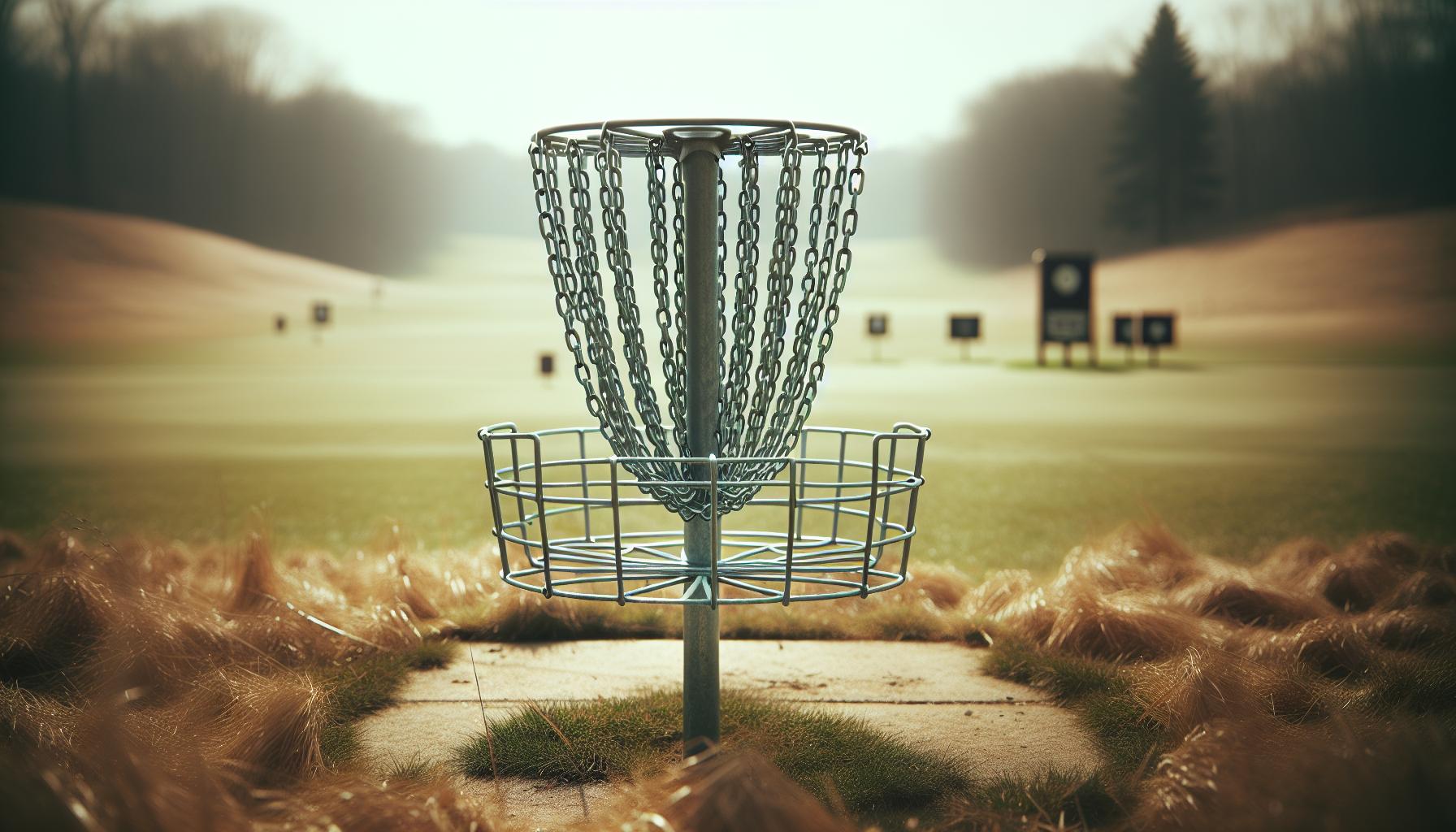
Defining Official Basket Dimensions
Despite being a game built on simplicity, disc golf marries a complex array of specifications that govern its playing equipment, particularly the basket. The dimensions of a disc golf basket are critical for ensuring a consistent and fair experience, especially for competitive play. Understanding these specifications not only enhances a player’s strategic approach but also deepens their appreciation of the sport itself.
The official dimensions of a disc golf basket, as outlined by the Professional Disc Golf Association (PDGA), dictate that a standard basket should have a height of 52 inches from the ground to the top of the basket. The target area, which is the concentric circle that defines the basket’s catch zone, has a diameter of at least 21 inches, allowing for a definitive target for players to aim for. The catch basket is typically composed of multiple rows of chains, arranged to maximize catch efficiency. As a standard, most baskets feature between 12 to 16 chains, usually ranging from 18 to 24 inches in length.
In addition to the chain configuration, the spacing between the chains plays a pivotal role. Ideally, chains should be spaced neither too far apart-where discs can pass through unimpeded-nor too close, where discs might deflect back out. This careful balance allows for a basket that is forgiving enough for newer players while still challenging seasoned competitors. When selecting a basket, it’s essential to consider these specifications alongside personal skill level and throwing style, as they can markedly affect play dynamics on the course.
Choosing a basket that meets official dimensions is not just about adhering to the rules; it’s a commitment to creating an enjoyable and challenging environment for every player on the course. As disc golf continues to grow globally, understanding these specifications becomes ever more important-for both the competitive player and the casual enthusiast-ensuring an equitable and engaging experience for everyone involved.
Impact of Chain Length on Disc Flight
The length of the chains on a disc golf basket significantly influences how discs interact with the target, shaping both the flight path during approach and the likelihood of successful catches. Longer chains tend to create a more forgiving catching area, reducing the chance of a disc bouncing out after making contact. This is particularly relevant in competitive play, where even the slightest variance can determine the outcome of a hole. Discs that strike the chains with sufficient speed and angle may be more easily captured by longer chains, allowing players to focus less on the precise angle of their throws.
In terms of disc dynamics, the interaction with the chains affects the disc’s overall flight path just as much as the initial throw does. When a disc hits the chains, a well-designed basket will absorb some of the energy, allowing the disc to settle into the basket rather than ricocheting out. This phenomenon becomes more pronounced with longer chains, as they create a smoother transition and a larger surface area for the disc to come into contact with, thereby increasing the chances for successful captures. In contrast, shorter chains can lead to discs getting stuck or bouncing away from the basket, introducing an unpredictability that can frustrate players, especially those who are newer and still finding their throwing technique.
To choose the optimal basket for your needs, consider how chain length aligns with your throwing style. Players who employ powerful throws may benefit from longer chains that cushion the impact, ensuring a reliable catch. Additionally, when setting up a disc golf course, it’s crucial to balance different basket styles, taking into account the types of players you wish to attract. Beginners will appreciate the enhanced catching ability of longer chains, while advanced players might seek more challenging setups with shorter chains that demand pinpoint accuracy.
Ultimately, understanding the not only enhances your gameplay but also fosters a deeper appreciation for the sport’s equipment design. Players can experiment with various baskets to see firsthand how chain lengths affect their strategies and ultimately their enjoyment of the game. Whether you’re an aspiring champion or just looking to have fun, recognizing these nuances helps enrich your experience and connection to the disc golf community.
A Guide to Selecting the Right Basket
Choosing the right disc golf basket can be pivotal not only for the success of a course but also for enhancing the playing experience for all skill levels. With a myriad of options available, understanding the specifications, particularly chain length, is crucial for making an informed decision. Baskets designed with longer chains tend to be more forgiving, providing a larger catching area for discs, which can be especially beneficial for beginners who are still honing their skills. In contrast, players seeking a more competitive edge may opt for baskets with shorter chains, posing an extra challenge that requires more precision in a throw.
When evaluating baskets, consider the following aspects to ensure they align with your goals and the needs of your players:
Key Factors to Consider
- Chain Length: Longer chains often result in a more reliable catch, reducing the risk of bounce-outs. This can significantly enhance the experience for players of all abilities.
- Material Quality: Baskets made with high-quality materials are essential for durability and weather resistance, ensuring they can withstand various environmental conditions.
- Basket Depth: The depth of the basket affects how well it can catch discs. Deeper baskets may provide additional security, preventing discs from bouncing out.
- Portability: If your course requires frequent reconfiguration or events that necessitate moving baskets, consider lightweight designs that are easy to transport.
When selecting a basket, it’s also helpful to compare models. Here’s a simple comparison of two popular options:
| Feature | Basket A | Basket B |
|---|---|---|
| Chain Length | 24 Inches | 18 Inches |
| Material | Galvanized Steel | Weather-Resistant Coating |
| Portability | Medium Weight | Lightweight Design |
Selecting the right basket ultimately enhances the experience of every round played on your course. By considering the aspects of chain length, material quality, and basket features, you can craft a disc golf environment that appeals to both newcomers and seasoned pros, fostering a deeper appreciation for the game and boosting community engagement.
Different Chains: Material and Design Variations
While many disc golf enthusiasts focus on factors like chain length and basket size, the actual material and design of the chains themselves can significantly impact both gameplay and the overall disc-catching efficiency of a basket. Chains are not just decorative; they play a crucial role in how well a basket performs, particularly when it comes to minimizing bounce-outs and ensuring a reliable catch.
Discs encounter a variety of chain types during play, each offering unique performance characteristics. Most baskets typically utilize either galvanized steel or coated chains. Galvanized steel chains are known for their durability and rust resistance, ensuring longevity even in harsh weather conditions. They provide a weighty, solid feel, which can help to enhance the consistent catching ability of the basket. On the other hand, coated chains, often found in higher-end models, have a plastic or rubberized covering. This coating not only adds an extra layer of protection from the elements but also softens the impact on discs, which can help reduce bounce-outs and improve the chances of a successful catch.
The design and arrangement of the chains also contribute significantly to the basket’s performance. For instance, chains can be configured in a variety of lengths and arrangements – from traditional double rows to innovative patterns that increase catching opportunities. Chains with a longer design can make baskets more forgiving, providing additional surface area for discs to adhere to, especially useful for beginner players still mastering their throws. Meanwhile, baskets with shorter chains may challenge more experienced players, as they require increased accuracy for successful catches.
In summary, when selecting a disc golf basket, it’s essential not only to consider the length of the chains but also their material and design. How the chains are crafted can greatly influence gameplay, affecting both novice experiences and competitive scenarios. Emphasizing quality materials and thoughtful designs ultimately leads to a more enjoyable and successful disc golf experience.
How Chain Length Affects Accuracy and Control
Disc golf enthusiasts are often surprised to learn that chain length can significantly influence not only the performance of a basket but also the accuracy and control a player has during their throws. Shorter chains tend to create a more challenging catch scenario, requiring players to be precise with their throwing mechanics. In contrast, longer chains can enhance the basket’s forgiving nature, making it easier for discs to settle into the basket after a successful throw.
When considering the mechanics of a throw, players must account for how the disc interacts with the chains. With shorter chains, there is less surface area for the disc to catch, which means that errant throws can lead to frustrating bounce-outs. This necessitates an emphasis on accuracy, as even slight deviations can lead to missed opportunities. For beginners, this can be particularly challenging as they are still developing their throwing technique. In contrast, longer chains create a larger landing zone, allowing for a greater margin of error. This can instill confidence in newer players, encouraging them to refine their skills without the fear of frequent mistakes.
To further illustrate this point, it’s worth examining two hypothetical baskets: one with shorter chains and one with longer chains. The basket with shorter chains might yield a higher failure rate on more aggressive throws, leading to bounce-outs and missed putts. On the other hand, players using a basket with longer chains could enjoy a higher percentage of successful catches, as the additional chain length offers more opportunities for the disc to stay within the basket.
Ultimately, the choice between short and long chains can impact not only the outcome of a single game but also the overall player experience. As players progress, they may gravitate toward baskets that challenge their accuracy and improve their control, recognizing that these elements are critical to personal growth within the sport. By selecting chains that align with their skill level and playing style, players can enhance their disc golf journey, fostering both enjoyment and improvement in their game.
Comparative Analysis: Short vs. Long Chain Baskets
When it comes to the world of disc golf, understanding the differences between short and long chain baskets can be crucial for both players and course designers. The choice of chain length not only affects how discs interact with the basket but also impacts player performance and experience on the course. Players often note that the chain length changes the dynamics of the game, offering a variety of feedback that can enhance or hinder their skills.
Short chains typically offer a more challenging catch. The reduced length means fewer opportunities for a disc to snag onto a chain link. This can lead to a higher rate of bounce-outs, especially under aggressive putting conditions. For competitive players, this presents a test of precision; successful putting requires not just strength but exact placement. Many seasoned players prefer shorter chains as they reward skill and finesse, sharpening their overall game by forcing them to focus intently on technique.
Conversely, baskets with longer chains provide a more forgiving catch. The increased surface area allows discs to settle more easily, which can be particularly beneficial for novice players still developing their accuracy. These baskets create a larger margin of error, reducing the likelihood of frustrating misses-a significant factor for beginners striving to enjoy the game without the burden of frequent bounce-outs. Additionally, the comforting feel of making a putt when using longer chains can enhance a new player’s confidence, making them more likely to return to the course.
In considering the impact of chain length, it’s important to reflect on the player demographic and the course’s intended atmosphere. Recreational or beginner-oriented courses might lean towards longer chains to promote joy and engagement, while competitive setups might opt for short chains to cultivate skill development. Ultimately, whether choosing short or long chains, the goal is to create an inviting and challenging environment that helps players grow, fosters camaraderie, and legitimizes disc golf as a serious athletic pursuit.
Regulatory Standards for Professional Tournaments
In the world of disc golf, the importance of cannot be overstated. These standards ensure a level playing field and guarantee that every competitor faces the same challenges, irrespective of where they are playing in the world. One of the most critical components of these regulations is the specification of basket chain length, which affects how discs interact with the baskets during play.
For professional tournaments, the PDGA (Professional Disc Golf Association) has established clear guidelines regarding basket specifications, which include chain length, spacing, and overall design. Official PDGA-approved baskets must feature a minimum of 12 chains, extending no less than 50 centimeters in length. This specification is designed to optimize the catching ability of the baskets while minimizing bounce-outs, making for a more consistent playing experience. Adhering to these regulations ensures that players can rely on the equipment not only for performance but also for fairness in competition.
Understanding Chain Length Standards
Basket chains differ in length, and while some players may prefer the feel of shorter chains that demand precision, regulations dictate the standard lengths used in competitions. Long chains are particularly beneficial during tournaments, as they increase the likelihood of a successful putt by providing more opportunities for a disc to engage with the basket. This aspect becomes essential during high-stakes events where every throw counts, and players’ physical and mental states can significantly influence their performance.
The Role of Basket Design in Tournament Play
Basket design is another crucial factor governed by regulatory standards. The PDGA not only specifies chain length but also the basket’s height, construction materials, and overall construction quality. These standards ensure that baskets provide a consistent experience across different courses, which is vital for maintaining the integrity of competition. For instance, if a tournament uses a non-compliant basket, it could alter the outcome of the game, leading to disputes and dissatisfaction among players.
Ultimately, understanding these regulations helps players prepare better for competitive settings. It allows them to refine their techniques, knowing how various chain lengths affect disc flight and catch efficiency. As the sport grows, staying informed about these standards cultivates respect for the game and ensures that both newcomers and seasoned players can engage in fair competition. By celebrating the intricacies of disc golf through adherence to these regulations, players contribute to the sport’s legitimacy as a serious athletic pursuit.
Common Misconceptions About Chain Length
Many players entering the world of disc golf might believe that all chains on baskets are essentially the same, overlooking how subtle variations can dramatically affect their game. One prevailing misconception is that longer chains inherently lead to more successful putts. While it is true that longer chains can provide a greater catching area for the disc, this does not necessarily mean that they contribute to better overall performance. The interaction between disc and chains is complex, influenced by factors such as disc speed, angle of approach, and the specific mechanics of each throw.
Another common misunderstanding is that the number of chains is the sole determinant of a basket’s effectiveness. In reality, both the material and design of the chains are equally important. For example, some players prefer the softer, more forgiving feel of rubber-coated chains, which can help absorb the impact of a disc and reduce the chance of bounce-outs. In contrast, traditional metal chains may provide a firmer catch but can lead to more separation from the basket when struck hard by a putter, potentially sending the disc back out into play instead of securing it in the basket.
It’s often assumed that playing on a course with shorter chains will improve one’s putting precision. While this might seem logical, shorter chains can conversely make it more challenging to secure the disc if it impacts at a less-than-ideal angle. New players may feel encouraged to adopt a refined putting style based on this assumption, only to find that conventional basket standards often utilize longer chains specifically because they enhance catchability. Thus, embracing the common industry standards not only facilitates greater consistency but also encourages strategic adjustments that are essential for competitive play.
Finally, there’s a tendency to think that a player’s skill and familiarity with their local course will mitigate any disadvantages posed by the basket chain’s length or design. However, when competing in tournaments, players must adapt to diverse basket types, potentially including those that use unconventional chains. Understanding how to read and react to different chain configurations is crucial for any serious competitor wishing to enhance their performance consistently.
By debunking these misconceptions and understanding the real influences behind chain specifications, players can better integrate their strategies and improve their game. With continuous communication within the community, knowledge will flow, leading to even greater advancements in the sport.
Tips for Setting Up Your Disc Golf Course
Creating a disc golf course can be an exhilarating project, but it’s essential to consider various factors that can significantly enhance players’ experiences. One critical aspect is the placement and type of baskets you choose, particularly how chain length can affect play. Longer chains provide a larger catching area, which can increase disc retention; however, the choice should be guided by local conditions and player skill levels.
When setting up your course, think strategically about each hole’s design:
- Location and Terrain: Identify natural features that can enhance play, such as trees and hills. For challenging placements, consider positioning baskets near inclines or behind trees to test players’ skills while ensuring accessibility for all skill levels.
- Chain Specifications: Opt for baskets with chains that balance durability and catchability. Longer chains work well for more forgiving setups, while shorter chains can present an additional challenge. Experiment with different chain designs to find the best fit for your course’s overall flow.
- Clear Signage: Ensure players understand the layout by providing clear signs at each tee pad with information on distances and basket specifics. This can include data about chain length and material, which may influence shot strategies.
- Pace of Play: Consider creating some shorter holes designed for quick rounds alongside longer par 4s and 5s. Mixing layouts allows for a variety of play styles and encourages casual and competitive players to enjoy the course.
Moreover, incorporate feedback mechanisms, such as scorecards or online forums, to gather player experiences. This will help you make informed decisions for future adjustments to the course, particularly regarding basket types and placements. For example, after observing how players interact with the different chains, you might discover a preference for softer chains that minimize bounce-outs, further encouraging user retention.
Finally, remember that the disc golf community thrives on shared experiences. Hosting local tournaments can allow you to test different setups and gather insights. Invite feedback not just on chain length but on all aspects of the course. Whether you aim to challenge seasoned players or welcome newcomers, paying attention to these details will foster a vibrant disc golf environment that celebrates the sport’s competitive spirit and community nature.
Player Insights: Real Experiences with Basket Chains
In the world of disc golf, the type and length of basket chains can dramatically alter a player’s experience on the course. Players often share fascinating stories about how different chains influence their performance. For example, some disc golfers have noted that they prefer baskets equipped with longer chains, as these tend to capture discs more effectively, reducing those frustrating bounce-outs. One local club even reported that after switching to longer chains, their course saw a noticeable increase in player satisfaction and course completion rates.
Real experiences from players highlight the significance of chain material and design variations as well. Some enthusiasts advocate for softer chains, which absorb impacts better and lead to fewer ricochets. For instance, a seasoned player mentioned how soft chains at a popular tournament venue allowed for a more “forgiving” play style, accommodating both seasoned and novice players. They found that these chains not only catch the discs better but also contribute to more enjoyable interactions with the basket.
Another perspective comes from those who appreciate a challenge. Players accustomed to shorter chains often revel in the added difficulty, claiming it sharpens their throwing skills. They relish the learning process, stating that competing on tougher baskets enhances their focus and encourages them to refine their techniques. A competitive player remarked, “It’s the thrill of knowing that precision counts. If I can nail that shot in a shorter chain basket, I know I’m improving.”
Incorporating player feedback into course design can lead to invaluable insights as well. Many players suggest that course creators organize test events to gather opinions on different chain setups. By sharing their experiences with varied chain lengths and materials, players help shape a better course for future rounds. This ongoing dialogue within the community not only fosters a sense of belonging but also strengthens disc golf’s reputation as both a sport and a vibrant fellowship.
Future Trends in Basket Design and Chain Technology
As the world of disc golf continues to evolve, innovation in basket design and chain technology is becoming increasingly critical to enhancing the player experience. Manufacturers and designers are exploring new materials and chain configurations that promise improved performance and durability on the course. For instance, advancements in lightweight metals and polymers may lead to baskets that not only resist rust and wear but also offer a more “friendly” catching experience, minimizing bounce-outs and making successful putts more rewarding.
One of the most exciting trends involves the integration of smart technology into basket systems. Imagine a disc golf basket equipped with sensors that can capture data on throw statistics, such as speed and angle of approach, or even provide feedback on player performance in real-time through a connected app. Such innovations would not only appeal to competitive players looking to hone their skills but also to newcomers interested in gamifying their practice sessions.
The design of chains themselves is also undergoing significant innovation. Players have expressed interest in chains that are adjustable in length or tension, allowing for personalized basket setups that cater to different throwing styles or course conditions. This flexibility could support various gameplay strategies, giving players the opportunity to adapt their equipment for specific tournament settings or local course challenges.
Furthermore, the community is actively engaging in discussions about aesthetic design alongside functionality. Many disc golfers appreciate baskets that integrate artistic elements, reflecting local culture or environmental themes. Such creativity not only enhances the visual appeal of a course but also fosters a deeper connection between players and the locations they love to play.
In summary, the future of basket design and chain technology promises an exciting blend of performance, personalization, and aesthetics, all contributing to a richer disc golf experience for players of all skill levels. The thoughtful incorporation of player feedback and cutting-edge advancements will surely propel the sport into a new era of innovation and enjoyment.
Frequently asked questions
markdown
Q: What is the standard chain length for official disc golf baskets?
A: The standard chain length for official disc golf baskets varies, but typically falls between 12 to 14 inches. This length is designed to optimize disc capture while ensuring durability and effective performance. For detailed specifications, refer to the section on Defining Official Basket Dimensions.

Q: How does chain length affect disc golf gameplay?
A: Chain length significantly impacts gameplay by influencing how well a basket catches discs. Longer chains can reduce bounce-outs, enhancing the chances of successful putts. Understanding this can improve strategy during play. Check How Chain Length Affects Accuracy and Control for more.

Q: Why do some players prefer longer chains on baskets?
A: Some players prefer longer chains because they provide better capture rates for discs, especially when thrown at high speeds. Longer chains are believed to minimize the likelihood of disc bounce-offs, making scoring easier. Explore Comparative Analysis: Short vs. Long Chain Baskets for insights.

Q: Can basket chain design vary by manufacturer?
A: Yes, basket chain designs can vary significantly among manufacturers. This includes differences in material and link shape, which can affect durability and catching ability. See the section on Different Chains: Material and Design Variations for more information.

Q: What materials are commonly used for disc golf basket chains?
A: Common materials for disc golf basket chains include galvanized steel for its rust resistance and stainless steel for durability. These materials ensure long-lasting performance in various weather conditions. Learn more about materials in Different Chains: Material and Design Variations.

Q: Are there regulations regarding chain length in professional tournaments?
A: Yes, professional tournaments adhere to specific regulations set by organizations like the PDGA (Professional Disc Golf Association), which dictate minimum and maximum chain lengths to ensure consistency and fairness in competition. Check Regulatory Standards for Professional Tournaments for detailed standards.

Q: Does longer chain length yield a different putting experience?
A: Yes, longer chain lengths can provide a different putting experience by enhancing disc retention. This can increase player confidence during putts, as longer chains reduce possibilities of bounce-outs. For more tips, see Player Insights: Real Experiences with Basket Chains.

Q: How can I choose the right disc golf basket based on chain length?
A: When selecting a disc golf basket, consider your playing style and local conditions. If you often face windy conditions or tougher throws, opt for longer chains. For further guidance, refer to A Guide to Selecting the Right Basket for tailored recommendations.
Wrapping Up
Thank you for exploring our detailed breakdown of the “Chain Length: Official Basket Specifications.” Understanding these specifications is crucial for optimizing your disc golf performance and ensuring you choose the right setup for your game. If you’re ready to enhance your skills, check out our articles on disc flight characteristics and throwing mechanics linked below. Don’t miss out on valuable tips that can refine your technique and elevate your gameplay!
Feeling inspired to take action? Dive deeper by signing up for our newsletter, where you’ll receive exclusive insights, tutorials, and product recommendations straight to your inbox. For those looking to get involved in competitive play, explore our resources on tournament strategies and equipment comparisons. We encourage your thoughts-share your comments below or connect with us on social media!
Remember, mastering your game is a journey. Equip yourself with the knowledge and resources needed to succeed, and keep coming back for more tips and community stories that celebrate the spirit of disc golf. Happy throwing!
Get our latest guides, news, and insights highlighted in your Google Search & AI Overviews.