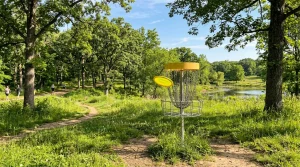
Did you know that the size of a disc golf course can significantly impact gameplay and enjoyment? Understanding the standard acreage specifications for disc golf courses is crucial for course designers, players, and enthusiasts alike. A well-sized course not only enhances the overall playing experience but also promotes safe and competitive play. In this article, we’ll explore the ideal course dimensions, the various factors that influence them, and how getting these specifications right can create an inclusive environment for players of all skill levels. Whether you’re a seasoned player looking to strategize your next round or a newcomer eager to grasp the fundamentals, mastering course dimensions is key to unlocking your potential in this exhilarating and rapidly growing sport. Join us as we delve deeper into the essentials of course size and its vital role in elevating the disc golf experience!
Course Size and Its Importance in Disc Golf
A disc golf course’s size is critical not only for the feasibility of its design but also for the player experience it offers. Generally, a well-designed 18-hole disc golf course requires between 2 to 10 acres, depending on the intended layout and the length of the holes. For instance, the Professional Disc Golf Association (PDGA) suggests that an average course with longer holes, approximately 300 feet each, may require up to an acre per hole, leading to a total space of around 18 acres for a full course. This larger footprint is necessary to accommodate fairways that are wide enough to offer challenging yet rewarding gameplay, preserving the aesthetic and functional diversity of the course.
Understanding the implications of course size goes beyond simple acreage; it fundamentally shapes the player experience by influencing the flow of play, the technical challenges presented, and the overall enjoyment. A compact course may cater well to beginners or casual players who appreciate shorter, approachable layouts, while a more spacious design can accommodate complex navigation through natural terrain, challenging variations, and advanced strategies that engage seasoned players. The integration of natural features-like woods, hills, and water hazards-can enhance the appeal of larger courses, exciting participants through varied challenges while necessitating careful planning.
Moreover, the scale of the course can also lead to significant cost considerations. Course installation can start at a minimum of $25,000 for a standard 18-hole setup, as confirmed by experts in the field. This investment not only reflects the physical infrastructure required-such as tee pads, baskets, and signage-but also highlights the ongoing maintenance needed to keep the course playable and enjoyable. Innovative design, mindful of course size, can yield a sustainable and community-oriented space that promotes growth in this rapidly expanding sport.
When planning a disc golf course, considerations of size and acreage are not merely technical specifications; they impact how players interact with the course and with each other, fostering community engagement and enhancing the sport’s growing appeal. To create successful spaces that serve diverse player needs, it’s essential to reflect on not just the minimum requirements, but what kind of experience the course will provide to its players.
Understanding Standard Acreage Specifications
Creating a successful disc golf course hinges on a precise understanding of standard acreage specifications. The space allocated can dramatically influence not only the gameplay experience but also the community’s engagement with the sport. Typically, an ideal 18-hole layout requires anywhere from 2 to 10 acres; however, these numbers can fluctuate based on several factors such as hole length, the topography of the land, and the level of challenge desired for players.
When contemplating the design, it’s crucial to consider that courses accommodating longer holes-approximately 300 feet or more-may necessitate as much as an acre per hole, translating to an overall requirement of up to 18 acres for a full course. This allows for the inclusion of wider fairways, which not only provide a more enjoyable playing experience but also enhance the visual appeal of the course. Proper spacing between holes is essential for player safety and the overall flow of the game. It’s not just about fitting as many holes into a given space; quality and variety in gameplay must be prioritized.
Moreover, different types of courses cater to varying skill levels and player types. For instance, a compact 9-hole beginner layout may only need a few acres, making it a cost-effective introduction to the sport. Such courses generally focus on shorter, more accessible holes that encourage new players while promoting engagement from more experienced competitors who seek to hone their skills on manageable layouts. In contrast, advanced players might gravitate towards expansive layouts that include challenging terrains and natural obstacles, thereby fostering greater strategic play.
In designing a disc golf course, considerations such as local zoning laws and environmental regulations should not be overlooked. These factors can limit the permissible size and density of the course, aligning it with community standards and ecological preservation efforts. As disc golf continues to gain popularity, understanding these specifications becomes essential not only for course design but also for ensuring that these spaces foster a love for the game while being sustainable and community-oriented.
Differentiating Between Disc Golf Courses
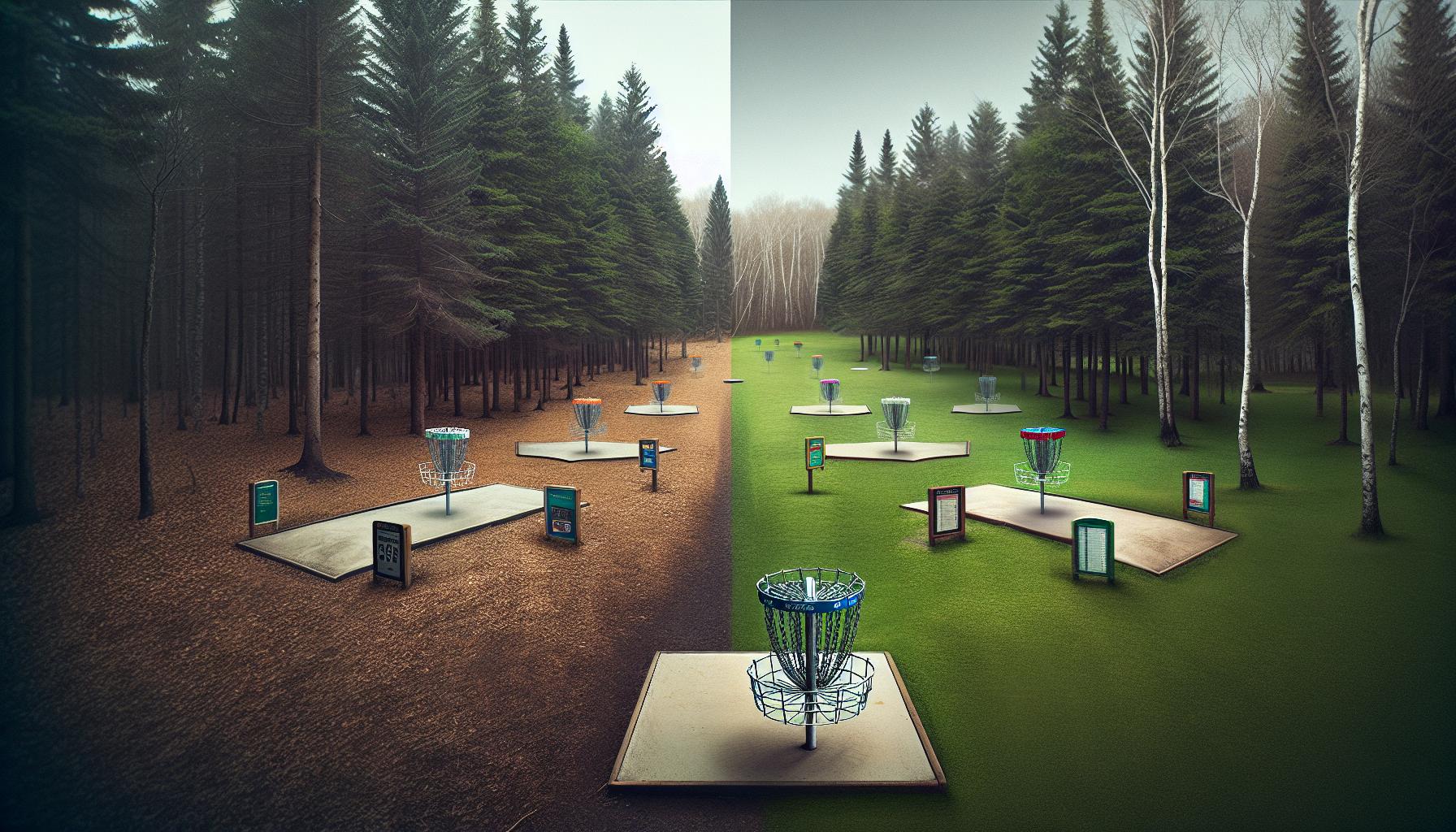
A diverse array of disc golf courses exists to accommodate varying skill levels, player preferences, and community needs, each offering a unique experience shaped by its size and design. The planning of these courses is not simply about mapping out holes on a piece of land; it’s about creating an engaging and accessible environment for players of all ages and skills. While some players thrive on the challenge of larger, more complex courses, beginners often seek out shorter, more forgiving layouts that allow for skill development without overwhelming them.
Courses can broadly be categorized into several types based on their size and hole design. For instance, a standard 18-hole championship course typically requires larger areas, often between 10 to 18 acres, and features longer holes averaging over 300 feet in length. These courses are designed for serious players looking for a competitive environment, incorporating challenging fairways and a variety of natural obstacles, which can enhance strategic gameplay.
On the other hand, community or beginner-friendly courses usually consist of 9 holes and occupy anywhere from 2 to 5 acres. These layouts aim to introduce new players to the sport, focusing on accessibility and enjoyment rather than competition. They often feature shorter holes, such as those around 200 feet, which are perfect for practicing fundamental skills without the intimidation that can come from longer, more complex designs. Additionally, many parks incorporate disc golf holes into existing recreational areas, maximizing their use without requiring extensive land modification.
Considerations for Course Design
When differentiating between courses, it’s important to consider several design factors:
- Terrain and Topography: Elevated landscapes or wooded areas can significantly influence the design, making certain layouts more complex and challenging.
- Amentities: Additional features such as tee pads, signage, and benches can enhance the player experience, especially on championship-level courses.
- Player Demographics: Understanding the local player base can help in designing a course that meets their needs, whether it’s beginner-friendly or advanced.
By thoughtfully considering these aspects, course designers can create discs golf environments that not only promote the sport but also foster community engagement and enjoyment for all participants. Whether it’s a challenging 18-hole track or a cozy 9-hole setup in a local park, each course plays a crucial role in expanding the reach and appeal of disc golf.
Impact of Course Size on Player Experience
The size of a disc golf course profoundly influences the player experience, shaping everything from skill development opportunities to the overall enjoyment of the game. For example, larger, championship-level courses, typically spanning 10 to 18 acres, offer seasoned players the chance to tackle complex layouts that test their skills, strategy, and endurance. The extended distances allow for a variety of challenges-strategically placed trees, elevation changes, and multi-throw holes-all designed to push the limits of a player’s abilities. This kind of design not only caters to competitive players seeking to improve their game but also attracts tournaments, thereby engaging the broader disc golf community.
Conversely, smaller courses, such as 9-hole beginner layouts occupying 2 to 5 acres, serve a different purpose. They create welcoming environments for new players who may feel intimidated by the sport’s complexities. The shorter distances, typically around 200 feet per hole, allow novices to practice fundamental throwing techniques without the frustration that can accompany longer, more difficult holes. This responsive design fosters enjoyment and accessibility, ensuring that players of all ages can appreciate the game while developing their skills in a supportive environment.
Incorporating various course sizes into a community can diversify the local disc golf scene, encouraging more individuals to engage with the sport. A vibrant disc golf community often emerges when players have access to both challenging and accessible layouts, facilitating casual rounds and more serious competition. Furthermore, course designers can enhance player experience by integrating natural features such as ponds, forests, or hills into their layouts, ensuring that each round becomes a unique adventure, regardless of skill level.
Ultimately, understanding how course size impacts player experience is crucial for designers aiming to create engaging and effective disc golf environments. The strategic balance of space not only meets the needs of diverse player demographics but also elevates the sport’s presence and popularity within communities, fostering a rich culture of disc golf that thrives on inclusivity, skill development, and shared enjoyment.
Strategies for Designing Optimal Course Layouts

Designing an optimal disc golf course layout requires a thoughtful balance between challenge and accessibility, ensuring that players of all skill levels can enjoy the game while being pushed to improve their skills. Whether crafting a championship course or a beginner-friendly layout, designers must consider how the course size interacts with its natural surroundings and existing player demographics. A successful layout is one that evolves over time, responding to player feedback and changing community needs.
One effective strategy involves dividing the course into distinct sections that cater to varying skill sets. For example, longer, more complex holes can be placed early in the course for experienced players, with steadily easier holes toward the end to help novices build confidence. Additionally, designers should incorporate a mix of straight, hyzer, and anhyzer shots to promote diverse throwing techniques and keep players engaged throughout the round. Using rich natural features such as elevation or bodies of water not only enhances the visual appeal but also introduces strategic elements that compel players to think critically about shot selection.
To further enhance the player experience, attention to safety is paramount. Designers should carefully evaluate throwing lines and the proximity of holes to one another to minimize the risk of injury from errant throws. Implementing clear signage and established boundaries can help delineate areas and ensure both new and experienced players feel secure while navigating the course. Additionally, considering the flow of the course-how players move from hole to hole-is vital; an intuitive layout helps maintain a smooth pace of play.
Ultimately, optimal designs go beyond just the layout; they anticipate future growth and evolution within the community. The course should allow for accessibility improvements, such as adding more beginner-friendly tees or creating alternative routes during busy tournaments. By creating an adaptable design, course planners can ensure their disc golf facility remains a centerpiece of enjoyment and engagement for players, fostering a healthy and inclusive disc golf community that thrives on shared experiences and competitive spirit.
Analyzing Cost Implications of Course Acreage
Designing a disc golf course involves significant financial considerations, especially when it comes to land usage. On average, a championship-level, 18-hole disc golf course typically requires between 18 to 36 acres, with around 1 to 2 acres dedicated to each hole [1]. This not only affects initial setup costs but also influences ongoing maintenance and potential upgrades, which can strain budgets if not carefully planned.
One of the primary cost implications of acreage is related to land acquisition and preparation. Rural areas may offer lower land costs, making them potentially appealing for course development. However, factors such as soil quality, vegetation, and terrain can impact both the expense and feasibility of constructing a course. For instance, clearing dense underbrush or leveling uneven ground entails considerable labor and equipment costs. Thus, communities should conduct detailed site assessments and consider environmental surveys to avoid budget overruns during development.
Moreover, the investment in infrastructure-such as tees, baskets, signage, and pathways-scales with the size of the course. A well-designed, 18-hole course can cost around $25,000 USD for adequate facilities and clear pathways; however, larger or more complex courses requiring extensive landscaping or additional amenities (like parking and restroom facilities) can escalate these costs significantly [3]. It’s vital for stakeholders to allocate funds wisely and plan for potential future expenses, which include ongoing maintenance, natural disaster recovery, and upgrades to meet growing player demands.
Finally, it’s essential to consider funding sources and community involvement when analyzing costs. Grants, local sponsorships, and fundraising events can help cover expenses, while community engagement fosters a sense of ownership and pride. By collaborating with local disc golf clubs or enthusiasts, planners can not only gather valuable feedback but also bolster support for the financial and logistical aspects of project implementation. This community-centric approach not only mitigates costs but also enhances the sustainability and success of the course long-term.
Regulatory Considerations for Course Size
Understanding the regulatory landscape surrounding disc golf course size is crucial for successful development and operation. Local zoning laws, environmental regulations, and community ordinances play significant roles in determining how much land can be utilized for a course, and these considerations can greatly influence both the design and costs associated with course construction.
Many regions require a thorough site assessment to ensure that the chosen location for a disc golf course does not disrupt local ecosystems or violate land-use restrictions. For instance, if the intended site is near protected wetlands or wildlife habitats, obtaining the necessary permits can be a lengthy process. Therefore, engaging with local environmental agencies early in the planning process can facilitate smoother project progression and compliance with regulations. Additionally, certain areas might have noise ordinances that impact how and when the course can be used, especially in residential neighborhoods where the game might have a more significant disruptive potential.
Moreover, community involvement in the planning stage not only fosters support but also ensures that the course meets local expectations and regulations. Conducting public forums or surveys can help gauge community interest, address concerns, and gather input on course design. This proactive approach not only enhances the community’s engagement but also aids in navigating regulatory challenges more effectively.
For successful course development, stakeholders should maintain meticulous records of interactions with regulatory bodies and keep abreast of any legislative changes that might affect land use. This diligence will ensure that the course remains compliant with local laws while also promoting a positive relationship with the community. In sum, understanding and adhering to regulatory requirements is key to creating a disc golf course that is not only enjoyable but also sustainable and legally sound.
Comparative Study of Course Sizes Worldwide
Around the globe, disc golf courses vary drastically in size and design, reflecting local landscapes, community needs, and regulatory environments. In the United States, the typical standard for an 18-hole disc golf course often lands within the range of 4.5 to 6 acres. This size accommodates diverse layouts that can challenge players of different skill levels, typically from beginners to advanced competitors. For instance, many municipal parks successfully fit smaller 9-hole courses within just a few acres, making the sport accessible even in tightly crowded urban settings.
In Europe, particularly in countries like Finland and Sweden where the sport has gained significant popularity, courses often incorporate natural features such as forests, hills, and lakes, expanding their sizes while enhancing playability and aesthetics. Many of these courses may utilize 6 to 10 acres or more to create immersive experiences that engage players with the surrounding environment. The wooded courses especially emphasize technical skill over sheer distance, focusing on throwing accuracy and strategic shot selection-a style that resonates with the European disc golf community.
Interestingly, in regions like Asia and South America, as the sport is emerging, courses may be smaller initially due to space constraints. For example, temporary courses set up in festival or event settings may only cover 2 to 3 acres and consist of a handful of holes. These setups allow communities to sample the sport with minimal investment, often leading to interest in constructing permanent facilities as public awareness and enthusiasm grow.
Ultimately, the effective management of course size involves understanding both the physical landscape it occupies and the community it serves. Courses designed with a thoughtful approach to local ecology, player engagement, and community visibility not only foster a vibrant disc golf culture but also help legitimize the sport. The ongoing discourse around course sizes worldwide underscores the diverse interpretations of space and layout, continually pushing the boundaries of what a disc golf course can be. Through this exploration, course designers are paving the way for this dynamic sport to thrive in varying contexts, adapting to local needs while enriching the overall disc golfing experience.
Best Practices for Maintaining Course Size Standards
Maintaining optimal course size standards is vital for the enjoyment and growth of the disc golf community. Properly sized courses not only enhance player experience but also bolster community engagement and sustainability. When designing or maintaining a course, understanding the balance between space availability and the needs of different player skill levels is crucial.
One of the best practices in maintaining course size standards is regular assessment and adjustment based on player feedback and course usage. Engaging with the local disc golf community through surveys or meetings can provide insights into how players interact with the course. Considerations such as difficulty, safety, and overall enjoyment should guide adjustments. For example, if players consistently express difficulty in navigating certain areas, it might be beneficial to reconfigure holes for better flow and accessibility.
Utilizing natural features effectively also contributes to maintaining course standards. Incorporating trees, hills, and water bodies can create strategic challenges without requiring much additional land. Implementing a course design that highlights these elements ensures that the course remains engaging and utilizes its space efficiently. Aspects like clear fairways and strategically placed obstacles can enhance gameplay without expanding the physical footprint of the course.
Moreover, ongoing maintenance is essential for preserving standards. Regular inspections can identify areas needing repair or modification to meet player needs and safety standards. Keeping sight lines clear, ensuring adequate signage for navigation, and maintaining tee pads and baskets all contribute to a consistent and enjoyable player experience. This proactive approach not only enhances gameplay but also shows a commitment to the community and the sport, fostering a culture of respect and improvement.
In summary, maintaining course size standards effectively requires a commitment to community engagement, innovative design solutions that utilize natural features, and ongoing maintenance. By focusing on these areas, disc golf courses can thrive, providing excellent play experiences for both casual players and serious competitors.
Integrating Natural Features into Course Design
Integrating the natural landscape into disc golf course design not only enhances aesthetic appeal but significantly influences gameplay and player experience. A well-designed course that utilizes its surroundings can create a unique challenge for players of all skill levels while preserving the natural ecosystem. For instance, incorporating natural features such as trees, elevation changes, and water bodies can turn a standard course into an engaging environment that offers both beauty and difficulty.
Utilizing Terrain and Vegetation
One approach to effective course design is to leverage the existing topography. For example, using hills for elevation changes can add depth to throws, requiring players to adjust their techniques for uphill and downhill shots. Similarly, strategically placing tees and baskets near natural obstacles like trees or rock formations can create interesting lines of play. This not only tests players’ abilities to navigate through diverse terrains but also promotes strategic thinking, as players must consider different throw angles and disc choices depending on the location of obstacles.
Moreover, the careful selection of vegetation can enhance the course’s challenge and beauty. Designing fairways with varying thicknesses of trees can lead to tactical decisions, rewarding players who can skillfully navigate controlled throws. Clear-cutting areas should be avoided to maintain the natural beauty and integrity of the landscape. Instead, only minor trimming may be necessary to ensure clear lines of sight from the tees to the baskets.
Water Features as Strategic Elements
Incorporating bodies of water, whether ponds, streams, or other natural water features, can dramatically affect how a course plays. Players might face the additional challenge of avoiding water hazards, compelling them to make precise throws or opt for strategic layups. Water features can enhance both the difficulty and beauty of a course, providing not only a visual appeal but also a functional challenge that keeps players engaged.
However, careful consideration must be given to the impact on local wildlife and ecosystems. Courses should be designed with minimal disruption to natural habitats, ensuring that any alterations support both the sport and the environment. Implementing buffers of vegetation around water can help protect local flora and fauna while enhancing the overall course aesthetics.
Community Involvement and Feedback
Engaging the local disc golf community in the design process can yield additional insights into how natural features might be best integrated. Feedback from players on previous designs can inform decisions about how to utilize certain elements of the landscape effectively. This collaboration can also foster a sense of ownership and pride among community members, making the course a beloved facility for players.
In conclusion, integrating natural features into disc golf course design is essential for creating a versatile and enjoyable playing experience. By thoughtfully incorporating terrain variations, vegetation, and water elements, designers can offer an engaging environment that enhances gameplay while respecting and preserving the natural landscape. This approach not only attracts enthusiasts but also facilitates a deeper appreciation for the sport and its connection to the environment, promoting sustainability within the growing disc golf community.
Case Studies: Successful Course Size Implementations
Across the globe, disc golf courses of various sizes showcase how thoughtful acreage specifications can lead to enhanced playing experiences. A notable example comes from the United States where a 9-hole course successfully fits within just a few acres, demonstrating that small spaces can still deliver a rich and engaging experience for players. Courses like this often utilize multi-use city parks, allowing for a blend of recreational activities without requiring substantial land investment.
In terms of more extensive implementations, championship-level courses can require between 18 to 36 acres. A successful example of this is the Maple Hill Disc Golf Course in Massachusetts, which occupies approximately 30 acres and features a challenging 18-hole layout. The course’s design embraces natural terrain, effectively combining open fields with wooded areas that test players’ diverse skill sets. Players report that the strategic layout keeps their game fresh and engaging, further validating the importance of course size in promoting a thrilling player experience.
Beyond the United States, some international courses have also embraced strategic size by blending natural landscapes with well-thought-out configurations. For instance, the Sula Disc Golf Course in Norway cleverly utilizes 20 acres, incorporating elevation changes and water features that not only beautify the course but also present strategic challenges. These implementations demonstrate how designers can promote sustainability while accommodating various skill levels, thus broadening accessibility and appeal.
Whether local parks or internationally renowned championships, the successful integration of size and design in disc golf courses highlights the need for thoughtful planning. By considering the terrain, existing biodiversity, and overall player experience, course designers can create engaging and functional spaces that celebrate both the sport and the environment. The lessons learned from these case studies continue to guide new developments, inspiring communities to invest in disc golf as a valuable athletic pursuit.
Future Trends in Disc Golf Course Design
The future of disc golf course design is poised for exciting developments, particularly in how course size and layout are approached. As participation in the sport continues to grow, designers are increasingly recognizing the need to optimize the use of space, blending functionality with environmental consciousness. This trend not only enhances player experiences but also promotes sustainability within diverse community settings.
One significant trend is the rise of community-centric course designs. Designers are exploring multi-use spaces, integrating disc golf courses into existing parks and recreational areas. This approach allows for shorter, creatively designed courses that can fit into as little as two to five acres, making them accessible to urban areas where land is at a premium. Such courses frequently feature varied hole lengths and strategic use of terrain to offer a compact yet engaging experience for players of all skill levels.
Technological advancements are also shaping the future of course design. Increased access to mapping software and 3D modeling tools enables designers to visualize courses within their specific landscapes. By utilizing precise data, course layouts can be optimized to enhance flow, minimize environmental disruption, and creatively incorporate natural features. For instance, courses may now integrate elevation changes, water hazards, or wooded areas in ways that challenge players while respecting the native ecosystem.
Moreover, as disc golf embraces its competitive side, there’s a growing emphasis on championship-level course designs that adhere to specific size and layout specifications. Future trends are likely to see an increase in standardized dimensions for professional courses, fostering consistency in competition formats. This could lead to greater visibility and legitimacy for the sport, attracting sponsors and larger tournaments to venues designed with careful attention to players’ needs.
In summary, the future of disc golf course design is bright, highlighting not only the importance of thoughtful acreage specifications but also the integration of technology and community needs. By preparing for these trends, designers can create courses that not only challenge players but also cultivate a love for the sport, ensuring its growth and sustainability for years to come.
FAQ
Q: What is the standard acreage required for a disc golf course?
A: The standard acreage for a disc golf course typically ranges from 20 to 30 acres. This size allows for an optimal layout that accommodates various hole lengths and diverse terrain while maintaining player safety and enjoyment.
Q: How does course size impact the difficulty of a disc golf course?
A: Larger courses can be designed with more complex layouts, including longer holes and strategic obstacles, making them potentially more challenging. Conversely, smaller courses may favor beginners by providing shorter distances and simpler navigation.
Q: What factors should be considered when designing a disc golf course?
A: Key factors include available acreage, natural terrain features, local regulations, and player demographics. An effective design also considers the overall flow, accessibility, and integration of varying hole difficulty levels to enhance player experience.
Q: Can disc golf courses vary in size depending on their location?
A: Yes, disc golf courses can vary in size based on urban vs. rural environments. Urban courses may be smaller due to space constraints, while rural courses often utilize larger tracts of land to create diverse and challenging layouts.
Q: What are the benefits of larger disc golf courses?
A: Larger disc golf courses offer enhanced playability and flexibility in design, allowing for greater variety in hole layouts, elevation changes, and natural features, ultimately improving player engagement and encouraging competitive play.
Q: How does the acreage of a disc golf course affect maintenance?
A: Maintaining a larger course can be more resource-intensive, requiring more staff and equipment for upkeep, including mowing, debris clearing, and hole repositioning. In contrast, smaller courses may be easier to manage but may also face wear under heavy use.
Q: Are there regulations regarding disc golf course sizes?
A: Regulatory considerations vary by region but often include zoning laws and environmental guidelines. It’s crucial to check with local authorities to ensure compliance with any spatial or environmental requirements before course development.
Q: What are common mistakes to avoid when determining course size?
A: Common mistakes include underestimating land requirements, ignoring player demographics, and neglecting to account for future expansion. Careful planning can help create a sustainable and enjoyable course layout for all skill levels.
To Conclude
Congratulations on completing “Course Size: Standard Acreage Specifications”! Remember, understanding the optimal acreage for disc golf courses not only enhances gameplay but also contributes to developing a vibrant disc golf community. If you have questions or need further clarification, don’t hesitate to reach out through our forums or in the comments below-your insights and inquiries are invaluable to us!
As you continue your journey in disc golf, consider exploring our articles on Throwing Mechanics and Disc Flight Characteristics for deeper insights. Don’t miss out on our newsletter, where you can get the latest tips, tricks, and updates tailored to help you elevate your game. Let’s keep the momentum going-get involved, share your thoughts, and connect with fellow enthusiasts! Every throw counts towards mastering your skills and contributing to the sport’s growth. See you on the course!
Get our latest guides, news, and insights highlighted in your Google Search & AI Overviews.