Did you know that many disc golfers find solitary rounds to be a rejuvenating part of their game? Playing disc golf by yourself not only allows for reflection and personal growth but also gives you the freedom to play at your own pace and focus on honing specific skills. Whether you’re a seasoned player aiming to refine your technique or a newcomer eager to learn, solo play offers unique benefits. Exploring the great outdoors while practicing disc flight characteristics and understanding throwing mechanics can enhance your appreciation for the sport. This guide will delve into the tips and strategies for enjoying solo rounds, addressing common concerns and highlighting the joy of playing independently. Get ready to discover how to make the most of your solo disc golf experience!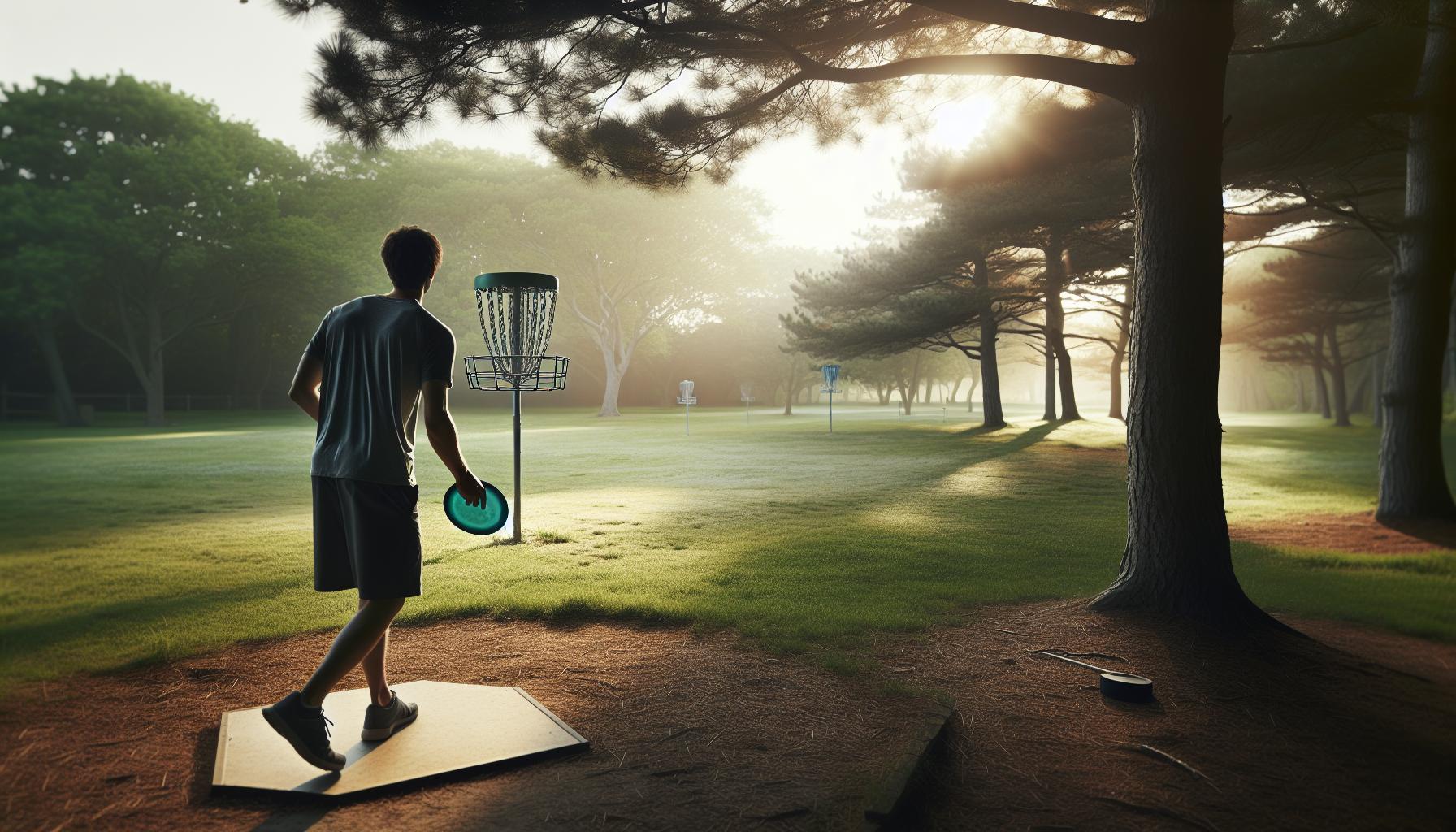
Can You Play Disc Golf Alone? Understanding the Benefits
Playing disc golf alone not only offers a unique opportunity for self-discovery and personal growth, but it also allows players to connect with the sport on a deeper level. Many players find that solo rounds are a chance to decompress and enjoy the simplicity of the game without the pressure of competition or the dynamics of a group. This quiet time on the course can enhance focus, improve skills, and even inspire creativity in gameplay strategies. As you navigate the course at your own pace, each throw becomes a moment of mindfulness, allowing you to be fully present and engaged with your surroundings.
Solo rounds foster independence and allow players to tailor their practice to their specific needs. Whether that means focusing on technique, experimenting with new throws, or simply enjoying the tranquility of the environment, each outing can be uniquely beneficial. For instance, a player might decide to concentrate on mid-range throws, adjusting their stance and grip to see how small changes can influence their game. This freedom to practice intentionally can lead to noticeable improvements over time, as you become more attuned to your disc flight and personal tendencies.
Moreover, playing alone encourages self-reflection and goal-setting. It can be useful to establish personal targets, whether that’s improving your score or mastering a particular throwing technique. Many players find that keeping a journal of their solo rounds helps track progress and identify areas for growth. It’s not just about the scores either; documenting your experiences and feelings while playing can transform your approach to disc golf, enhancing your appreciation for the nuances of the game.
Lastly, while solo play can initially feel isolating, it ultimately strengthens your connection to the sport and can lead to a more fulfilling disc golf experience. It opens doors to personal challenge, rather than just social engagement, allowing players to appreciate the sport’s athletic pursuit. Whether you’re a seasoned player looking to refine your skills or a newcomer seeking solace in the game, venturing out to play solo can yield a wealth of benefits that enhance both performance and enjoyment.
Essential Gear for Solo Disc Golf Sessions
When embarking on a solo disc golf mission, having the right gear can elevate your experience and enhance your game. Playing alone not only allows for personal exploration but also gives you the freedom to tailor your setup to meet your specific needs. Here’s a guide to the essential equipment that will make your solo rounds both enjoyable and productive.
One of the most vital pieces of gear is, of course, your discs. A well-rounded selection can significantly impact your performance. Ideally, you should carry a variety of discs, including:
- Distance Drivers: For long-range throws that require speed and stability.
- Fairway Drivers: Great for controlled distance and accuracy on tight fairways.
- Midrange Discs: Versatile for shorter, accurate shots and approaches.
- Putt and Approach Discs: Essential for close-range accuracy and specialized techniques.
Investing in a sturdy disc golf bag that is comfortable and spacious will keep your discs organized and accessible. Look for features like padded straps and water-resistant materials to ensure comfort and durability during your solo outings.
Additional Gear for Comfort and Efficiency
Playing alone means you should also be prepared for various conditions. Here are some additional items you might want to consider:
- Water Bottle: Staying hydrated is crucial, especially during long sessions.
- Snacks: High-energy, easy-to-carry snacks like granola bars or nuts can keep you fueled.
- First Aid Kit: A small kit can be a lifesaver in case of any unexpected injuries.
- Comfortable Footwear: Good shoes will help prevent fatigue and support your movements on the course.
- Portable Chair: For those times when you want to take a break between rounds.
Technology and Training Aids
To further enhance your solo practice, consider incorporating technology into your routine. A GPS watch or app can help track your throws and distances, providing valuable data to analyze your game. There are also handy training aids like putting mats or target nets, which can be easily set up in your backyard or a local park.
Lastly, a journal or a digital app for tracking your progress can be incredibly beneficial. Recording your scores, noting your thoughts after each round, and setting goals can help you grow as a player while keeping your experience organized and reflective.
Equipped with the right gear, your solo disc golf sessions can transform into a productive and enriching practice, making every round not just a game, but an opportunity to improve and enjoy the sport you love.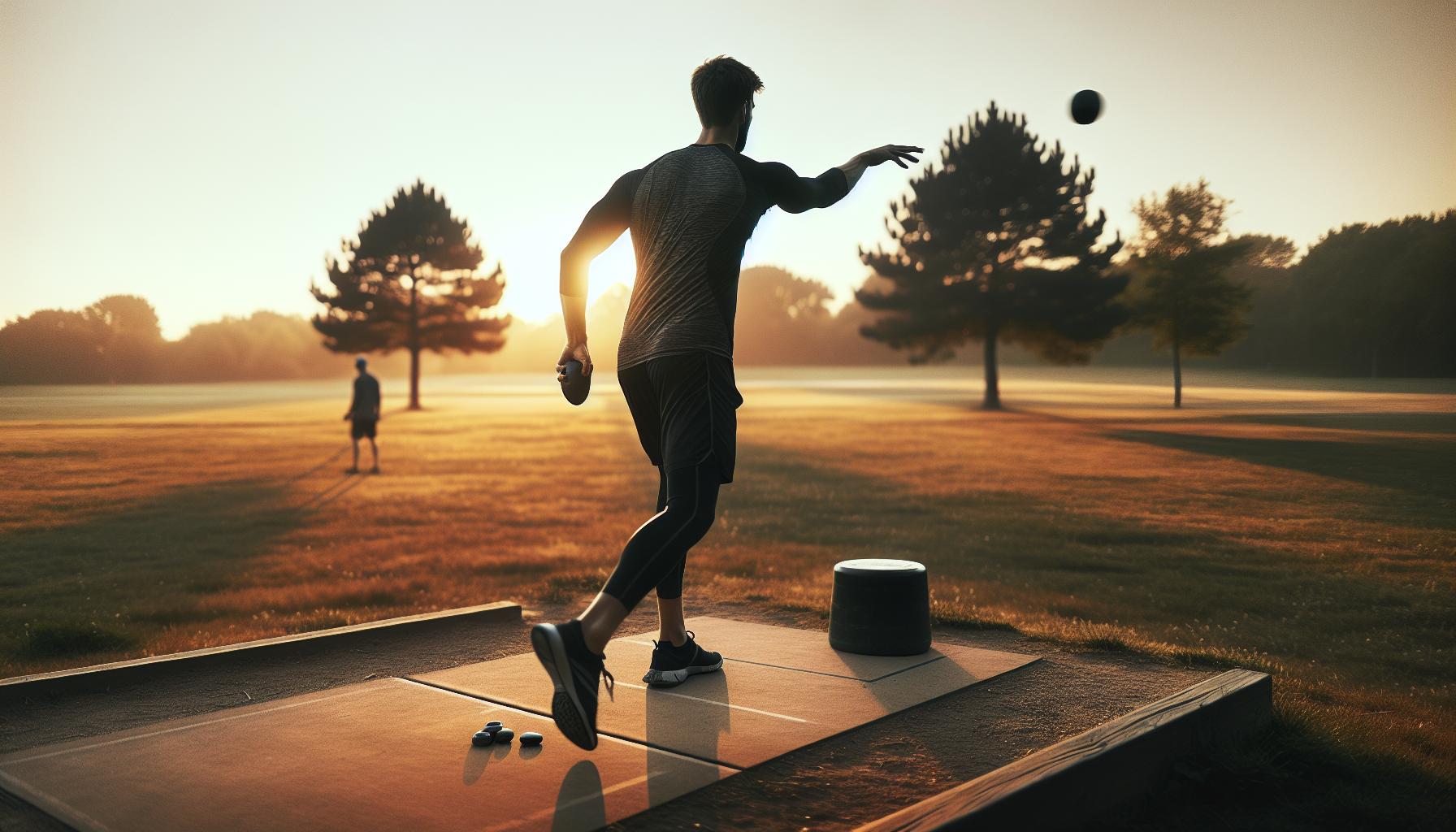
Mastering Throwing Techniques for Solo Play
There’s a unique thrill that comes with playing disc golf alone, offering not only an opportunity for personal growth but also time to refine your throwing techniques without the distractions and pressures of a group. When practicing solo, you have the freedom to focus on your mechanics, allowing for experimentation and adjustment at your own pace. Mastering throwing techniques in a solo setting can greatly enhance your overall game and help you discover the nuances of disc flight.
To get started, focus on the fundamentals of grip, stance, and follow-through. A proper grip involves holding the disc firmly but not too tightly, allowing for a clean release. Your stance should be balanced, with your feet shoulder-width apart. As you throw, engage your entire body, shifting your weight from your back foot to your front foot. This weight transfer is crucial for generating power. Practice throwing from different stances-open, closed, and staggered-to see how each affects your throws. For added variety, try distance throws, approach shots, and putting practice. Pay close attention to how small adjustments in your grip or stance can change the outcome.
Setting up a training routine can also add structure to your solo sessions. Allocate time to drill specific techniques, such as hyzer and anhyzer throws. Create a target practice setup using objects or discs placed at various distances. This will help improve your accuracy and reinforce your understanding of how different discs behave in the air. Using slow-motion video or a mirror can provide immediate feedback, allowing you to see and correct any flaws in your technique as you practice.
Moreover, documenting your progress can turn your solo practice into a rewarding journey. Keep a journal or use an app to track the distance of your throws, your accuracy, and any observations about your technique. Reviewing this data will help you identify patterns and areas for improvement. Whether you’re a beginner trying to master basic throws or a seasoned player looking to refine your skills, these solo practice sessions can provide invaluable insights into your game, ultimately leading to more confidence and creativity on the course. Embrace the solitude of solo play as an opportunity not just to practice but to explore the vast possibilities of disc golf.
Choosing the Right Courses for Solo Play
When playing disc golf solo, selecting the right course is crucial for a rewarding experience. Not only does the course’s layout and difficulty level impact your game, but it can also enhance your overall enjoyment and focus during practice. Look for courses that cater to your skill level, allowing for a balanced mix of challenge and accessibility. Ideally, a course should feature a variety of hole layouts, including wooded, open, and technical shots, which can promote skill development while keeping the experience fresh and engaging.
Consider the following attributes when choosing a course for solo play:
- Course Difficulty: As a solo player, you want a course that matches your skill level. A beginner might benefit from shorter, less complicated courses to build confidence, while more experienced players can seek out courses that demand precision and strategy.
- Foot Traffic: Opt for courses that are less crowded, particularly during off-peak hours. This will allow you to play at your own pace without the pressure of waiting on others or feeling rushed.
- Safety Considerations: It’s important to select locations that feel safe for solo outings. Consider the surrounding environment and choose parks or courses that are known for their family-friendly atmosphere.
- Facility Amenities: Courses with amenities like practice baskets, restrooms, or nearby parking can help enhance your overall experience. Amenities can provide convenience and comfort, especially if you’re planning to spend an extended time practicing.
- Variety in Terrain: Look for courses that offer different terrains and conditions. Playing in varied environments, such as hilly courses or those with water hazards, can challenge you to adapt your techniques and improve your versatility as a player.
By thoughtfully selecting your course, you can create a fulfilling solo disc golf experience. Whether you’re working on specific throwing techniques or simply enjoying a quiet day on the course, the right environment can significantly enhance your practice sessions. Remember, the goal is not just to play but to continuously develop as a disc golfer while enjoying the serenity that solo play offers.
How to Set Personal Goals and Track Progress
Setting personal goals is a key aspect of improving your disc golf game, especially when playing solo. By framing your aspirations in clear, actionable terms, you can not only enhance your skills but also experience a greater sense of fulfillment during your time on the course. Start by defining what you want to achieve: whether it’s improving your throw distance, mastering specific techniques, or lowering your score on certain courses. Having these targets will give your practice sessions a focused direction.
To effectively track your progress, consider maintaining a disc golf journal-a simple notebook where you can jot down your round scores, techniques practiced, and any notable improvements or challenges faced. For instance, after each session, take a few moments to reflect on what went well and what needs attention. You could create a basic scorecard or a simple log that tracks your performance over time. Use metrics such as average throws per hole, successful putts, or accuracy measurements to quantify your growth.
Additionally, setting short-term and long-term goals can keep your motivation high. Short-term goals, such as completing a certain number of rounds each week or experimenting with new throwing techniques, can lead to quick wins that boost confidence. Long-term objectives, like preparing for a local tournament or achieving a specific rating in disc golf, provide an ongoing challenge that inspires sustained effort.
Remember to celebrate your achievements, no matter how small. Whether it’s nailing a difficult throw or completing a round without any bogeys, acknowledging your successes fuels your passion for the game. By structuring your practice sessions around these goals and tracking your progress diligently, you’ll find that your time spent playing solo can be both productive and enjoyable. As you continue to develop your skills, the joy of personal improvement can often enhance the solo experience, allowing you to truly embrace and enjoy your journey through the sport.
Engaging in Solo Practice Drills for Skill Improvement
One of the most rewarding aspects of playing disc golf alone is the opportunity to tailor your practice sessions to focus strictly on skill improvement. Engaging in specific solo practice drills not only enhances your technique but also keeps your practice session fresh and exciting. To get started, consider incorporating a variety of drills designed to address different aspects of your game, from putting and approach shots to driving techniques.
Simple Drills for Skill Advancement
- Putt and Repeat: Find a flat area, ideally near a practice basket, and set a distance of 10-30 feet. Start by making a series of putts, aiming for a specific number before moving further away. This drill helps build confidence and consistency in your putting.
- Up-the-Tree Drill: Choose a tree or a well-defined target in the distance and practice throwing to it from a variety of angles and distances. This drill improves accuracy and teaches you to work on different throwing techniques (e.g., backhand, forehand).
- Distance Control: Use a rangefinder or marked distances on the field. Set targets at 50, 100, and 150 feet, and practice throwing your drivers, midranges, and putters to those distances. Focus on control and developing a feel for how far each disc travels.
Incorporating these drills into your routine can significantly boost your overall skill set. Vary the drills to focus on areas where you feel less confident, allowing for continuous growth. For instance, if you struggle with hyzer throws, dedicate a session specifically to practicing that shot shape. The key is to challenge yourself while also making the practice enjoyable.
Tracking Progress and Celebrating Improvement
To make the most of your solo practice, keep a log of your drill performance and progress. Recording specifics such as the number of successful putts or distances achieved per throw will provide tangible insights into your improvement. This practice not only holds you accountable but also highlights areas needing further attention.
Moreover, don’t forget to celebrate your achievements! Whether it’s sinking your longest putt or successfully executing a challenging approach shot, acknowledging these milestones will keep your enthusiasm high. Engaging in solo practice can transform solitude into an opportunity for extraordinary personal development, ultimately leading to more satisfying experiences on the course. Happy practicing!
Creating a Fun and Challenging Solo Routine
Creating a solo disc golf routine that is both fun and challenging can significantly enhance your skills while keeping boredom at bay. One way to kick off your custom routine is to mix practice and play. Start each session by warming up with specific drills. For instance, spend the first 30 minutes on your putting game, alternating between short and long-range attempts. Implement progress checkpoints-aim for a minimum number of successful putts before moving on. This structured beginning primes your mindset for the competitive nature of solo play.
Once you’ve warmed up, turn your attention to the actual course. To keep things interesting, consider setting unique challenges for yourself. For example, you can play “par 3” on all holes, regardless of their actual par, effectively changing your perspective and adding a strategic layer to your game. The psychological aspect of this challenge can boost your focus and make you more aware of your strengths and weaknesses throughout the round.
Including a variety of targets during your practice can also spice up your routine. Select different objects within the park to aim for as you play. This could range from benches to trees, forcing you to adjust your angles and throw types. Over time, you might find that your adaptability improves significantly, which is crucial when navigating diverse disc golf courses.
Here’s a mini-structure for your solo sessions to create a comprehensive and enjoyable routine:
Sample Solo Disc Golf Routine
- Warm-up (30 minutes): Focused putting drills alternating between distances.
- Course Play (1-2 hours): Set personal challenges, aiming for a modified par, or target practice on various objects.
- Skill-focused Drills (30 minutes): Target specific skills like hyzers or forehands, using dedicated drills to enhance control.
- Cooldown & Reflection (15 minutes): Review your performance, jot down notes on successes and areas for improvement.
Integrating these elements will not only make your solo practice sessions more engaging but also allow for a comprehensive approach to mastering disc golf. By adjusting difficulty levels and varying the types of drills you incorporate, you’ll ensure every outing offers something fresh and exciting. Always feel free to adapt this format based on what feels most rewarding for your growth as a player.
Connecting with the Disc Golf Community Solo
Stepping onto the disc golf course solo does not mean you have to sacrifice connection with the community. In fact, playing alone offers unique opportunities to engage with fellow enthusiasts in low-pressure environments. You might discover some of your best connections come through casual interactions or by sharing your journey on social media platforms. Whether you’re a beginner or a seasoned player, there are many avenues to cultivate meaningful relationships in the disc golf community even when you’re playing alone.
One effective way to connect is by participating in online forums and social media groups dedicated to disc golf. Platforms like Reddit have subreddits where players share tips and stories, fostering a sense of belonging. You might also consider joining local disc golf Facebook groups to keep abreast of events, casual meet-ups, and tournaments in your area. Engaging with these communities not only provides camaraderie but also invaluable insights into improving your skills and enjoying the game more deeply.
Another proactive approach is to visit local courses during peak hours. If you play during weekend afternoons, you’re likely to encounter many players. Use this opportunity to strike up conversations. A simple compliment on someone’s shot or a question about their favorite discs can be great icebreakers. Don’t hesitate to ask if you can join a group for a round or two; most disc golfers are friendly and open to sharing the course with new faces. This communal spirit helps to enrich your experience and can lead to lasting friendships.
Lastly, consider volunteering for local tournaments. Many events welcome volunteers for various roles, and this gives you a chance to meet experienced players and local advocates for the sport. These interactions can enhance your understanding of the game, from technical skills to the social dynamics of competitive play. By immersing yourself in these environments, you cultivate a network of support that will complement your solo practices, ensuring every round is both a personal challenge and a step toward being more engaged in the vibrant disc golf community.
Safety Tips for Playing Disc Golf Alone
Venturing onto the disc golf course alone can be an exhilarating experience, but it also brings its own set of safety considerations. Whether you’re honing your skills or simply enjoying a peaceful round in nature, taking some precautions can ensure your solo outing remains enjoyable and incident-free.
Stay Aware of Your Surroundings
One of the most important safety tips is to remain conscious of your environment. Always be vigilant for other players on the course, as disc golf is often played in shared spaces with pedestrians, cyclists, or other park-goers. Stay alert when teeing off, especially on busy holes, and be cautious of any potential hazards in the area, such as rivers, steep drops, or wildlife. It’s beneficial to familiarize yourself with the course layout beforehand if you’re playing a new location, ensuring you know where to expect potential risk areas.
Inform Someone of Your Plans
Before heading out, let a friend or family member know where you will be playing and the estimated duration of your round. This simple step ensures that someone is aware of your whereabouts in case of an emergency. If possible, playing courses that are well-trafficked and during peak times can provide extra peace of mind, as you’re likely to encounter fellow disc golfers who can assist if needed.
Pack Emergency Supplies
Being prepared for the unexpected is part of enjoying solo play. Always bring some basic emergency supplies in your bag, such as a first aid kit, extra water, and snacks to stay hydrated and energized. A mobile phone for quick access to emergency services is also essential, especially if you venture into more isolated or challenging terrains.
Trust Your Instincts
When playing alone, it’s crucial to listen to your instincts regarding personal comfort and surroundings. If something feels off-whether it’s an unfamiliar person approaching or a sudden change in the weather-don’t hesitate to cut your round short. It’s better to prioritize your safety and return at a later date.
By taking these precautions, you can maximize your enjoyment of solo disc golf while ensuring your safety. Engaging with this wonderful sport alone doesn’t just improve your skills, it can also enhance your personal resilience, adding a rewarding dimension to your disc golf journey.
Maximizing Your Solo Play Experience: Mental Strategies
Engaging in solo disc golf can be an incredibly rewarding experience, offering not just a chance to refine your skills but also an opportunity to connect with your inner game. When playing alone, the mental aspect of the sport becomes paramount. Unlike larger groups where distractions abound, solo sessions allow for a deep concentration that can significantly enhance your performance. To truly maximize these solo outings, it’s essential to cultivate mental strategies that leverage the unique benefits of playing alone.
One effective tactic is to establish a focused mindset before your round. This means setting clear intentions for what you want to achieve during your time on the course, whether it’s mastering a specific throwing technique, lowering your score, or simply enjoying the tranquility of your surroundings. By visualizing your goals beforehand, you create a framework for your play, enhancing both your focus and motivation. This can be coupled with mindfulness practices such as breathing exercises to center your thoughts and eliminate distractions from the environment.
In addition to mental preparation, keeping a journal of your experiences can be immensely beneficial. After each round, take a moment to jot down insights, feelings, and progress related to your game. This habit not only allows you to track your improvements over time but also helps in identifying patterns in your play. For instance, you might notice that certain courses or conditions affect your performance positively or negatively. By maintaining this log, you equip yourself with a treasure trove of data that can inform your future sessions.
Another powerful strategy for elevating your solo experience is to incorporate positive self-talk throughout your game. It’s easy to become critical of yourself when playing without others present. Instead, focus on celebrating small victories-like nailing a tricky throw or reducing your average score. Positivity breeds improvement; encouraging yourself through affirmations helps you remain motivated and resilient, arguably more so when you’re alone.
Lastly, consider introducing a challenge element to your practice. Design specific goals for your solo rounds, such as completing a course within a certain time or using only one type of disc for all holes. This not only breaks the monotony but also simulates the pressure of competition, sharpening your game. Engaging in these mental strategies will help you not only enjoy your solo rounds more fully but will also enhance your skills, making you a well-rounded player ready to engage with the broader disc golf community.
Understanding Disc Flight Characteristics Alone
Understanding how different discs behave in the air can greatly enhance your solo disc golf practice. Each disc’s flight characteristics are influenced by its design, including factors like weight, rim width, and plastic type. Familiarizing yourself with these elements enables you to make informed choices that match your throwing style and the course layout. Whether you’re a beginner or an experienced player, understanding disc flight not only boosts your performance but also builds confidence as you navigate challenging courses alone.
The most effective way to grasp disc flight is through real-world experience. Start by categorizing your discs into three main flight paths: stable, understable, and overstable. Stable discs fly straight, making them great for beginners or for shots requiring accuracy. Understable discs tend to curve to the right (for right-handed backhand throwers) and are perfect for creating hyzer flips. Overstable discs, on the other hand, tend to curve left, providing a reliable option for headwinds and sharp turns. Spending time alone on the course gives you the freedom to experiment with each disc without the pressure of onlookers, allowing you to uncover how slight adjustments to your stance or grip can affect the outcome.
Take specific notes during your rounds to track how different discs perform under varying conditions. For example, you might discover that a specific under-stable driver performs especially well on a downwind hole but struggles against headwinds. Utilize a simple system to record your observations, perhaps noting wind direction, disc choice, and resulting flight paths. This data will be invaluable as you refine your technique and adapt your strategy, making you more adept at reading course conditions.
Finally, engaging with disc flight mechanics offers an excellent opportunity for skill improvement during solo play. Break down your throws into stages: the grip, stance, pull-through, and follow-through. Analyzing these phases critically allows you to isolate problem areas, whether it’s an inconsistent grip or an improper follow-through. Visualize each component, and if possible, record your throws to review later. This level of self-analysis can be challenging but ultimately rewarding, as it aids you in developing a more nuanced understanding of how to manipulate each disc’s flight path effectively. Embrace the learning process during your solo sessions; the insights gained will not only improve your game but also enrich your overall experience in the growing and vibrant community of disc golf.
Exploring the Thrill of Competitive Solo Play
The excitement of competitive solo play in disc golf offers a unique blend of challenges and rewards, allowing players to test their skills against time and personal benchmarks rather than opponents. Solo rounds can elevate your game, fostering a different kind of focus and discipline. Without the distractions of playing with a group, you can immerse yourself completely in the mechanics of your throws, dissecting each aspect of your performance. By choosing to engage in competitive solo play, you invite a sense of personal accountability and motivation that can push you to excel.
To get started with competitive solo play, consider setting specific goals for each round. For example, you might aim to complete a course within a certain time or attempt to beat your personal best score. This not only adds an element of fun but also simulates the pressure of competition, sharpening your mental game. Use a timer or a score tracking app to measure your progress, and don’t hesitate to challenge yourself by introducing varying objectives during different rounds. For instance, alternate between focusing on accuracy, distance, or specific throwing techniques to keep your practice engaging.
The solitude of these solo sessions provides the perfect environment for reflective practice. Consider keeping a journal or log where you can document your experiences: track the discs you used, the distances thrown, and how the conditions impacted each round. This analysis will deepen your understanding of your strengths and areas for improvement, making each round a continuous learning opportunity. Additionally, sharing experiences with the disc golf community, whether through social media or local clubs, can foster connections and provide supportive feedback that enhances your growth as a player.
As you embark on your competitive solo journey, remember that every round is a chance to embrace the spirit of competition – both against yourself and the sport. While outdoor disc golf courses are designed for social play, turning them into a battleground for personal achievement can transform your approach to the game. Enjoy the thrill of challenging yourself, refining your skills, and witnessing your progress as you grow in this dynamic and increasingly popular sport.
Faq
Q: Is it safe to play disc golf alone?
A: Yes, it is generally safe to play disc golf alone. However, it’s essential to choose well-populated courses and inform someone of your location and expected return time. Always be aware of your surroundings and carry a fully charged phone for emergencies.
Q: What are the benefits of playing disc golf solo?
A: Playing disc golf alone allows for personal reflection and improvement without the pressure of competition. You can focus on perfecting your technique, set personal goals, and enjoy the tranquility of nature at your own pace, making it a fulfilling experience.
Q: How can I improve my disc golf skills when practicing solo?
A: To enhance your skills while practicing alone, engage in specific drills such as distance throws, accuracy shots, and putting exercises. Use a practice basket for putting consistency, and track your throws to monitor progress effectively. Consider setting a routine to keep your practice structured.
Q: Are there specific courses that are better for solo disc golf play?
A: Yes, choosing courses that are less crowded and have clear paths can enhance your solo play experience. Look for well-marked courses with manageable layouts, emphasizing safety and enjoyment. Research local courses in advance to select one that aligns with your skill level.
Q: What gear do I need for solo disc golf sessions?
A: For a successful solo disc golf session, essential gear includes a good quality disc golf bag, a selection of discs suited for various throws, water, snacks, and a portable practice basket if you’re focusing on putting. Comfortable clothing and shoes are also vital for an enjoyable experience.
Q: How can I set personal goals for solo disc golf practice?
A: Start by identifying specific skills you want to improve, such as throwing distance or accuracy. Set measurable and achievable goals, like reducing your score on a specific course or mastering new throwing techniques. Use a journal to track your performance and progress over time.
Q: What are some mental strategies for enjoying solo disc golf?
A: Focus on mindfulness to enhance your experience. Enjoy the moment by immersing yourself in the surroundings and setting a positive mindset before you start. Visualize successful throws to build confidence, and take breaks to reflect on your game and appreciate nature.
Q: How can I connect with the disc golf community while playing alone?
A: Connect with the disc golf community by joining local online forums, social media groups, or participating in community events and tournaments. Sharing your solo experiences or tips can lead to meeting like-minded players and possibly organizing future playdates with others.
Closing Remarks
Playing disc golf alone can be a rewarding experience, offering you the freedom to explore new techniques and enjoy the game at your own pace. Remember, whether you’re practicing your throws or mastering course strategy, each solo round sharpens your skills and deepens your connection to this vibrant sport. Ready to elevate your game? Check out our detailed guides on improving your throwing mechanics and disc selection for different conditions.
Don’t forget to share your solo play experiences in the comments! We’d love to hear your tips and any challenges you’ve faced. And for those looking for community insights or upcoming tournaments to participate in, our resources page is packed with useful information. Keep the spirit of disc golf alive, and visit us often for fresh content. Together, let’s grow this exhilarating sport!