Whether you’re a newcomer to the vibrant world of disc golf or a seasoned player seeking the perfect gear, having the right starter set can make all the difference. The right discs can significantly enhance your learning curve, improve your game, and ensure you enjoy every throw. With so many options available, it can feel overwhelming to choose the best discs to kickstart your journey. This guide breaks down essential recommendations tailored to various skill levels, emphasizing the unique characteristics of each disc, from stability to distance. Get ready to discover how the right equipment can elevate your performance and deepen your love for the sport. Join us as we explore some of the best starter sets that will have you throwing with confidence and skill!
Essential Discs for Beginners: What to Look For
When embarking on your disc golf journey, selecting the right discs is crucial for both enjoyment and improvement. Beginners should focus on versatile discs that cater to a variety of throwing styles and conditions. Generally, a solid starter set should include a distance driver, a fairway driver, a mid-range disc, and a putter. Each type of disc has distinct characteristics that can aid in developing your skills on the course.
A distance driver is designed for maximum distance and is typically more lightweight with a sleek profile. Look for one with a low turn and high fade, as this will help mitigate errant throws. For a great starter option, consider a model that offers a more stable flight path, which is forgiving for new players still mastering their throw. In contrast, a fairway driver provides control and accuracy, making it ideal for shorter, technical shots. Choose a disc that has a moderate speed rating-this helps beginners get the hang of their throwing mechanics without sacrificing distance.
Next, having a mid-range disc in your bag is important for versatile approaches. These discs tend to have a reliable, straight flight path and can be used for various shots during a round. They’re great for approaches into the basket or for navigating around obstacles. Finally, a good putter rounds out the set. Look for one that feels comfortable in your hand and provides a stable flight path to improve your confidence on those crucial short-distance shots.
- Distance Driver: Great for maximum distance; look for low turn and high fade.
- Fairway Driver: Control and accuracy; choose a moderate speed rating.
- Mid-Range Disc: Reliable and versatile; ideal for approach shots.
- Putter: Comfortable in hand; stable flight for close-range accuracy.
Investing in these essential discs will not only help you play better but will also enhance your appreciation for the sport. Remember, practice makes progress, so take your time experimenting with your discs to find what feels best for you!
Top Starter Discs: Our Recommended Picks
Choosing the right starter discs is foundational for anyone looking to delve into the exciting world of disc golf. An effective starter set should encompass various disc types to support different throwing styles and course scenarios. Below are some highly recommended discs that have garnered praise for their performance, stability, and user-friendliness, making them perfect for beginners.
Recommended Starter Discs
- Distance Driver: Innova Leopard – This lightweight driver is celebrated for its straight flight path and superior glide. With a manageable speed rating, the Leopard is forgiving for newcomers, allowing them to achieve impressive distances without overwhelming them with excessive speed.
- Fairway Driver: Discraft Buzzz – Known for its consistency and control, the Buzzz offers dependable straight shots and a slight fade at the end. Its versatility makes it excellent for both tight fairways and open shots, making it a staple for players of all levels.
- Mid-Range Disc: Dynamic Discs Truth – This mid-range disc is perfect for various shots around the course. With a reliable straight flight and some turn, the Truth can navigate obstacles effectively while providing confidence for approaches to the basket.
- Putter: Axiom Anode – The Anode is a popular choice for its comfortable grip and balanced flight characteristics, making it a great option for both putting and short approaches. It helps new players develop their confidence right where it counts most.
These discs are not only accessible but also help develop essential skills as players gain experience. Investing in these recommended picks lays a strong foundation for your disc golf journey, combining fun, challenge, and community. As you explore these discs, remember that practice and experimentation will lead to the best fit for your throwing style and preferences. Embrace the learning curve-it’s all part of the joy of this increasingly popular sport!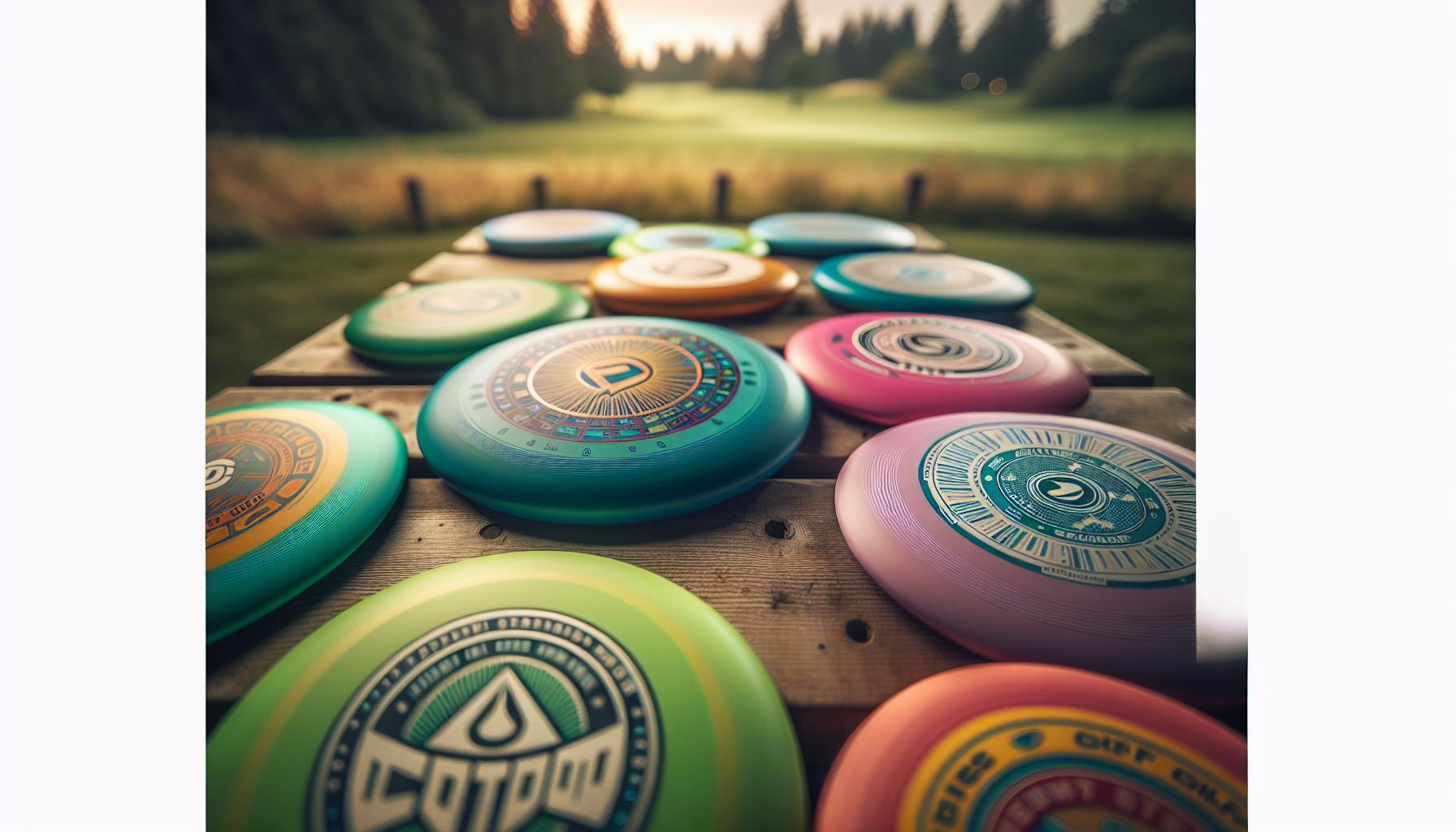
Understanding Disc Flight Patterns: A Guide for New Players
Understanding how discs fly is crucial for any new player eager to improve their game and enjoy the thrill of disc golf. Each disc is designed with specific flight characteristics that directly influence how far and accurately it can be thrown. For beginners, grasping these fundamentals not only enhances performance but also makes the sport more enjoyable, as players can better gauge their throws and adapt to varying course conditions.
Discs are typically categorized based on their speed, glide, turn, and fade-which together define their overall flight pattern. The speed rating indicates how fast the disc must be thrown to achieve its intended flight. For instance, slower discs (under speed 7) like putters and mid-range discs are ideal for new players, allowing for better control and accuracy during practice. Glide refers to the disc’s ability to stay in the air, impacting its distance. A high glide rating means the disc can maintain its altitude longer, which is why many beginner-friendly drivers, such as the Innova Leopard, are appreciated.
Turn is the disc’s tendency to drift right (for a right-hand backhand throw) during the initial part of its flight; a negative turn rating means the disc is stable and will tend to go straight. A slight positive turn can aid beginners in achieving a gentle, controlled curve. Finally, fade describes the disc’s tendency to hook left at the end of its flight (again, for a right-hand backhand throw). Understanding these four dimensions enables players to choose the right disc for specific throws, whether aiming for distance, accuracy, or navigating tricky layouts.
To illustrate, if a beginner is faced with a tight fairway, selecting a low-speed disc with moderate glide and a slight turn can help navigate the holes more effectively. Practicing with a selection of discs and paying attention to how each behaves during different throws will foster a better understanding of personal throwing dynamics and preferences. As skill and confidence grow, players can gradually experiment with faster and more diverse discs, enhancing their game and versatility on the course.
Embracing the nuances of disc flight patterns not only propels players toward greater skill but also enriches their appreciation for the game, leading to a more engaging and rewarding disc golf experience overall.
Choosing the Right Disc: Speed, Glide, Turn, and Fade Explained
Understanding how to choose the right disc for your game can transform your experience on the course, making every throw feel more intuitive and controlled. The essential factors that define a disc’s flight-speed, glide, turn, and fade-serve as the building blocks for finding a suitable starter set. This knowledge not only enhances your accuracy and distance but also helps you navigate the complexities of different courses with greater ease.
Speed is one of the most crucial aspects to consider. This rating, usually ranging from 1 to 14, indicates how fast a disc must be thrown to achieve its intended flight. As a beginner, you will likely benefit from slower discs (under speed 7), which are designed to maximize control and minimize the variability of your throws. Discs like putters and mid-range models fall into this category, making them excellent choices for newcomers who are still refining their throwing technique.
Next, the glide rating reveals how long a disc can stay aloft during its trajectory, impacting overall distance. A high glide rating (typically 4-7) suggests that the disc will maintain its altitude longer, a vital attribute for developing distance without needing considerable arm speed. For example, the Innova Leopard-often recommended for beginners-features a solid glide, allowing for easier distance management.
Equally important is turn, which refers to the initial flight behavior of the disc. For right-hand backhand throws, a negative turn rating (e.g., -1 to -3) indicates stability and a straighter flight path, while a positive turn (e.g., +1 to +3) allows for a controlled rightward drift. Beginners might find that using a disc with a slight positive turn can help achieve smooth, gradual curves.
Lastly, the fade represents how much a disc will hook left at the end of its flight. A fade rating of 1 to 5 shows how pronounced that leftward movement will be. For new players, a disc with a low fade (1-2) can provide a smoother, more predictable finish, allowing for better shot placements and greater confidence as you navigate challenges on the course.
By paying attention to these flight characteristics when selecting your beginner disc set, you can significantly improve your game. Start with a balanced combination of slower speed discs with high glide and manageable turn and fade ratings to set yourself on a solid path for skill enhancement. Practicing with different disc types will not only build muscle memory but also deepen your understanding of disc mechanics, paving the way for a fulfilling and enjoyable disc golf journey.
Throwing Techniques: Mastering Basics for Accurate Shots
Mastering the art of throwing in disc golf is crucial for any player looking to improve their game. Whether you’re a complete beginner or transitioning from casual play to a more competitive approach, understanding and refining your throwing techniques can lead to significant improvements in accuracy and distance. A well-executed throw involves not just arm strength, but also body mechanics, footwork, and correct disc selection, especially when starting with essential discs.
One of the best starting points for beginners is the backhand throw, which is the most common method used in disc golf. It begins with a firm grip on the disc-this can be a power grip, where your fingers wrap around the bottom of the disc for maximum control. Stand with your feet shoulder-width apart and knees slightly bent, maintaining a stable base. As you initiate the throw, rotate your shoulders back, bringing the disc to your hip. This motion engages your core, which is vital for power generation. When you’re ready to release, shift your weight onto your front foot and rotate your hips towards the target. This motion unleashes a powerful throw, allowing the disc to glide smoothly through the air.
Another useful technique is the forehand throw, often used to navigate around obstacles or take sharp turns. To execute this throw, grip the disc with your index and middle fingers along the inside rim, and place your thumb firmly on top. Position your body sideways to the target. Similar to the backhand, utilize your hips for power; then, flick your wrist upon release to generate spin. Practicing this technique can improve your versatility on the course.
For both types of throws, mastering the release angle is critical. Beginners should aim for a flat release, keeping the disc level to the ground. A +1 to -1 turn rating on your disc will help ensure that it behaves predictably in flight. Experimenting with different discs within your starter set can help you learn how each one responds to your throwing style and adjust accordingly for better results.
Lastly, always practice your throws in an open area to isolate your technique without the distractions of a real course. Taking time to focus on your footwork, grip variations, and release angles will enhance your muscle memory, ultimately translating into greater accuracy and confidence during your rounds. Remember, every seasoned player started just where you are today; consistent practice will make you a part of that growing community of disc golf enthusiasts. Enjoy the learning process, and don’t hesitate to seek out local clubs or players for tips and camaraderie along the way!
Equipment Essentials Beyond Discs: Bag, Accessories, and More
To fully enjoy the sport of disc golf, having the right equipment extends well beyond just your discs. A well-organized setup not only enhances your performance but also elevates your overall experience on the course. Investing in a quality disc golf bag, appropriate accessories, and additional gear can make a significant difference, particularly for beginners eager to develop their skills.
A good disc golf bag is essential; it needs to be both functional and comfortable. Look for a bag that offers enough capacity to hold at least 10-15 discs, which is ideal for storing your essential starters and any additional discs you acquire as you progress. Many bags come with padded straps for comfort, multiple compartments for accessories, and even insulated sections for drinks. When selecting a bag, consider your play style and how much gear you typically take with you. Some popular options include messenger-style bags for casual players and full backpacks for those venturing into longer courses.
Accessories play a pivotal role in ensuring a smooth and enjoyable outing. Items such as a mini marker disc (for marking your lie), a towel (to keep your discs dry), and a water bottle will become staples in your bag. Additionally, consider a range finder or distance measuring tool to help with accuracy when gauging throws. Beyond the essentials, having a portable chair or a hammock can provide comfort during longer days on the course. Always remember to dress comfortably and layer appropriately to handle changing weather conditions.
Moreover, investing in other equipment can enhance your gameplay. A reliable pair of shoes with good grip is crucial, especially on uneven terrain. Consider shoes specifically designed for hiking or outdoor sports. If you’re serious about improving your game, a practice basket for home use can be invaluable, allowing you to work on your putting skills at any time. Such equipment not only builds your technique but can also foster a sense of ownership and passion for the sport.
By equipping yourself with the right bag and accessories, along with home practice tools, you position yourself for a successful and enjoyable journey in disc golf. As you continue to grow, you’ll discover how these foundational items support your skills, making every round more enjoyable and effective. Engaging with fellow players or local clubs can also guide you to find new gear and share tips on the best equipment tailored to your style.
Course Strategies: Navigating Your First Disc Golf Course
The first experience on a disc golf course can be both exhilarating and intimidating, especially for those new to the sport. Understanding basic course strategies is essential to navigating your way to better play and enjoyment. The beauty of disc golf lies in its combination of skill, strategy, and the natural landscape, which can pose unique challenges and opportunities for growth.
Before you tee off, take a moment to analyze the course layout. Many courses provide a map at the beginning or have signs at each hole showing distance and possible paths to the basket. Familiarize yourself with hole lengths, layouts, and any obstacles such as trees, water hazards, or elevation changes. Knowing these elements can greatly influence your choice of discs and throw techniques. Use your starter discs effectively-typically a putter, mid-range, and a driver can cater to a variety of distances and shot shapes. For example, on a shorter hole with tight gaps, consider opting for your mid-range disc, which offers better control, instead of potentially risking a turnover with your driver.
When it comes to throwing techniques, focus on your form. A consistent and strong stance, coupled with a smooth throwing motion, can help you release the disc with accuracy and distance. Spend some time practicing hyzer and anhyzer throws, as these are essential for maneuvering around obstacles and navigating the flight patterns of various discs. Remember, throwing straight may not always be the best option; strategic shaping of your shots can often save strokes. Moreover, keep an eye on your footing and consider the terrain of the course. Uneven ground can affect balance, so maintain a stable stance and follow through with your throw to ensure accuracy.
As you progress through the course, be mindful of your pace and respect the flow of play. If it feels like you’re holding up other players, it’s perfectly okay to let them pass; disc golf is as much about community and friendly competition as it is about personal growth. Lastly, don’t hesitate to embrace the friendly advice or tips from seasoned players. Their insights can drastically enhance your understanding of course management and shot selection. Each round is a learning opportunity, so reflect on your performance after your game.
By developing fundamental strategies and engaging responsibly on the course, you will create a rewarding disc golf experience that encourages both skill enhancement and personal enjoyment. As your confidence grows, so will your ability to tackle various courses and challenges, making every outing a step towards becoming a more skilled and strategic player.
Advanced Discs: Transitioning from Beginner to Intermediate
Transitioning from beginner to intermediate in disc golf is an exciting phase, opening up a broader range of disc options and throwing techniques to explore. As your skills develop, so too should your understanding of how different discs can enhance your game. The shift often starts with recognizing the limitations of your initial starter set. While discs that assist in mastering basic shots are essential, moving toward a more performance-oriented selection can significantly improve your accuracy and distance.
When you start considering advanced discs, it’s important to grasp their specific flight characteristics. For instance, if you’ve mainly relied on a stable mid-range disc, it may be time to add a variety of drivers and overstable discs to your collection. Drivers, particularly distance drivers, are designed with higher speeds in mind and will enable you to cover more ground with fewer throws. They often incorporate technology aimed at reducing drag and improving glide, which can be a game-changer on longer holes or during challenging wind conditions. Similarly, overstable discs can cut through wind and allow for more predictable fades at the end of your throw, perfect for shaping shots around obstacles.
Recommended Discs for Intermediate Players
As you progress, consider incorporating the following types of discs into your bag:
- Distance Drivers: Look for discs with a speed rating of 13 or higher. They are designed for experienced players seeking maximum distance.
- Fairway Drivers: These discs provide a balance of distance and control, making them suitable for approaching the basket with accuracy.
- Overstable Mid-Range Discs: A good choice for players who want to add shape to their shots, these discs will turn less and fade more.
- Variety of Putters: Experiment with different putters to find those that suit your feel and throwing style, especially for approach shots.
Investing in a well-rounded bag of discs allows players to adapt to various course layouts and conditions. For example, certain discs may excel in high winds while others perform superbly on calm days. It’s advisable to test out your new discs in practice rounds to understand their flight paths fully.
Understanding Your Flight Preferences
As you embrace more advanced discs, consider how your throwing mechanics influence your choices. Enhancing your grip, stance, and release point can affect how a disc responds during flight. Pay attention to your preferences-do you favor forgiving discs that handle slight errors, or are you drawn to more specialized models that require precision? By fine-tuning your technique, you will find that the right disc can elevate your performance and enjoyment of the game.
Each player’s journey through disc golf is unique, filled with opportunities to learn and grow. Engaging with the disc golf community will enrich your experience, as fellow players often share valuable insights and recommendations on navigational strategies and the best discs to enhance your game. As you transition from beginner to intermediate, keep embracing new challenges and never hesitate to explore the wide array of discs available to you.
Learning from the Pros: Insights from Seasoned Players
Experienced players often emphasize the importance of starting with a well-rounded set of discs, not just for mastering the game but also for enhancing enjoyment. Many pros agree that the foundational set should include a distance driver, a fairway driver, a mid-range disc, and a putter, allowing for a range of shots that can adapt to various course demands. For newcomers, understanding the characteristics of these discs can significantly influence your early progression.
A common recommendation from seasoned players is to prioritize stability and control in your initial choices. For example, a stable distance driver can help you achieve longer throws with less risk, while a neutral mid-range disc offers a dependable flight path that is forgiving of minor mistakes. It’s essential to select a putter that feels comfortable in your hand; practicing putting with a few different models can greatly refine your touch and accuracy on the green. Many pros suggest that experimenting with different molds in each category can lead to confidence in your skills and a better understanding of what works best for your individual style.
Additionally, seasoned players often recount the importance of field work and practice rounds. Simply playing rounds on various courses is beneficial, but focusing on the unique flight paths of your discs can unlock greater potential in your game. For instance, discovering how different discs react to various wind conditions or how they behave when thrown at different speeds can make all the difference. Taking the time to throw each disc in a controlled environment allows you to gather valuable insights into their performance, building your skills progressively.
Networking within the disc golf community is another area where advanced players find valuable insights. Joining local clubs and participating in leagues often provides opportunities to learn from others’ experiences and receive personalized recommendations for discs that suit your play style. Engaging with seasoned players at these events can provide a wealth of knowledge on course management and shot selection that can accelerate your growth as a player. Remember, the journey in disc golf is just as much about sharing experiences as it is about honing technical skills.
Building a Diverse Disc Collection: Balancing Your Gear
Building a collection of discs that meets your needs is not just about having the right tools; it’s about having the right combination of tools to enhance your game at every level. For beginners, it can often feel overwhelming to navigate the vast array of disc types and brands available on the market. However, by focusing on a few essential aspects, you can create a well-balanced disc collection that will serve you throughout your disc golf journey.
First, consider the foundational discs that allow you to execute a variety of shots. A typical starter set should include a distance driver, a fairway driver, a mid-range disc, and a putter. Each type of disc serves a specific purpose; for instance, distance drivers are designed for maximum distance, while mid-range discs provide more control and versatility. As you progress, introducing backups and specialty discs like an overstable driver or a stable mid-range can enhance your ability to tackle different course conditions and shot types. Your collection should grow with your skills, so don’t hesitate to experiment with new molds as you become more confident in your throwing technique.
Next, understanding disc characteristics like speed, glide, turn, and fade is vital in building a well-rounded collection. Each disc has unique flight patterns influenced by these factors, which can significantly affect your game. Speed determines how far the disc can travel; glide indicates how long it stays in the air; turn affects how much the disc will curve to the right (for right-handed backhand throws) during its flight; and fade determines how much the disc will hook left at the end. Selecting various discs with different ratings in these categories will give you the flexibility to tackle a range of shots from different lies and in varying wind conditions.
Moreover, practicing regularly with your discs is crucial for understanding their behavior. This practice includes throwing sessions in which you focus on the unique flight patterns of each disc, and it allows you to adapt your throws in real-time during actual gameplay. Keeping a training journal can be beneficial, allowing you to jot down observations about how each disc performs in various situations. This will help you refine your collection further, focusing on discs that complement your style rather than simply adding to the quantity of gear.
Finally, initiating conversations with other players can provide insight into building a diverse disc collection. Joining local clubs or engaging in community events can introduce you to seasoned players who can share their experiences and recommendations on gear that suits your playing style. Building relationships within the disc golf community not only helps you learn more about the game but can also lead to opportunities to try different discs before committing to a purchase. By leveraging the collective knowledge of your disc golf community, you can approach building your collection strategically and joyfully, embracing the endless possibilities that this sport offers.
Community and Events: Engaging with Local Disc Golf Clubs
Joining a local disc golf club can be one of the most rewarding decisions a beginner can make on their journey into the sport. Beyond simply finding a circle of like-minded individuals, local clubs offer a unique blend of support, camaraderie, and resources that can elevate your game and deepen your appreciation for this dynamic sport. Engaging with these communities not only enhances your skills but also helps you to build lasting friendships and a network of fellow enthusiasts who share a passion for disc golf.
Local clubs often organize regular play sessions, events, and competitions, providing opportunities for players of all skill levels to participate and learn. Many clubs host clinics and workshops where more experienced disc golfers share valuable insights on throwing techniques, disc selection, and course strategy. For instance, participating in a beginner’s clinic can give you hands-on experience with different types of discs, helping you to understand how each disc in your starter set behaves in various conditions. This practical knowledge can be crucial as you progress in skill and begin to see how different discs perform under different circumstances.
Moreover, being part of a disc golf community can expose you to a variety of discs that you might not typically consider. Many clubs host disc swapping events or fundraisers where members can trade discs, giving newcomers a chance to experiment with different brands and models without the financial burden of buying each one. This not only broadens your understanding of disc characteristics-like speed, glide, turn, and fade-but also allows you to connect with more experienced players who can share their personal recommendations based on your game style.
In addition to enhancing your technical skills, being involved in local disc golf clubs can also make you aware of upcoming tournaments and events, from casual leagues to competitive tournaments. Participating in these gatherings, even as a spectator, can kickstart your competitive spirit and motivate you to further refine your skills. Ultimately, whether you’re looking to casually enjoy a round with friends or test your abilities against seasoned players, local clubs can be the cornerstone of a rich and fulfilling disc golf experience. Being part of such a community transforms disc golf from merely a sport into a vibrant social activity complete with friendships and shared challenges.
The Future of Disc Golf: Trends and Innovations to Watch
As the sport of disc golf continues to gain traction globally, exciting trends and innovations are shaping its future, particularly for newcomers exploring essential discs for their starter sets. One of the most compelling shifts in the industry is the introduction of disc technology that enhances performance while maintaining affordability. Manufacturers are increasingly focusing on producing discs that combine durability with advanced aerodynamic designs, which help beginners achieve better flight characteristics and consistency. This development empowers new players to experience immediate improvement in their game without needing to invest significantly from the onset.
Customization and Personalization
Another notable trend is the growing customization and personalization of discs. Many brands now offer options to create unique designs or select specific weight ranges, allowing players to tune their equipment to match their throwing style and preferences. This aspect not only adds a personal touch but also helps beginners develop a deeper connection with their gear, fostering a sense of ownership and improving their overall enjoyment of the game. Local disc golf shops and online retailers are often equipped to assist in this customization process, ensuring that new players can access advice and options tailored to their specific needs.
Emphasis on Environmental Sustainability
Furthermore, the movement towards environmental sustainability in disc golf manufacturing is gaining momentum. As more players become environmentally conscious, companies are responding by creating eco-friendly discs made from recycled or sustainable materials. This innovation not only appeals to the ethical considerations of many players but also enhances the community aspect of disc golf, as players can feel good about their choices while participating in a sport that already emphasizes respect for nature.
Community Engagement and Technology
On the community front, technology plays a pivotal role in enhancing engagement and accessibility. Mobile applications and online platforms are proliferating, providing tools for tracking scores, navigating courses, and connecting players with local events. These resources are especially beneficial for newcomers who may feel hesitant about joining in on local play. By providing platforms for interaction, these technologies foster a welcoming environment that encourages more participation, ultimately strengthening the sport’s community ties.
In summary, the evolving landscape of disc golf is not just about the discs themselves but also the broader community and technological advancements that support players at every level. The combination of enhanced disc technology, customization options, sustainability efforts, and community engagement ensures that new players are not only equipped with the best tools but are also welcomed into a vibrant and growing sport.
Faq
Q: What are the best beginner discs for new players?
A: The best beginner discs include the Innova Leopard, Discraft Buzzz, and Dynamic Discs Judge. These discs offer a good balance of speed, glide, and stability, ideal for developing skills. For specific recommendations, check our section on Top Starter Discs for more details.
Q: How do I choose the right weight for my starter disc?
A: Beginners should typically choose discs weighing between 150-170 grams. Lighter discs are easier to throw, while heavier discs offer more control. Refer to our Choosing the Right Disc section to learn more about selecting the optimal weight for your throws.
Q: What should I consider when buying a starter set of discs?
A: When buying a starter set, consider the disc types, weights, and durability. Look for sets that include a driver, mid-range, and putter for a well-rounded start. Our article’s Essential Discs for Beginners section provides insights on what to look for in a set.
Q: How can I improve my throwing technique as a beginner?
A: To improve your throwing technique, focus on your grip, stance, and follow-through. Practicing simple drills, such as standing throws and field practice, can enhance your form. Check our Throwing Techniques section for step-by-step guides on mastering the basics.
Q: Can I use regular Frisbees for disc golf?
A: While you can technically use regular Frisbees, they are not designed for disc golf. They typically lack the stability and aerodynamics of specialized disc golf discs, making them harder to throw accurately. For better performance, it’s recommended to use discs specifically designed for the sport.
Q: What are the advantages of a disc golf starter set over individual discs?
A: A disc golf starter set offers a cost-effective solution for beginners, providing a comprehensive selection of discs tailored for new players. You’ll receive a variety of disc types (driver, mid-range, putter), facilitating all-around skill development. Refer to our Equipment Essentials Beyond Discs section for more insights.
Q: When should I consider upgrading my discs from a starter set?
A: You should consider upgrading your discs when you consistently exceed the capabilities of your starter discs, often after playing for about six months to a year. Upgrading will improve performance as you start to throw with more power and accuracy. Check out the Advanced Discs section for guidance on the transition.
Q: How do different disc flight characteristics affect my game?
A: Understanding disc flight characteristics-speed, glide, turn, and fade-is crucial for selecting the right disc for your gameplay. Each characteristic influences how the disc behaves in the air, impacting accuracy and distance. Our Understanding Disc Flight Patterns section delves deeper into these concepts for a better grasp.
The Conclusion
As you embark on your disc golf journey with our Essential Discs: Starter Set Recommendations, remember that the right equipment can truly elevate your game. Whether you’re mastering throwing mechanics or exploring disc flight characteristics, these sets are crafted to help you every step of the way. If you’re eager to dive deeper, check out our guides on disc flight characteristics and throwing techniques to enhance your skills even further.
Don’t wait to take your first throw-invest in your passion today! Join our community by signing up for our newsletter to stay updated with the latest tips and gear reviews, or browse our extensive product pages for the best deals. Your adventure in disc golf awaits, and we’re here to support you every throw of the way! What are you waiting for? Share your experiences in the comments and let’s continue the conversation!