Did you know that the way a disc flies can change dramatically as it wears down? This phenomenon, known as control/disc-brake-system” title=”Disc Brake Parts – Brake Calipers, Pads, & Rotors – AutoZone”>disc break-in, is essential for players who want to optimize their performance on the course. As discs age, their flight characteristics shift, which can either benefit or challenge your game. Understanding how and why worn discs fly differently is crucial for every disc golfer, whether you’re aiming to improve your accuracy or looking to achieve new distances. By exploring the science behind disc break-in, players can make informed decisions about their equipment, enhancing both their enjoyment and effectiveness on the course. Discovering the nuances of disc flight not only deepens your appreciation of the sport but also positions you for greater success. Join us as we delve into the factors that influence disc performance, and learn how to harness this knowledge to refine your skills and elevate your disc golf game.
Understanding Disc Flight Dynamics: The Science Behind Disc Behavior

Understanding the intricacies of how discs behave in flight can drastically enhance your performance in disc golf. At its core, the flight dynamics of a disc is governed by several key physical principles, including physics of lift, drag, and the forces applied at release. Discs are designed with specific aerodynamics that dictate how they glide through the air, taking into account their shape, design, and materials used. Each factor plays a pivotal role in how a disc will perform under different throwing conditions, meaning that understanding these dynamics can help players better predict and control their disc’s flight path.
When it comes to worn discs, the changes in flight characteristics are particularly notable. As a disc undergoes wear, its surface becomes smoother and its edges can become rounded, affecting the way it interacts with airflow. These changes may result in a more stable flight path and increased glide, as well as a reduced tendency to over-stabilize, making worn discs easier to handle for skilled players who can adapt their throwing techniques. For beginners, however, a worn disc might seem unpredictable, making it critical to choose the right disc based on skill level and experience.
Incorporating these flight dynamics into your practice routine can lead to significant improvements. Consider experimenting with both new and worn discs in varying conditions. By observing how different discs react to your throwing style, you can fine-tune your mechanics and develop a deeper understanding of which disc will suit your needs best under different circumstances. Embrace the idea of breaking in your discs, allowing you to discover how minor alterations in their condition can yield major shifts in performance. This exploration not only enhances your skills but fosters a more profound appreciation for the sport and its physics, ultimately cementing disc golf as a serious athletic endeavor.
The Role of Worn Discs in Flight Path Variation

The transformation of a disc’s performance as it wears is a fascinating aspect of disc golf that can significantly affect a player’s game. When new, discs are produced with sharp edges and a specific stability inherent to their design; they tend to fly predictably according to their manufacturer’s specifications. However, as they encounter various surfaces, collisions, and the elements, they experience a “break-in” period that alters their flight paths and behaviors. This wear affects the aerodynamics, the grip on release, and ultimately the results on the course.
A worn disc typically displays softer stability and increased glide. The smoothing of the surface allows air to flow more efficiently around it, which can lead to diminished resistance and increased distance. For instance, many experienced players swear by their “seasoned” discs, which have shifted from a more over-stable to a less stable flight pattern, enabling them to achieve longer drives and navigate more tricky fairways. This alteration is coveted as it allows players to manipulate the disc’s flight through different angles of release, providing a competitive edge in shot-making.
While the benefits of these worn discs are clear for seasoned competitors, newcomers may find themselves frustrated by their unpredictability. Understanding this nuanced behavior is crucial. As a beginner, it’s advisable to maintain a balance of both new and slightly worn discs in your bag. Having a variety allows for experimentation and adaptation; you can learn how to use each disc effectively under different conditions. Establishing a feel for the differences between new and worn discs will ultimately enhance your skill set and decision-making process on the course.
As you break in your discs, consider establishing a routine that complements their evolving nature. Practice using worn discs on familiar holes to gauge how they respond under different throwing conditions. Keeping notes on your experiences will be invaluable in understanding how each disc behaves as it matures. Embracing this aspect of disc golf not only elevates your game but also deepens your appreciation for the sport as each throw evolves with your discs.
How Disc Material and Weight Impact Performance
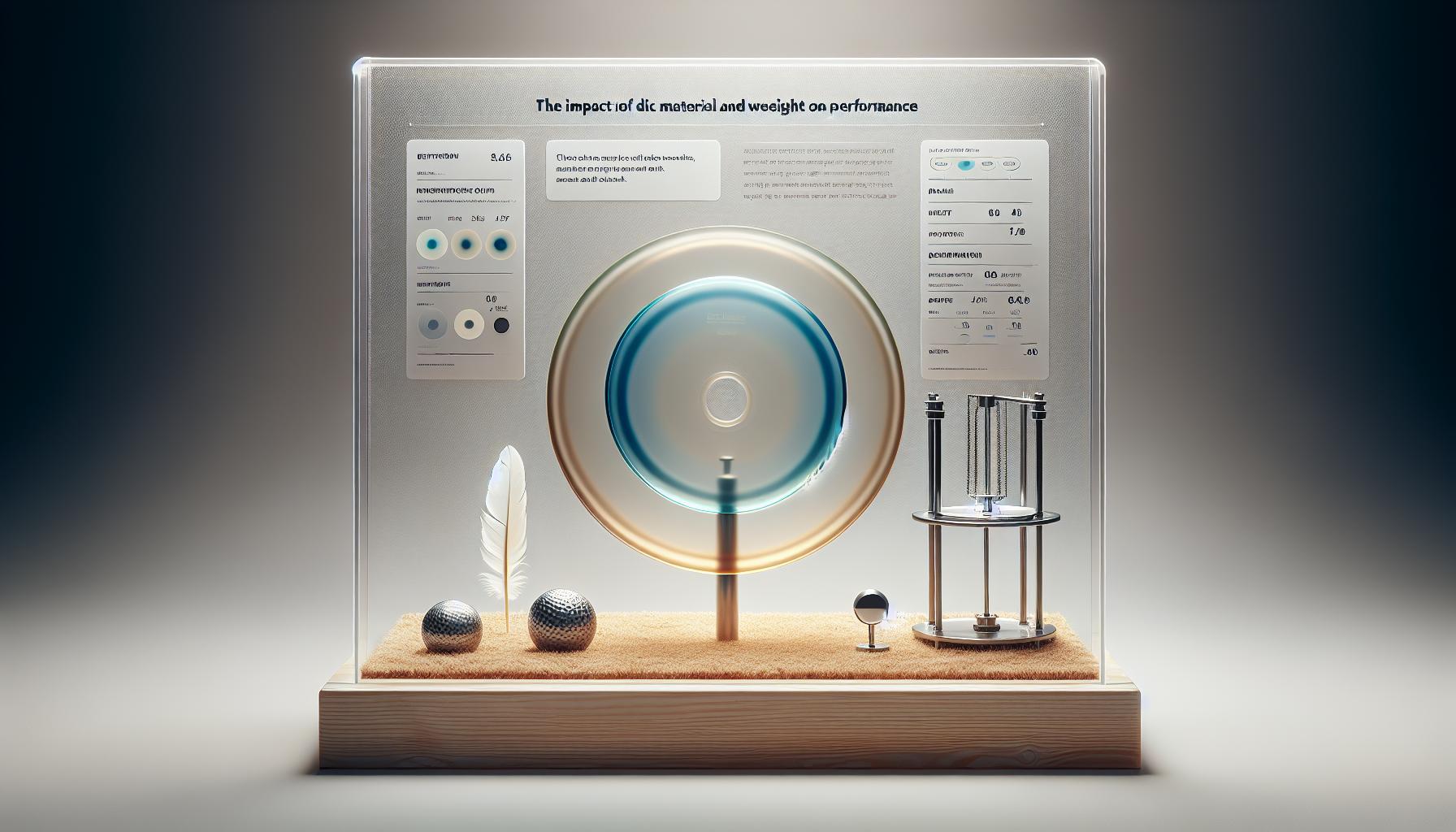
The choice of disc material and weight plays a crucial role in determining how a disc performs on the course, especially as it wears over time. Discs are typically made from various types of plastics, each impacting the disc’s overall flight characteristics. For instance, premium plastics offer enhanced durability and a longer lifespan, which is essential for maintaining flight consistency as the disc ages. Conversely, less durable materials may provide better grip and control initially but can wear down more quickly, leading to altered flight patterns sooner than expected.
Weight is another critical factor to consider. A heavier disc will generally have a more stable flight path and is less likely to be affected by wind conditions. However, it may not achieve the same distance as a lighter disc, which can provide increased lift and glide but may also turn more easily before it settles into a stable flight. This interplay between weight and material can influence a player’s decision on which discs to utilize based on their throwing style and level of skill.
As a player gains experience, understanding the dynamics of disc material and weight can help in selecting the right disc for specific courses or conditions. For example, many seasoned players keep a range of discs in various weights and materials to adapt to changing course conditions, allowing them to optimize their performance based on the current scenario. Newer players should experiment with different options to find the best fit for their individual throwing mechanics.
When breaking in a new disc, players are encouraged to note how the characteristics evolve with wear. Over time, a disc made of soft plastic may develop a smoother surface, enhancing glide but potentially sacrificing stability. Keeping a balanced bag with a variety of materials and weights ensures that players can effectively manage their flight paths, allowing for both controlled throws and loftier risks on challenging holes. Embracing this complexity not only improves individual performance but also enriches the overall experience of the sport.
Breaking In: Techniques to Enhance Disc Flight
There’s a certain thrill among disc golfers when it comes to breaking in a new disc. This process isn’t just about softening a rugged surface; it’s about unlocking a disc’s potential for optimized flight performance. A well-broken-in disc can exhibit distinct flight characteristics that allow for greater control and distance, making this phase essential for any serious player.
To enhance the flight of a new disc, players can employ several techniques. One effective method is the gradual “seasoning” of the disc through repeated, controlled throws in varying conditions. Start with gentle, smooth releases that focus on form rather than power. This practice helps the disc’s rim and surface gradually adjust to the player’s throwing mechanics while allowing it to begin conforming to its intended flight pattern. Incorporating different throwing styles, such as hyzer, anhyzer, and straight shots, will help the disc develop versatility and responsiveness.
Another popular method among seasoned players involves utilizing various throwing surfaces. Throwing against a softer surface, like a field or grass, can gently wear down the plastics without risking significant damage. In contrast, practicing on harder surfaces, like concrete, might accelerate wear but can also introduce undesirable unpredictability in flight. Ultimately, it’s a balance – selecting the right environment can make all the difference in how a disc ages.
Regularly inspecting the disc is crucial during this stage. Look for changes in feel and surface texture, as these indicators can signal the beginning of a disc’s true performance potential. Keeping a detailed log of throws and their respective distances and behaviors can help players track the evolution of their discs, allowing for strategic adjustments in gameplay. With patience and intentional practice, the breaking-in process can transform a new disc into a reliable ally on the course, enhancing the overall experience for both novices and experienced competitors alike.
Comparing New vs. Worn Discs: Performance Insights
When comparing the performance of new discs with their worn counterparts, players often notice significant differences in flight behavior and overall control. New discs typically have a sharper edge and a firmer plastic composition, which can result in a predictable, stable flight. However, this predictability comes at a cost-new discs often require a precise throwing technique and may be less forgiving of slight errors. As a player begins their journey with a fresh disc, they may find themselves battling the inherent stiffness and less-than-ideal grip, sometimes leading to frustrating throws that don’t reach their potential.
In contrast, worn discs boast a unique combination of flexibility and seasoned characteristics that can elevate a player’s game. Over time, the plastic develops micro-abrasions and surface changes that affect aerodynamics and grip, leading to what many players describe as a “magic” feel. These alterations enhance the disc’s ability to hold various lines, making it easier to execute complex throws like hyzer flips or controlled anhyzers. Players often appreciate the predictability of a well-worn disc, as it can provide a reliable response even when throwing under pressure.
Moreover, the breaking-in process plays a pivotal role in shaping each disc’s personality. New players might hesitate to wear their discs down, fearing they’ll lose distance or stability. Yet, seasoned players often embrace this process, recognizing that a “broken-in” disc can become a trusted companion in competition. They encourage newcomers to experiment with different throwing styles and conditions to help their discs reach this sought-after state.
To make a practical comparison, consider the following performance factors:
| Factor | New Discs | Worn Discs |
|---|---|---|
| Stability | More stable; predictable flight | Less stable; may hold lines better |
| Distance | Requires precise technique for maximum distance | Can cover distances with less effort |
| Control | Can be less forgiving of errors | Enhanced control; more versatile |
| Feel | Firm grip; less friction | Softened grip; can feel “alive” in the hand |
Ultimately, the choice between new and worn discs often comes down to personal preference and playing style. Newcomers are encouraged to embrace both types, learning how to maximize the benefits each stage offers. Meanwhile, seasoned veterans can fine-tune their arsenal by balancing new options for stability with their favorite older discs for increased versatility. In this way, the evolution from a new disc to a worn one becomes a shared journey that enriches not only individual play but also the broader disc golf community.
How Weather Conditions Affect Disc Flight
Weather plays a pivotal role in how discs perform, and understanding these effects can significantly enhance your game. For example, wind can dramatically alter the flight of your disc, regardless of whether it is new or broken-in. A new disc, with its more aerodynamic profile, can slice through calmer conditions with precision but may become challenging to control in gusty winds. In contrast, worn discs, which tend to have varying degrees of flex and surface texture, can sometimes respond more favorably to unpredictable conditions. Their adaptive nature allows them to maintain stability in the air, making them reliable companions when facing adverse weather.
Wind Effects on Disc Flight
When throwing in windy conditions, the trajectory of your throw will change depending on the wind’s direction. A headwind can cause your disc to stall out, requiring you to use a more overstable disc that can cut through the resistance. Conversely, a tailwind can propel your disc further, so using a slightly understable worn disc can help maximize distance, as they often glide better due to their smoother surface and prior flight patterns. Here are a few tips for adjusting to different wind conditions:
- Headwind: Opt for a more stable or overstable disc and throw with a lower angle to reduce lift.
- Tailwind: A worn disc can assist with added distance; try to release with a higher angle for optimal lift.
- Crosswind: Choose a disc that has been slightly broken in, as its unique flight characteristics will help manage stability.
Impact of Temperature and Humidity
Temperature and humidity also influence disc performance. Warmer temperatures generally make plastics softer and more pliable, aiding in grip and overall control. Therefore, a well-worn disc may feel more comfortable to throw in a humid setting, as its surface can grip better and respond to throwing mechanics more readily. In contrast, cooler weather may cause new discs to feel stiffer and less predictable, which can lead to misthrows if not properly adjusted for. It’s essential to monitor these conditions and, if necessary, adapt your throwing technique or choice of disc accordingly.
Real players often remark on their experiences in varying weather conditions, with many noting how a favorite worn disc provided unexpected benefits during a heated tournament day. The ability to adjust your strategy based on weather not only enhances game performance but builds confidence, making each round an opportunity for improvement and enjoyment in the sport. Embracing these variations helps you become not just a player, but a strategist who thrives in any condition.
Disc Golf Throwing Mechanics for Optimal Performance
Understanding the mechanics of throwing a disc is essential for players looking to improve their performance, especially when considering how a disc’s wear affects its flight characteristics. As discs break in over time, they undergo changes in stability, glide, and overall responsiveness, which directly impacts how they are thrown and how they perform under specific conditions. A well-worn disc can often provide a more reliable flight path, while understanding the mechanics of your throw will allow you to harness these characteristics for optimal performance.
To achieve an effective throw, it’s crucial to focus on several key mechanics. First, ensure that your grip is secure but not overly tight. A relaxed grip allows for a smoother release, which is especially critical with a broken-in disc that may require nuanced control to maximize its flight potential. As you prepare for your throw, position yourself in a stable stance, using your legs for power. Your weight should shift from your back foot to your front foot as you throw, utilizing your hips and torso to generate momentum. This biomechanics not only enhances distance but also keeps your throw consistent, regardless of the disc’s current state.
The angle at which you release the disc plays a significant role in determining its flight path. For worn discs, you might find that releasing at a slightly higher angle can optimize lift and glide due to the disc’s natural flexibility. In contrast, a new disc might need a more precise angle to achieve the desired stability. Experiment with varying angles to see how they alter the flight of your discs. For example, an understable worn disc can benefit from a gentle hyzer release to help it navigate through the air effectively, whereas an overstable disc may demand a more direct line to achieve maximum distance.
Finally, practice is essential to mastering your throwing technique and understanding how different discs behave after significant use. Regular drilling with both new and worn discs can help you recognize how wear affects flight dynamics and allow you to make the necessary adjustments in your throwing mechanics. As you become more aware of how worn discs can influence your throws, you’ll learn to tailor your approach to each disc’s unique characteristics, ultimately enhancing your overall game performance. Embrace the nuances of disc flight and always consider how mechanical improvements and equipment changes can lead to a more enjoyable and successful experience on the course.
Advanced Techniques for Mastering Disc Control
Mastering disc control is a pivotal skill for any disc golfer, particularly as you transition between new and worn discs that exhibit different flight characteristics. Understanding the nuances of how a disc’s wear impacts its behavior can elevate your performance on the course. One of the most critical techniques is adjusting your release angle. With a worn disc, you might find that a higher release angle enhances lift and glide, allowing it to navigate the air effectively. Conversely, a new disc may require a more specific angle to achieve desired stability. Experimenting with these angles during practice can help you discover the unique flight patterns of each disc.
Another essential technique involves refining your grip. A too-tight grip can stifle the release, making it challenging to attain the intended flight path. Instead, focus on maintaining a firm yet relaxed grip, which allows for a smoother release. This technique becomes especially crucial when dealing with worn discs, which often require more nuanced control to exploit their enhanced glide and reduced stability. As you practice, pay attention to how variations in grip pressure can alter the results of your throws. This awareness will lead you to greater consistency and precision in your game.
Incorporating various throwing techniques can also enhance your control. For instance, utilizing different stances-such as the open, square, or staggered stance-can affect your balance and throwing mechanics. A staggered stance may provide added stability for powerful throws, while an open stance could facilitate a more fluid motion for finesse shots, particularly with worn discs that may require delicate handling. Understand that each technique may produce different results, and adapting your approach based on the disc’s condition is key to mastering your throws.
Finally, observing and learning from others can be invaluable. Engaging with the disc golf community through clubs or tournaments allows you to exchange insights and techniques with players at various skill levels. Pay attention to how seasoned players utilize their worn discs, and don’t hesitate to ask for tips on techniques they’ve found effective. By combining your personal experiences with the wisdom of others, you can further hone your disc control skills, ultimately leading to improved performance and enjoyment on the course.
Player Experiences: Personal Stories on Disc Break-In
While many players tend to focus on the latest technology when selecting their discs, it’s the stories of seasoned players breaking in their discs that reveal a deeper understanding of flight mechanics and personal preference. A regularly shared experience in the disc golf community involves learning how a worn disc can shape a player’s style and strategy on the course. This notion is not merely anecdotal; personal stories highlight the dynamic relationship between disc condition and player performance.
For instance, let’s consider the journey of a player who initially struggled with distance and accuracy using new discs. After some time, they discovered that their well-worn mid-range disc had developed a unique feel and flight pattern. Through trial and error, they learned that the slight turn and added glide from this disc on specific throws helped them reach distances that simply weren’t achievable with the stiffer, new discs. This player’s experience emphasizes the importance of becoming attuned to the specific characteristics of a broken-in disc, adjusting their throwing technique to exploit the subtle changes in stability and glide.
Another illustration comes from a seasoned competitor who champions the personal break-in process as essential for mastering disc control. They shared that incorporating a stretched-out warm-up routine allowed the discs to flex more with their throws. This practice not only improved their accuracy but also led to miraculous comebacks in pressure situations. The player attributes much of their success to understanding how worn discs could provide a forgiving flight path, helping them navigate tricky courses with ease. This not only highlights special techniques for utilizing worn discs but celebrates the evolving nature of player preferences and skills over time.
Ultimately, these personal narratives emphasize that each player’s journey is unique, and breaking in discs is not a one-size-fits-all approach. Rather, it is a process that involves experimenting with throwing angles, grip adjustments, and even your emotional connection to the disc over time. Whether you are a newcomer or a seasoned competitor, embracing the break-in phase can transform your outlook and performance on the course. Understanding these experiences can enhance your gaming strategy, leading to lasting improvements in your disc golf journey.
Choosing the Right Disc for Your Skill Level
Choosing the right disc can significantly elevate your game, especially when considering how worn discs can differ dramatically in flight dynamics compared to their new counterparts. Many players, particularly beginners, may feel overwhelmed by the sheer variety of discs available, but understanding basic flight characteristics can guide you toward making an informed choice that best suits your skill level and throwing style.
When selecting a disc, it’s essential to consider the stability rating-this indicates how the disc behaves during flight. Discs are generally categorized as understable, stable, or overstable. For newer players, a stable or slightly understable disc often results in more forgiving flight patterns. These discs will typically provide easier distance and straighter lines, allowing players to focus on their throwing technique without being penalized by aggressive fade at the end of their flight.
Weight and Material Considerations
Another critical factor is the weight of the disc. Lighter discs are generally easier to throw for beginners, allowing for longer distances with less effort. As you gain strength and technique, gradually shifting to heavier discs can help improve control and precision. Additionally, the material of the disc plays a role in how it feels during flight. Softer blends can offer more grip but may wear quicker, changing the flight characteristics over time, while stiffer plastics tend to last longer, maintaining their original behavior for a more extended period.
When assessing your needs, taking inspiration from the community is invaluable. Countless players share their experiences with how certain discs in their bag have shaped their game. Some may find that their well-worn putter is their go-to choice for accuracy, even when they own newer models. Observing how worn discs behave differently can refine your approach to both your selection and maintaining a balanced set that caters to various course conditions.
In summary, finding the right disc involves more than just picking the latest high-tech model; it encompasses understanding the interplay of stability, weight, material, and personal throwing style. Embrace the journey-delve into the community for recommendations, try different styles, and be open to the nuances that worn disks bring to the game. By aligning your disc choices with your evolving skill level, you not only optimize your performance but also enhance your enjoyment of this thrilling sport.
Tips for New Players: Selecting and Caring for Discs
When stepping into the world of disc golf, it’s easy to feel overwhelmed by the wide array of discs and their varying flight characteristics. A fascinating aspect of disc dynamics is the way worn discs can alter flight performance, often in ways that seasoned players appreciate. Understanding how to select and care for your discs is crucial for enhancing your gameplay and enjoying the sport to its fullest.
Begin with your disc selection by considering the type of discs that suit your throwing style and skill level. For newcomers, stable and slightly understable discs tend to be more forgiving, offering straighter flight paths that help you build confidence in your throws. As you familiarize yourself with the sport, you might notice that certain discs in your bag feel just right, often influenced by how worn they are. Worn discs can provide different flight characteristics-like a more controlled fade or a gradual turnover-compared to brand-new ones, which can be an exciting aspect of using them effectively.
Caring for your discs is equally important to maintain their performance. Regular cleaning is essential; simply rinse them with water and gently scrub off any dirt or debris to ensure that they perform optimally. Avoid using harsh chemicals that could damage the plastic. Additionally, be mindful of how you store your discs. Keeping them out of extreme temperatures or direct sunlight will prevent warping or degradation of the material. When it comes to breaking in your discs, gradual use in varying conditions-such as practicing throws on different terrains-will help them adapt and improve their flight characteristics over time.
Lastly, engage with the thriving disc golf community to gain insights from fellow players. Whether in forums or local clubs, sharing experiences can shed light on which discs have worked well for others and how they manage their wear and tear. Many players find that their favorite discs evolve through consistent play, revealing unique subtlety in flight that can radically enhance their game. Embracing this community spirit not only enriches your understanding of disc selection and care but also fosters friendships anchored in this dynamic and ever-evolving sport.
The Evolution of Disc Technology and Its Impact on Play
The world of disc technology has undergone significant evolution since the inception of disc golf. This progression has not only transformed the performance of new discs but has also fundamentally altered the way worn discs interact with the environment, affecting their flight paths and overall playability. Modern manufacturing techniques have introduced a variety of materials and designs that cater to different throwing styles and skill levels, creating a substantial impact on how players experience the game.
Innovations such as superior plastics and enhanced aerodynamics have resulted in discs that are not only durable but also exhibit remarkable flight characteristics. For instance, premium plastics, like champion and star variations from manufacturers, offer players the benefit of longevity without losing performance. As these discs become worn, they often develop unique flight patterns that experienced players cherish. A disc that might have started as overstable in its new condition can become perfectly understable after a season of play, enabling players to achieve different shots that were previously out of reach.
To truly understand the impact of disc evolution on performance, it’s essential to consider how advancements in disc weight distribution and design tweak their behavior. Flight numbers-which represent a disc’s speed, glide, turn, and fade-can change dramatically as discs break in. New players often marvel at how their new discs may not fly as expected, while seasoned players know that with time and usage, they can achieve extraordinary results with what was once considered a simple new disc. Knowing how to read these flight characteristics based on wear allows players to adjust their skills accordingly, leveraging the unique aspects of their gear to navigate courses more effectively.
Moreover, technological advancements have facilitated personalized play experiences. Many disc manufacturers now offer customizable options, allowing players to create discs that cater specifically to their throwing style. This makes understanding the break-in process even more critical, as players can optimize their gear’s performance to suit their evolving skills. Engaging with the broader disc golf community-both online and offline-can further enhance this knowledge. Sharing insights and techniques about how discs behave as they age can foster camaraderie and spread valuable information, ultimately elevating the sport for newcomers and veterans alike.
In summary, the evolution of disc technology is an exciting landscape that continues to shape how players interact with the game. Understanding the dynamic relationship between new and worn discs, along with staying informed about technological developments, empowers players to maximize their performance and enjoy the rich, strategic depths of disc golf. As technology progresses, so too will the techniques and knowledge surrounding disc play, ensuring that every throw-new or broken in-holds the potential for greatness.
Faq
Q: How does the break-in process affect disc flight characteristics?
A: The break-in process makes discs more flexible and improves their glide, potentially increasing distance. As a disc wears, its surface smooths out, allowing better aerodynamics. This change can slightly alter the predictability of the disc’s flight path, making it crucial for players to understand their disc’s lifecycle.
Q: What are the signs that a disc is properly broken in?
A: A properly broken-in disc will demonstrate consistent flight paths and improved distance. Look for less rigidity and a smoother glide. Additionally, the disc may start to fade less sharply and exhibit a slight change in stability, making it easier to control during throws.
Q: Can weather conditions impact the disc break-in process?
A: Yes, weather conditions significantly influence the break-in process. Humidity can soften the disc material, accelerating wear, while cold weather can make discs stiffer, slowing down the break-in. Players should consider wearing discs on different days to understand how their flight behavior changes based on conditions.
Q: Are there specific techniques for breaking in a disc faster?
A: To break in a disc faster, players can use techniques such as high-speed throws, rolling on a smooth surface, checking the disc against other objects, or simply frequent use in practice rounds. However, be mindful to avoid excessive abrasion, which could lead to unwanted wear.
Q: How does a worn disc compare to a new disc in terms of performance?
A: A worn disc often offers smoother glides and extended distance, while a new disc typically retains a sharper and more predictable flight. Players may prefer worn discs for specific shots but should ensure they have well-rounded options to cater to various course demands.
Q: What factors determine how quickly a disc breaks in?
A: Several factors influence the break-in time, including disc material, weight, and usage frequency. More flexible materials will break in faster than rigid ones. Regular play and varied throwing styles are also key in accelerating the break-in phase.
Q: Can different brands of discs have varying break-in characteristics?
A: Absolutely! Different brands use varied plastic blends and manufacturing techniques, leading to discrepancies in how discs break in. Players should experiment with multiple brands to find the ones that fit their style and preferred flight patterns best.
Q: What should players consider when selecting discs for break-in?
A: When selecting discs for break-in, players should consider the disc’s plastic type, weight, and their intended throw style*. Choosing a slightly more understable disc can facilitate a better gradual break-in process, tailoring to evolving player skill and course challenges.
The Conclusion
Understanding how worn discs fly differently can transform your game and elevate your skills on the course. As you refine your technique, remember that the break-in process is key to mastering disc flight characteristics. Don’t miss out on optimizing your performance-explore our guides on throwing mechanics and disc selection to find the perfect fit for your style.
Ready to take action? Join our newsletter for exclusive tips and resources that will keep you ahead of the competition and informed about the latest in disc golf. If you found this article valuable, share your thoughts in the comments or connect with fellow enthusiasts to discuss your experiences. Together, let’s celebrate and grow this amazing sport! Engage further with our comprehensive articles on course strategy and competitive tournaments, and come back for more insights that empower you to thrive in your disc golf journey.
Get our latest guides, news, and insights highlighted in your Google Search & AI Overviews.