Disc golf, a sport that combines precision, skill, and strategy, is gaining momentum globally, attracting players at all levels. Among the most critical aspects of mastering this game is understanding the relationship between disc speed and the power needed to effectively throw high-speed discs. You may wonder if using these discs truly demands more power or if technique plays a larger role in achieving distance and accuracy.
In this article, we’ll explore the dynamics of disc flight, the mechanics of your throw, and how these factors influence your overall performance. Whether you’re a recreational player looking to improve your game or a seasoned competitor seeking that extra edge, grasping these power requirements can elevate your disc golf experience. Join us as we break down the intricacies of throwing high-speed discs, helping you tap into the potential of every throw for enhanced performance on the course.
Understanding High-Speed Discs: What Are They?
High-speed discs are a fascinating element of disc golf, appealing not only to seasoned players but also to those new to the sport. These discs are designed to cut through the air with minimal resistance, allowing for longer throws and greater control in flight. Understanding what high-speed discs are and their unique characteristics is essential for players who want to enhance their game and maximize their throwing power.
A high-speed disc typically has a speed rating of 13 or higher, indicating that it is crafted for distance and performance. Unlike slower discs, which may have more pronounced stability but a limited range, high-speed discs require a certain level of skill and technique to unleash their full potential. The key to effectively throwing high-speed discs lies in the thrower’s ability to generate enough power and speed on the release. This means that players often find themselves making adjustments to their form and grip compared to when they throw traditional discs.
One important aspect of high-speed discs is their aerodynamics. They are designed with sharper edges and a more pronounced profile, which helps them slice through the wind efficiently. This design not only aids in achieving greater distances but also affects how the disc behaves in flight-offering varying degrees of stability, glide, and fade based on the specific disc model. As a player, choosing the right high-speed disc involves understanding these flight characteristics as well as your own throwing style.
To maximize the benefits of high-speed discs, players should focus on developing their mechanics and building adequate muscle memory. Proper grip, stance, and follow-through are critical in ensuring that the disc is launched correctly. Investing time to practice with these discs can lead to significant improvements in both distance and accuracy, making high-speed discs a vital tool in any disc golfer’s arsenal.
High-speed discs not only elevate the competitive edge of a player’s game but also represent the exciting possibilities within the sport itself, encouraging players at all levels to push their boundaries and explore new techniques.
The Science Behind Throwing Power Requirements
To achieve impressive distances with high-speed discs, understanding the fundamental power requirements is essential. High-speed discs, typically rated 13 or above on the speed scale, demand not only precision but also sufficient throwing force to maximize their aerodynamic design. Unlike slower discs, which might respond effectively to moderate power, high-speed discs excel when released with explosive force, making it crucial for players to focus on their technique and physical conditioning.
The mechanics of throwing power involve several key components: grip, stance, and follow-through. A strong grip ensures that the disc doesn’t slip during the throw, while a stable stance allows for a solid foundation from which to exert force. In executing the throw, players should engage their entire body, generating power from the legs through the torso and into the arm. This kinetic chain can significantly increase the velocity of the disc upon release.
For practical tips, consider the following strategies to enhance your throwing power with high-speed discs:
- Practice Your Form: Focus on your footwork and body rotation, integrating your hips and shoulders into the throw for better force generation.
- Increase Strength: Incorporate strength training specific to core and shoulder muscles, which play a pivotal role in throwing performance.
- Drill for Consistency: Use performance drills that simulate the rapid release needed for high-speed discs, honing the muscle memory required for effective throws.
Another important aspect to consider is the release angle and timing. For high-speed discs, a flat release often results in optimal flight paths, allowing the disc to take full advantage of its aerodynamic features. Players should practice achieving this angle through repetitive throws, paying attention to the nuances of each release.
In compelling competitive environments, understanding and applying these principles can set players apart. High-speed discs can revolutionize throwing techniques and elevate performance levels, encouraging athletes to refine their strategies and push their limits on the course. Through commitment to technique and power development, players can unleash the full potential of their high-speed discs, transforming their gameplay and enjoyment of this dynamic sport.
How Disc Weight Affects Flight and Power
Understanding is crucial for players looking to maximize their performance with high-speed discs. Heavier discs tend to have more stability in windy conditions, cutting through the air with less drift, which can be particularly beneficial for making accurate throws in challenging weather. Conversely, lighter discs can achieve greater distances but might require more finesse in terms of throwing power and technique to achieve the desired flight path.
When selecting a disc, consider its weight as it directly influences how much power you need. A heavier disc-typically ranging from 175 grams-demands a strong throw to achieve a long distance but offers more predictability in flight. This is especially important for advanced players who can generate the necessary power. Lighter discs, on the other hand, can benefit beginners who may not yet possess the arm strength or technique to handle heavier discs efficiently. A lighter disc allows for easier control and longer throws with less exertion, making it a preferred choice for developing players looking to enhance their skills.
Additionally, the interplay between disc weight and throwing mechanics cannot be underestimated. When throwing a lighter disc, players can generate speed and distance through technique alone-utilizing body mechanics effectively to launch the disc at optimal angles. For instance, a well-timed hip rotation and core engagement can substantially increase the distance of a lighter disc throw, while a heavier disc might require more pure strength and explosiveness from the legs and core.
Choosing the right disc for your skill level and style of play can make a significant difference. Here’s a quick comparison:
| Disc Weight | Flight Characteristics | Best For |
|---|---|---|
| 175 grams | Stable flight, less affected by wind | Advanced players, windy conditions |
| 150-160 grams | Longer flight, easier to throw | Beginners, players seeking greater distance |
Ultimately, understanding how disc weight influences flight dynamics and power output will empower disc golfers to make informed decisions about their gear, enhancing their overall game. Whether you’re an experienced competitor refining your technique or a newcomer eager to learn, recognizing these nuances will guide you in selecting the right disc for your unique style and playing conditions.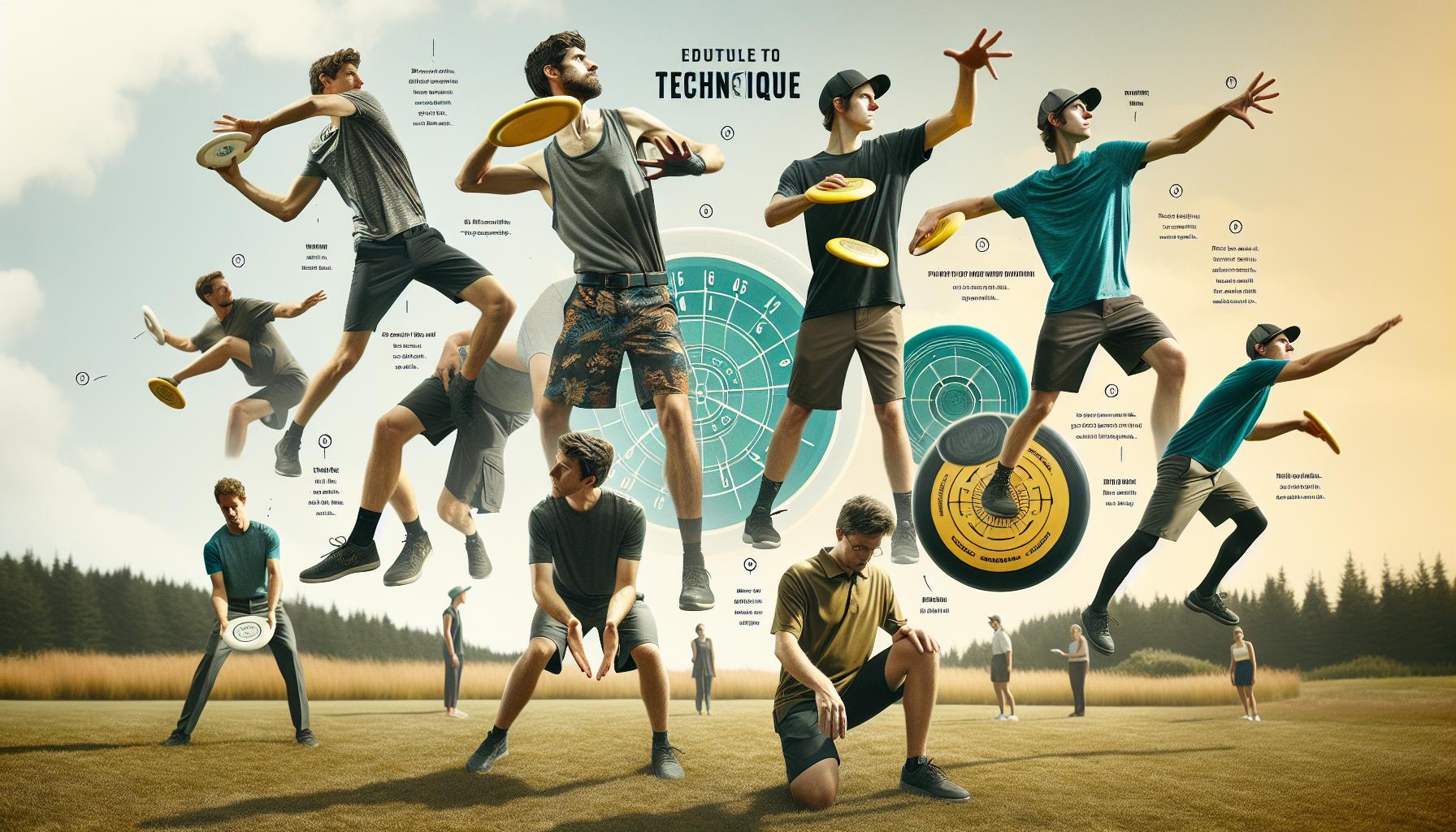
Technique Tips for Throwing High-Speed Discs
To harness the full potential of high-speed discs, mastering technique is essential. These discs are designed for advanced performance, often requiring a blend of power, precision, and finesse in throwing mechanics. Developing a solid foundation in technique not only maximizes your distance but also enhances your control, allowing for better execution in various course conditions.
Grip and Stance
Begin with your grip. For high-speed throws, an *power grip* is generally recommended. This involves placing your index and middle fingers inside the rim of the disc, with your thumb firmly on top. A strong grip ensures stability and allows you to generate spin, which is crucial for achieving optimal flight paths. Your stance should be shoulder-width apart, with your knees slightly bent and your weight balanced. This position prepares you for a strong, fluid motion.
Body Mechanics and Timing
Proper body mechanics significantly influence the power you can generate. Start with your non-throwing shoulder facing your target, as this allows you to build tension in your body. As you initiate your throw, shift your weight from your back foot to your front foot while rotating your hips and shoulders. Timing is key: ensure that your body moves in unison, allowing your arm to follow through smoothly. A common mistake is to rely solely on arm strength rather than a coordinated body movement, which can diminish the power and control of your throw.
Follow Through and Release
The follow-through is just as crucial as your initial motion. As you release the disc, aim for a clean snap of your wrist to produce additional spin. Your arm should extend fully towards your target, and your body should naturally follow your arm’s motion. This not only increases power but also helps in controlling the angle and trajectory of the disc. Aim for a balanced finish; your stability at the end of the throw contributes to accuracy in subsequent throws.
By focusing on these techniques-grip, body mechanics, and follow-through-you will be well on your way to effectively throwing high-speed discs. Like any skill in disc golf, practice is vital. Work on drills that reinforce these fundamentals, such as throwing at various angles, and evaluate your progress through video analysis or feedback from peers. With commitment to refining your technique, you’ll find that high-speed discs become a powerful tool in your game.
Maximizing Distance: Power Throws & Techniques
Maximizing distance with high-speed discs requires an understanding of both throwing power and technique. Unlike traditional discs, high-speed discs are designed to cut through the air more efficiently, enabling longer flights when thrown with the right power and mechanics. For players looking to unleash the full potential of their high-speed discs, focusing on the synergy between strength, precision, and timing is essential.
To begin with, generating maximum power isn’t merely about muscle; it’s also about proper technique and body mechanics. Start by ensuring your grip is secure yet relaxed. A common grip for power throws is the power grip, where your index and middle fingers are firmly embedded in the rim and your thumb presses down on top. This grip helps maintain stability during the throw while allowing the disc to spin freely.
Next, your stance plays a crucial role in your overall power output. Keep your feet shoulder-width apart with your knees slightly bent, enabling a strong base. As you prepare to throw, align your non-throwing shoulder toward your target. This positioning not only gets your body into an ideal angle for generating torque but also sets up a natural weight transfer when you begin your throw. As you initiate your motion, shift your weight from your back foot to your front foot. Simultaneously, rotate your hips and shoulders towards the target-a key element in maximizing throw power.
The timing of your release is equally important. As you unleash your throw, focus on snapping your wrist at the moment of release. This snap adds spin to the disc, which is critical for stability and distance. Aim to fully extend your arm toward the target while keeping your follow-through smooth and controlled. A strong follow-through maintains your balance and prepares you for the next throw, ensuring that you’re not just throwing for power but also for precision.
Lastly, consider integrating practice drills that allow you to experiment with various grips, stances, and follow-throughs to find what maximizes your personal distance potential. Analyzing your form through video can identify areas for improvement, and regular feedback from peers can enhance your understanding of what techniques work best. By adopting these strategies, you’ll not only improve your distance but also solidify your status as a formidable competitor in the growing sport of disc golf.
The Role of Wind and Terrain in Disc Golf
Understanding how environmental factors influence your disc flight is essential for mastering high-speed discs. Wind and terrain can dramatically alter the performance of your throws, making it crucial for players to adjust their tactics accordingly.
When it comes to wind, a strong headwind can significantly increase the amount of power needed to achieve the desired distance. This is because the wind pushes against the disc’s flight path, creating resistance that demands more power to maintain momentum. To counter this effect, players often need to adopt a lower release angle and adjust their throwing technique to ensure the disc cuts through the air effectively. On the other hand, a tailwind can help propel the disc forward, allowing for longer flights with less effort. Understanding how to utilize tailwinds while modifying your grip and release point can maximize your distance.
Terrain also plays a vital role in disc golf strategies. Uphill throws typically require additional power due to the gravity at play, while downhill throws may allow for more leeway in terms of power since gravity assists in propelling the disc. Additionally, uneven ground can affect your stance and balance, which in turn influences your throwing mechanics. For instance, if you’re throwing from an elevated position, your follow-through might need to adjust to maintain balance and control. A solid understanding of the terrain will allow players to make informed choices about disc selection and throwing techniques.
Adapting to both wind and terrain not only enhances your performance but also builds your confidence as a player. Regularly practicing in varying conditions will make you more adept at responding to these factors during competitive play. Engaging with the disc golf community for shared experiences and strategies can further enrich your approach, enabling you to tackle these environmental challenges with skill and poise.
Comparing Different Disc Types: Which Needs More Power?
Every disc golfer knows that not all discs are created equal, especially when it comes to the power required to throw them effectively. High-speed discs, often referred to as drivers, typically have a higher speed rating and are designed to achieve maximum distance with less effort. However, the relationship between disc type and the power needed to throw them effectively can vary significantly based on several factors, including the disc’s weight, shape, and intended flight pattern.
When comparing different types of discs, it’s important to understand that high-speed drivers generally require more throwing power than putters or mid-ranges. This is because drivers are engineered for speed and distance; they have sharper profiles that slice through the air more efficiently. If you’re looking to find out which discs need more power, consider the following categories:
- Distance Drivers: These are the kings of the course when it comes to maximum distance. They typically range from 11 to 14 on the speed scale. Requiring significant power to reach their potential, players often need a better technique and greater arm strength to unlock the long, sweeping flights they promise.
- Fairway Drivers: These discs, with speed ratings usually between 7 and 10, balance control and distance. They can be thrown with less power than distance drivers while still achieving impressive distance. Due to their stability, they can be more forgiving for those still developing their throwing technique.
- Mid-Range Discs: Mid-ranges (speed 4 to 6) offer versatility for approaches and shorter drives. They demand less power, making them ideal for beginners or those perfecting their technique. These discs typically have a better glide factor, allowing them to achieve distance even with moderate power.
- Putters: With speed ratings around 2 to 4, putters are designed for precision rather than distance. They require the least amount of power, allowing players to focus on accuracy and touch when executing short-range shots.
Understanding the distinct needs of each disc type can help you select the right equipment for your playing style and ability. Each disc offers unique flight characteristics; therefore, knowing which ones demand more power versus those that maximize control is crucial for improving your overall game. As you progress in your disc golf journey, you’ll likely experiment with different types and find what works best for you, ultimately leading to more enjoyable and successful rounds on the course.
In conclusion, while high-speed discs are built for power, mastering them requires a combination of strength, technique, and understanding of the disc itself. Whether you’re a newcomer eager to learn or an experienced competitor fine-tuning your skills, recognizing the power dynamics between different disc types is a vital step toward becoming a formidable player in the growing world of disc golf.
Injury Prevention Through Proper Throwing Mechanics
Proper throwing mechanics are critical for preventing injuries while maximizing performance in disc golf, especially when working with high-speed discs. The need for power in your throws increases significantly with these drivers, making it essential to cultivate a technique that safely harnesses that strength. Not only does this help achieve greater distances, but it also minimizes the risk of strain and injury over time.
A common mistake many disc golfers make is attempting to throw harder without refining their form. Instead of focusing solely on generating power, concentrate on the following key aspects of throwing mechanics:
- Stance and Balance: Begin with a solid foundation. Your feet should be shoulder-width apart for stability, with your weight evenly distributed. As you prepare to throw, shift your weight onto your back foot to store potential energy.
- Grip and Release: How you grip the disc can dramatically affect your throw. Ensure a firm grip without over-tightening, which can lead to wrist injuries. As you release, follow through smoothly to prevent snap-back motions that could harm your shoulder.
- Follow Through: An effective follow-through is as crucial as the initial throw. Don’t halt abruptly; allow your arm to extend fully and rotate naturally. This not only enhances your throw’s distance but also reduces undue stress on muscular structures.
Each of these elements contributes to a more natural throwing motion, which is instrumental in avoiding injuries like shoulder impingements or elbow strains. The kinetic chain-from your feet through to your fingers-must be fluid; improper mechanics can lead to energy leaks and increased stress on specific body parts.
To further bolster your injury prevention strategy, consider incorporating flexibility and strength training into your routine. Strengthening your core and shoulder muscles, along with improving your overall flexibility, can drastically enhance your stability and throwing power while also protecting against injuries. Engaging in specific exercises that target the shoulder girdle, such as rotational band exercises, can make a significant difference in your performance and longevity in the sport.
By prioritizing proper mechanics and conditioning, you not only improve your game but also ensure that you can enjoy disc golf for years to come, fostering a healthier, more sustainable athletic practice.
Essential Gear for High-Speed Disc Golf
Investing in the right gear can significantly elevate your game, particularly when it comes to high-speed discs. These discs are designed to cut through the air efficiently and require a robust throwing technique to harness their full potential. When you’re looking to enhance your performance, understanding the essentials of disc golf gear becomes crucial. High-speed discs not only demand more power but also benefit from specialized equipment that complements their design and flight characteristics.
Choosing the right high-speed disc involves understanding various factors, including stability, weight, and material. Most high-speed drivers have a narrow profile and are typically rated with a speed of 13 or higher. Relying on disc brands known for quality and consistency, such as Innova, Discmania, or Dynamic Discs, ensures that you’re using discs that can withstand repeated power throws without warping or changing flight dynamics.
When it comes to maximizing your throw’s power and efficiency, proper footwear plays an important role. Look for shoes that provide excellent grip and support, allowing for a stable stance during your throw. Whether you’re playing on grassy fields or rugged terrain, your footwear should keep you grounded and agile. Another essential piece of equipment is a quality bag that can accommodate not just your high-speed discs but also various putters and mid-range discs for different situations on the course. A well-organized bag with padded compartments protects your gear and allows for quick access during play.
Furthermore, consider utilizing training tools such as weighted discs or practice targets. Weighted discs help build the necessary muscle strength and technique for throwing high-speed drivers effectively, while practice targets can help refine your accuracy. Supplement your gear with accessories like gloves designed for grip enhancement and wrist support to improve throwing mechanics and prevent strain during those powerful throws.
Ultimately, equipping yourself with the essential gear tailored for high-speed discs fosters both performance improvement and injury prevention, enabling you to approach the game more confidently. Whether you’re a newcomer or a seasoned player, prioritizing the right equipment will help you unlock your potential on the disc golf course.
Insights from Pro Players on Power Throws
Harnessing the knowledge and experience of professional players can provide invaluable insights for anyone looking to improve their power throws with high-speed discs. One recurring theme among pros is the importance of core strength and body mechanics. Many elite players emphasize that power comes not just from the arms but from a well-coordinated movement that engages the entire body. Disc golf champion Paul McBeth often highlights the role of footwork in generating torque, suggesting that players focus on a strong pivot and follow through for maximum distance.
Proper grip and release also play critical roles in achieving the necessary spin and velocity required for high-speed discs. Pro player Eagle McMahon recommends practicing the “power grip”-holding the disc firmly but without tension. This grip facilitates a smooth release and helps send the disc flying with speed and stability. Additionally, taking the time to study disc flight patterns and understanding how different high-speed drivers respond to varying levels of power can aid players in tailoring their throws to specific course conditions.
Another common piece of advice is to learn how to adjust your power based on the environment. Experienced players like Ricky Wysocki have discussed how conditions such as wind and elevation can require changes in throwing technique. For instance, when throwing against a headwind, increasing your angle of release can help keep the disc stable, while a tailwind might allow for a more aggressive throw.
Lastly, integrating consistent practice with feedback is vital for developing throwing power. Pro players often suggest recording throws to analyze form and mechanics or working with a coach to refine technique. Following their lead, players should focus not only on power but also on precision, ensuring that every throw counts towards building the skills necessary for competitive play. By adopting these strategies and insights from the pros, players of all levels can enhance their throwing capabilities and maximize their distances on the course.
Strategies for Different Skill Levels in Disc Golf
Mastering high-speed discs in disc golf requires an understanding of your skill level and how it influences your throwing technique and power requirements. Whether you’re a novice just getting started or a seasoned competitor aiming to enhance your game, the strategies to effectively use these discs will vary significantly. It’s essential to recognize that high-speed discs are designed for experienced players who can generate sufficient spin and power to make use of their advanced flight characteristics.
Beginners should focus on fundamental skills before tackling high-speed discs. It’s crucial to build a solid throwing foundation by practicing with mid-range or fairway drivers, which are generally more forgiving and easier to control. Once a comfortable level of accuracy and technique is established, moving to high-speed drivers can amplify performance. New players should prioritize achieving a proper grip, as demonstrated by pros like Eagle McMahon, and mastering the basic throwing mechanics. Practicing with lighter discs can help in this progression, allowing players to develop the necessary muscle memory and confidence to transition to heavier, high-speed models.
For intermediate players looking to refine their game, the focus should shift towards integrating more advanced techniques. This includes experimenting with grip variations to enhance release velocity and working on footwork to generate torque. Understanding how different discs behave in various conditions is also vital. Using tools like a flight chart can help identify which disc models work best under certain wind conditions, thereby empowering players to make informed choices during play. Regular drills aimed at increasing arm speed and strength, combined with video analysis of throws, can foster substantial improvements.
Experienced players, on the other hand, should concentrate on optimizing their throwing techniques to harness the full potential of high-speed discs. This means not only increasing throw power but also mastering the subtleties of angle control and spin release. Competitive players often emphasize the importance of consistency in their mechanics; even the smallest variation can dramatically affect distance and accuracy. Moreover, understanding competitive strategies, such as adjusting power levels based on course terrain and wind conditions, is vital for achieving optimal performance during tournaments.
In conclusion, regardless of skill level, the path to effectively using high-speed discs entails a journey of continual learning and adaptation. By focusing on the tailored strategies that align with your current abilities, you can develop a powerful and precise throwing technique that will enhance your performance on the disc golf course. As you grow into your disc golf journey, remember that every expert was once a beginner; persistence, practice, and proper technique will illuminate the path to becoming a proficient player.
Building Endurance for Powerful Disc Throws
The ability to throw high-speed discs effectively hinges not only on technique but significantly on endurance and strength. Just like any athlete, those who excel in disc golf require a well-rounded physical foundation that allows them to generate the necessary power for those long, soaring throws. Without adequate endurance, even the fiercest competitor can falter in performance, especially during prolonged rounds or tournament play.
Building endurance begins with understanding the muscle groups involved in disc throwing-primarily the shoulders, arms, and core. By integrating specific strength and conditioning exercises, players can enhance their overall stamina. Consider incorporating
- Resistance training: Focus on compound movements like squats, deadlifts, and bench press to develop core strength and stability.
- Rotational exercises: Engage in medicine ball throws or cable rotations to mimic the twisting motion of a disc throw, which is crucial for generating power.
- Cardiovascular activities: Activities such as running, cycling, or swimming can improve heart and lung capacity, essential for sustaining energy levels during long rounds.
Moreover, incorporating throwing practice into your fitness routine is vital. Dedicate time each week to practice your throws, gradually increasing the volume and intensity as your body adapts. Start with shorter distances to focus on form, then increase the distance as your endurance builds. User-friendly tools like weighted discs or training aids can also enhance muscle memory and allow players to feel the motion and power needed for high-speed throws without the added physical strain of heavier discs.
Consistency is key in any training program. By setting realistic goals and gradually increasing the intensity of your workouts, you ensure that your body adapts efficiently without risking injury. For players looking to maximize their output on the course, it’s also important to incorporate rest and recovery into your routine-muscles need time to rebuild stronger and more resilient. Consider active recovery techniques like yoga or light jogging to aid in recovery while still keeping muscles engaged.
In conclusion, is a multifaceted approach combining targeted strength training, consistent practice, and proper recovery. As part of this journey, remember that every player has their unique pace; embrace the process, listen to your body, and enjoy the growth both in skill and physical capability. By fostering endurance, you not only improve your throwing power but your overall enjoyment and performance on the course.
Faq
Q: Do high-speed discs need more arm strength to throw?
A: Yes, high-speed discs generally require more arm strength and technique to achieve optimal distance and accuracy. To effectively utilize these discs, players must focus on building core and shoulder strength while practicing proper throwing mechanics. Consider incorporating strength training exercises to enhance your power throws.
Q: What throwing techniques are best for high-speed discs?
A: To maximize performance with high-speed discs, emphasize a smooth, explosive throwing technique. Start with a strong grip, engage your hips, and follow through fully. Practicing wrist snap and stabilizing your elbow will further improve your throw. Explore more about techniques in the “Technique Tips for Throwing High-Speed Discs” section.
Q: At what distance do high-speed discs perform best?
A: High-speed discs excel at distances of 300 feet and beyond, benefiting from additional throwing power. They are designed for advanced players who can deliver the speed necessary for optimal flight. Understanding the relationship between speed and distance can enhance your game experience.
Q: Why are some players hesitant to use high-speed discs?
A: Many players hesitate to use high-speed discs due to concerns about control and power requirements. Beginners or less experienced players may find these discs harder to manage. It’s important to develop your technique and gradually incorporate high-speed discs as your skills improve.
Q: How does wind affect throwing a high-speed disc?
A: Wind can significantly influence the flight path of high-speed discs. Strong winds can cause these discs to hyzer or anhyzer unexpectedly. Players should adjust their throw angle and stability based on wind conditions, ensuring they understand how varying wind affects their throws.
Q: Can using a high-speed disc lead to injuries?
A: Using high-speed discs without proper technique can increase the risk of injuries, particularly in the shoulder and elbow. It’s crucial to maintain good form and warm up properly before practice. Explore strategies for injury prevention in the “Injury Prevention Through Proper Throwing Mechanics” section.
Q: What materials are high-speed discs typically made of?
A: Most high-speed discs are made from durable plastics that offer flexibility and stability. These materials help the disc achieve its intended flight characteristics while withstanding various conditions on the course. Understanding the material properties can guide you in selecting the right disc for your play style.
Q: How can I transition from using slower discs to high-speed discs?
A: To transition effectively, start by gradually incorporating high-speed discs into your practice sessions. Focus on developing your throwing technique and building strength. Track your progress with both disc types to understand how power impacts your game. For more tips, check the sections on “Strategies for Different Skill Levels in Disc Golf.”
Insights and Conclusions
Now that you understand the power requirements for high-speed discs in disc golf, take your game to the next level! Choosing the right disc is crucial, and a solid throwing technique will maximize your distance and accuracy. Don’t forget to check out our guides on improving your throwing mechanics and exploring different disc types to find the perfect fit for your play style.
Ready to make your disc golf experience even better? Join our community by signing up for our newsletter for exclusive tips and insights, or visit our product pages to discover the latest gear that meets your needs. If you have questions or want to share your own experiences, feel free to leave a comment below.
Dive deeper into the world of disc golf with resources on course strategy and competitive playing techniques. Your journey to mastering high-speed discs starts today-embrace the challenge and enjoy every throw!