
Did you know that disc golf is one of the fastest-growing sports, attracting players of all ages? One of the biggest questions newcomers often have is about the difference in size between disc golf discs and regular frisbees. Understanding this distinction is crucial for both performance and enjoyment as it affects throwing techniques, disc flight, and overall gameplay. While frisbees are generally larger and designed for casual fun, disc golf discs are engineered with specific dimensions and weights to enhance accuracy and control on the course. Whether you’re a seasoned player or just curious about the sport, knowing how these discs compare can help you choose the right equipment and elevate your game. Read on to discover the fascinating details behind disc sizes and learn why it matters in your disc golf journey!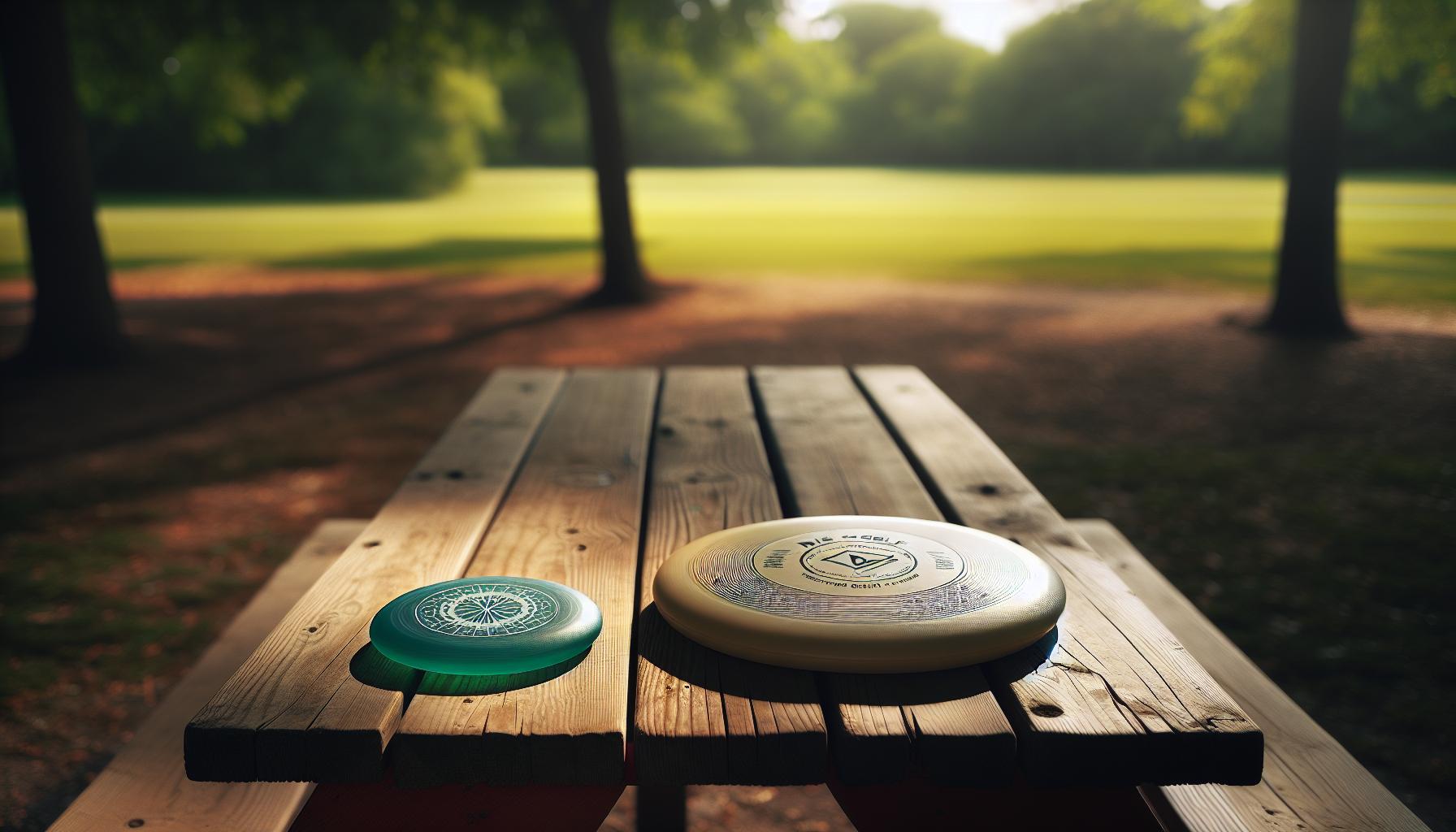
Size Differences: Disc Golf vs. Regular Frisbees
Understanding the differences in size between disc golf discs and regular frisbees is crucial for players at all levels. While both are designed for throwing and catching, disc golf discs are meticulously engineered to meet the demands of a sport that values precision, aerodynamics, and varied performance characteristics. Regular frisbees typically have a larger diameter, averaging around 10-12 inches, while disc golf discs range from 8-9 inches in diameter. This smaller size not only enhances aerodynamics, allowing for greater accuracy and distance, but also promotes a tailored grip for more controlled throws.
The reduced size of disc golf discs serves specific functions in gameplay. A smaller diameter means less air resistance, allowing the disc to slice through the wind more efficiently. This is particularly beneficial when navigating the varied conditions often encountered on a disc golf course. Moreover, the shape and design differences, such as a sharper edge and lower profile in disc golf discs, facilitate various flight paths to suit different throwing techniques. For players transitioning from casual frisbee throwing to disc golf, adjusting to the different size and weight can significantly impact their throwing mechanics and overall performance.
Additionally, disc golf discs are specifically designed for various throwing styles, which can contribute to differences in size. Throwing techniques in disc golf often require a more precise release angle and power distribution. Players can choose from a range of disc types-drivers, midranges, and putters-each tailored for unique roles within a game. With a focus on performance, disc golf designs ensure that players can achieve optimal flight characteristics based on the course layout and conditions. Thus, recognizing these size differences is fundamental for both new and experienced players aiming to improve their skills and enjoy the sport.
Understanding Disc Golf Discs: Types and Specifications
In the sport of disc golf, understanding the variety of discs available and their specifications is essential for any player looking to elevate their game. Disc golf discs are not only smaller than regular frisbees, but they are also designed for specific roles that cater to the nuanced demands of the sport. Typically, these discs are categorized into three main types: drivers, midranges, and putters, each tailored to achieve distinct flight patterns and performance characteristics.
Types of Discs
- Drivers:
– These are among the fastest discs, crafted for long-distance throws. They have a thicker profile and a sharp edge, which helps them cut through the air with minimal resistance. Most players use drivers for the initial throw from the tee pad, aiming for maximum distance.
– Examples: Distance drivers like the Innova Destroyer or the Discraft Nuke, designed for players with more power in their throws.
- Midranges:
– Offering versatility, midrange discs are ideal for precise throws that require control rather than sheer distance. They typically have a flatter profile compared to drivers and provide a reliable flight path, making them perfect for approach shots and shorter distances.
– Examples: Discs like the Innova Roc or the Latitude 64 Diamond, which are popular among players for their balanced performance.
- Putters:
– These discs are designed for accuracy and control, primarily used for short throws and in putting situations. They have a wider diameter and a deeper profile, which aids stability during lower-speed throws and provides a comfortable grip.
– Examples: Popular putters include the Innova Aviar and the Gateway Wizard, renowned for their reliable and consistent performances.
Specifications and Performance
The specifications of these discs-such as weight, diameter, and rim width-play a critical role in how a disc performs. For instance, lighter discs typically require less power to achieve a distance, making them easier for beginners to handle. On the other hand, heavier discs are often preferred by experienced players who can generate more arm speed, allowing for a more controlled and stable flight.
Here’s a quick overview of key specifications:
| Disc Type | Diameter (inches) | Weight Range (grams) |
|---|---|---|
| Driver | 8.0 – 9.5 | 150 – 175 |
| Midrange | 8.0 – 9.0 | 160 – 180 |
| Putter | 8.0 – 10.0 | 150 – 175 |
Choosing the right disc is a journey that often involves trial and error, but understanding the specifications and intended use of each type can immensely help beginners and seasoned players alike in optimizing their performance on the course. Embracing the diversity of disc types allows players to craft their strategies, expanding their skill set while deepening their appreciation for the sport.
Why Disc Golf Discs Are Smaller: Aerodynamics Explained
The design and size of disc golf discs are crucial for their performance, primarily driven by aerodynamics. Unlike regular frisbees, which are larger and often used for casual play, disc golf discs are carefully engineered for specific throws and flight characteristics necessary in competitive play. The smaller size of disc golf discs allows them to slice through the air more efficiently, resulting in greater distance and accuracy.
One of the fundamental reasons for the reduced dimensions of disc golf discs lies in their shape and edge profile. Disc golf discs typically have a sharper edge and a more defined profile, which reduces drag and improves flight stability. This design enables players to achieve varying degrees of stability and turns depending on how they intend to throw the disc. The smaller diameter aids in achieving tight lines and maneuverability on the course, making it easier to navigate obstacles and enhance flight paths.
In addition to size, aerodynamics involve understanding how lift and drag affect the disc’s flight. The smaller and more aerodynamic shape helps generate lift, allowing the disc to maintain altitude longer while minimizing the energy lost to drag. For players, this means that with a proper technique and the right disc, they can execute longer and more controlled throws. Enthusiasts often observe that the trade-off between size and control is what elevates serious disc golf from casual tossing, allowing events to showcase athletes’ skills in nuanced ways.
Ultimately, the thoughtful engineering behind disc golf discs highlights the sport’s evolution. As players become more skilled in disc selection and throwing mechanics, the impact of these size differences becomes apparent; they invite a deeper engagement with the sport while offering layers of complexity for both beginners and seasoned competitors.
Weight Matters: How Disc Weight Affects Performance
Understanding the weight of disc golf discs is crucial for players looking to tailor their performance on the course. Unlike regular frisbees that can vary significantly in weight, disc golf discs tend to follow a more standardized weight range, typically between 150 to 180 grams. This uniformity aids players in mastering their throws while developing consistency in distance and accuracy. The impact of a disc’s weight on its performance is profound and can greatly influence a player’s game strategy.
For beginners and casual players, lighter discs (around 150 to 160 grams) are often recommended. These discs are easier to throw, particularly for those still developing their technique or lacking the power of more experienced players. With a lighter disc, the dynamics of flight tend to favor longer distances without requiring excessive force, allowing for more enjoyable gameplay among newer participants. Additionally, lighter discs tend to have a higher susceptibility to wind, making them ideal for calm days but potentially challenging on breezy afternoons.
Conversely, more experienced players or those with stronger throwing arms may opt for heavier discs (170 grams or more) to achieve greater stability and control during their throws. Heavier discs generally resist wind better and have a more predictable flight path, which is crucial when navigating obstacles on the course. For example, a player making a delicate approach shot needs a disc that won’t be easily swayed by gusts, allowing them to maintain accuracy. The extra weight also helps in achieving a more controlled hyzer or anhyzer throw, facilitating advanced techniques like snap and spin, which can significantly alter the disc’s flight characteristics.
In conclusion, choosing the right weight is paramount, requiring players to assess their skill levels, throwing styles, and the weather conditions of their local courses. The right weight can transform a disc into a trusted companion on the fairway, whether it’s a lightweight disc aiding in learning the ropes or a heavier model providing the stability needed for competitive play. Consider experimenting within the weight range to find what feels best and enhances your performance, as even minor adjustments can lead to more precise and enjoyable rounds of disc golf.
Throwing Techniques: Adjusting for Size Differences
To achieve the best results in disc golf, adjusting your throwing technique to account for the differences in disc size and weight compared to regular frisbees is crucial. The smaller, heavier design of disc golf discs plays a significant role in their flight patterns, stability, and overall behavior in the air. While casual frisbee throws often focus on simple back-and-forth tossing, disc golf demands a more refined and powerful approach to each throw to navigate varying distances and terrains effectively.
When transitioning from recreational frisbee throwing to disc golf, it’s essential to focus on your grip and release technique. Due to their smaller diameter, disc golf discs require a firmer grip to ensure they are released cleanly; a loose grip can lead to wobble and decreased accuracy. Start by holding the disc with your thumb on top and your index finger pressed against the bottom rim, while your remaining fingers rest along the underside. This grip not only enhances control but also promotes a more consistent release angle, which is critical for achieving desired flight paths.
Adjusting Your Stance and Motion
The throwing motion in disc golf is also distinctively different from throwing a typical frisbee. While casual throws may rely on a relaxed arm swing, disc golf mandates using your full body to generate power. To throw effectively, adopt a stance with your feet shoulder-width apart, shifting your weight onto your back foot. As you begin your throw, pivot on that back foot and rotate your hips, transferring weight to your front foot as you release the disc. This motion maximizes the kinetic energy transferred from your body to the disc, allowing for a longer, more controlled flight.
Furthermore, understanding the differences in throw types is vital. Disc golfers utilize a variety of throws, such as backhand, forehand (also known as sidearm), and overhand shots. Each style has its nuances influenced by the disc’s aerodynamics. For instance, the backhand throw generates more of a spinning motion, ideal for distance and stability, while forehand throws can achieve sharp angles beneficial for navigating wooded courses. Practicing these techniques will help players of all levels develop a more robust skill set, welcoming them into the community while elevating their game to compete at higher levels.
In summary, adapting your technique for smaller disc golf discs is key. From grip and release to body mechanics and stance, honing these elements will directly impact your precision and performance on the course. Embrace the learning curve, enjoy the process, and connect with fellow players to share tips and experiences, solidifying your place in the vibrant disc golf community.
Material Matters: Comparing Disc Golf Disc Materials
When it comes to disc golf, the materials used in discs play a pivotal role in their performance, longevity, and overall game experience. Unlike standard frisbees, which are often made from lighter materials conducive to recreational play, disc golf discs are crafted from more durable plastics to cater to the demands of competitive play. This difference in material not only affects how discs feel and react during throws but also influences their flight characteristics and how they perform under various conditions.
The majority of disc golf discs are constructed using several types of plastics, each offering unique attributes. Some of the most common materials include:
- Standard plastic: This is often used in beginner-friendly discs and is known for being affordable and reliable. It provides a decent grip and is suitable for casual play.
- Premium plastic: These discs are more durable and have better grip than standard plastic, allowing for a more consistent release and longer lifespan. They are favored by serious players who need reliable performance.
- Specialty plastics: Some discs are made from materials designed for specific conditions, such as glow-in-the-dark plastics or other variations tailored for enhanced grip in wet conditions.
Choosing the right material can significantly affect your game. For instance, premium plastics not only provide superior grip but also maintain their stability longer than standard plastics, making them ideal for advanced players who want to ensure their discs perform predictably over time. On the other hand, beginners may opt for standard plastics to learn the basics without investing too much upfront.
Another factor to consider is how the material impacts flight behavior. A heavier plastic can offer more stability, especially in windy conditions, allowing for a more controlled throw. Lightweight options, while easier to throw, may not resist high winds as effectively and can result in unpredictable flight patterns. Understanding these nuances will empower players to make informed choices about which discs best suit their playing style and the conditions they often face on the course.
Ultimately, the choice of disc material is crucial not just for performance but also for enhancing the enjoyment of the game. As players explore the different types of discs available, they will discover how each material brings its own advantages, enabling them to fine-tune their gear as they develop their unique playing style. Embracing these options is part of the joy of disc golf, inviting both newcomers and seasoned players to navigate their journeys with well-informed decisions that lead to improved gameplay.
Choosing the Right Disc: Beginners vs. Professionals
When it comes to selecting the right disc for disc golf, understanding the nuances between beginner and professional players is crucial. Novices might feel overwhelmed by the abundance of options available. However, a key factor to consider is how disc size and specifications differ significantly from regular frisbees, which impacts performance on the course. For instance, disc golf discs are typically more durable, denser, and designed with flight characteristics that promote control and accuracy, while regular frisbees are often bulkier and intended for casual throwing.
Beginners should focus on discs that are specifically designed for ease of use and forgiveness. Lightweight discs (typically in the range of 160-170 grams) with a significant glide and stable flight characteristics can help new players achieve better results with less effort. Discs in the “putter” and “mid-range” categories are excellent starting points, providing a manageable learning curve. Focus on models that are marked “beginner-friendly” as they tend to be easier to throw and control, helping to build confidence and skills.
In contrast, professionals are often attracted to advanced aerodynamics and specific disc configurations that allow them to execute complex throws and strategies. These players tend to choose discs that cater to their throwing style, weather conditions, and course layouts. For competitive play, weight becomes a more critical factor, as players may opt for heavier discs for stability in windy conditions or lighter discs for maximum distance throws. Professional players also often use a wider variety of discs, including distance drivers, which can weigh over 170 grams and are engineered to maximize speed and distance while maintaining precision.
Ultimately, the disc you choose can significantly influence your performance on the course. While beginners should seek guidance on suitable disc options and prioritize ease of use, professionals will benefit from understanding the intricate details of disc specifications and how they align with their playing style. By knowing the differences between beginner and professional choices in disc golf, players at all levels can make informed decisions, enhancing both their enjoyment and skill development in this fast-growing sport.
Popular Brands: What Disc Golf Discs Are Made Of
When it comes to the diverse world of disc golf, understanding the materials that comprise the discs is essential for both newcomers and seasoned players. Disc golf discs are engineered using various plastics that not only determine the disc’s durability but also influence its flight characteristics. Brands have developed specific blends that cater to different throwing styles, conditions, and preferences, creating a spectrum of options for each player.
Most popular disc golf brands like Innova, Discraft, and Dynamic Discs provide an array of choices that highlight the importance of material in disc performance. For instance, Innova offers their “Champion” plastic, which is known for its exceptional wear resistance and stability, making it a favorite among competitive players. On the other hand, Discraft’s “Z” plastic is another robust choice, celebrated for offering a consistent grip and superior durability under varied weather conditions. Each of these materials has unique properties that impact a disc’s glide, stability, and durability, which are critical factors players must consider based on their skill level and specific gameplay style.
Material Types and Their Advantages
Understanding the types of plastics commonly used in disc golf can help players choose the right disc for their needs:
- Base Plastics: These are the most affordable and often provide a good grip. They’re typically found in beginner discs and may wear more quickly but help new players focus on technique without worrying about disc preservation.
- Mid-grade Plastics: Offering a balance between cost and performance, these discs maintain good grip and durability, making them ideal for recreational players who play regularly.
- Premium Plastics: Designed for advanced players, these discs offer superior aerodynamics and stability. They tend to resist wear and can be a worthwhile investment for competitive play.
Each of these materials contributes to how a disc behaves in the air. A heavier disc made from premium plastic, for example, may resist wind better and achieve greater distance, whereas lighter, less durable discs can be more forgiving for beginners learning their throwing mechanics.
The right choice of disc material can enhance a player’s performance on the course. For example, players who frequently throw in varied weather should think about investing in premium plastics that endure harsh conditions while maintaining their intended flight path. On the contrary, casual players might prefer the less expensive options that allow them to focus more on enjoyment than equipment maintenance.
With the continuously growing popularity of disc golf, brands are introducing innovative materials to improve disc design. Players are encouraged to explore and understand how the material of their discs aligns with their style and skill to maximize their game experience. Whether you’re playing a casual round on the weekend or competing in a tournament, selecting the right disc can take your performance to the next level.
Flight Patterns: How Size Influences Disc Behavior
The distinct sizing of disc golf discs compared to traditional frisbees significantly affects their flight behavior and performance on the course. While a standard frisbee is typically larger, measuring around 10 to 11 inches in diameter, disc golf discs are smaller, averaging about 8 to 9 inches. This difference in size plays a crucial role in aerodynamics, allowing disc golf discs to cut through the air more efficiently, leading to more controlled and stable flight paths.
When a disc is smaller and typically more specialized, it can achieve various flight patterns based on its design, which includes the shape of the rim and the weight distribution. For example, distance drivers-designed for maximum distance-have sharper edges and are generally lighter, which enables them to slice through the air and achieve impressive speeds. In contrast, putters, which are often used for short-range shots, are thicker and heavier, offering more stability which helps them land softly near the basket. This variety allows players to select discs that best fit their driving style, whether they are focusing on distance, accuracy, or control.
Moreover, the way these discs are thrown-considering size and design-affects their behavior mid-flight. Smaller discs usually exhibit more predictable patterns when thrown correctly because they are less prone to being affected by wind. Factors such as speed and angle of release significantly influence the disc’s flight path. For example, a right-handed backhand throw will see an understable disc (one with a high turn rating) initially moving to the right before gradually coming back to the left as it loses speed. Understanding these nuances allows players to optimize their throwing techniques based on the specific disc characteristics.
Ultimately, the size difference between disc golf discs and regular frisbees enhances the technical aspects of disc golf, making it a dynamic sport that combines skill, precision, and strategy. Whether you are a beginner or a seasoned competitor, recognizing how these size variations impact flight can lead to improved performance and more enjoyable gameplay on the course.
Real Players’ Insights: Personal Experiences with Discs
The experience of players in the disc golf community reveals a wealth of practical insights into how the size difference between disc golf discs and regular frisbees can impact performance and technique. Many players transitioning from casual frisbee tossing to the more technical realm of disc golf often express surprise at the significant changes in their throwing dynamics. A common sentiment is that once you adapt to the smaller, denser nature of disc golf discs, your ability to control and predict flight paths dramatically improves. Players frequently note that the sharper edges and weighted design of disc golf discs allow for more precise throws, enabling them to execute complex shots that are less feasible with larger, lighter frisbees.
One passionate disc golfer shared how switching to a smaller disc helped refine their throwing mechanics. “Initially, I struggled with control using a traditional frisbee,” they remarked. “Once I made the jump to disc golf discs, not only was my distance better, but I also found that the stability of the shots improved significantly. With practice, I learned to adjust my grip and stance, which allowed for more consistent throws.” This emphasizes the importance of understanding the unique characteristics of disc golf discs, which can lead to enhanced performance on the course.
Furthermore, the aerodynamic differences are not lost on most new players. Experienced competitors often highlight how smaller discs are less affected by wind, which can be a game-changer in certain outdoor conditions. Individuals new to the sport report a learning curve but ultimately express appreciation for the increased precision and responsiveness they achieve with disc golf discs. Many suggest that practicing different throwing techniques, such as ‘hyzer’ and ‘anhyzer’ releases, can significantly improve one’s gameplay, underscoring the versatility that comes with understanding disc flight dynamics.
Ultimately, the journey of adapting to smaller discs in disc golf not only builds skill but also deepens the player’s connection to the sport. Sharing experiences within the community fosters a supportive environment for both beginners and seasoned competitors. The ongoing dialogue about personal experiences and tips within the disc golf community reflects a collective passion for refining technique, celebrating the sport, and understanding how every aspect-from disc size to throwing style-contributes to performance and enjoyment on the course.
Disc Golf Courses: Understanding Disc Size Impact on Gameplay
Navigating a disc golf course can be fundamentally different from throwing a traditional frisbee, largely due to the size and design characteristics of the discs used. Disc golf courses are meticulously designed with various layouts, hazards, and elevation changes, which can significantly influence gameplay depending on the type of disc employed. The smaller size and sharper edges of disc golf discs allow players to execute precise shots that are essential in navigating these complex courses.
One of the standout features of disc golf discs is their ability to slice through the air more effectively than traditional frisbees. As a result, players often find that overhand shots, sidearms, and backhand throws are more controllable and accurate, which is crucial when approaching tight fairways or strategically placed obstacles. The various weights and flight ratings of these discs can further enhance performance on a given course, allowing players to select discs optimized for distance, stability, or specialty shots.
To truly understand how disc size impacts gameplay, consider the following:
- Controlled Throws: Smaller discs enable players to grip more securely, facilitating better throw mechanics, which is vital when targeting narrow paths.
- Aerodynamic Advantages: The streamlined shape of disc golf discs minimizes air resistance, making them less susceptible to wind interference during flight. This is particularly advantageous on open holes or elevated terrains.
- Strategic Selection: Different courses may favor different disc profiles. For instance, a course characterized by winding paths and treed fairways may benefit from discs that provide greater control over fade and turn.
Real players often recount experiences where switching disc types based on course conditions led to improved scores. For example, on a heavily wooded course, one player found that using a more understable disc allowed for greater customization of angles and releases, enabling them to weave expertly between trees. Conversely, a different course with open layouts favored overstable discs that could maintain distance and stability in the wind.
Ultimately, understanding the relationship between disc size, aerodynamics, and playing strategy on various courses can elevate one’s game. As players become acclimated to these nuances, they find themselves not only enhancing their skills but also deepening their strategic approach to each round, further enriching their experience within the vibrant disc golf community.
The Future of Disc Golf: Trends in Disc Technology
The realm of disc golf is evolving rapidly, driven by continuous advancements in disc technology. As this sport gains traction among enthusiasts and new players alike, manufacturers are pushing the boundaries of design to enhance performance, consistency, and user experience. One significant trend is the increasing emphasis on materials and construction techniques that optimize flight dynamics and durability.
Recent developments have seen the introduction of plastic blends that not only reduce weight but also improve grip and resilience. For instance, companies like Innova and Dynamic Discs are experimenting with proprietary materials that provide a balance between flexibility and stiffness, leading to superior flight characteristics. Players are particularly drawn to discs that can maintain their stability across various weather conditions, ensuring consistency during play. Moreover, the advent of glow-in-the-dark and hybrid materials opens up opportunities for nighttime play and vibrant aesthetics, appealing to a broader audience.
Additionally, the rise of technology-based fitting and manufacturing methods is influencing the future of disc design. Tools such as 3D printing allow for the rapid prototyping of disc shapes and weights, enabling manufacturers to test and iterate designs more efficiently than ever before. This approach not only speeds up the development process but also enables customization, allowing players to match discs more closely to their individual throwing styles and preferences.
The community is also seeing a shift towards sustainability, with several brands committing to producing eco-friendly discs made from recycled materials. This trend resonates with environmentally conscious players and illustrates a growing responsibility within the industry to minimize ecological impact.
In summary, the future of disc golf is bright, with innovations in materials, technology, and sustainability pushing the sport into new territories. As these trends continue to evolve, players at all skill levels will benefit from improved equipment that caters to their needs on the course, inspiring both competitive spirit and camaraderie among the vibrant disc golf community.
Frequently Asked Questions
Q: How does the size of a disc golf disc compare to a standard frisbee?
A: Disc golf discs are generally smaller than standard frisbees. A typical disc golf disc has a diameter of about 21.0-21.5 cm, while a standard frisbee can range from 23 to 25 cm. This size difference contributes to their unique flight characteristics.
Q: What affects the size of disc golf discs compared to frisbees?
A: The size of disc golf discs is influenced by aerodynamics and performance needs. Disc golf discs are designed for accurate throws and stability, whereas frisbees prioritize casual play and catching. This results in smaller, more streamlined shapes for disc golf.
Q: Are there different sizes of disc golf discs?
A: Yes, disc golf discs come in various sizes, including putters, midranges, and drivers, each with specific measurements tailored for different throwing techniques. However, all are generally smaller than traditional frisbees. For more details, check the “Understanding Disc Golf Discs” section of our article.
Q: Why are disc golf discs designed to be smaller?
A: Smaller sizes enhance aerodynamic efficiency, allowing disc golf discs to achieve better control and distance. The design accounts for the specific needs of the sport, focusing on precision over casual flying, which is often seen with larger frisbees.
Q: Do the size differences affect throw techniques in disc golf?
A: Yes, size differences significantly influence throwing techniques. Players need to adjust their grip and release points when switching from a frisbee to a disc golf disc. This difference is crucial for mastering throws, as discussed in our “Throwing Techniques” section.
Q: How does the weight of disc golf discs compare to frisbees?
A: Disc golf discs typically weigh between 150-180 grams, while standard frisbees can weigh around 150-200 grams or more. This weight variation affects flight stability and overall throwing dynamics. Consider weight when choosing a disc for optimal performance.
Q: What types of materials are used in disc golf discs compared to frisbees?
A: Disc golf discs are made from specialized plastic blends for durability and varied grip. In contrast, traditional frisbees are often composed of softer, more flexible materials. This difference can be crucial for overall performance and longevity, as outlined in our “Material Matters” section.
Q: How does the flight pattern of disc golf discs differ from frisbees?
A: Disc golf discs exhibit more controlled flight patterns tailored for specific throws and trajectories, while frisbees typically have a wider and less predictable flight due to their larger size and design. The size impacts stability and distance, key factors for disc golf success.
The Way Forward
Now that you understand the differences in size between disc golf discs and regular frisbees, it’s time to take action! Choosing the right equipment can significantly enhance your game and overall experience. If you’re eager to dive deeper into the world of disc golf, check out our guides on disc flight characteristics and throwing techniques to refine your skills. Don’t forget to explore our equipment comparison articles to find the perfect disc for your playing style.
Join our community by signing up for our newsletter, where you’ll receive tips, tricks, and exclusive content tailored for both beginners and seasoned players. If you have any questions or want to share your thoughts, leave a comment below-we love hearing from you! Remember, every throw counts, so grab a disc and hit the course today. Happy disc golfing!
Get our latest guides, news, and insights highlighted in your Google Search & AI Overviews.