Did you know that disc golf is one of the fastest-growing sports worldwide, attracting enthusiasts of all ages? Whether you’re seeking a new outdoor adventure, looking to connect with friends, or wanting to improve your fitness, learning how to play disc golf opens doors to an exciting community and a rewarding experience. In this complete beginner tutorial, we’ll break down the essential components of the game, from understanding disc flight characteristics to mastering throwing mechanics and essential equipment. You’ll discover practical step-by-step techniques that enhance your skills while enjoying the thrill of the course. So, grab your discs and get ready for an exhilarating journey into the world of disc golf! This guide not only aims to equip you with the fundamentals but also inspires your growth as a player in this vibrant sport.
How Disc Golf Works: A Beginner’s Overview
Disc golf combines the best elements of traditional golf with the casual and engaging spirit of recreational sports. Players throw a flying disc toward a targeted basket, navigating a course typically consisting of 9 to 18 holes, much like golf. The objective is simple: complete the course in the fewest number of throws. Unlike standard golf clubs, disc golf relies primarily on specially designed discs crafted for distance, accuracy, and various flight patterns. This accessibility has propelled disc golf into a rapidly growing sport, appealing to individuals of all ages and skill levels.
To start playing, you’ll want to familiarize yourself with some fundamental concepts. Understanding the scorekeeping system is essential. Each hole’s par indicates the number of throws an experienced player should take to complete it. A lower score indicates better performance; for instance, if you throw five times on a par four, you would record a score of five, which is considered a “bogey.” Players take turns throwing from designated teepad areas, aiming to land their disc in the basket, which is mounted on a pole above the ground, ideally with as few throws as possible.
Weather conditions, terrain types, and course layout can all impact gameplay significantly. Beginners often start on moderate layouts that offer a balanced mix of challenges without overwhelming obstacles. Familiarizing oneself with the environment is crucial; knowing where to place your throws-be it over trees, around tight corners, or across open fields-can dramatically affect your performance and enjoyment of the game. In addition, disc golf promotes a sense of community and camaraderie among its players, creating opportunities to connect and compete through local leagues and casual meet-ups. Embracing this welcoming environment will enhance your experience as you embark on your disc golf journey.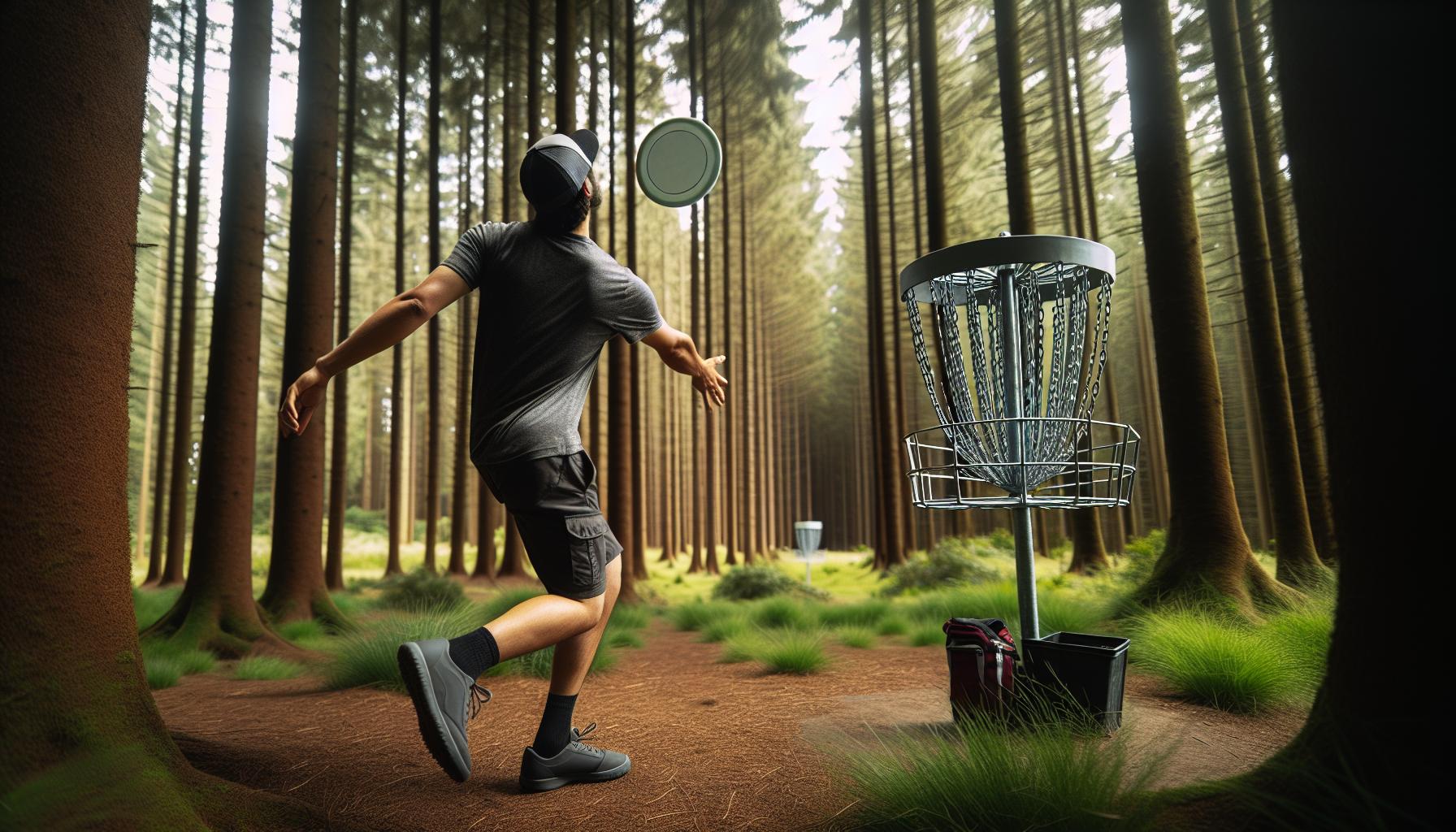
Essential Equipment for New Disc Golfers
The thrill of stepping onto a disc golf course begins with having the right equipment that not only meets your needs but also enhances your enjoyment of the game. For beginners, understanding which discs to invest in can significantly impact your learning curve and overall experience. Unlike traditional sports, disc golf doesn’t require extensive gear, but there are essential items every new player should have to get off to a flying start.
First and foremost, a basic disc golf set typically includes three types of discs: a driver, a mid-range disk, and a putter. Drivers are optimized for distance and speed, making them ideal for long throws. They usually have a sharper edge and are designed to cut through the air efficiently. An example of a beginner-friendly driver is the Innova Leopard, which offers a good balance between distance and control. Mid-range discs, like the Discraft Buzzz, provide versatility and are great for shorter, precise throws-perfect for navigating tricky parts of the course. Finally, putters are used for short-range shots and getting into the basket, with soft edges that help them glide with steadiness. The Innova Aviar is a widely recommended option for new players due to its forgiving flight path.
Maintaining comfort and gear organization is equally important. A durable disc golf bag will not only protect your discs but also keep you organized on the course. Look for a bag that has pockets for extra discs, water bottles, and other essentials. Additionally, wearing appropriate footwear can enhance your stability and grip, especially on uneven terrain, making your game more enjoyable.
As you progress in your skills, consider diving into the world of disc technology and how different disc profiles can affect your game. Discs are categorized by their stability-overstable, stable, and understable-each affecting the flight path and distance. A beginner should experiment with various discs to see how they respond and find a comfortable throwing style. Engaging with local disc golf communities, either through online forums or at the course, can also provide invaluable advice on which equipment suits your playing style best.
In essence, while disc golf is accessible and emphasizes fun, investing in the right equipment fosters growth and satisfaction as you learn the intricacies of this beloved sport. Whether you’re throwing a driver across a sunny field or sinking a putt to seal a win with friends, having the essentials will lay the foundation for your disc golfing journey.
Understanding Disc Types and What They Do
Understanding the various types of discs in disc golf is fundamental for any newcomer eager to develop their skills and strategy. Each disc is designed with specific characteristics that dictate its flight pattern, stability, and intended use. The three primary categories of discs are drivers, mid-range discs, and putters, each serving a unique role on the course.
Drivers are crafted for speed and distance, making them essential for long-range throws off the tee. Their sleek, sharp edges are designed to slice through the air, allowing more experienced players to achieve impressive distances. As a beginner, you might start with a stable driver like the Innova Leopard, which combines decent distance with manageable control, helping new players get comfortable with their throwing mechanics.
Mid-range discs, such as the Discraft Buzzz, excel in versatility. They are perfect for controlled, accurate throws that require more precision than distance. With a wider profile than drivers, mid-range discs offer a stable flight path, making them ideal for navigating tight spots on the course. As you progress, mastering these can enhance your ability to approach baskets and deal with varied terrain.
Putters are your go-to for short, precision shots-especially during approaches and final putts. With their wider, softer edges, putters are designed to glide smoothly and resist hard turns in the air. The Innova Aviar is a popular choice among beginners for its predictable flight path, helping players build confidence in their putting skills.
To sum it up, exploring different disc types gives you the tools needed to improve your game. Each time you step onto the course, bring a variety of discs, play around with them, and see how they react to your throws. As your understanding deepens, so will your appreciation for the sport, transforming each round into an opportunity to connect with fellow players and refine your skills.
Mastering the Basic Throwing Techniques
To become proficient in disc golf, is essential. Every successful throw starts with a solid foundation in form and mechanics, making it crucial for newcomers to focus on technique before they attempt more advanced shots. Understanding how to throw correctly not only improves distance and accuracy but also reduces the risk of injury and leads to a more enjoyable experience on the course.
One vital throwing technique involves the backhand throw, which is the most common among disc golfers. To perform a backhand throw effectively, start with a stable stance, your feet shoulder-width apart. Hold the disc with your thumb on top and your index and middle fingers extended underneath for a solid grip. Initiate the throw by rotating your shoulders away from your target, coiling your body, and then unwind your hips and shoulders towards your target. As you release the disc, follow through with your arm and let it wrap across your body for added power and distance. Practice this motion repetitively to build muscle memory.
Another important technique is the forehand throw or flick, often used for navigating around obstacles or executing tight angles. Grip the disc with your index finger underneath and your thumb on top, keeping your other fingers tucked in for stability. Begin by rotating your hips and shoulders to face away from your target. As you unwind, flick your wrist at the point of release to generate spin, which provides better stability for straight shots. Ensure your follow-through mirrors that of the backhand throw; this allows for improved accuracy as well.
For beginners, experimenting with various throwing styles can yield significant improvements. Here are some tips to enhance your throwing technique:
- Practice Consistently: Regular practice helps solidify the muscle memory associated with your throwing form.
- Video Analysis: Recording your throws can help you identify areas for improvement and adjust your technique accordingly.
- Work on Grip: A proper grip enhances control over the disc, impacting its flight path significantly.
- Utilize a Variety of Discs: Experimenting with different disc types can help you understand how each performs under various conditions.
Learning to throw effectively in disc golf combines physical skill with mental strategy. Each throw offers a chance to not only improve your game but also deepen your understanding of disc flight patterns, which is vital as you progress. Keeping a positive attitude will foster growth in your skills, making the journey as rewarding as the game itself. Enjoy the learning process and embrace the vibrant community that surrounds disc golf, as support and shared experiences can significantly enrich your development as a player.
Exploring Disc Golf Course Layouts
Understanding the layout of a disc golf course can significantly enhance your playing experience and ability to strategize your game. Each course is unique, featuring a variety of terrains, obstacles, and hole configurations, which can range from wide open fields to densely wooded areas. Whether you’re navigating a beginner-friendly course or a more challenging layout, familiarizing yourself with its design elements is crucial for effective play.
Most disc golf courses consist of 18 or 9 holes, each typically ranging from 200 to 600 feet in length. The objective is to throw your disc from the tee pad into the target basket with the fewest throws possible. Exploring the course layout begins with understanding the par for each hole, which indicates the number of throws an experienced player would ideally take. On your scorecard, mark how many throws it takes to complete each hole. Familiarize yourself with the terrain, as certain hills or elevation changes can affect disc flight significantly.
One key feature to watch for on a disc golf course is the obstacles, which can be natural, such as trees and bushes, or man-made, like paths and benches. These obstacles require players to consider different throwing techniques, such as backhand, forehand, or even specialty throws like anhyzer or hyzer shots, to navigate effectively around them. Learning to read the course layout helps you choose the right disc and the best throwing strategy for each situation.
Additionally, the positioning of the baskets adds another layer of complexity to the game. Baskets can be placed on elevated ground, tucked behind trees, or just off a cliffside to create interesting challenges. Understanding how the wind interacts with various elevations and obstacles will also improve your game. For instance, a hyzer throw might be necessary to keep the disc low and avoid getting caught up in branches, while an anhyzer could help you navigate around a tree on the right.
To make the most of your time on the course, take a moment to walk each hole before you throw. This practice allows you to visualize your shots and consider potential backup plans if your initial throw doesn’t go as planned. Engage with fellow players or locals who know the course; they can provide valuable insights into its nuances, giving you higher chances of success.
Finally, as you gain experience, consider challenging yourself with courses that have a higher level of difficulty or unique designs. Each experience will deepen your understanding of how to navigate the complexities of disc golf course layouts, making you a more versatile and skilled player overall.
Strategies for Navigating Different Course Types
Navigating the diverse landscapes of disc golf courses can be both thrilling and challenging, as each course presents its own set of obstacles, terrain features, and strategic considerations. Whether you’re stepping onto a flat, open course or diving into a dense, wooded area, understanding how to adjust your game plays a crucial role in improving your performance. Here are some effective strategies to enhance your gameplay based on different course types.
To succeed on open courses, where long drives and distance play a pivotal role, consider focusing on your throwing mechanics. Using a more stable disc can help achieve greater distance, while taking advantage of wind conditions is vital. Make sure to practice your backhand and forehand throws to vary your approach and maintain accuracy over long distances. Warm up before starting the course to develop muscle memory. This will not only help with endurance but also refine your power throw technique.
When venturing onto wooded courses, your approach shifts dramatically. Here, precision takes precedence over distance. Control your throw with finesse, opting for slower discs that offer more stability and accuracy. Another useful tactic is to implement a strategy of throwing hyzer flips, which can help navigate through trees effectively. Take the time to carefully scout your path, analyzing where your disc has the best chance to land while minimizing potential obstacles. Utilize the gaps between trees and plan your throw trajectory accordingly to maintain control.
On hilly or elevated courses, leveraging the terrain to your advantage is crucial. Understand how elevation affects throwing angles and disc flight. For instance, throws on an incline may require a higher release angle to compensate for the drop, while throws downhill could necessitate a flatter release to avoid overshooting the target. Explore techniques like throwing with a slight hyzer on downhill shots to keep your disc low and controlled. Always consider the wind flow, as it can be unpredictable on elevated terrain, impacting the stability of your throw.
Finally, as you progress into competitive play, learning about specific course layouts and their difficulty levels can significantly enhance your strategies. Engaging with local players and participating in community events will also provide insights into navigating various course types more effectively. Familiarize yourself with how different obstacles and landscapes can impact gameplay, and think about keeping a record of your personal bests on different courses to track your improvement over time.
By adapting your strategies to suit the unique characteristics of each course type, you’ll not only improve your own gameplay but also gain a deeper appreciation for the sport. The combination of skill, strategy, and knowledge of your environment is what makes disc golf an exhilarating challenge for players at every level.
Tactics to Improve Your Disc Golf Game
To take your disc golf game to the next level, mastering a few tactical approaches can make a significant difference in your performance on the course. Whether you’re just getting started or looking to refine your skills, implementing focused strategies can enhance your overall gameplay and enjoyment of this dynamic sport.
Understanding the mechanics of your throws is crucial. This includes not only the type of disc you are using but also how to adjust your grip and stance to maximize power and accuracy. Practice the fundamentals-try video recording your throws to analyze your form and identify areas for improvement. This self-analysis will help you understand how your body mechanics affect disc flight, allowing you to make adjustments as needed.
Another important aspect of improving your game is learning how to read the course. Taking time to walk each hole before you play can be invaluable. Check for potential obstacles like trees, water hazards, and elevation changes. Study how these elements will affect your throws, and plan your route to the basket accordingly. This course management strategy can often be the difference between a good score and a great one.
Engaging with the disc golf community is also a significant way to improve. By joining local leagues or participating in tournaments, you can learn from more experienced players and gain firsthand insight into different playing styles and strategies. Observing and asking questions about their techniques can provide new perspectives that enhance your understanding and skills. Connecting with others on the course creates a supportive environment, showcasing how disc golf thrives on community engagement.
Lastly, make practicing a regular part of your routine. Focused practice with specific goals can help you develop critical skills, like putting, mid-range throws, and distance driving. Consider setting up a practice regimen that includes drills designed to improve your weaknesses. Whether it’s mastering a new throwing technique or perfecting your putting stroke, consistent effort can lead to notable improvements, keeping you motivated and improving your game over time.
By blending these tactics into your training and gameplay, you will not only see marked improvements but also deepen your appreciation for the skill and strategy inherent in disc golf.
Common Mistakes Beginners Make in Disc Golf
Many beginners entering the world of disc golf unknowingly fall into common traps that can hinder their enjoyment and progress in the sport. Recognizing these mistakes early on can have a profound impact on both skill development and overall enjoyment. One prevalent issue is the misunderstanding of disc selection; many newbies often default to using the same disc for every situation, ignoring the distinct roles different discs play in their arsenal. This can lead to frustration when longer drives fail to achieve the expected distance or when putts fail to stay on target. Each disc type is engineered to perform differently based on weight, rim width, and stability, making it essential to understand how to utilize them effectively.
Another frequent mistake is improper throwing mechanics. New players often rush their throws, leading to poor form that can cause their discs to fly unpredictably. A good throw begins with a solid grip and stance, transitioning smoothly into a proper release. Beginners should focus on developing a consistent throwing form, ideally starting with basic backhand throws before progressing to more complex techniques like forehands and overhead throws. Video analysis can be a powerful tool here; capturing your throws can help identify flaws that might not be apparent in the moment.
Additionally, neglecting course management can be detrimental. In their eagerness to take a shot, beginners may fail to analyze obstacles or consider the best strategy for the hole. Walking the course before their turn and visualizing the best route to the basket is vital. Understanding how to navigate obstacles like trees or water hazards can save players several strokes and cultivate a more strategic approach to the game. Lastly, many newcomers overlook the importance of regular practice. Disc golf is as much about consistency as it is about skill. Setting aside time for drills-whether it’s practicing putting, approach shots, or long-distance throws-can significantly enhance overall performance.
By addressing these common pitfalls, new players can improve their skills much faster and enjoy the game more fully. Embracing the learning process and seeking resources like local clubs or online tutorials can further enrich their understanding of this dynamic sport. Remember, every seasoned player was once a beginner; patience and practice go hand in hand on the journey to becoming a proficient disc golfer.
The Importance of Practice: Drills and Tips
Cementing your skills in disc golf is not merely about showing up to play; it’s about dedicating time to refine your techniques and mental game. Each session you spend practicing can open new doors of possibility on the course, transforming you from an occasional player into a confident competitor. Effective practice is about quality, not just quantity, and incorporating specific drills can dramatically elevate your performance.
To enhance your game, consider focusing on these essential areas during practice:
Putting Drills
- Circle Drill: Set up putters from various distances within the putting circle (10-30 feet). Make ten consecutive putts before moving back. This builds confidence and accuracy under pressure.
- Around the World: Place a series of markers in a circle around the basket. Putt from each marker, trying to make them all. This helps improve footwork and adaptability.
Driving and Distance Control
- Field Practice: Find an open field and practice your drives with different discs. Focus on mechanics and aim for specific landing zones to develop your distance and control.
- Throw and Retrieve: Throw multiple discs from a tee pad and keep track of your throws. Walk to each disc, gradually increasing your throwing distance as you become more comfortable.
Approach Shots
- Target Practice: Set targets (like trees or stones) at varying distances. Use mid-range discs to practice approaching these targets consistently to enhance your accuracy for crucial second shots.
- Up-and-Down Drill: Place a marker 150 feet from a basket. From there, use different approach techniques (forehand, backhand) to get as close to the basket as possible. This emphasizes versatility in your game.
Integrating these drills into your practice regime will not only improve your technical skills but also help you cultivate a deeper understanding of disc flight dynamics and how various discs behave in different situations. Consider tracking your progression over time by keeping a practice journal where you note down what you worked on, breakthroughs, and areas needing improvement.
Speaking of breakthroughs, many players find that simply recording their practice sessions can offer valuable insights. By reviewing footage, it’s easier to identify flaws in technique that may not be apparent during practice. Moreover, discussing your progress with fellow enthusiasts or coaches can provide additional perspectives and tips tailored to your unique style and areas for improvement.
In disc golf, practice is your ally; combining focused drills with consistent play can help develop both your technique and confidence. As you grow, don’t forget to engage with the community-join local leagues or participate in friendly competitions to experience the supportive spirit of disc golf, which thrives on camaraderie and shared passion for the game.
Getting Involved: Local Leagues and Tournaments
Joining local leagues and tournaments is one of the best ways to immerse yourself in the world of disc golf, nurturing both your skills and your love for the game. The vibrant community surrounding this sport welcomes players of all skill levels, making it the perfect environment for beginners to learn, grow, and connect. Participating in organized play not only improves your game through regular competition but also fosters friendships and camaraderie with fellow enthusiasts who share your passion.
Local leagues typically meet weekly or monthly and provide an easygoing format where new players can feel at ease. Many of these leagues offer divisions based on skill level, so you can compete against those who are at a similar stage in their disc golf journey. This structure encourages players to improve without the intimidation that might accompany more competitive environments. It’s also an excellent opportunity to learn from experienced players, who often share tips and insights on techniques, course management, and equipment choices. Check your local disc golf club’s website or social media for calendar events to find leagues near you.
Tournaments, on the other hand, tend to be more structured and competitive, making them a thrilling way to challenge yourself. While initially daunting, entering a local tournament can enhance your skills and mental game. Most tournaments are organized by organizations like the Professional Disc Golf Association (PDGA), and you can find events ranging from casual to highly competitive formats suitable for your experience level. Don’t be discouraged if your scores aren’t perfect; every tournament provides valuable lessons and memorable experiences, regardless of placement. As you gain confidence and skill, you’ll likely find yourself entering higher-level competitions, further propelling your development as a player.
To get the most out of your league or tournament experience, consider some practical strategies:
- Stay Consistent: Regular attendance not only hones your skills but helps you build relationships with other players.
- Learn from Others: Don’t hesitate to ask seasoned players for advice or feedback on your game. Most are happy to share their experiences.
- Track Your Progress: Keep a record of your scores and notes on what you learned after each game or tournament. This practice helps pinpoint areas for improvement.
Ultimately, getting involved in local leagues and tournaments will enrich your disc golf experience, allowing you to grow not just as a player but as a part of a supportive community. Engage with fellow golfers, learn from every game, and enjoy the journey ahead.
Resources for Learning and Community Engagement
In disc golf, the journey of learning extends far beyond just mastering your throws and understanding course layouts. A wealth of resources exists to assist both new and experienced players in developing their skills and enhancing their understanding of the game. By tapping into these communities and learning tools, you can significantly elevate your disc golf experience and knowledge.
One of the most valuable resources available is online communities, such as forums and social media groups dedicated to disc golf. Websites like the Professional Disc Golf Association (PDGA) provide access to a plethora of information, including news about local leagues, tournaments, and instructional materials. Participating in discussions or simply following these platforms can keep you updated on the latest techniques, disc reviews, and strategies shared by fellow enthusiasts.
In addition to online communities, there are numerous instructional videos and tutorials that cater to varying skill levels. YouTube is a treasure trove of content where experienced players break down techniques through demonstrations, offering tips on everything from grip to release angles. Channels dedicated to disc golf often feature practice routines designed to hone specific skills, making it easy for beginners to incorporate effective drills into their practice sessions. Seeking out content that matches your current skill level will make the learning experience both manageable and enjoyable.
Local clubs and community events are equally important for engagement. Many areas have disc golf meet-ups, clinics, and workshops where players gather to share knowledge and advice in a friendly environment. Attending these events allows you to connect with more experienced disc golfers, gain insights into the psychology of the game, and receive personalized feedback on your throwing form and game strategy.
To ensure you’re taking full advantage of these resources, consider the following practical tips:
- Engage Actively: Join online discussions or local clubs. Ask questions and share your experiences to foster deeper connections.
- Utilize Multimedia Learning: Explore both video tutorials and written guides. Different mediums can help reinforce the same concepts in unique ways.
- Participate in Community Events: Look for local tournaments where you can volunteer or attend as a spectator to learn from watching more skilled players in action.
By immersing yourself in these resources, you harness the power of community and mentorship within the sport, transforming your approach to disc golf from solitary practice into an enriching shared experience. Whether you’re looking to refine your technique or simply enjoy the camaraderie of fellow disc golfers, tapping into these opportunities will undoubtedly enhance your journey in this exciting sport.
Advanced Techniques for Competitive Play
Excelling in disc golf requires more than just mastering basic throws and understanding course layouts; it involves a deep dive into advanced techniques that can make a significant difference in competitive play. Players who have honed their skills in areas such as shot selection, course management, and mental strategies often find themselves managing the pressure of competition more effectively and achieving better results.
Understanding the unique flight characteristics of different discs is crucial. Experienced players often carry a selection of discs with varying stability ratings: understable discs, which tend to turn right (for right-handed backhand throws) can help execute sharp dogleg turns, while overstable discs are invaluable for controlling the wind and powering through tricky conditions. Additionally, players should familiarize themselves with the concept of “hyzer” and “anhyzer” angles. Learning to throw with these angles can open up new avenues for shot-making that might not be apparent at first glance.
Mastering your mental game is equally essential. Competitive disc golfers frequently develop routines to handle the pressure of tournament play, which includes visualizing successful shots, focusing on breathing, and practicing mindfulness techniques to stay in the present moment. Using a pre-shot routine can help to build consistency and confidence, allowing players to execute their strategy without getting overwhelmed by the stakes of competition.
Tactical course management is a skill that often distinguishes casual players from seasoned competitors. This involves not only choosing the right discs for each shot but also making strategic decisions about risk versus reward. For example, during a tournament, you might opt for a safer, more reliable shot to ensure you land on the fairway rather than an aggressive throw that could land you in the woods. Experienced players often analyze course layouts beforehand to identify the most favorable landing zones and potential hazards, allowing them to navigate challenges with poise.
Adopting a flexible mindset toward training and practice can also enhance competitive performance. Engaging in specific drills that target weaknesses-whether that’s putting under pressure, distance drives, or approaches-can help fine-tune your game. Monitoring stats such as putt percentages and fairway hits can illuminate areas for improvement and aid in setting personal goals.
In sum, elevating your disc golf game to a competitive level intertwines technical skill with strategic thinking and mental fortitude. By continuously adapting and learning from both successes and setbacks, you can enjoy the thrill of competition while contributing to the vibrant disc golf community.
Faq
Q: What is the basic objective of disc golf?
A: The basic objective of disc golf is to complete a course by throwing a disc into a series of baskets in the fewest strokes possible. Each throw counts as a stroke, and players aim to navigate the course while overcoming obstacles like trees and water.
Q: How do you choose the right disc for beginners?
A: Beginners should start with a stable, lightweight driver that offers better control. Look for discs rated in the mid-150g range and consider models specifically designed for beginners, as they are easier to throw and handle.
Q: What are the main rules of disc golf?
A: The main rules of disc golf include throwing from the designated tee area, completing each hole by getting the disc in the basket, and following certain guidelines like the strokes-per-hole format. Additional rules cover interferences, out-of-bounds areas, and player conduct.
Q: How do you calculate your score in disc golf?
A: In disc golf, your score for a round is calculated by adding the number of throws made on each hole. The goal is to have the lowest total score. For scoring, you may also encounter terms like par, birdie, and bogey, which indicate performance relative to the expected score.
Q: What should you wear when playing disc golf?
A: Wear comfortable athletic clothing that allows for easy movement. Comfortable shoes are crucial since you’ll be walking on various terrains. Consider dressing in layers if weather conditions vary, and don’t forget accessories like hats or sunglasses for sun protection.
Q: When is the best time to play disc golf?
A: The best time to play disc golf is during mild weather conditions, typically in spring or fall when it’s neither too hot nor too cold. Early mornings or late afternoons often provide ideal lighting and less crowded courses.
Q: How can you practice throwing techniques for disc golf?
A: To practice throwing techniques, set up target areas using trees or baskets, and focus on specific throws like backhand and forehand. Additionally, practicing with a variety of discs will enhance your throwing skills and understanding of different disc flight patterns.
Q: What are some common etiquette practices in disc golf?
A: Common etiquette practices in disc golf include being quiet when others are throwing, allowing faster groups to play through, and properly caring for the course by picking up litter. Always be respectful to other players and the environment.
To Wrap It Up
Congratulations on embarking on your disc golf journey! Remember, mastering the basics of throwing mechanics and understanding disc flight characteristics are key to enhancing your game. Don’t wait-grab your gear, find a local course, and start practicing today! If you’re eager to dive deeper, check out our guides on advanced throwing techniques and essential equipment comparisons to ensure you have the best tools for success.
We’d love to hear from you! Share your experiences or any questions you have in the comments below, and make sure to explore our resources on disc golf strategies and tournament preparation. Your next step could be just a click away, so stay engaged with our community and subscribe for the latest tips and updates on this exciting sport. Let’s take your game to the next level together!
Get our latest guides, news, and insights highlighted in your Google Search & AI Overviews.