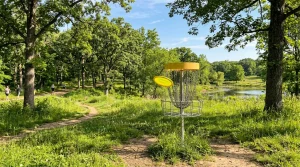
Did you know that the standard disc golf course typically features 18 holes, much like a traditional golf course? However, this number can vary, leading to intrigue and debate among players. Understanding how many holes are on a disc golf course is essential, as it impacts everything from course design to tournament play and your overall experience on the course. Whether you’re a beginner eager to learn the basics or a seasoned player strategizing for your next game, knowing the standard layout helps enhance your enjoyment and skills in this dynamic sport. Join us as we dive deeper into the world of disc golf courses and explore the variations in hole number, how it affects gameplay, and tips for maximizing your time on the course!
Types of Holes on a Disc Golf Course
There’s an intriguing diversity to the holes you’ll encounter on any disc golf course, each offering its own unique challenges and opportunities for strategy. Generally, disc golf courses feature a standard of 18 holes, but layouts can vary significantly in both design and purpose. Understanding the various types of holes not only enhances gameplay but also develops a deeper appreciation for the sport and its strategic nuances.
A typical disc golf course might include different styles of holes such as open, wooded, and elevated. Open holes allow for longer throws and more aggressive drives, where players can utilize distance drivers to cover significant ground. In contrast, wooded holes demand precision and control, urging players to navigate through trees and undergrowth, often requiring the finesse of midrange discs or putters. Elevated holes may introduce additional complexity, providing a test of both arm strength and accuracy as players throw from an elevated tee pad down to a target.
Another essential type includes dogleg holes, where the fairway bends left or right, necessitating strategic shot selection and placement. These holes often reward skillful players who can manipulate the flight of their disc, using anhyzer or hyzer throws to bend around obstacles. Additionally, some courses feature water hazards or OB (out of bounds) areas, where careful decision-making is crucial, as a miscalculated throw can lead to additional strokes and lost discs.
Ultimately, mastering the various types of holes is key to becoming a well-rounded disc golfer. Players are encouraged to familiarize themselves with the different hole styles and integrate this knowledge into their game plans, enhancing both enjoyment and competitiveness. Embrace the variety, and let it inspire your strategies for every round you play.
Understanding Standard Course Lengths

Disc golf courses typically feature a standard layout of 18 holes, but understanding the details of course lengths can significantly affect gameplay and strategy. Each hole on a course is designed with specific distances, often ranging from short to long, which provides a mix of challenges for players of all skill levels. The average length for disc golf holes can vary, usually falling between 200 to 600 feet, but some pro courses may have holes that exceed these distances, demanding exceptional skill and control.
The variation in hole lengths encourages players to select different types of discs based on distance and the technical requirements of each throw. For shorter holes, players may opt for putters or midrange discs, as they offer greater accuracy and control. Conversely, longer holes favor distance drivers, which are designed to maximize throw distance when executed correctly.
A well-designed course will also consider the variance in player abilities, offering a balanced mix of shorter, beginner-friendly holes alongside longer, more advanced challenges. This diversity not only makes the sport accessible but also invites competition where players can showcase their skills across various hole lengths. As players gain experience, they learn how to adapt their technique and disc choice based on the course’s layout, fostering an ongoing journey of improvement and strategy development.
Ultimately, recognizing the significance of course lengths in disc golf allows players to approach each round with a tailored strategy, celebrating both the game’s challenges and its community spirit. The combination of varied lengths and styles of holes creates a rich playing experience that can accommodate everyone from newcomers honing their skills to seasoned competitors striving for perfection.
The Importance of Par in Disc Golf Courses

In the realm of disc golf, the concept of “par” serves as a benchmark for both casual players and serious competitors alike. Traditionally used in ball golf, par represents the number of strokes an expert golfer is expected to take to complete a hole, and this principle translates equally well to disc golf. In revealing the nuances of each course, understanding par can significantly elevate a player’s strategic approach, catering to their strengths and weaknesses.
Par for a disc golf course, typically set at 54 for 18 holes, can vary based on the layout and length of each hole. The basic structure assigns par 3 to shorter, more accessible holes, par 4 to those that require more skill or distance, and par 5 for the longest and most complex challenges. For instance, a hole measuring around 200-400 feet might be a par 3, encouraging players to complete it within three throws, while a longer par 4 or par 5 would necessitate strategic planning, often requiring skillful throws around obstacles or up hills.
For players, knowing the par of a course offers a framework for self-assessment and improvement. It allows them to track performance over time, setting personal goals such as maintaining a score close to par or improving on previous rounds. This awareness also fosters healthy competition; players often gauge their skills against the par, using it as a motivation to raise their game.
Moreover, par serves another vital purpose: it levels the playing field among competitors. In tournament settings, where players may confront varying course designs and difficulty levels, the concept of par provides a common metric to evaluate all participants’ performance. As a result, par becomes not just a number on a scorecard but a critical component of the disc golf experience, influencing strategy, fostering competition, and challenging players to refine their skills.
By contemplating par values and hole designs, players can enhance their strategic approach, making each round not just a game, but a pathway to personal growth within the welcoming community of disc golf. Understanding par empowers players, informs their choices on the course, and ultimately enhances their enjoyment of this dynamic, athletic pursuit.
How to Choose the Right Disc for Each Hole

Selecting the right disc for each hole on a disc golf course can be as crucial as mastering your throwing technique. Different holes demand different skill sets, throwing styles, and, importantly, disc types. Whether you’re navigating tight woods or open fields, understanding the specific characteristics of your discs can significantly affect your performance and enjoyment of the game.
When approaching a hole, consider the distance and layout. For shorter holes, typically classified as par 3s, you might opt for a mid-range or putter. These discs are designed for control and accuracy, allowing you to make tight throws to land near the basket. An excellent choice might be a stable putter, like the Axiom Envy, which offers a consistent flight path, ideal for precision throws in close quarters. Conversely, for longer holes or those requiring more distance, a driver is necessary. Distance drivers like the Innova Destroyer excel at achieving maximum distance but require more skill to handle due to their speed and glide.
Flight characteristics of discs are equally important. Every disc has a unique combination of speed, glide, turn, and fade, which determines how it behaves in the air. Understanding these factors can help you select the most suitable disc for various situations. For example, you might choose a stable disc for a straight shot on a level hole or a more overstable disc to combat strong winds or to make a left turn at the end of a throw.
Finally, consider the terrain and obstacle placement on the hole. A wooded fairway might necessitate a disc that can perform well with hyzer (angled throw) or anhyzer (angled throw in the opposite direction) techniques. Choosing a disc that suits these throwing styles-like a more understable midrange for anhyzer shots-can make navigating tricky holes much more manageable.
In summary, the key to choosing the right disc lies in understanding your needs for each hole-distances, obstacles, and possible environmental effects. As you gain experience, you’ll develop a more intuitive sense of which discs work best under various circumstances, letting you enjoy the strategic depth of disc golf while continually improving your game.
Course Layout Variations: A Deeper Dive
Exploring the nuances of disc golf course layouts reveals a fascinating tapestry of design that caters to players of all skill levels. Courses typically feature a variety of hole types, ranging from open, long-distance throws to tight, technical shots through wooded areas. These variations are not just about geographic differences-they also determine player strategy and choice of equipment, enhancing both enjoyment and challenge.
When discussing layout variations, it’s essential to consider how each hole interacts with its surrounding environment. For instance, a hole positioned on an elevated terrain might introduce factors like wind currents that can significantly affect disc flight. Conversely, wooded holes may demand precise throwing techniques, as players navigate through trees while considering different angles of release. These natural elements shape how players approach each hole, encouraging strategic thinking and adaptability.
The use of baskets and tee placements also plays a critical role in layout design. Some advanced courses may employ multiple tee pads and basket positions for the same hole, creating a dynamic experience with varying difficulty levels. This flexibility caters to beginner players while still providing seasoned veterans with a challenge. For example, adjusting the position of a basket on a shorter par 3 can transform it from an accessible hole into a technical opportunity that requires skillful execution.
As you venture onto different courses, you’ll notice the balance between challenge and accessibility is paramount. Many courses aim to create an engaging experience for all players, integrating par values and obstacles in a way that tests skills without discouragement. Understanding these layout variations not only enriches your game but also fosters a deeper appreciation for the sport-as you learn to adapt your strategy based on each unique course design. Embracing the diversity of course layouts can bridge the gap between casual play and competitive disc golf, making each round an adventure in itself.
Factors Influencing Hole Design and Placement
When designing a disc golf course, various factors influence the placement and characteristics of each hole, ultimately impacting the experience for every player who takes on the challenge. A well-thought-out course doesn’t just test skill; it creates a dynamic interplay between design and nature, drawing players into a sport that combines precision, strategy, and enjoyment.
One of the primary considerations in hole design is the terrain of the course. Different geographical features can dramatically alter how a hole is approached. For instance, a hole on hilly terrain may require players to adapt their throws to account for elevation changes, which can affect disc flight significantly. Additionally, natural obstacles such as trees, water hazards, and rocky outcrops add layers of complexity, demanding strategic forethought from players. A deeply wooded hole might reward those who can execute precise approaches, while wide-open holes may favor powerful distance throwers.
The intended audience of the course is also crucial in determining hole design. Courses that cater to beginners typically include shorter, more straightforward holes that allow for learning and enjoyment. Conversely, advanced or professional-level courses often feature longer distances and complex layouts that challenge even the most seasoned players. Thoughtful placement of tee pads and baskets enables a balance between accessibility and challenge, fostering a welcoming atmosphere for newcomers while still offering seasoned competitors a worthy test of skill.
Moreover, environmental factors such as climate and seasonal changes can influence design decisions. For example, a course located in a windy area may feature strategically placed trees to shelter certain holes from harsh winds, while courses in rain-prone regions may require effective drainage solutions to maintain playability. Understanding these elements ensures that the course remains both challenging and fair throughout the year.
Incorporating feedback from the disc golf community can also inform better hole design. When players engage with the course and share their experiences, it provides valuable insights that can lead to enhancements and refinements. Embracing a collaborative approach not only fosters community but also helps in creating a course that resonates with players, promoting continued interest and participation in the sport. Ultimately, each hole’s design should reflect an understanding of both the natural environment and the diverse skills of the disc golf community, resulting in a course that is both enjoyable and professionally rewarding.
Exploring Famous Disc Golf Courses Worldwide
While most traditional disc golf courses consist of 18 holes, you’ll find that some extraordinary courses around the world have unique layouts that draw players for various reasons, be it scenic beauty or challenging designs. For example, the famous Whistler’s Bend in Oregon offers breathtaking views alongside its expertly designed holes, making it a top destination for enthusiasts. Located on the banks of the Deschutes River, this course not only tests players’ skills but also rewards them with stunning natural surroundings.
One of the notable characteristics of famous disc golf courses is how they utilize terrain effectively. The Milo McIver State Park in Oregon is renowned for its integration of elevation changes into its design. Players must navigate uphill and downhill throws, which add complexity to each hole. Such courses encourage players to tailor their throwing techniques to the geography, enhancing their skills as they adapt to these unique challenges.
Some exceptional courses also celebrate the rich history and culture of the sport. For example, Maple Hill in Massachusetts, often cited as one of the best disc golf courses worldwide, features a balanced blend of open fairways and dense woods. The annual Maple Hill Open not only attracts professional players but also inspires countless recreational players, turning a day on the course into a vibrant community event. Facilities, accessibility, and a focus on player experience make it a perfect model for thriving disc golf infrastructures.
When exploring unique disc golf courses internationally, consider how local landscapes shape design and player strategy. For instance, courses in regions with steep cliffs or coastal views present distinct challenges that players must navigate. Understanding the interplay between location and course design can significantly enhance your approach to the game. Unique settings, such as the Nihon Daisuke in Japan, offer a glimpse into how cultural elements influence course layouts and player experiences, making disc golf a global sport rooted in community and rich landscapes.
Whether you find yourself at a famous course or a local gem, the experience of playing different holes across diverse terrains can profoundly elevate your appreciation for the sport, showcasing the creativity and passion that thrives within the disc golf community.
Navigating Disc Golf Course Etiquette
Engaging in disc golf means not only honing your skills but also respecting the communal spirit of the game, which is deeply rooted in etiquette. Proper etiquette on the course ensures that everyone has an enjoyable experience, whether they are new players or seasoned pros. One of the fundamental rules is maintaining pace of play; be ready with your throw when it’s your turn and keep an eye on groups ahead to avoid unnecessary delays. The standard expectation is to finish a round in about two hours, but this can vary depending on factors like course popularity and group size.
Another essential aspect of disc golf etiquette is being aware of your surroundings. Always shout “fore!” if your disc is headed toward another player or group. This simple yet effective call can prevent accidents and keep everyone safe. Additionally, be considerate of others’ throws; remain quiet and still until they release their disc, as distractions can affect performance. When moving to the next hole, respect the space of fellow players by avoiding crossovers and keeping pathways clear.
Maintaining the course is equally vital in demonstrating good etiquette. Always pick up after yourself by disposing of trash properly and leaving the course as you found it. If your draw leaves holes in the ground or damaged vegetation, it is good practice to repair the area. Also, refrain from creating unnecessary noise and disturbances; respecting wildlife and other players enhances everyone’s experience.
Lastly, understanding local customs and community norms can further enrich your time on the course. Different regions may have their own unwritten rules, such as “waiting for your turn” at busy courses or “scoring by courtesy” during casual rounds. Engaging with other players, perhaps by sharing tips or discussing strategies, fosters a welcoming environment and promotes camaraderie among disc golf enthusiasts.
In summary, adhering to proper etiquette on the disc golf course elevates the experience for everyone involved, fostering a sense of community while advancing the sport as a legitimate athletic pursuit. Embrace these guidelines, and you’ll not only improve your own game but contribute to a respectful and enjoyable atmosphere for all.
The Role of Terrain in Course Difficulty
The landscape of a disc golf course profoundly influences the difficulty and strategic approach of the game. Factors such as elevation changes, natural obstacles, and terrain types create an array of challenges that can elevate a course from basic to highly technical, affecting players’ experiences and scores. For example, a hole that requires players to navigate steep slopes or closely cropped trees demands not only skillful throwing but also strategic planning-both crucial for achieving par or above.
Understanding Terrain Challenges
When playing a course with steep hills or undulating terrain, players must adjust their throwing techniques. Uphill throws require a different angle and power than downhill throws; the latter can send discs further than intended if not calculated properly. Likewise, the presence of natural elements such as water hazards or thick woods introduces additional layers of complexity to any round. Players might need to consider risk versus reward when deciding whether to aim directly for the basket or to play it safe with a more conservative throw.
Course Design and Variability
The design of a course heavily leverages the existing terrain to add variety and educational benefits for players. Holes with varying elevation levels not only test a player’s skill but also their ability to adapt. For instance, a hole with a steep descent can disturb normal disc flight patterns, requiring players to use specific discs designed for stable flight at varying angles. This environmental interplay not only creates unique play styles but also enhances a player’s ability to evaluate flight mechanics, ultimately improving their overall game.
Moreover, it’s essential for players to understand that different types of terrain may favor distinct disc types-something that can deeply influence performance. For instance, navigating a rocky environmental setup may require the use of overstable discs that resist undesirable turns during flight. To help you plan for diverse terrains, consider the following types of terrains and their impacts on gameplay:
| Terrain Type | Typical Challenges | Recommended Disc Types |
|---|---|---|
| Hilly | Elevation changes, wind exposure | Stable to overstable drivers |
| Wooded | Tree obstacles, tight fairways | Midrange and putters for accuracy |
| Wetlands | Puddles, slippery footing | Water-resistant discs |
| Open fields | Wind effects | Distance drivers to handle wind |
Each type of terrain creates unique challenges and experiences for players, reinforcing the necessity of well-rounded skills in disc selection and throwing mechanics. Approaching a course with a deep understanding of its terrain can lead to a more strategic game and increased enjoyment, highlighting the essential connection between the natural environment and the sport of disc golf.
Unique Holes: An Overview of Design Challenges
Some of the most memorable moments in disc golf come from uniquely designed holes that test players’ skills and creativity. These holes often present specific challenges that require exceptional strategy and a deep understanding of disc flight mechanics. Whether it’s a tricky dogleg, an elevated basket, or a tee box positioned on a hillside, unique holes not only provide excitement but also reflect the artistry involved in course design.
Courses often feature signature holes that stand out due to their distinct characteristics. For instance, a hole that strategically incorporates water or a cliff not only enhances the course aesthetically but also demands precise throws and mental fortitude from players. The psychological component of navigating these obstacles can lead to unforgettable gameplay experiences, whether you’re facing the pressure of a big tournament or just out for a casual round with friends.
Key Design Challenges
Designing a unique hole involves balancing creativity and practicality, ensuring that it is both challenging and fair. Factors like length, angle, and hazards must be carefully considered. A well-placed manditory route can force players to adapt their usual throwing techniques and think critically about their approach. For example, a short par 3 with heavily wooded fairways challenges players to throw with accuracy and finesse rather than relying solely on power.
Here are some common design challenges for unique holes:
- Elevation Changes: Holes with uphill or downhill throws require players to adjust their throwing angles and power, drastically affecting disc flight.
- Natural Obstacles: Incorporating trees, rocks, or water hazards adds layers of complexity and can influence strategic decisions throughout a round.
- Distance Variation: Short and long holes serve different purposes and can create a diverse playing experience, testing various skills and disc selections.
- Course Flow: Unique holes should fit seamlessly into the overall course layout, maintaining a rhythm that enhances the player’s experience.
Understanding these challenges helps players appreciate the thought behind course design and informs their approach when tackling these holes. Embracing the unique features of each course can elevate both one’s game and enjoyment, celebrating the creativity and challenge inherent in the sport of disc golf. Ultimately, the presence of unique holes not only enriches gameplay but also strengthens the community, as players share tales of their triumphs and trials on these specially crafted layouts.
Impact of Climate on Course Management
The conditions in which disc golf courses are played can significantly influence both the experience of the players and the management of the course itself. Understanding how climate impacts course management is crucial for ensuring the quality and playability of the course throughout the year. Factors such as temperature, precipitation, and seasonal changes can alter the landscape, affecting everything from course layout to maintenance schedules.
For instance, areas that experience heavy rainfall may lead to muddy or waterlogged fairways. This not only makes the course less enjoyable but can also cause long-term damage to the grass and soil structure. In such cases, course managers might need to implement drainage solutions or alter hole layouts to minimize water issues. Conversely, in regions with extended dry spells, courses may face challenges like parched fairways and stressed vegetation, necessitating irrigation systems and careful water management to maintain the health of the greens and tees.
Another key consideration is the impact of extreme temperatures. In hotter climates, courses might have to contend with player safety and the effects of heat on both people and the course. Managers may opt to provide shaded areas and hydration stations during peak temperatures, while also keeping an eye on how heat stress might impact the grass. In colder climates, winter play might be limited, and courses may need to close during frost to protect the course from damage. Decisions about cutting grass, trimming foliage, and securing safe pathways are all influenced by these seasonal variations, requiring a flexible approach to course management.
In summary, a deep understanding of climatic impacts on disc golf courses enables managers to make informed decisions that enhance player experience while ensuring the health of the course through the changing seasons. Embracing these challenges not only fosters a sustainable playing environment but also encourages a vibrant community of disc golf enthusiasts who can enjoy their sport regardless of the weather conditions.
Preparing for Tournaments: What to Expect on the Course
Preparing for a disc golf tournament can be both exhilarating and nerve-wracking, especially for newcomers to the sport. With multiple holes designed to challenge players’ skills, bringing awareness to what to expect on the course can greatly enhance the tournament experience. One of the foundational aspects of preparing for a tournament is understanding the course layout, which will typically feature anywhere from 18 to 21 holes, although some courses may have as few as 9 or even 27 holes. Familiarizing yourself with each hole’s distance, terrain, and obstacles can provide a strategic advantage.
Know Your Course
Before tournament day, make time for a practice round on the course. Studying how the holes are laid out allows you to visualize your throws and identify any tricky areas that could disrupt your game. Pay particular attention to hazards such as water or wooded areas, as well as the elevation changes that may affect your disc flight. Take notes on your practice round, documenting distances, potential landing zones, and the types of discs that work best on each hole based on your throwing preferences.
Equipment Essentials
Tournament day equipment preparation is critical. Bring a variety of discs-drivers, midranges, and putters-tailored to the course demands. Many players carry 10-15 discs to accommodate different throwing techniques and conditions. It’s also crucial to have a reliable bag, quality water supply, snacks for energy, and sun protection. Understand your throw mechanics and have confidence in your disc choices, as many players find their game improves significantly when they play with familiar equipment.
Mindset and Mental Preparation
Equally important is the mental game. Disc golf tournaments can introduce additional pressure, so adopting techniques to maintain focus under stress is key. Practice your breathing and visualization techniques to develop a pre-shot routine that calms your nerves. Additionally, stay positive and adaptable; the course may present unexpected challenges, like wind changes or delays. Learning to maintain a balanced perspective will not only enhance your performance but also contribute to a more enjoyable overall tournament experience.
Etiquette and Sportsmanship
Familiarizing yourself with proper disc golf etiquette is also beneficial when preparing for a tournament. Actions such as being quiet while others throw, allowing faster groups to play through, and respecting the course itself-leaving no litter and not damaging the environment-are paramount. Maintaining good sportsmanship, whether winning or losing, contributes positively to the disc golf community and fosters a supportive atmosphere for all players.
With the right preparation and mindset, you’ll find tournament play to be an exhilarating challenge that helps sharpen your skills and build camaraderie among fellow disc golfers. Embrace the experience, celebrate the competition, and keep your enthusiasm for the game alive as you take on the course!
Faq
Q: How many holes are typically on a disc golf course?
A: A standard disc golf course typically has 18 holes, similar to traditional golf. However, many courses also feature 9-hole layouts for shorter rounds or beginner-friendly options. Understanding the number of holes can enhance gameplay strategy and enjoyment.
Q: What determines the number of holes on a disc golf course?
A: The number of holes on a disc golf course is influenced by factors such as available space, course design goals, and the type of play intended. Some parks may opt for fewer holes to provide a quicker play option, while others aim for the traditional 18-hole layout to cater to serious players.
Q: Are there any courses with more than 18 holes?
A: Yes, some disc golf courses feature more than 18 holes, often offering extra “bonus” holes to challenge players. These courses serve to enhance variety and skill development, providing unique gameplay experiences for advanced players.
Q: What is the longest disc golf course in terms of holes?
A: While most courses feature either 9 or 18 holes, some exceptional courses can have over 21 holes, catering to large disc golf events or tournaments. These extended designs challenge players with varied terrains and obstacles, enhancing the competitive experience.
Q: How do course layouts affect the number of holes?
A: Course layouts directly impact the number of holes by defining distances, obstacles, and navigational challenges. For example, a compact course may have fewer holes, while a sprawling landscape could accommodate more, allowing for an engaging range of playing styles.
Q: Can I play on a disc golf course that has alternative formats for holes?
A: Yes, many courses adopt alternative formats, such as “loop” or “circular” designs, which allow players to play certain holes twice or in varying orders. These formats can offer a fresh take on traditional play, enhancing enjoyment for experienced players.
Q: Is hole-in-one a common occurrence in disc golf?
A: Hole-in-ones, also known as “acers,” are relatively rare in disc golf, particularly on standard 18-hole courses. The occurrence rate varies with the skill level of players and the course design, with shorter or more accessible holes being more likely to yield aces.
Q: How do environmental factors influence the number of holes on a course?
A: Environmental factors such as terrain, weather conditions, and vegetation can greatly impact hole design and overall course layout. Courses may adjust hole counts and placements to accommodate challenges posed by natural features and improve player experience.
For further insights, consider exploring the related sections on Types of Holes on a Disc Golf Course and Course Layout Variations in the main article. Happy disc golfing!
In Retrospect
Now that you understand how many holes are on a disc golf course, you’re one step closer to enjoying the game to its fullest! Whether you’re planning your next round or looking to refine your skills, knowing the standard layout can greatly enhance your experience. If you have questions or want to share your thoughts on disc golf course design, we’d love to hear from you in the comments below!
Ready to deepen your knowledge? Explore our guides on disc flight characteristics or check out our equipment comparison tables to find the best discs for your skill level. Don’t forget to sign up for our newsletter for tips, tournament updates, and exclusive content to help elevate your game.
Remember, disc golf is as much about community as it is about competition. Join our discussions and connect with fellow players on all levels to grow your passion for this fantastic sport. Keep throwing, keep learning, and see you on the course!
Get our latest guides, news, and insights highlighted in your Google Search & AI Overviews.