
Did you know that the speed of a disc golf disc can significantly impact your game? Understanding how fast discs fly is crucial for improving your throws and mastering your technique. Whether you’re a seasoned pro or just starting your disc golf journey, knowing the speed of your discs helps you choose the right ones for various conditions and throwing styles. As disc golf continues to grow, understanding speed measurements elevates not only your performance but also the enjoyment of the game. Throughout this article, we’ll explore how the speed of a disc affects its flight path and ultimately your success on the course. Join us as we delve into the fascinating world of disc flight characteristics and learn how to optimize your throwing mechanics for an edge in your next round!
How Disc Golf Discs Gain Speed
To understand , we must first appreciate the intricate balance of physics involved in their flight. When a disc is thrown, its initial velocity and the mechanics of the throw determine how fast it travels through the air. The key to gaining speed lies primarily in the thrower’s technique and the disc design itself.
A well-executed throw relies greatly on body mechanics, which include the use of core strength and follow-through. For many players, improper grip or lack of wrist snap can severely limit their disc’s acceleration. To enhance speed, focus on maintaining a stable grip while generating torque through the hips and shoulders. This kinetic chain effect allows maximum energy transfer onto the disc, allowing it to slice through the air efficiently.
The shape of the disc also plays a critical role in how it gains speed. Discs designed with a streamlined profile reduce air resistance, while a flatter profile can contribute to a quick release. Additionally, a disc’s weight and stability influence its performance; lighter discs typically allow beginners to achieve higher speeds more easily. Conversely, seasoned players may prefer heavier, more stable discs that provide both distance and control.
In summary, a combination of technique, disc design, and understanding the physics of flight contributes to . By focusing on proper techniques and selecting the right equipment, players can maximize their throwing potential and experience the thrilling results on the course.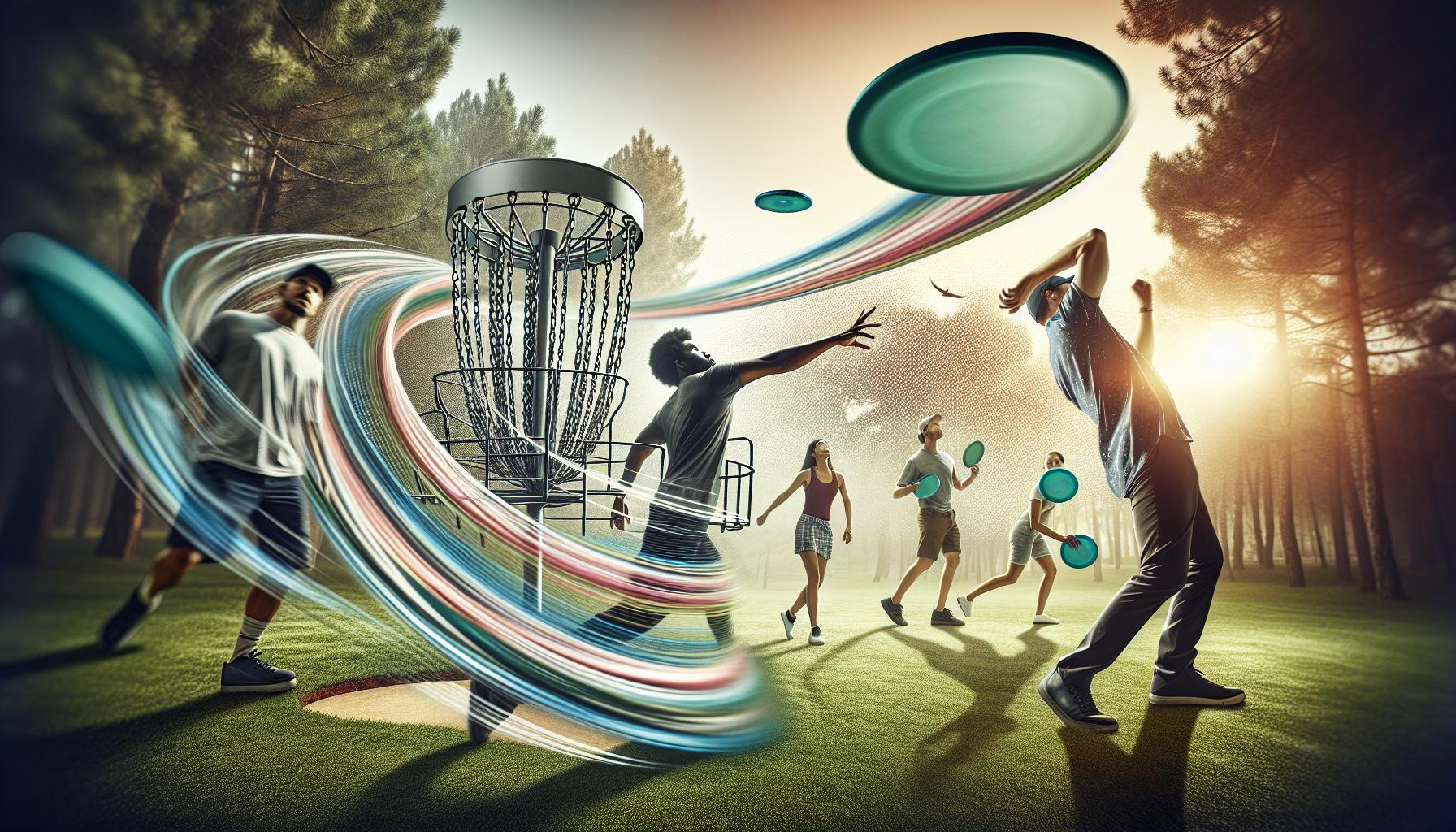
Understanding the Physics of Disc Flight
When you launch a disc into the air, you’re not just throwing a piece of plastic; you’re engaging with the principles of physics that govern its flight. The way a disc glides through the air depends on several interconnected forces, including lift, drag, and gravity, all of which are influenced by the disc’s design and the mechanics of your throw. Understanding these principles is essential for any disc golfer aiming to maximize their throwing distance and accuracy.
At the core of disc flight is the concept of lift, which is generated as the disc moves through the air. The shape of the disc, particularly its rim and wing design, influences how effectively it can create lift. A disc with a wider rim usually provides increased lift, allowing it to stay aloft longer. However, it’s essential to balance this with the dish’s stability; a more stable disc will resist turning over in the wind, making it easier to control.
Another critical factor is drag, which is the air resistance the disc encounters as it flies. Discs that feature a streamlined design tend to reduce drag, allowing them to fly faster and farther. For instance, high-speed drivers are engineered for minimal drag, enabling seasoned players to unleash powerful throws. Additionally, the angle at which the disc is thrown, known as the release angle, plays a significant role in determining its flight path. A flat release angle maximizes distance, while an upward angle can enhance lift, although it may also lead to increased drag.
To gain an edge in your disc golf game, experiment with different release techniques and disc types. For example, a backhand throw utilizes body rotation to generate momentum, focusing on engaging your legs and core to deliver the power through your shoulders. Practice finding your ideal grip and wrist snap, as these elements are crucial in controlling both speed and precision. By paying attention to both the physics of your throws and the characteristics of the discs you use, you can enhance your skills and enjoyment of this vibrant sport.
Key Factors Affecting Disc Speed
When it comes to mastering the art of disc golf, understanding the factors that influence a disc’s speed is crucial for players at any skill level. One primary consideration is the design of the disc itself. Aerodynamics plays a significant role; discs with a streamlined shape will experience less drag, allowing them to cut through the air more efficiently. This design typically includes a sharper edge and a well-contoured rim, which helps the disc maintain speed during flight. For example, high-speed drivers are engineered specifically to minimize air resistance, making them ideal for experienced players looking to maximize their throwing distance.
Another essential aspect is the throwing technique employed by the player. The combination of body mechanics, grip, and the angle of release can significantly impact disc speed. A backhand throw, which many players favor, relies on a full body rotation and a strong follow-through to generate speed. Ensuring that your wrist is flexed at the moment of release can create additional snap, propelling the disc with greater force. Practicing variable release angles can also yield different flight results; for instance, a flat release generally leads to optimal distance, while a slight upward angle may enhance lift but could lead to a decrease in forward momentum.
The weight of the disc also contributes to its speed capabilities. Lighter discs tend to fly faster and are easier to throw for beginners, while heavier discs provide more stability and can cut through wind. However, all players should be aware of how the disc’s stability rating interacts with their throwing style and the prevailing weather conditions. A disc with more stability can help prevent unwanted turns during windy throws, allowing for more consistent performance.
Additionally, it’s worth discussing how environmental factors affect disc speed. Wind conditions, temperature, and altitude can influence how a disc performs in flight. For example, throwing into a headwind can slow a disc down significantly, while a tailwind can enhance its speed and distance. Understanding these variables aids players in selecting the right disc for specific course conditions, making strategic adjustments to their technique and equipment that can elevate their game.
In summary, the speed at which a disc golf disc flies is not merely a function of its construction but a complex interplay of design features, player mechanics, and external conditions. By honing their skills and being aware of these factors, disc golfers can enhance their performance and enjoy the thrill of the game even more.
Comparing Speed Ratings of Disc Golf Discs
The world of disc golf can be both exhilarating and overwhelming, especially when it comes to discerning the speed ratings of various discs. Speed ratings, which range from 1 to 14, provide insight into how quickly a disc can cut through the air, affecting distance and throw performance. Understanding these ratings not only helps players select the right disc for their style but also equips them to optimize their throwing techniques and strategies on the course.
The speed rating system is not just a simple number; it reflects the disc’s design, including its profile, weight, and structural integrity. For instance, high-speed drivers, rated 13 to 14, are specifically shaped for distance throws. These discs feature a more aerodynamic design, with sharper edges that minimize drag. Conversely, mid-range discs, typically rated between 5 and 7, offer better control, making them ideal for shorter throws where precision is key. This variability allows players to tailor their equipment to their unique throwing style and course conditions.
When comparing discs, it’s essential to consider not only their speed rating but also factors such as glide, turn, and fade. Glide refers to how well a disc stays aloft, while turn indicates stability during the flight path, and fade represents how sharply the disc will hook to the left or right at the end of its flight. Pairing a disc’s speed with the right glide can significantly affect how far and accurately it travels. For example, a fast disc with high glide can help players achieve impressive distances, while those seeking more accuracy may prefer a slower, more stable option.
Making informed decisions about disc selection can dramatically impact a player’s performance on the course. As such, seasoned players and beginners alike benefit from experimenting with different speed ratings to discover what suits their throwing technique best. For example, a beginner might start with a disc rated around 7, allowing them to focus on mastering their form without the added complexity of handling a high-speed driver. In contrast, more experienced players might gravitate towards higher-speed discs to maximize their distance potential.
In summary, delving into the speed ratings of disc golf discs reveals a wealth of information that can enhance every player’s game. By understanding how speed interacts with other flight characteristics, athletes can make strategic choices that elevate their performance, allowing them to fully embrace the dynamic nature of this growing sport.
Throwing Techniques for Maximum Speed
The art of throwing a disc golf disc is as much about physics as it is about technique. Achieving maximum speed requires a keen understanding of not only how to grip and release the disc but also how to harness your body’s mechanics effectively. Every throw begins with a solid stance and grip, setting the stage for a powerful delivery. Players should adopt a balanced posture, feet shoulder-width apart, knees slightly bent, and weight distributed evenly, allowing for a full range of motion and stability as they prepare for the throw.
Once in position, the grip is crucial. A power grip, where the fingers are pressed firmly against the underside of the disc with the thumb on top, provides the most control and leverage. The key is to maintain tension in your grip without making it rigid, ensuring you can release the disc smoothly at the right moment. As the throw begins, use your hips and shoulders to generate rotational force. This rotational movement is what propels the disc forward with speed, so engaging your core is essential. Initiate the throw with a strong, explosive motion from your legs, driving upward and transferring that energy through your torso and into your throwing arm.
Practice is fundamental to mastering these techniques. Start with shorter throws to focus on form before gradually increasing the distance and speed. Using drills that emphasize hip rotation and arm speed can significantly enhance your overall ability. For example, practice the “X-step,” a common footwork technique that helps create momentum and allows for a more powerful release. This adds not just speed but also stability to your throw, making it a favorite among experienced players.
Lastly, consider the type of disc you are using. As mentioned previously, speed ratings play a pivotal role in how a disc behaves in flight. Higher-speed discs require more skill to throw effectively and are typically favored by experienced players who can handle them. Beginners should start with more stable, slower discs that allow for easier throwing mechanics while building their skills. Remember, understanding the nuances of your equipment combined with solid throwing techniques will lead you to achieve peak performance on the disc golf course. By honing your skills and experimenting with different techniques, you can elevate your game and experience the thrill of watching your disc soar through the air with remarkable speed.
The Role of Disc Weight and Stability
The weight and stability of a disc golf disc are crucial factors that significantly influence how fast and far the disc can fly. Understanding these elements not only enhances your gameplay but also empowers you to make informed decisions when selecting discs that suit your playing style. Lighter discs often allow for quicker releases and can achieve higher speeds due to less inertia; however, they may also be more susceptible to wind and require a higher mastery of technique to control effectively.
When it comes to disc stability, it’s essential to acknowledge that this feature informs how a disc behaves in the air. Stability is categorized into four primary types: stable, understable, overstable, and fluctuating stability based on speed and angle of release. For example, overstable discs tend to resist turning over, making them reliable for consistent hyzer throws. Conversely, understable discs can flip up and reach incredible distances but may also require greater skill to manage their flight patterns. A disc’s stability interacts with its weight, meaning a heavier disc will generally maintain stability better in windy conditions, while a lighter disc might offer more distance when thrown correctly.
Selecting the right combination of weight and stability can enhance your performance on the course. Beginners might benefit from starting with slightly heavier discs that are more stable, which can help mitigate misthrows and allow for enjoyable learning curves. More experienced players, aiming for maximum distance, often prefer lighter discs that offer a balance of speed and control. Remember to take into account personal comfort and throwing style, as individual preferences vary widely.
In practice, you can experiment with different weights and stability ratings by borrowing or renting discs at your local disc golf shop or community events. By engaging with the disc golf community and participating in casual games, you can gain insights from experienced players who can share firsthand experiences of how different discs perform under various conditions. This collaborative approach will not only help you refine your understanding but also enrich your enjoyment of the sport as you progress.
Speed Measurements: How They’re Done
Understanding how disc golf discs are measured for speed provides valuable insights for players aiming to enhance their game. Speed measurements for these discs are typically conducted using specific tools and techniques designed to simulate real-world conditions and provide accurate data. One common method involves the use of a mechanical arm or a throwing machine that releases the disc at a controlled angle and with a consistent amount of force, allowing for precise measurements of speed upon release.
To give you a clearer perspective, the speed of a disc golf disc is quantified on a scale of 1 to 14, with higher numbers reflecting faster discs. This scale is standardized across manufacturers, helping players compare performance across different brands and models. The speed rating specifically indicates the maximum velocity a disc can achieve when thrown under optimal conditions, which includes a proper release angle, spin, and throw technique. It’s worth noting that while a disc may be rated for high speed, factors such as wind conditions, individual throwing mechanics, and even the type of course can influence actual flight performance.
In practical terms, players can gauge how a disc will fly by considering both its speed rating and other attributes like glide, turn, and fade. For instance, a disc with a high speed rating but low glide may not travel as far as anticipated because it doesn’t stay airborne as effectively. To optimize your understanding, it’s helpful to categorize discs based on speed ratings and conduct trials in various conditions to see how they perform. This hands-on approach offers valuable experience, allowing you to see firsthand how speed interacts with technique and environment.
Additionally, measurements taken by professional players often serve as benchmarks for aspiring competitors. Many professionals share their techniques through videos and blogs, showcasing how they achieve optimal speed and control. By engaging with these resources and experimenting with measurements yourself, you can develop a nuanced understanding of how speed affects your game, ultimately improving your distance and accuracy on the course.
Professional Disc Golf Players and Their Techniques
Professional disc golf players possess a unique combination of skill, technique, and experience that enables them to achieve remarkable disc speeds. One technique commonly utilized by top players is the *x-step*, which allows them to generate maximum kinetic energy when throwing. This motion involves a series of steps that helps build momentum before releasing the disc. Typically, players will begin with a balanced stance, take a step back with their non-dominant foot, and then rotate their hips as they thrust forward.
Moreover, the grip can significantly influence disc speed and control. Many pros use a power grip, where all four fingers are positioned underneath the disc, providing a strong pull during release. This grip helps maximize spin and velocity, crucial for long-distance throws. Top throwers also emphasize the importance of snap at the point of release. Achieving a smooth flick of the wrist can add extra spin and, therefore, speed to the disc, allowing it to cover distance more efficiently.
Real-World Insights
Several renowned players like Paul McBeth and Simon Lizotte frequently share their techniques through social media, instructional videos, and clinics. For instance, Paul McBeth emphasizes consistent mechanics and body alignment, which can enhance both power and accuracy. He often advises less experienced players to focus on their form rather than sheer strength, highlighting that a well-executed throw can easily surpass a forceful attempt that lacks technique.
Another noteworthy point is the way professional players select their equipment for throwing speed. Discs from specific manufacturers, such as Innova or Discraft, have varying speed ratings, and professionals often gravitate towards certain models based on their throwing style and preferences. To illustrate, players might choose a high-speed disc for long-range open shots while opting for a more stable disc in tighter, more technical settings.
As you explore the world of disc golf, remember that the journey to mastering speed is as important as the destination. By studying these professionals’ techniques and incorporating them into your practice, you’ll not only enhance your throw speed but also deepen your appreciation of the sport’s intricacies. Engaging with the disc golf community, whether through tournaments or casual play, can also provide valuable insights and motivation to refine your skills, ultimately making you a more competent and confident player on the course.
The Best Disc Models for Speed Enthusiasts
When it comes to selecting discs that maximize speed for distance-driven disc golf enthusiasts, the market offers a plethora of options designed to enhance performance. One crucial aspect to consider is the speed rating of the disc. Discs are generally rated from 1 to 15, with higher numbers indicating faster discs. A high-speed disc can greatly reduce the effort needed to achieve long-distance throws, allowing players to maximize their throws with finesse rather than force.
Some of the standout models that speed enthusiasts gravitate towards include:
- Innova Destroyer: Often favored by advanced players for its impressive speed (Rated 13) and stability, the Destroyer excels in both distance and controlled throws. Its aerodynamics allow for impressive glide, making it a top choice for maximum distance.
- Discraft Tern: This high-speed (Rated 13), lightweight disc suits players looking for a reliable distance driver. Its natural turn enables it to carve through the air, making it especially effective for hyzer flips.
- Dynamic Discs Raider: With a speed rating of 14, the Raider is perfect for players who demand both speed and stability. Its design enables maximum distance with a predictable fade, making it an incredible option for both beginners and seasoned pros alike.
- Kastaplast K1 Reko: While known for its putter qualities, the K1 Reko earns its place due to its excellent glide and versatility. Though not the fastest (Rating of 5), it is remarkably efficient for distance approach shots.
For those committed to elevating their game, pairing high-speed discs with disciplined throwing techniques can make a significant difference. Players should experiment with various models to find the right fit, considering factors such as throwing style and grip.
Be sure to engage with local disc golf communities, whether through club tournaments or casual meetups; sharing experiences and tips can only serve to enrich your understanding of disc choices and dynamics. As you explore and practice, you’ll appreciate how the right disc model can not only enhance your speed but also elevate your overall performance on the course, making each round more exhilarating.
Common Misconceptions About Disc Speed
Many newcomers to disc golf believe that simply choosing the disc with the highest speed rating will lead to the best performance on the course. However, this isn’t necessarily true. Speed ratings, which range from 1 to 15, indicate the potential of a disc, but they don’t account for a player’s individual throwing style, technique, and physical ability. Understanding that speed isn’t just about the disc itself but also how you throw it can help demystify disc speed and lead to better results on the course.
Another common misconception is that heavier discs are inherently slower than lighter discs. While it’s true that heavier discs can sometimes require more force to achieve higher speeds, they can also cut through wind more effectively and maintain stable flight paths. Many experienced players find that heavier discs provide better distance under certain conditions, especially in windy weather. Hence, focusing solely on weight without considering conditions and personal preference can limit a player’s potential.
Additionally, the idea that speed defines accuracy is a misunderstanding that can hold players back. It’s easy to think that throwing faster equals more distance and, therefore, better performance; however, accuracy is vital in disc golf. Proper technique, consistency, and a solid understanding of disc dynamics often outweigh sheer speed. Players should prioritize developing their skills and understanding how different discs perform in various scenarios rather than solely chasing faster throw speeds.
Finally, many aspiring players underestimate the importance of practice and technique. Watching professional players effortlessly throw long distances might make it seem like speed comes naturally, but professionals invest countless hours honing their craft. Focusing on improving form, strength, and technique through drills will often yield better results than solely trying to select the fastest discs available. Engaging with local disc golf communities and seeking tips from seasoned players can provide insights that help demystify these misconceptions, enhance your skills, and ultimately improve your overall game.
Improving Your Throw Speed: Tips and Drills
Improving your throw speed can significantly enhance your performance on the disc golf course, and it’s rooted in a blend of technique, strength, and practice. Did you know that the average professional player can achieve throw speeds exceeding 60 miles per hour? For amateurs, reaching even 40 mph can feel like a challenge. However, with focused drills and an understanding of proper techniques, you can work towards maximizing your throw speed, benefiting not only your distance but also your accuracy on the course.
To begin improving your throw speed, start with your grip and stance. Use a firm but relaxed grip on the disc, ensuring that your fingers are positioned correctly and that you maintain control without being overly tense. Your stance should be shoulder-width apart, allowing for a balanced base. As you prepare to throw, your body should rotate, engaging your hips and shoulders in the motion. Focus on generating power from your legs and core rather than relying solely on arm strength-this foundational principle is crucial for maximizing speed.
A practical drill for enhancing your throwing speed is the “X-step” drill, which helps build momentum through your body movements. Begin with your dominant foot back, then step forward in a diagonal motion, using a sequence that shifts your weight efficiently from your back foot to your front foot. As you do this, keep your upper body compact and emphasize the hip rotation. Incorporate these steps into your throws, aiming for fluidity rather than raw power.
Regular practice is essential for improvement. Try dedicating specific sessions solely to speed drills, using light, mid-weight discs to allow for faster movements without fatigue. Gradually, as your technique and strength improve, you can transition to heavier discs, which will challenge your speed further. Engaging with local disc golf communities can also provide valuable insights and training regimens tailored to speed enhancement. Remember, consistent practice and a focus on technique are your best allies in this journey towards faster throws and better disc golf performance.
By embracing these strategies and making them part of your routine, you’ll not only improve your throw speed but also gain the confidence needed to tackle the various challenges on your disc golf journey. It’s a sport that thrives on community and personal growth, and every enhancement in your technique brings you a step closer to mastering this exciting game.
Q&A
Q: What factors influence the speed of disc golf discs?
A: The speed of disc golf discs is influenced by factors such as disc design, throwing technique, and environmental conditions. Understanding these elements can help players maximize their disc speed. For more in-depth details, check out the section on Key Factors Affecting Disc Speed.
Q: How do disc golf disc speed ratings work?
A: Disc speed ratings indicate how fast a disc can travel when thrown correctly. Ratings typically range from 1 to 14, with higher numbers signifying greater speed potential. These ratings are useful for comparing different disc models. Learn more about this in the Comparing Speed Ratings of Disc Golf Discs section.
Q: What is the average throw speed for professional disc golfers?
A: Professional disc golfers can throw discs at speeds averaging between 60 to 70 miles per hour (approximately 97 to 113 kilometers per hour). This impressive speed is achieved through honed technique and physical conditioning. For tips on how to enhance your speed, check the Improving Your Throw Speed section.
Q: Can the weight of a disc affect its speed?
A: Yes, the weight of a disc directly impacts its speed and stability. Heavier discs tend to fly more predictably and maintain speed better, while lighter discs can achieve higher speeds but may be more prone to wind influence. For insights, refer to the The Role of Disc Weight and Stability section.
Q: How does temperature affect disc speed?
A: Temperature can affect both the air density and the material of the disc, influencing its speed and distance. Generally, warmer conditions allow for better flight performance due to reduced air density. Understanding these effects can enhance your performance; read more in the Physics of Disc Flight section.
Q: What throwing technique maximizes disc speed?
A: To maximize disc speed, focus on achieving a powerful and smooth snap at the release point while ensuring your stance and follow-through are correct. Practicing different throwing styles can further enhance your speed. Discover more in the Throwing Techniques for Maximum Speed section.
Q: Are there disc types that fly faster than others?
A: Yes, certain disc types, such as distance drivers, are designed for speed and can fly faster than putters or mid-range discs. Understanding disc types can help players choose the right equipment for their goals. Explore the Best Disc Models for Speed Enthusiasts for recommendations.
Q: How can I measure the speed of my disc golf throws?
A: You can measure the speed of your disc throws using a radar gun or specific smartphone apps designed for tracking throw speed. Regular practice with these tools can help in assessing progress. More techniques can be found in the Speed Measurements: How They’re Done section.
The Way Forward
Understanding how fast disc golf discs fly is crucial for improving your game and mastering throwing techniques. Armed with the speed measurements we’ve discussed, you’re now equipped to make smarter choices in your disc selection and technique adjustments. Don’t let this knowledge sit-practice your throws to see and feel the difference in your performance!
For deeper insights, check out our articles on disc flight characteristics and throwing mechanics to refine your skills further. Curious about the best discs for specific throwing styles? Explore our comprehensive equipment comparison to find the perfect gear for your next round, or sign up for our newsletter for the latest tips and community stories.
Join the conversation by sharing your experiences or asking questions in the comments below. Your journey in disc golf doesn’t end here; keep exploring and elevating your game!
Get our latest guides, news, and insights highlighted in your Google Search & AI Overviews.