Choosing the right weight for your disc golf driver can significantly impact your game. Did you know that many players struggle with the question of driver weight, often unsure how it affects distance and control? Understanding weight options not only enhances your performance but also boosts your confidence on the course. Whether you’re picking up the sport for the first time or refining your skills, knowing how weight influences flight characteristics is crucial. This guide will walk you through the intricacies of disc weight, helping you find that sweet spot that suits your throwing style and playing conditions. Get ready to elevate your game as we explore the right driver weight for you!
How Disc Golf Driver Weight Affects Performance
The weight of your disc golf driver can significantly influence your game, affecting everything from distance to accuracy. A well-chosen driver weight helps players maximize their throwing potential, allowing them to navigate various course conditions with confidence. While many newcomers may wonder if there’s a perfect weight for every scenario, the reality is that performance is often a personal journey shaped by several factors, including skill level, throwing technique, and the specific demands of a given course.
Choosing the right driver weight often starts with understanding how weight affects flight dynamics. Heavier discs tend to be more stable in the wind and are less affected by outside factors, giving players greater control during their throw. Conversely, lighter discs are generally easier to throw for beginners and can achieve greater distances when thrown correctly. As a player develops their technique, experimenting with different weights can reveal preferences that enhance performance. Most players find their sweet spot by regularly testing various weights, gradually moving to a heavier or lighter disc based on comfort and effectiveness.
One common mistake among disc golfers is disregarding how their throwing mechanics relate to disc weight. For instance, a player with a slower arm speed might struggle to achieve optimal distance with a heavier driver, while someone with a more advanced technique may benefit from the extra stability that a heavier disc provides. It’s also worth noting how course conditions play into this decision. For example, on windy days, a heavier driver can cut through turbulence, whereas lighter discs may be more useful in calm weather for achieving longer flights. Understanding these nuances can lead to a more tailored and effective disc selection, ultimately transforming your game.
As players progress, they’ll discover which weights help them achieve consistent and controlled throws. Sharing insights within the disc golf community can also aid in this exploration. Conversations with fellow players about their preferences and experiences reveal that there isn’t a one-size-fits-all answer; rather, it’s an evolving understanding of how different disc weights can enhance individual performance based on personal style and course challenges. Therefore, commit to testing, learning, and adapting your approach, allowing you to find that perfect weight that feels just right, propelling your game to new heights.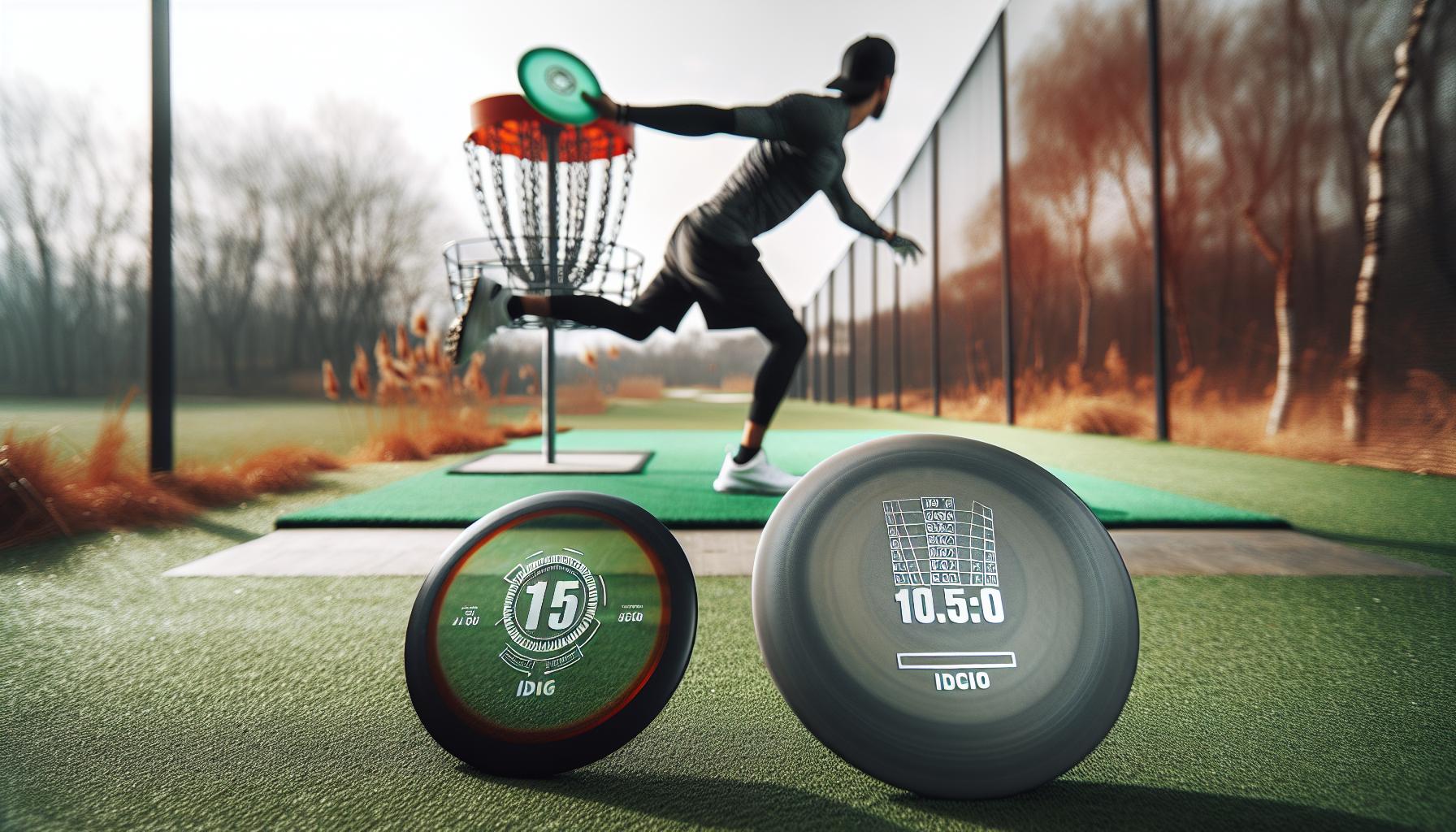
Understanding Driver Flight Ratings
Understanding the nuances of driver flight ratings is essential for any disc golfer aiming to improve their game. Flight ratings are typically measured by four key components: speed, glide, turn, and fade. Each of these factors plays a crucial role in determining how a disc will behave when thrown, offering players valuable insight into which disc will complement their throwing style best.
- Speed: This rating, usually ranging from 1 to 14, indicates how fast a disc needs to be thrown to achieve optimal performance. Higher speed ratings usually correspond with longer distances, requiring more power from the thrower.
- Glide: Glide ratings, typically from 1 to 7, reflect how well a disc stays aloft during its flight. A disc with high glide (rated 5 or more) tends to stay in the air longer, resulting in more distance, while a low glide (rated 3 or below) often drops quicker.
- Turn: This rating indicates how a disc will turn to the right (for right-handed backhand throws) during the initial part of its flight. Rated from -5 (extreme turn) to 0 (no turn), a disc with a negative turn rating may help players with slower arm speeds achieve more distance, while a neutral or positive rating suits powerful throws needing stability.
- Fade: Fade ratings, which run from 0 to 5, describe the leftward finish of a disc’s flight. A disc with a high fade will fade back significantly at the end of its flight, which is ideal for navigating sharp turns or hooking into the basket.
It’s important to recognize that these ratings are not set in stone; they can vary based on numerous factors, including throwing style, arm speed, and the disc’s weight. For instance, lighter discs can exhibit more turn and glide, making them forgiving for less experienced players. In contrast, heavier drivers might be more stable and desirable for higher-velocity throws, making them suitable for more advanced players seeking precision and predictability in challenging conditions.
To maximize the benefits of flight ratings, players should experiment with discs of varying weights and styles while paying attention to their throwing mechanics. Understanding how a disc could potentially behave in various weather conditions, terrains, and with different throw techniques will enhance your decision-making process and ultimately elevate your performance on the course. By aligning your chosen driver weights and flight characteristics with your unique throwing style and the demands of the course, you’ll not only improve your accuracy and distance but also your overall enjoyment of this dynamic and exciting sport.
Choosing the Right Weight for Your Skill Level
Finding the optimal weight for your disc golf driver is a critical step in elevating your game and can significantly influence your overall performance on the course. Choosing the correct weight isn’t just about personal preference; it involves understanding your skill level, throwing style, and even the types of courses you typically play. Many players discover that experimenting with various weights can lead to breakthroughs in their throwing accuracy and distance.
Players new to the sport or those still honing their skills often benefit from lighter drivers, typically ranging from 150 to 165 grams. These discs are generally easier to control, allowing for longer flight times and greater forgiveness on off-center throws. The added glide can help beginners achieve more distance without requiring significant power, making the learning curve less daunting. As you gain confidence and develop your technique, you might gradually transition to heavier weights (165 to 180 grams) that can provide more stability and a stronger performance against wind.
Intermediate to advanced players typically favor drivers in the 165 to 175-gram range, as these weights allow for a balance of control and distance. Heavier discs often provide more predictable flight paths and can handle more power, enabling seasoned players to execute more complex throwing techniques and maneuvers. Additionally, experienced players often have a better understanding of how variations in weight can affect their throws; for example, a heavier driver may resist turning over as easily, which is beneficial in specific wind conditions and strategic course layouts.
An important consideration when selecting driver weight is the type of course you’re playing. In more open courses with strong wind conditions, a heavier driver can maintain stability and reduce errant throws. Conversely, technical courses with tight fairways and obstacles might benefit from lighter discs, giving players the ability to achieve more controlled, accurate placements. Ultimately, the key is to test various weights, assess how they feel in your hand, and observe their impact on your throws. By aligning your driver weight with your skill level and the demands of the course, you’ll set yourself up for greater success and enjoyment in your disc golf journey.
Lightweight, Midweight, or Heavyweight: What’s Best?
The weight of your disc golf driver plays a pivotal role in determining both distance and accuracy, making it crucial to understand the differences between lightweight, midweight, and heavyweight options. Many players might assume that heavier drivers are always better for distance, but that’s not necessarily true. In fact, the ideal weight depends largely on your individual skill level, arm strength, and the type of shots you plan to make on the course.
Lightweight drivers, typically weighing between 150 and 165 grams, are often favored by beginners and players with slower arm speeds. These discs are easier to handle and generate a generous amount of glide. This additional glide can help newer players achieve longer flights with less effort, allowing for better control on initial throws and a more forgiving response on off-target releases. The ability to manipulate such discs can create the momentum and air resistance needed to maximize distance without relying heavily on throwing power.
Conversely, midweight drivers (165 to 175 grams) strike a balance between control and distance, making them suitable for a broader range of players. They provide enough stability to handle stronger throws while not being so heavy that they hinder technique. Intermediate players often find that these discs allow for more consistent performance across a variety of throwing styles and conditions. As you gain experience, a midweight driver can become your go-to choice, offering the versatility needed to tackle both technical courses and open spaces.
Heavyweight drivers, generally exceeding 175 grams, shine in windier conditions where stability is paramount. Players who can generate significant arm speed may prefer these discs for their resistance to turning over, enabling more reliable hyzer and turnover shots. However, it’s essential to remember that heavier drivers demand a good technique; they are not necessarily better for everyone. Experienced players may lean towards these options during competitive play or in challenging weather, where the ability to maintain a controlled flight path is crucial.
Ultimately, the best weight for your driver relies on a combination of personal preference, throwing style, and the specific demands of the course. Consider experimenting with different weights to discover what feels most comfortable and effective in your hands. Keep in mind that practicing with various weights can reveal nuances in throwing techniques and result in improved performance across your disc golf journey.
Impact of Weight on Throwing Technique
The weight of your disc golf driver can dramatically influence your throwing technique, ultimately affecting the accuracy and distance of your throws. Understanding how varying driver weights interact with your mechanics is crucial for maximizing your potential on the course. Lighter drivers may allow for quicker releases and more manageable throws, making them ideal for developing form and consistency, especially for beginners. However, as players grow in strength and skill, the transition to heavier drivers often requires adjustments in technique that are essential for harnessing their benefits fully.
When utilizing a lightweight driver (150-165 grams), the emphasis typically rests on a smooth, fluid motion. This weight makes it easier to achieve significant distance without the need for a powerful throw. Beginners can experience considerable success with lighter discs, as they promote a natural throwing motion that enhances learning. However, to achieve optimal results, it’s vital to focus on proper grip, stance, and follow-through. Players should practice engaging their whole body rather than overexerting their arm, as this approach fosters a more sustainable and effective throwing technique.
In contrast, while midweight (165-175 grams) and heavyweight drivers (>175 grams) can provide increased stability and control, they also demand greater technique refinement. Players throwing heavier drivers must focus on generating sufficient spin and speed. This often requires stronger core and shoulder engagement, as well as a more deliberate weight transfer throughout the throw. Practicing with a heavier driver can help enhance overall power and accuracy, but it is essential to ensure that your mechanics adapt accordingly; failure to do so may result in inconsistent throws or even injury over time.
Ultimately, the key to maximizing performance with disc golf drivers of varying weights lies in experimentation and practice. Players should not only test different weights but also reflect on how these choices affect their throwing mechanics. Regularly analyzing your technique can reveal insights about your grip and release points, facilitating improvements that align with your developing skill set. Embrace the journey of discovering what weight works best for you; your practice will richly reward your efforts as your game evolves.
Popular Driver Weights Among Professional Players
Across the world of disc golf, player preferences for driver weights can vary significantly, reflecting individual styles and skill levels. Many professional players gravitate towards specific weight ranges that they feel offer the best balance between distance and control. For instance, while some elite players favor heavyweight drivers for their stability and ability to handle strong winds, others may opt for lighter options that allow for quicker release and enhanced distance.
Typically, professional players tend to use driver weights ranging from 165 to 175 grams, striking a balance between the agility of lighter discs and the control of heavier options. This weight spectrum provides a versatile toolkit for navigating various course conditions. For example, many competitive players report that they can achieve consistent performance with midweight drivers, which are excellent for executing controlled, powerful throws on a variety of hole types.
Another noteworthy trend is the adaptability among professional players regarding driver weights. Some opt for lighter discs during practice or in calmer weather, allowing for more advanced throwing techniques, while switching to heavier discs during competitive play, especially in challenging conditions like strong winds or dense foliage. Understanding these preferences can help amateur players identify their own ideal driver weight by monitoring which weights they feel most comfortable with in practice versus competitive settings.
Furthermore, players often experiment with various brands and models to find the perfect fit. Notable professionals such as Paul McBeth and Ricky Wysocki have been known to use drivers on the heavier end of the spectrum, sometimes exceeding 175 grams for specific situations where stability is paramount. Conversely, rising stars may favor lightweight drivers during their formative years, allowing them to build skill steadily before transitioning into heavier models as their technique matures and power increases.
Ultimately, there’s no one-size-fits-all answer to what driver weight is best, even among professionals. The key takeaway is that player preference is deeply personal and influenced by a wide range of factors, including throwing style, strength, and course conditions. To find the perfect driver weight, players are encouraged to engage in trial and error, connecting key insights from the experiences of established professionals to develop a nuanced understanding of their capabilities and aspirations on the course.
Testing Different Weights for Optimal Control
Finding the right weight for your disc golf driver is a transformative journey that can elevate your game dramatically. While many players gravitate towards specific weights based on comfort, preference, and playing style, a structured approach to testing different weights can provide invaluable insights into what truly works best for you. Whether you’re a beginner trying to find your groove or a seasoned competitor refining your skills, understanding how weight affects control can make all the difference on the course.
Start your experimentation by assembling a range of drivers across various weight categories-lightweight (150-165 grams), midweight (165-175 grams), and heavyweight (175 grams and above). Head to a field or open space where you can throw freely. Begin your session with the lightest driver in your collection. Focus on achieving consistent form with each throw, assessing how it feels in your hand and the distance it covers. Take note of the disc’s stability in flight, including its glide, and how it handles wind resistance.
Once you’ve warmed up with lighter discs, gradually transition to midweight and then heavyweight drivers. As you progress, pay close attention to how your throwing technique adapts with each weight increment. Heavier discs can require more power and may lead to different release angles, while lighter discs can enhance your velocity but may become unpredictable if not thrown correctly. Keep a diary or use an app to log your observations-include details on distance achieved, throwing comfort, and any directional control issues encountered.
Key Testing Indicators
When testing different weights, consider the following factors to assess optimal control:
- Release Angle: Note how changes in weight affect your release angle and the corresponding flight path of the disc.
- Distance: Record the distance you achieve with each weight, aiming for consistency rather than maximized distance.
- Wind Resistance: Test each weight on windy days to see how well they hold up against breezy conditions.
- Throwing Fatigue: Monitor how your arm feels after multiple throws; heavier discs may lead to fatigue faster.
It’s also beneficial to include different types of throws in your testing routine-forehand, backhand, and hyzer throws-to observe how each driver weight performs under varied conditions. Engaging in this process not only aids in deciding which weight promotes the best control but also develops your skill set as you adapt your technique to different drivers.
Involving fellow players in your testing can enhance this experience; collaborate by throwing each other’s drivers, sharing feedback, and discussing preferences. Listening to the insights of seasoned disc golfers can uncover nuances you might have overlooked. Embrace this phase as an opportunity to refine your skills and deepen your understanding of your equipment. Testing various weights in a structured manner can ultimately lead you to your ideal disc driver, finely tuned to your unique throwing style and the demands of the courses you play.
Common Mistakes When Selecting Driver Weight
Selecting the right weight for your disc golf driver is crucial to enhancing your overall performance, yet many players fall into common pitfalls that can hinder their progress. One of the most prevalent mistakes is assuming that heavier discs automatically translate to longer distances. While heavier drivers can provide a consistent glide and stability in wind, they require more power to throw optimally. New players, in particular, might choose a heavyweight driver without fully grasping their throwing mechanics, resulting in less control and more erratic throws.
Another frequent misstep is not considering individual throwing styles and how they connect with disc weight. Disc golfers have varied throwing techniques influenced by strength, speed, and release form. Some might benefit from lighter discs due to their lower arm speed or less physical strength, allowing for easier manipulation and distance. It’s essential to acknowledge your unique throwing characteristics and test a range of weights to find the perfect match, rather than conforming to generalizations about “what works” for most players.
Overlooking the impact of course conditions is another key error. Many players stick with the same driver weight regardless of environmental changes. For instance, a lightweight driver may perform well on calm days but can lead to instability in windy conditions. Adapting your driver weight to suit the weather and terrain can significantly improve your play. Additionally, players often underestimate the importance of throwing several types of throws (backhand, forehand, hyzer, etc.) when testing weights; different throws may reveal varying performance levels across driver weights.
Finally, many golfers skip the journal aspect of their testing process, neglecting to document their experiences with each weight. Keeping track of what worked and what didn’t allows for better decision-making based on empirical data rather than fleeting impressions. By learning from these common mistakes and engaging in thorough, thoughtful testing, players can navigate the intricacies of disc weight selection to enhance their game skillfully.
Seasoned Insights: Weight Preferences from Expert Players
The preferences for disc weights among seasoned players reveal a fascinating interplay between experience, technique, and individual style. Expert players often emphasize the importance of knowing not just your own throwing mechanics but also how different weights can influence performance in various conditions. Many top competitors opt for midweight drivers, usually around 170 to 175 grams, citing a balance between distance and control. This weight allows for optimal stability while providing a good distance potential without requiring excessive power.
Personal Insights from the Pros
Acclaimed players like Paul McBeth have shared their experiences highlighting the versatility of midweight drivers. McBeth, known for his precision and powerful throws, recommends lighter discs for players still developing their technique. “A lighter disc allows more room for error, helping you to refine your form without the immediate pressure of managing heavier weights,” he noted during a recent interview. This sentiment is echoed by other professionals who often advise beginners to start with lighter options (around 160-165 grams) before gradually shifting toward heavier discs as they gain strength and confidence.
In contrast, some experienced players prefer heavier drivers (175 grams and above), particularly for windy conditions or specific course challenges. They argue that heavier discs cut through the wind more effectively, offering better stability during flight. For instance, players facing heavy headwinds might stick with a heavier driver to maintain control over their throws when conditions become challenging. This adaptive strategy is crucial in a sport where the environment plays a significant role in every throw.
Weight Preferences and Course Conditions
When asked about their weight choices, many experts reflect on how course layout and conditions influence their driver selection. For example, if a course features tight fairways and requires precision, they may lean towards lighter drivers for increased maneuverability. However, on open courses where distance is vital, heavier drivers come into play to ensure stability and distance.
Moreover, seasoned players frequently suggest rotation-testing different weights on the practice field to gauge comfort and performance. By maintaining an open mindset and experimenting with various weights, you can uncover your unique preferences, rather than adhering to generalized standards. Ultimately, the insights from experienced players encourage disc golfers at all levels to consider their personal style and the environment, turning weight selection into a thoughtful aspect of their game strategy.
Adapting Driver Weight for Course Conditions
Understanding how to adjust your driver weight based on course conditions can significantly enhance your performance on the disc golf course. The weight of your disc affects not just distance but also stability and control, which are crucial when navigating varying terrains and environmental factors. For instance, when facing tight fairways, a lighter disc can offer the necessary finesse to navigate through obstacles while maintaining accuracy. Its reduced weight allows for quicker adjustments in your throwing technique, giving you room to optimize your form under pressure.
On the other hand, when tackling open courses with strong winds or tricky weather conditions, heavier drivers (typically over 175 grams) can be your best friend. They possess the ability to cut through the wind more effectively, providing the stability that lighter discs often lack in turbulent air. For example, seasoned players often rely on heavier drivers when they anticipate headwinds during a tournament, as the extra weight helps to ensure that their throws maintain a straight path rather than being pushed off course.
Moreover, to find the perfect balance, consider conducting practice sessions where you rotate between different weights. This hands-on experimentation allows you to discern which weight feels most comfortable in specific situations, enhancing your overall strategy. Make a note of how each weight performs in various elements-such as distance, accuracy, and how well it handles wind-which can inform your gear choices during competitions. Ultimately, being adaptable and understanding the interplay between driver weight and course conditions can refine your gameplay and boost your confidence.
Listening to feedback from fellow players and observing how they adjust their equipment can further deepen your understanding. Remember, this sport not only celebrates individual skill but also community insights, allowing you to grow and refine your technique collaboratively. Embrace the learning process and let your experiences shape your equipment choices, ensuring that every throw is as effective as possible.
The Evolution of Disc Golf Driver Technology
The progression of disc golf driver technology has transformed the way players approach this dynamic sport, providing a plethora of options suited to varying skill levels, throwing styles, and course conditions. In the early days, discs were primarily made of durable plastic, with limited weight options, but advancements in materials and design have introduced a range of weights and flight characteristics that cater to diverse player preferences.
Modern drivers come in a multitude of weights, typically ranging from 150 grams to over 175 grams. The selection of weight influences not only distance but also stability and control, making it vital for players to understand how these nuances affect performance. Innovations such as rim design adjustments and innovations in plastic blends have allowed manufacturers to create discs that maintain their flight paths more reliably, regardless of the player’s skill level. Many manufacturers are now incorporating new technologies that enhance grip, minimize drag, and optimize aerodynamics, allowing players to achieve greater distances with improved accuracy.
When considering driver weight, it is beneficial to note how technology has led to a deeper understanding of disc flight dynamics. Discs designed with higher stability ratings are better equipped to handle headwinds due to increased mass, while lighter discs promote a greater degree of glide and ease of maneuverability among obstacles. This knowledge now enables players to match their disc choice with both their skill level and the specifics of the course they are tackling, whether it’s a tightly wooded layout or an open field course subject to strong winds.
As a grassroots sport that thrives on community feedback and experimentation, players today are fortunate to access an extensive range of customizable options. Engaging with the local disc golf scene and taking time to test different weights in practice rounds can lead to valuable insights. Many players find that adapting their driver weight as they progress in skill and as conditions change on the course leads to continuous improvement in performance. This emphasis on technology, community, and adaptability is shaping the future of disc golf, making it an exciting field for both novices and seasoned competitors alike.
Tips for Transitioning to a Heavier or Lighter Driver
Transitioning to a different weight of disc golf driver can profoundly influence your game, enhancing performance and enjoyment on the course. Whether you’re moving to a heavier disc for more control or lightening your load for greater distance, doing so requires careful consideration and a structured approach. Start by assessing your current throwing mechanics and physical strength. A well-executed transition ensures you can adapt your technique without sacrificing accuracy.
When shifting to a heavier driver, a gradual adaptation is crucial. Begin by practicing with the new weight during casual rounds before incorporating it into competitive play. Focus on maintaining proper form – a smoother, more controlled throw will help you manage the additional weight. Strengthening your wrist and shoulder muscles through targeted exercises can also enhance your ability to handle heavier discs. Many players report success with a rigorous warm-up routine that includes stretching and light throwing to prevent strain and build confidence.
Conversely, if you’re moving to a lighter driver, it’s important to understand how this affects stability and flight patterns. You might find that a lighter disc is more susceptible to wind and requires different throwing angles. To acclimate, practice with various grips and release points, experimenting with how adjustments alter the disc’s flight. Keeping a detailed log of your throws with both weights can help you track performance changes and improve your decision-making in real game conditions.
Ultimately, success in transitioning between disc weights lies in patience and persistence. Take the time to experiment with different driver specifications under various course conditions. By understanding how each weight feels in your hand and reacts in the air, you’ll cultivate greater confidence in your choice of driver, contributing to every throw’s success. Engage with fellow players, share experiences, and embrace the learning process, as each adjustment takes your skills to the next level.
Frequently Asked Questions
markdown
Q: What weight should I choose for my first disc golf driver?
A: For beginners, a disc golf driver weighing between 160-170 grams is ideal. This range provides a good balance of distance and control, allowing new players to develop their throwing technique effectively. As you gain experience, you can adjust the weight based on your throwing style.

Q: How does the weight of a disc golf driver affect distance?
A: Generally, lighter drivers (under 160 grams) can achieve greater distances with less effort, while heavier drivers (170 grams and above) provide more stability in windy conditions. Players should experiment to find the right weight that maximizes their distance while maintaining control.

Q: Can heavier discs improve my accuracy in disc golf?
A: Yes, heavier discs often provide more stability and can reduce the impact of wind, leading to improved accuracy, especially on long throws. However, it's essential to ensure you can comfortably throw the weight; otherwise, it may hinder your technique.

Q: Should I adjust my driver weight based on my throwing mechanics?
A: Absolutely! Your throwing mechanics play a crucial role in your choice of driver weight. If you have a slower arm speed, consider a lighter disc to help with distance. Conversely, faster arm speeds can benefit from heavier drivers for better control and stability.

Q: What weight do professional disc golfers typically use?
A: Most professional disc golfers use drivers weighing between 170-175 grams. This weight strikes a balance between distance and stability, allowing for controlled throws across various course conditions.

Q: How can I test different weights of discs effectively?
A: To test different weights, try throwing multiple drivers of varying weights during practice sessions. Focus on your control and distance for each weight. Take note of how each disc performs and choose one that complements your style.

Q: What are the common mistakes when selecting driver weight?
A: Common mistakes include choosing a weight solely based on what others use or opting for lighter discs without considering your throwing technique. Instead, assess your skill level and experiment with different weights to find what feels best for you.

Q: How can I transition from a lighter to a heavier disc golf driver?
A: To transition, gradually increase the weight of your driver over time. Start with a couple of practice sessions using a slightly heavier disc, and focus on maintaining your throwing form. This gradual approach helps you adapt without sacrificing control or distance.
To Wrap It Up
Now that you’re equipped with the insights on how heavy your disc golf driver should be, it’s time to put this knowledge into practice! Choosing the right weight is crucial for your throwing mechanics and overall performance on the course. Don’t wait-experiment with different weights and discover what feels best for you. Remember, whether you’re a beginner or looking to enhance your competitive edge, every throw contributes to your growth as a player.
If you found this guide helpful, be sure to explore our articles on disc flight characteristics and throwing techniques to deepen your understanding. Interested in the latest equipment? Check out our product reviews to find the perfect driver tailored to your needs. And don’t forget to join our newsletter for expert tips and exclusive updates! Your journey in disc golf is just beginning-share your experiences with us in the comments below, and let’s keep the conversation going. Happy tossing!
Get our latest guides, news, and insights highlighted in your Google Search & AI Overviews.