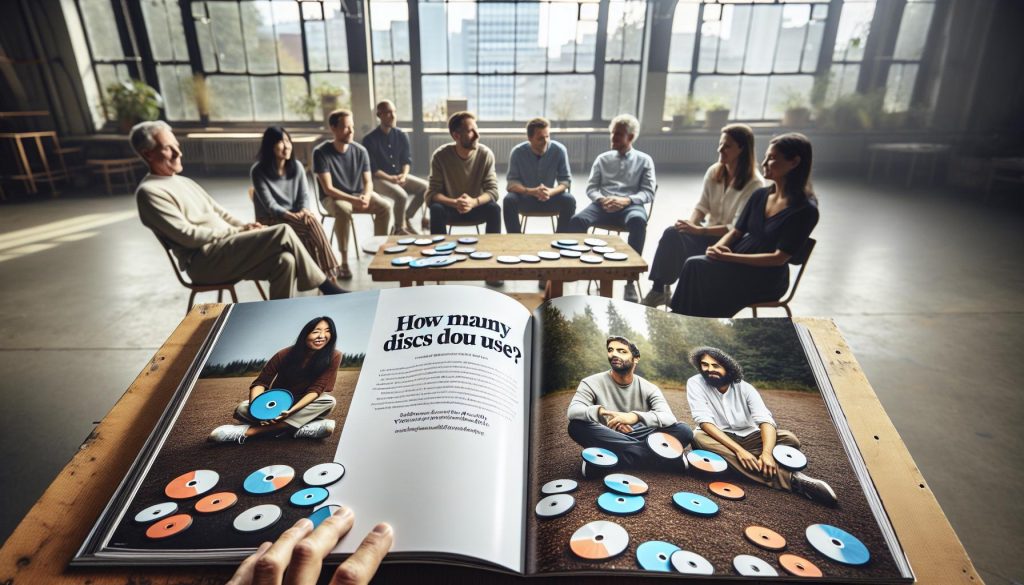
When it comes to disc golf, the number of discs you carry can significantly influence your game. Did you know that many experienced players recommend a versatile bag containing around 15 discs? This strategic selection helps to cover various throwing needs and course conditions. Understanding how to balance your collection with distance drivers, fairway drivers, midranges, and putters is key to enhancing your performance and enjoyment.
As you navigate your disc golf journey, choosing the right number of discs isn’t just about quantity; it’s about quality and suited functionality. Whether you’re a newcomer eager to discover the sport or an experienced player aiming to refine your strategy, figuring out the ideal discs for your style can open doors to new skills and improved confidence on the course. Dive deeper to uncover methods for streamlining your selection and maximizing your potential in this exciting sport.
Understanding Disc Flight Characteristics and Types
Understanding how discs behave during flight is crucial for any disc golfer looking to refine their strategy and improve their game. Each disc has distinct flight characteristics defined by its stability, speed, glide, turn, and fade, often summarized using the four-number flight rating system. For instance, a disc rated as 13/5/-1/3 indicates it has a high speed (13), good glide (5), slight turn (-1), and moderate fade (3). When selecting discs, understanding these ratings helps you predict how a disc will perform under various throwing conditions and mastery of this knowledge allows for more informed choices in your disc selection.
When you throw a disc, its flight path can be greatly affected by factors such as arm speed, angle of release, and wind conditions. Beginners should focus on mastering the basic throws, such as the backhand and forehand, while being mindful of these factors. For example, by releasing a disc at a slight upward angle, players can maximize its glide potential. As skills advance, learning to manipulate disc characteristics – for instance, throwing a more overstable disc into the wind or choosing a lighter disc for roller shots – adds depth to your gameplay and allows you to tailor strategies to specific courses.
Key Flight Characteristics:
- Speed: How quickly the disc travels through the air; higher speed discs require more power.
- Glide: The ability of the disc to stay airborne; discs with higher glide are ideal for longer distance shots.
- Turn: The amount the disc will move right (for a right-hand backhand throw) during the initial part of its flight; lower turn values indicate stability.
- Fade: The disc’s tendency to finish left (for a right-hand backhand throw); knowing the fade helps with the placement of shots.
Exploring these flight characteristics offers a more profound understanding not only of the discs in your bag but also of how to approach each hole on a course. Players often discover that mastering flight paths can lead to more consistent scoring and the ability to overcome challenging course layouts. As you engage further with the disc golf community, sharing experiences and strategies can lead to collective improvement, helping each other become better players while enjoying the sport. With this increased understanding of disc flight, players can effectively choose their arsenal for various courses, maximizing their potential on the tee.
Key Factors Influencing Your Disc Choices
Choosing the right discs for your game can significantly enhance your performance on the course. With thousands of disc options available in various shapes and designs, it can be overwhelming for newcomers and veterans alike. Each golfer has unique preferences and playing styles, which makes understanding what factors influence your choices essential. Factors such as disc stability, your throwing style, course conditions, and even personal comfort with specific models all play crucial roles in determining which discs will best complement your gameplay.
When evaluating discs, one of the first aspects to consider is stability. Discs are categorized as understable, stable, or overstable, and this classification affects how they fly. Understanding these characteristics aids players in making informed decisions based on their arm speed and throwing technique. For instance, beginners often benefit from using understable discs, as they tend to follow a predictable flight path and are easier to control. Conversely, more advanced players can take advantage of overstable discs for powerful throws in challenging conditions, like windy situations or for specific shot shapes.
Another key element to consider is course type and conditions. Different courses require varied strategies, so selecting discs that adapt to these conditions is vital. For example, heavily wooded courses may necessitate a bag filled with more accurate, stable discs that can handle narrow fairways, while open or long courses might encourage the inclusion of high-glide drivers that excel in distance. Seasonal changes can also affect disc choice; wet conditions can lead players to choose more durable plastics or heavier discs to mitigate the effects of water on disc flight.
Additionally, personal comfort and familiarity with certain brands and disc models can influence your selection process. Many players develop a bond with specific discs that just seem to click with their throwing style. Engaging with your local disc golf community can also provide recommendations based on collective experiences, allowing you to test and find what works best for your game. Over time, keeping a detailed record of your performance with different discs can guide your decisions, making it easier to optimize your bag as you continue to grow in skill and confidence.
Ultimately, understanding these factors and how they interplay allows for a more strategic approach to selecting your disc arsenal, ensuring that you have the tools necessary to tackle any course while enjoying the beautiful complexity of disc golf.
Essential Equipment for All Skill Levels
In the world of disc golf, having the right equipment is crucial to maximizing your performance and enjoyment on the course. Whether you’re just starting or you’re a seasoned competitor, the essentials for your disc golf arsenal can significantly influence your game. Understanding what equipment suits your skill level can transform how you approach each round, making it a more enjoyable experience.
To kick off your journey, a good starter set typically includes a selection of three types of discs: a driver for long-distance throws, a mid-range for versatility, and a putter for accuracy near the basket. Most players find that a set of three to fifteen discs is sufficient as they begin refining their techniques. As you progress, consider expanding your bag with a variety of discs tailored for specific situations, such as stable, understable, and overstable discs. This not only enhances your skill set but also prepares you for different course layouts and conditions.
Beyond just discs, other essential equipment contributes to a successful outing. A comfortable, well-fitted backpack or disc golf bag can make carrying your gear much easier, especially on longer courses. Look for features like padded straps, ventilation, and space for accessories such as water bottles and snacks. Furthermore, investing in some quality gloves can improve your grip in diverse weather conditions, allowing for more consistent throws.
Lastly, never underestimate the importance of practice tools. Disc golf markers for indicating your lie, a scorecard for tracking game progress, and even a portable disc retriever for those tricky shots can enhance your gameplay. As you engage with the disc golf community-through events or local clubs-you’ll also discover a plethora of equipment tailored to specific player needs, such as different throwing styles and competitive strategies.
Together, these elements form a solid foundation for both newcomers and experienced players, ensuring that everyone can find their rhythm on the course while enjoying this fantastic sport.
Throwing Mechanics: Master the Fundamentals
Mastering the fundamentals of throwing mechanics in disc golf is crucial for players at any skill level. Understanding how to effectively launch your disc not only improves accuracy but also helps maximize distance and control. Imagine stepping up to the tee, confident in your technique, ready to unleash a perfectly executed throw-that’s the goal!
To start, let’s break down the basic components of an effective throw:
Grip and Stance
The way you grip the disc can significantly influence its flight path. Most players opt for either a power grip (where all four fingers are under the disc and pressed against the bottom) or a fan grip (which spreads the fingers for better control). Experimenting with these grips will help you find what feels comfortable for you.
Your stance is equally important. Position your feet shoulder-width apart for stability, and turn your shoulders slightly back to build torque. Keep your knees slightly bent to engage your core and maintain balance throughout your throw.
The Throwing Motion
The throwing motion can be broken down into several phases:
- Pull – Start with the disc close to your body and pull it back while rotating your shoulders away from the target.
- Release – As you begin to rotate your hips and shoulders back towards the target, bring your disc forward, releasing it at the peak of your throw.
- Follow-through – A complete follow-through allows you to maintain balance and control. Your throwing arm should extend fully, and your body should naturally pivot to face your target.
Practice these steps methodically, focusing on smooth, fluid movements rather than power. It’s essential to develop muscle memory to improve your consistency.
Common Mistakes to Avoid
Even seasoned players can fall into common traps that hinder their performance. Here are a few pitfalls to watch out for:
- Over-gripping: Tension can lead to poor control. Focus on a relaxed grip to allow for a smooth release.
- Rushing the throw: Allowing yourself time to set up properly is key. Hurrying can result in sloppy mechanics.
- Neglecting the follow-through: Many players underestimate the importance of finishing their throw correctly. A good follow-through not only aids accuracy but also helps prevent injuries.
By honing your throwing mechanics and practicing regularly, you’ll be well on your way to improving your game.
Practice Drills
To reinforce these fundamentals, consider incorporating specific drills into your practice routine, such as:
- Field Throws: Use a field to practice throwing at different distances, focusing on technique rather than distance initially.
- Target Practice: Set up targets at varying distances and heights to challenge your accuracy.
- Video Analysis: Recording your throws can provide valuable feedback on your mechanics and help identify areas for improvement.
With these fundamentals in mind, remember that every player’s journey is unique. Celebrate your progress and stay engaged with the community, sharing tips, techniques, and personal experiences to elevate your and others’ games.
Advanced Techniques for Competitive Play
In competitive disc golf, mastering advanced techniques can significantly elevate your game, enabling you to optimize your disc selection and strategy. As you delve into the nuances of shot-making, it’s crucial to understand how to adapt your skills to various course layouts and conditions. For competitive play, this means cultivating a versatile arsenal of shots and knowing when to deploy them.
One key aspect to dive into is the S-curve throw, an advanced technique that maximizes distance while maintaining control. This throw utilizes a combination of anhyzer and hyzer angles. Begin the throw with an anhyzer release for the initial flight path. As the disc starts to fade, it will curve back towards the left (for right-handed backhand throwers), creating an “S” shape in its flight. Practicing this throw helps players navigate tight lines between trees or utilize left-right shifts on a course.
Additionally, understanding wind dynamics is essential for competitive play. Wind can drastically affect disc flight. To adapt, consider the Wind Overhaul Technique: adjust your grip pressure and angle based on wind conditions. In strong headwinds, grip a disc firmer and throw it at a steeper angle to maintain stability. Conversely, tailwinds can allow for a more relaxed grip, enhancing distance. Keeping an eye on weather reports before your rounds and practicing in varying conditions can significantly improve your performance.
Moreover, the concept of a “conditional strategy” is vital in competitive disc golf. This involves selecting discs based not just on the throw but on specific environmental factors like terrain, temperature, and wind. Establish a core set of discs, but don’t hesitate to adapt this selection based on the dynamics of a tournament. For example, if faced with a wet, muddy course, prioritize discs that handle well in such conditions, as they provide better traction and consistency in your throws.
Remember, integrating these advanced techniques into your routine requires persistent practice and an open mindset toward learning. Regularly engage with the disc golf community, swapping tips and insights with fellow players. This collaborative approach will not only strengthen your skills but also deepen your appreciation for this ever-evolving sport.
Comparing Popular Disc Models and Brands
When it comes to disc golf, the myriad of disc models and brands available can feel overwhelming for newcomers and seasoned players alike. Understanding the nuances of popular discs can significantly influence performance, allowing players to maximize their potential on the course. Each brand offers a unique blend of disc flight characteristics tailored to different throwing styles, conditions, and player preferences.
When comparing brands, two giants in the industry are Innova and Discraft, both known for their extensive range of molds. Innova’s *Destroyer* is a top choice among players seeking high-speed distance, while the *Leopard* serves well for beginners with its easy-to-control flight. On the other hand, Discraft’s *Buzzz* is renowned for its reliability and versatility, making it a go-to midrange for many. Additionally, Dynamic Discs has made a name for itself with the *Judge*, a highly regarded putting disc praised for its stability and grip under varying conditions. Players often find it beneficial to experiment with different models from these leading brands to identify which discs complement their throwing mechanics and style.
Understanding the specifications of discs can further refine your selection. Discs are categorized by speed, glide, turn, and fade, which all impact their flight paths. For example, a higher-speed disc (e.g., 13 for the *Destroyer*) can cover long distances if thrown with sufficient power, while a lower-speed disc (e.g., 3 for a putter) is more suited for precision and control. Here’s a simplified comparison of popular models:
| Brand | Model | Type | Speed | Glide | Turn | Fade |
|---|---|---|---|---|---|---|
| Innova | Destroyer | Distance Driver | 13 | 5 | -1 | 3 |
| Discraft | Buzzz | Midrange | 5 | 4 | -1 | 1 |
| Dynamic Discs | Judge | Putter | 4 | 3 | 0 | 3 |
As you consider how many discs to carry, remember that having a mix of different disc types can greatly enhance your adaptability to various course challenges. Many players find success with a well-balanced bag that includes a few drivers for distance, some midranges for versatility, and reliable putters for accuracy. Ultimately, the key is to find the discs that fit your style and comfort, allowing you to focus on your strategy and technique as you navigate the course. Being informed and trying out different models will lead you to a setup that not only boosts your performance but also brings joy to your disc golf journey.
Optimizing Your Bag for Different Courses
Crafting a well-optimized bag for disc golf isn’t just about adding more discs; it’s about strategically selecting the right tools for the courses you regularly play. Every course presents unique challenges-be it tight fairways, open fields, or heavily wooded areas-which demand different flight paths, stability, and control from your equipment. Understanding how to tailor your collection to the demands of each course can significantly enhance your performance and enjoyment of the game.
When assessing what to carry, think about the specifics of each course. For courses with shorter holes or tight layouts, consider including more midrange discs and putters that offer control and precision. A reliable midrange like the Discraft Buzzz can help navigate tricky fairways, while a straight-flying putter such as the Dynamic Discs Judge will elevate your short game. Conversely, on longer courses with more open space, having a solid distance driver (like the Innova Destroyer) is crucial for maximizing distance and establishing early leads. You might also want to include a few overstable discs for windier days or to counteract any turnover shots that could otherwise stray off course.
To take full advantage of your bag’s potential, consider the weather and course conditions as well. Wind can drastically affect the flight of your discs, so incorporating a range of stability options (understable, stable, and overstable discs) is beneficial. In wet conditions, opt for discs that maintain their grip, such as premium plastic blends that resist slipping. Additionally, practice with your selected discs in various conditions to learn their behavior-understanding how each disc handles shifts in temperature or humidity can lead to improved performance on the course.
Utilizing a mix of discs not only prepares you for varying scenarios but also enhances your adaptability. A well-rounded bag typically includes several types: distance drivers for maximum distance, control drivers for specific lines, midranges for versatility in approaches, and putters for accuracy. By strategically refining your selections based on course layout, weather, and specific challenges, you equip yourself to face any round with confidence. Ultimately, the goal is to find a balance that reflects your personal style while meeting the unique demands of the courses you play most often.
Remember, experimentation is key. Take the time to tweak your bag over months of play, noting how different discs respond in various scenarios. This hands-on insight is invaluable, transforming your game through a deeper understanding of both your equipment and the courses themselves.
Developing a Personal Strategy for Success
To excel in disc golf, understanding your own game and tailoring your strategy to both your strengths and the challenges of each course is paramount. Success in the sport isn’t just about the number of discs you carry; it’s about how you use them to navigate a variety of situations. A well-defined personal strategy can significantly enhance your performance and enjoyment of the game.
First, assess your skill level and playing style. Beginners may find comfort in a simplified approach, focusing on a few versatile discs that can handle multiple situations. As you gain experience, consider expanding your collection with discs that suit specific throwing techniques and course conditions. For instance, understanding how to differentiate between your throwing preferences for anhyzer and hyzer shots can lead to more strategic decisions about which discs to incorporate into your bag.
Next, embrace a habit of continual assessment and adaptation. After each round, reflect on your performance and consider whether your current selection of discs served you well. Keep a log detailing how different discs performed under various conditions-you might be surprised by how minor shifts in weather or course layout affect disc behavior. For instance, a disc that is excellent in calm conditions might not perform as well in strong winds. This ongoing practice not only enhances your strategic response to varying courses but also contributes to personal growth as a player.
Finally, engage with your local disc golf community to learn from more experienced players. Observing their techniques and equipment choices can inspire you to refine your approach. Many players are more than willing to share insights about their own strategies, the evolution of their disc choices, and what they’ve learned from experience. This communal aspect of disc golf fosters growth not just in skill but also in camaraderie, making the sport even more enjoyable.
By focusing on self-reflection, adaptability, and community learning, you can develop a personal strategy that is not only effective but also deeply rewarding, paving the way for both personal achievement and the growth of your passion for the sport.
Learning from Pro Players: Insights and Tips
Learning from seasoned professionals in disc golf is an invaluable way to refine your own game. These players have not only honed their skills over thousands of hours but also developed strategies that can effortlessly inspire and guide you in your progression. For instance, many pro players advocate for a minimalistic approach when it comes to selecting discs. They often carry only 10 to 15 discs but with a wide variety of flight characteristics to suit different situations. This deliberate selection forces them to master the nuances of each disc, whether it’s a stable driver for long-distance throws or a soft putter for precise short-range shots.
One common piece of advice shared among top players is to prioritize understanding your discs rather than simply accumulating them. For example, Simon Lizotte, a well-renowned player, emphasizes the importance of “knowing your bag” – being intimately aware of how each disc responds to various throwing techniques and environmental conditions. This depth of knowledge fosters better decision-making on the course, as players can adapt their strategies based on wind patterns, elevation changes, and their own throwing capabilities.
Moreover, many professionals suggest practicing specific scenarios that you may encounter during competition. This includes simulating pressure situations, such as putting while being observed by friends or fans, which can help replicate tournament environments. Training under similar pressure conditions can bolster confidence and readiness for actual play. Additionally, professional players often engage in routine pre-round warm-ups and mental preparation techniques, such as visualization, which can significantly enhance focus and performance.
Incorporating community feedback into your journey is another insightful approach used by many pros. Engaging with local disc golf clubs or participating in tournaments not only builds skills but also fosters relationships that lead to shared learning experiences. Seasoned players are often willing to share their insights, from throwing techniques to course management strategies. This exchange of knowledge is vital as it provides varied perspectives and enriches your understanding of the game, ultimately elevating your skills and enjoyment of disc golf.
By leveraging the wisdom and strategies of professional players, you can cultivate a more informed and effective approach to your disc golf game, paving the way for growth and success on the course.
Understanding Disc Golf Tournaments and Formats
Participating in disc golf tournaments can transform your understanding of the game, whether you’re a newcomer or a seasoned player. Tournaments not only enhance your skills but also immerse you in the community, inspiring growth and camaraderie among participants. Understanding the various formats of these tournaments can help you choose the right ones to play in and prepare effectively.
Disc golf tournaments typically follow a variety of formats, each with unique rules and structures. One of the most common is the stroke play format, where each player’s total number of strokes is counted over the entire course. The player with the fewest strokes at the end wins. Another popular format is match play, where players compete hole by hole, with the winner of each hole earning a point. This head-to-head competition can create a dynamic and exciting atmosphere, especially during tight matches.
In addition to formats, tournaments can vary in their level of competition, often categorized as local, regional, or national events. Local tournaments usually welcome all skill levels and can be a fantastic way to ease into competitive play. Conversely, national events can attract highly skilled players, featuring more stringent rules and more structured gameplay. Understanding these levels can help tailor your tournament experience, whether you seek relaxed competition or a more challenging environment.
To prepare for tournament play, consider practicing the specific challenges each format presents. If you’re gearing up for a stroke play event, focus on accuracy and consistency, developing a reliable putting routine. For match play, practice your mental game and how to strategize based on your opponent’s strengths. Engaging with local clubs and participating in informal rounds can also provide valuable insights from fellow players, helping you sharpen your skills and tactics.
Being well-versed in tournament formats and actively participating in events will not only improve your game but also deepen your appreciation for the sport. Whether you’re competing for fun or vying for a championship, every round at a tournament offers a chance to learn, grow, and connect with the vibrant disc golf community. Embrace this opportunity, and let the tournaments enrich your disc golf journey!
Community Engagement: Growing the Disc Golf Scene
Engaging with the disc golf community is more than just a way to enjoy the sport; it’s a critical component for its growth and your own development as a player. From casual meetups in local parks to competitive tournaments, every event is an opportunity to connect, learn, and contribute to a vibrant culture that embodies both inclusivity and competitiveness. Sharing experiences, knowledge, and techniques can lead to personal breakthroughs and foster relationships that enhance your playing experience.
Local clubs are a fantastic starting point for anyone looking to get involved. These groups often organize casual rounds, clinics, and practice sessions, which are especially welcoming to newcomers. Participating in these events not only sharpens your skills through practice but also offers a chance to meet fellow players who can share valuable tips on your game strategy, including how to build the ideal disc selection based on your play style and local course conditions. Consider volunteering as a way to connect with experienced players and give back to the community; helping with course maintenance or organizing events can be incredibly rewarding and build strong ties.
Moreover, leveraging social media platforms and online forums can significantly broaden your engagement. Join discussions on disc golf strategies, share tips about your favorite disc models, and bounce ideas off fellow enthusiasts. Many communities also promote events through Facebook, Instagram, or dedicated disc golf forums, which can keep you informed about upcoming tournaments and local meetups. As you grow more engaged, consider creating content-be it blogs, tutorials, or social media posts-that can help others navigate the complexities of disc selection and technique.
By actively participating in the disc golf scene, you’re not just honing your own skills; you’re contributing to the sport’s evolution. New players bring fresh perspectives, which can lead to innovative strategies and enhancements in how the game is played and enjoyed. Embrace this community spirit, and watch not just your game flourish, but also participate in the collective growth of a sport that many are passionate about.
The Future of Disc Golf: Trends and Innovations
The disc golf landscape is rapidly evolving, driven by both technological advancements and a growing community of passionate players. As the sport gains popularity, players are increasingly focused on how many discs to carry and which kinds enhance their performance. A significant trend is the customization of disc types and weights, catering to varying throwing styles and course demands. This allows players to refine their strategies and optimize how they manage their disc selections, responding directly to the question: how many discs do you really need?
Innovative materials are redefining disc performance, with many brands experimenting with different plastics and weights to enhance durability and grip. For instance, companies are now offering discs that maintain their flight characteristics over extended periods, reducing the variability often experienced in older models as they wear down. Additionally, some manufacturers are integrating technology like GPS and analytics features into disc designs, allowing players to collect data on their throws and improve their game through tailored feedback.
Community engagement also plays a crucial role in the future of disc golf. As more players become invested in their local scenes, clubs are forming that encourage group events and social play. With dedicated resources for newcomers, including clinics and mentorship programs, the learning curve becomes manageable, fostering a culture where players share strategies and insights on optimizing their disc counts and improving performance. This communal aspect not only enriches the sport but also helps players discover the nuances of course management-offering real-time feedback on the efficacy of their disc selections during varied conditions.
In conclusion, the sport’s trajectory points towards a future where innovation, community engagement, and performance optimization coexist symbiotically. Players are encouraged to remain open to trying different disc combinations and formats while leveraging new technologies and community resources to enhance their game. By adapting to trends and innovations, players can ensure they are strategically equipped for both casual rounds and serious competitions, ultimately finding what works best for them on the course.
Frequently Asked Questions
Q: How many discs do professional disc golfers typically carry?
A: Professional disc golfers usually carry between 15 to 25 discs in their bags. This variety allows them to adapt to different course conditions and throwing situations, ensuring they have the right disc for each shot and maximizing their performance.
Q: What types of discs are essential for beginners?
A: Beginners should start with 3-5 versatile discs: a driver for distance, a mid-range for control, and a putter for accuracy. This minimal selection helps new players focus on developing their throwing technique without feeling overwhelmed by choices.
Q: How does weather influence the number of discs you use?
A: Weather conditions can affect disc choice more than the number of discs. Windy days may necessitate heavier, more stable discs, while wet conditions might require using more durable plastic to prevent damage and maintain grip.
Q: Why is it important to optimize your disc bag?
A: Optimizing your disc bag ensures you have the right tools for various situations, allowing for better course navigation and shot selection. A well-curated bag enhances your performance by matching your skills and playing style with appropriate disc types.
Q: Can I use the same discs in different weather conditions?
A: While you can use the same discs, it’s advisable to consider the conditions. In wet weather, discs may fly differently. Carrying an additional stable disc or a more water-resistant option can help maintain consistency in your game.
Q: What should I consider when selecting discs for different courses?
A: Evaluate course difficulty, length, and terrain when selecting discs. For technical courses, a mix of control-oriented discs is beneficial, while for longer, open courses, you may need more distance drivers. Tailoring your selection enhances your competitive edge.
Q: How frequently should I change or add discs to my collection?
A: It’s wise to review and potentially update your disc collection every season or whenever you feel your skill level has improved. New discs may help you refine your strategy and adapt to evolving course challenges, ensuring you stay competitive.
Q: What is the benefit of learning from pro players about disc selection?
A: Learning from pro players provides insights into effective disc selection based on strategy and experience. Their tips can help you optimize your own bag and improve your performance, making your game more enjoyable and competitive.
Key Takeaways
Thank you for exploring the nuances of disc golf usage in “How Many Discs Do You Use? Strategy Revealed.” Understanding how different discs impact your game can be a game changer, whether you’re a novice or a seasoned pro. Remember, the right combination of discs tailored to your throwing style can enhance your performance on the course. Ready to take the next step? Dive deeper into our detailed guides on disc flight characteristics and throwing mechanics to refine your skills even further.
Don’t miss out on our resources about equipment comparisons and course strategies, specifically designed to elevate your game. Sign up for our newsletter to receive expert tips and stay updated on the latest disc golf trends! We encourage you to share your thoughts in the comments below or explore our related articles on tournament strategies and player insights. Join the vibrant disc golf community and turn your passion into performance-your next adventure is just a click away!
Get our latest guides, news, and insights highlighted in your Google Search & AI Overviews.