If you’re curious about the essentials of disc golf, one of the most frequently asked questions is, “How many discs do I really need?” The answer may surprise you! Understanding the variety and function of different discs is crucial for every player, whether you’re just starting or looking to refine your game. Each disc offers unique flight characteristics that can significantly impact your performance and enjoyment on the course.
Imagine stepping onto a disc golf course equipped with the right discs, giving you the confidence to tackle any challenge thrown your way. Knowing how to choose the right discs for your skill level not only enhances your playing experience but also empowers you to strategically improve your game. Dive into our comprehensive guide as we explore the essential types of discs, the number needed for various scenarios, and tips for selecting the perfect set tailored to your skills and goals. Get ready to elevate your disc golf journey!
Choosing the Right Discs for Disc Golf Success
When beginning your journey in disc golf, the choices you make in selecting the right discs can significantly influence your enjoyment of the game and your potential for improvement. The world of disc golf discs is diverse, with a variety of options designed to suit different throwing styles and conditions. Here’s how to navigate this exciting landscape to ensure you are set up for success each time you step onto the course.
First and foremost, understanding the primary categories of discs is crucial. Discs are generally divided into three types: drivers, midranges, and putters. Each serves its specific purpose, impacting distance, accuracy, and control. Drivers, which are meant for longer throws, feature a sharp edge for cutting through the air. Midranges offer versatility, helping players navigate tricky shots while offering a balance between distance and accuracy. Finally, putters have a wider, rounded edge designed for close-range accuracy, making them essential for the critical final shots before a hole-in-one.
For beginners, a recommended starting point is to have a well-rounded set comprising a few drivers, a couple of midranges, and at least one putter. This combination will provide the foundation needed to learn the mechanics of throwing different discs while exploring various flight paths. Aim for a set that allows you to grow; as your skills and understanding of the game evolve, you can gradually introduce more specialized discs to your collection.
It’s also important to consider the weight and speed of the discs you choose. Lighter discs are typically easier to throw for beginners, as they require less strength to achieve decent distances. Conversely, experienced players often gravitate toward heavier discs that offer more control when executed correctly. The speed rating of a disc can significantly impact your game; drivers typically range from speed 7 to 14, while putters are usually within the speed 2 to 5 range. Understanding these specifications will enhance your ability to select the optimal disc for different scenarios.
Moreover, the ability to analyze disc flight behaviors-specifically stability and turn-is vital. A disc’s stability impacts its flight path significantly, with stable discs flying straight without deviations, while understable discs may turn right (for right-handed backhand throwers) during flight. Conversely, overstable discs tend to fade left, offering reliability in windy conditions. Mastering this aspect of disc selection is key to improving your gameplay and strategically approaching each hole on the course.
As you progress, assess your performance and adjust your selection as needed. Think of your disc collection as an evolving toolkit, where each addition addresses a specific challenge or preference you encounter on the course. This thoughtful approach to disc selection not only enhances your skills but also deepens your experience of this passionate and dynamic sport. Whether you’re playing casually with friends or competing seriously, having the right discs can make all the difference in achieving success on the course.
Understanding Disc Types: Drivers, Midranges, and Putters
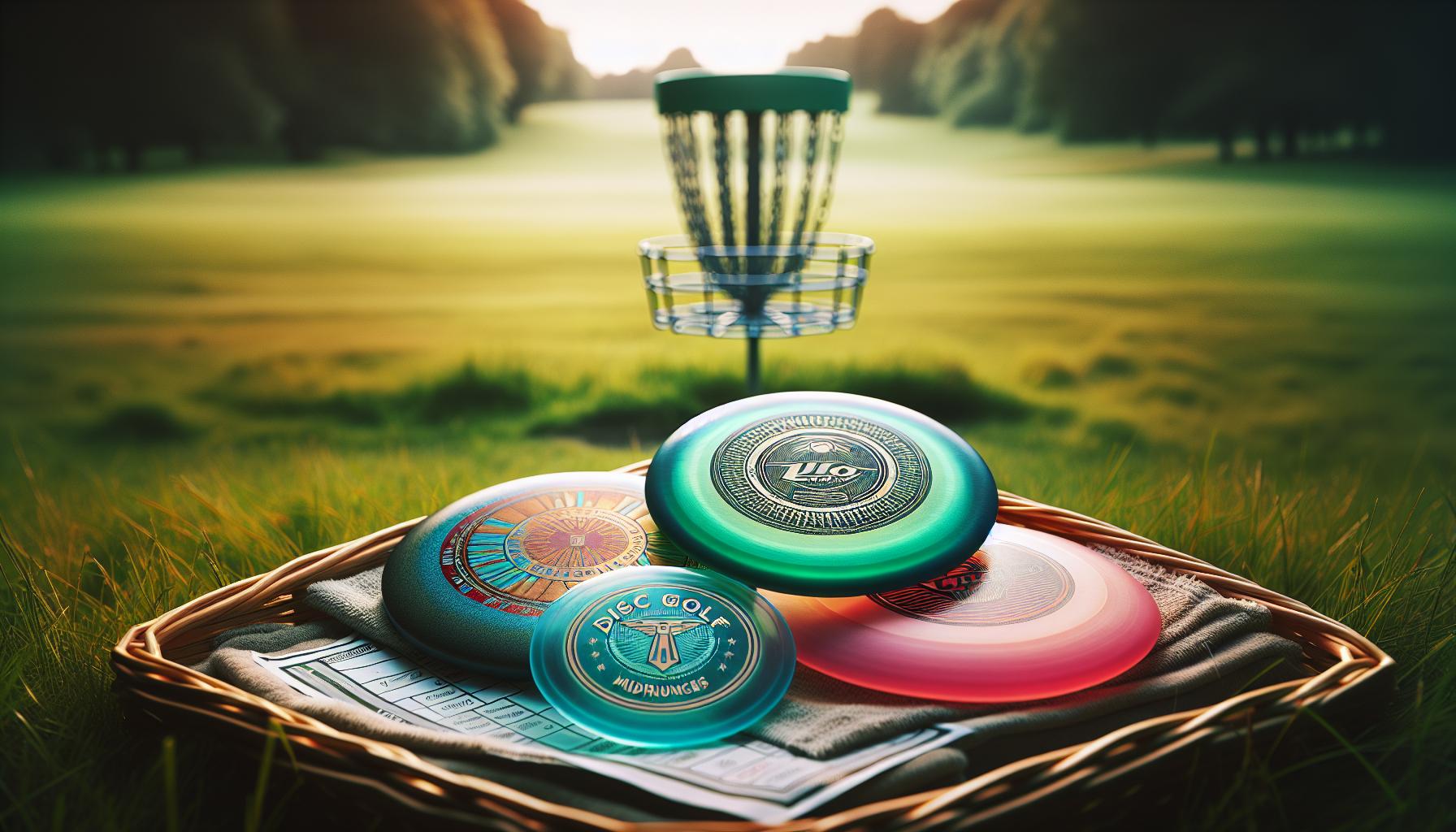
In the world of disc golf, understanding the different types of discs you can use is essential for both beginners and seasoned players alike. The three main categories are drivers, midranges, and putters, each designed with unique characteristics that cater to different situations on the course. With proper knowledge of these disc types, you can optimize your performance and enjoy the game even more.
Drivers are typically designed for maximum distance. They feature a sharp edge and a low profile, allowing them to cut through the air more efficiently. When thrown correctly, drivers can achieve impressive lengths with relatively little effort. These discs come in various speed ratings, often ranging from 7 to 14, which indicates their designed speed for flight. For beginners, it’s essential to start with a driver that suits your current skill level; a more understable driver can help in achieving longer throws without needing advanced techniques.
Moving to the middle of your bag, midranges are the workhorses of the disc golf world. They are versatile, offering a balance between distance and accuracy, and are perfect for navigating various course layouts. Midranges feature a wider profile that enhances stability, making them great for approach shots or when you need more control over your throw. Their speed ratings typically fall between 4 to 7, making them slightly easier to handle than drivers. As you gain experience, midranges can help transition your throws from powerful drives to precise placements near the basket.
Finally, putters are designed for short-range accuracy, making them critical for your final approach to the basket. With their wide, rounded edges, putters provide great control and stability, helping you land your shots softly on the target. Although they may not achieve the same distances as drivers, they excel in close-range scenarios, especially on those crucial putts for par or birdie. Putters generally have lower speed ratings ranging from 2 to 5, making them suitable for most players regardless of skill level.
By having a balanced collection of these three types of discs, you enhance your gameplay. Many beginners start with two drivers, two midranges, and one putter, as this setup allows you to work on various throws and develop a nuanced understanding of disc flight characteristics. As your skills progress, you can add more specialized discs tailored to your throwing style and the specific demands of the courses you tackle. Embrace this journey, and you’ll find that choosing the right disc at the right time is a key ingredient to your success in disc golf.
How Many Discs Should a Beginner Start With?

Starting your disc golf journey can be both exciting and a bit overwhelming, especially when it comes to choosing the right number of discs to begin with. Many newcomers wonder how many discs they actually need to have a fun and effective experience on the course. The good news is that you don’t need a massive collection to start playing and improving your game; a well-rounded selection of around five to seven discs is often ideal for beginners.
A practical starter kit typically includes two drivers, two midranges, and one or two putters. This combination allows you to experiment with different throwing techniques while still providing a versatile range of options for various on-course challenges. For example, having a more stable driver can help achieve longer throws, while an understable driver may aid in achieving distance with less advanced form. Midranges excel in control for approach shots, and putting with a reliable putter can boost your confidence during those critical final throws.
Guidelines for Selection
When selecting your initial discs, consider the following tips:
- Weight and Feel: Choose discs that feel comfortable in your hand. A weight range between 165-175 grams is typical for beginners, balancing distance and control.
- Stability Ratings: Look for beginner-friendly options, such as understable drivers and stable midranges. This can simplify learning proper throwing mechanics.
- Plastic Quality: Opt for durable plastics that provide good grip and withstand the rigors of the course. Soft putters can help enhance your touch around the basket.
By starting with just a few discs, you’ll not only become familiar with their flight characteristics but also develop a deeper understanding of your own throwing style. As your skills grow, you can gradually add specialty discs tailored to specific situations, such as high-speed drivers for long-distance throws or overstable discs that handle windy conditions. The journey of discovering the right discs for you is part of what makes disc golf such a dynamic and rewarding sport. Remember, it’s not about having the most discs; it’s about having the right ones that suit your game.
Mastering the Art of Disc Selection by Skill Level

Navigating the intricate world of disc golf can be a thrilling experience, especially when it comes to understanding how to select discs that align with your current skill level. Each player’s journey is unique, and mastering the art of disc selection is crucial not just for enjoyment but for improvement on the course. Players often feel an overwhelming sense of choice, but aligning discs with skill level can streamline the process and enhance your game.
For beginners, the focus should be on building a foundational understanding of disc flight characteristics and developing consistent throwing mechanics. It’s advisable to start with a balanced set of discs that includes two understable drivers, two stable midranges, and one or two putters. Understable drivers aid in achieving distance with less retired form, allowing new players to focus on proper technique rather than overpowering the throw. Midranges are invaluable for control and accuracy in approach shots, while a reliable putter will instill the confidence needed during those crucial moments on the greens.
As players progress to intermediate levels, they can begin experimenting with specialty discs that cater to various shot types and conditions. This could mean adding a stable driver to handle stronger winds or exploring overstable discs for reliable shot shaping. At this stage, diversifying the bag becomes essential, not just for added options, but for an improved understanding of how different discs behave under various scenarios.
Advanced players, on the other hand, should focus on fine-tuning their collections to include a variety of discs that cover all aspects of their game. A protégé of precision, serious competitors often have multiple versions of specific molds tailored for different conditions, such as high-speed drivers for distance and understable discs for hyzer flips. Collecting and experimenting with a wide array of brands and molds can uncover personal preferences that significantly enhance performance. It’s not just about having the right number of discs; it’s about having the right combinations to tackle any course layout successfully.
In summary, matching your disc selection to your skill level involves understanding your own game, embracing the learning process, and continually adjusting your collection as your skills evolve. The beauty of disc golf lies in its accessibility and the endless journey of personal improvement, influenced heavily by the choices you make in your equipment. By thoughtfully curating your bag in alignment with your current stage of play, you open the door to both enjoyment and success on the course.
The Importance of Disc Weight and Speed

Understanding disc weight and speed is crucial for achieving success on the disc golf course. These two factors significantly influence how a disc behaves when thrown, and mastering them can elevate your game to new heights. For instance, a disc’s weight affects its stability and flight path; heavier discs typically provide more stability on windy days, while lighter discs can be easier to throw for beginners and are often favored for achieving maximum distance. Additionally, speed is a critical measurement that determines how fast a disc can be thrown to achieve optimal distance without losing control.
It’s essential to consider how disc weight interacts with your throwing style and physical strengths. A player with a strong throwing arm may prefer heavier discs for their stability, allowing them to shape shots more easily and navigate challenging wind conditions. Conversely, novices or players with less upper body strength might find lighter discs more forgiving, facilitating smoother throws and improved accuracy. A good rule of thumb is to start with discs that weigh between 150-170 grams, as this range caters to a wide variety of players and throwing styles.
Moreover, the speed rating of a disc-typically measured on a scale of 1 to 14-indicates how fast a disc needs to be thrown to achieve its intended flight qualities. Faster discs (those rated 7 and above) are designed for long distances but require additional arm strength to manage effectively. Beginners may want to start with slower discs, which are often more controllable and easier to throw accurately without needing to throw hard.
Utilizing the right combination of disc weight and speed can dramatically impact your performance on the course. For example, high-speed drivers are best for experienced players looking to maximize distance, but they can be challenging for newcomers. As players develop their skills, they can experiment with different weights and speeds to find the optimal setup that complements their throwing mechanics. Incorporating a few different weights and types of discs into your bag allows for greater versatility and adaptability during play, enabling you to tackle various course conditions confidently.
- Understable Drivers (Speed 8-12, Weight 150-170g): Great for beginners looking to maximize distance with less effort.
- Stable Midranges (Speed 4-6, Weight 170-180g): Excellent for control and accuracy in approach shots.
- Stable Putters (Speed 2-4, Weight 170-175g): Essential for developing putting skills with confidence.
By understanding and selecting discs based on their weight and speed, players can create a collection that not only fits their current skill level but also fosters growth and improvement as they journey through their disc golf experience.
Optimal Disc Bag Capacity: What You Need to Know
Finding the right balance in your disc bag capacity is key to enhancing your disc golf experience, whether you’re just starting out or you’re an experienced player. Many new players might wonder how many discs they actually need. A general consensus among players is that having 10 to 15 discs is optimal for beginners. This range allows you to explore the differences in disc types and find those that complement your throwing style without overwhelming you.
As you progress and develop your skills, you may consider expanding your collection to around 20 to 25 discs. This capacity provides a broader selection that allows for specialized shots in various conditions. It’s important to ensure that your bag remains manageable; if it becomes too heavy or cumbersome, it can adversely affect your performance and enjoyment. Choose a bag that accommodates your discs comfortably while also offering pockets for accessories like towels, scorecards, and additional equipment.
Another essential factor in determining how many discs to carry hinges on the type of courses you typically play. For example, if your local courses feature a variety of challenging terrain or advanced technical layouts, having a wider disc selection can give you the versatility needed to tackle those challenges. Consider including several models of putters, mid-range discs, and drivers, as each type plays a unique role in your game.
Ultimately, the goal is to carry a selection that is useful and tailored to your individual playing style. Don’t feel pressured to fill your bag to its maximum; instead, focus on quality over quantity. A well-rounded setup that includes reliable discs you’re comfortable with will often result in better rounds than merely having an overloaded disc bag.
Seasoned Players: How to Build a Versatile Collection
Building a versatile collection of discs is essential for seasoned players looking to refine their game and tackle a variety of course challenges. As your skills develop, so too should your selection of discs to allow for every imaginable shot and condition. A well-curated set of discs not only enhances your performance but also boosts your confidence as you navigate both familiar and new courses.
To start assembling your collection, focus on having multiple options for each disc type: drivers, midranges, and putters. A good rule of thumb is to include at least three drivers of varying stability (overstable, stable, and understable), which will allow you to execute different throws based on wind conditions and course layout. Midranges are crucial for precision approaches; therefore, include versatile models that you can rely on for controlled shots. When it comes to putters, consider at least two distinct types-one for approach shots and another for distance or precision putting.
Disc Weight and Performance
Understanding weight and stability can significantly impact your game. Lighter discs are generally easier to throw for beginners, while seasoned players might opt for heavier options that offer more control under windy conditions. It’s also beneficial to experiment with varying weights within the same model to find what feels best during your throws. Track conditions play a role too; a heavier disc can perform better in windy weather, while lighter discs might be preferable on still days.
Customized Collection for Course Types
As you expand your collection, it’s wise to consider the types of courses you play most frequently. Here are some types to consider:
- Wooded Courses: Offer a selection of accurate midranges that can handle tight lines and technical shots.
- Open Courses: Stock up on powerful drivers that can achieve maximum distance.
- Mixed Terrain: Versatility is key; include a variety of discs that can handle different scenarios.
A versatile setup is an investment in your game. Keep your bag organized and relevant, regularly assessing which discs you consistently use and which may not be contributing to your performance. This approach fosters improvement by encouraging experimentation and learning from each round. Remember, the goal is to possess a refined toolkit that makes you adaptable to any challenge, ultimately leading to enhanced enjoyment and success on the course.
Environmental Factors: Adjusting Your Disc Choices
Weather conditions and course characteristics significantly influence how discs perform, making it crucial for players to adapt their disc selections accordingly. For instance, a sunny day with minimal wind might be perfect for lighter, understable drivers that allow for greater distance and less effort. Conversely, on overcast or windy days, heavier and more stable discs can provide the control needed to navigate challenging throwing conditions and avoid errant shots.
When playing courses with varying terrains, your disc selection should reflect the specific challenges you anticipate encountering. In wooded environments, for example, accuracy is paramount. Opt for midranges that excel in precision, allowing you to maneuver through narrow gaps and execute more technical shots. On open courses, however, having an array of drivers can maximize your distance off the tee, especially on long straight holes where wind conditions can play a significant role in disc flight.
Additionally, understanding how altitude and humidity affect disc flight can give you a competitive edge. At higher altitudes, discs may fly farther and with less stability due to decreased air density. Therefore, it’s wise to carry discs that perform well under these conditions, often leaning towards more stable options. In contrast, increased humidity can slightly weigh down discs, making lighter plastic options preferable to maintain optimal throwing distance and speed.
Lastly, monitoring temperature shifts is essential. Colder weather generally leads to a denser air, which can stabilize discs and alter their flight paths. Experimenting with different discs in varying environmental conditions will not only improve your adaptability but also deepen your understanding of disc dynamics, streamlining your approach to each round on the course.
Analyzing Disc Flight Behaviors: Stability and Turn
Every disc golfer knows that understanding how a disc behaves in the air can transform your game from a simple weekend hobby into a competitive edge. The terms “stability” and “turn” are vital in this realm, as they dictate how well your discs will perform based on your throwing style and the conditions you face on the course.
Stability refers to how a disc behaves during its flight, specifically whether it tends to fly straight, fade at the end, or turn to the right (for a right-hand backhand throw). Discs are categorized as overstable, stable, and understable, each serving specific purposes in a player’s arsenal:
- Overstable Discs: These are ideal for windier conditions and are great for players who need reliable fade. They tend to finish left (for right-handed backhand throws) and are perfect for hyzer throws.
- Stable Discs: These offer a balanced flight, allowing for straight shots and versatile use across many situations. They are excellent for players who want predictable performances without extreme turn or fade.
- Understable Discs: Known for turning to the right during flight, these discs are advantageous for executing long, sweeping turnovers and for players with less arm speed looking to achieve distance.
Turn, on the other hand, describes a disc’s ability to veer to the right before turning back left. A higher turn rating indicates that a disc will turn over more easily and maintain that turn longer, beneficial for performing distance shots that require an arc or controlled anhyzer angles.
When selecting your discs, considering the combination of stability and turn can optimize your gameplay. For example, beginners might want to start with a stable to slightly understable disc, allowing for more forgiving throws that can still get decent distance without veering wildly off course. As you progress, you can experiment with more overstable options or discs with higher turn ratings for specific shots, depending on your throwing style and course conditions. This knowledgeable approach will not only help refine your technique but also elevate your overall game experience, ensuring you’re well-equipped for any challenge the course throws your way.
Strategies for Enhancing Your Game with the Right Discs
Choosing the right discs can dramatically elevate your disc golf game, whether you’re a beginner or a seasoned player. Many enthusiasts find themselves overwhelmed by the vast array of discs available, yet understanding your needs and strategizing your selections can lead to significant improvements on the course.
First, assess your playing style and the types of throws you frequently use. If you aren’t already, consider adopting a basic set of discs that covers various situations. A good starting point is to have three key types: a driver for long-distance throws, a midrange for versatile approaches, and a putter for accurate finishing shots. Sticking with a balanced assortment not only enhances your performance but also helps you develop consistency.
Next, think about disc weight and material, as these factors can significantly influence your throw. Heavier discs typically provide more stability and control in windy conditions, while lighter ones can help beginners achieve greater distance. Additionally, utilizing different types of plastic can impact grip and durability. Experimenting with various disc weights and materials may help you find the perfect combination that feels comfortable during your throws.
It’s also essential to practice specific techniques with your discs to maximize their potential. Try different grip styles and throwing angles to better understand how different discs react. For example, practicing hyzer and anhyzer throws with an overstable and understable disc respectively can refine your skills and reveal which discs fit your throwing style best. Observing your shots and adjusting based on the results will enable you to enhance your gameplay significantly.
Finally, don’t overlook the importance of community insights and experiences. Engage with fellow players, attend local leagues, or follow disc golf forums. Real-world tips from other players can reveal disc recommendations that align with your skill level and playing style, helping you to build a collection that supports your growth in the sport. Remember, disc golf is continuously evolving, and adapting your strategy will keep your game fresh and competitive.
By thoughtfully selecting your discs based on your playing style, experimenting with weight and material, perfecting your throwing techniques, and leveraging community knowledge, you’ll unlock the full potential of your disc golf experience. This combination of strategies not only sharpens your skills but also deepens your appreciation for the game.
Comparing Disc Brands: Which Ones to Trust?
When it comes to disc golf, the right equipment can make all the difference in your game. With numerous brands available, choosing the right discs from trusted manufacturers can elevate your play and improve your overall experience on the course. Some of the most prominent disc brands include Innova, Discraft, Dynamic Discs, and Latitude 64, each renowned for their unique offerings and advancements in disc technology.
- Innova: Pioneers in the disc golf industry, Innova offers a diverse range of discs that cater to every skill level. Their popular models, like the Roc and Destroyer, are staples among both beginners and pros alike. Innova’s extensive lineup includes beginner-friendly discs and advanced options for seasoned players, making them a go-to brand for many.
- Discraft: Known for their focus on quality and performance, Discraft provides a great mix of distance drivers, midranges, and putters. The Buzzz and Zata are often cited as excellent choices for accuracy and control, showing Discraft’s commitment to helping players refine their throwing skills.
- Dynamic Discs: This brand emphasizes durability and performance, with designs catering specifically to a variety of throwing styles. Discs like the Lucid, a premium blend, are engineered for stability and distance, making them popular among competitive players.
- Latitude 64: Known for their innovative designs and high-quality materials, Latitude 64 offers custom options that appeal to serious disc golfers. Their discs often feature unique stability characteristics, enhancing flight performance for different throwing techniques.
Choosing discs from reputable brands means you not only benefit from their technical expertise but also gain access to reliable customer support and vast community knowledge. Many brands engage with players through sponsorships, creating a vibrant network of support and feedback that can guide new players in their disc choices.
As you explore your options, consider the feedback from community forums and local disc golf shops, which often have a wealth of information on the best discs suited for your needs. Engaging with seasoned players can also provide insights into which brands hold up best in real game conditions, enhancing your understanding of disc performance over time. By aligning your selections with well-regarded brands, you will ensure that you’re investing in discs that can withstand the rigors of play while also maximizing your potential on the course.
Real Player Insights: What the Pros Carry in Their Bags
Every disc golf aficionado loves to peek into the bags of professional players to see what tools they rely on during competition. The selection of discs in a pro’s bag is often a well-considered mix specifically tailored to their throwing style, course conditions, and individual preferences. What might surprise newcomers is that many top players carry just a handful of discs that enable them to perform effectively across various scenarios.
Professional players typically include a combination of drivers, midranges, and putters in their kits. For instance, renowned player Paul McBeth is known to use a collection that often features the Innova Destroyer and Star Wraith for distance throws, combined with midranges like the Buzzz from Discraft for versatility and accuracy on those tricky approach shots. Beginners and amateurs alike can take a cue from these professionals by focusing on a few key models that not only perform well but feel comfortable in hand.
What Pros Prioritize in Their Choices
When examining the choices of experienced players, it becomes evident that certain characteristics are prioritized. Many pros favor discs that offer a reliable flight path and stability, enabling them to replicate their throws with precision. Weight is another critical factor; many professionals opt for discs around 170-175 grams for their balance of distance and control. Moreover, the understanding of disc stability-whether a disc is stable, overstable, or understable-helps players choose the right disc for every shot they anticipate on the course.
Real Player Examples
To illustrate, we can consider the bag of a seasoned pro like Eagle McMahon, who carries several essential discs, including the Discraft Hex for distance and the Dynamic Discs Justice for its meatiness on hyzer shots. Meanwhile, he relies on a lightweight putter like the Axiom Envy for precision putting and short-range approaches. This variety showcases the importance of having a disc for every condition and shot type during play.
Understanding these pros’ choices not only helps aspiring players pick their initial lineup but also encourages them to experiment and refine their bags over time. The key takeaway is that successful disc golf performance is less about quantity and more about quality and suitability of discs-factors that can be easily incorporated into any player’s lineup, regardless of experience level.
Q&A
Q: How many discs do you really need for disc golf?
A: You typically need 3 to 5 discs to start playing disc golf effectively. This includes a driver for long distances, a midrange for versatility, and a putter for short throws and putting. As you grow in skill, you may add more to enhance your game.
Q: What types of discs should I carry in my bag?
A: It’s essential to carry drivers, midranges, and putters. Drivers help with long throws, midranges provide control for varied distances, and putters are for accuracy near the basket. This balance is crucial for a well-rounded disc golf experience.
Q: Is it better to have more discs or focus on a few?
A: While having a variety of discs can be beneficial, especially for experienced players, beginners should focus on mastering a few discs. Quality over quantity helps develop throwing techniques and understanding disc flight paths before expanding your collection.
Q: How should I select discs based on skill level?
A: Beginners should choose lighter discs that are easier to throw, focusing on stability and control. Intermediate and advanced players can select more specialized discs that fit specific flight patterns and throwing techniques to enhance their strategy.
Q: How can weather affect my disc selection?
A: Weather conditions can significantly impact disc flight. In windy conditions, opt for heavier, more stable discs to reduce unpredictability. Conversely, in calm weather, you may use lighter discs to maximize distance. Always adapt your choices based on current conditions.
Q: What are the most popular brands for disc golf?
A: Some of the most trusted brands in disc golf include Innova, Discraft, and Dynamic Discs. Each brand offers a variety of disc types suited for all skill levels. Research different brands to find those that align with your playing style and preferences.
Q: How do I know when to change my discs?
A: A disc should be replaced when it shows significant wear and tear, such as deep scratches or warping. Additionally, if a disc no longer flies as intended, it may be time to upgrade. Regularly assess your discs for optimal performance.
Q: What is a good strategy for beginners in disc golf?
A: Beginners should practice throwing with their primary discs consistently to develop proper techniques. Spend time understanding how different discs behave in various conditions and work on putting skills. Focus on course management to improve overall performance.
To Wrap It Up
Now that you know how many discs you need for disc golf, it’s time to take your game to the next level! Investing in the right discs can dramatically improve your performance on the course-so don’t hesitate to explore our guides on disc selection and throwing techniques to ensure you’re fully equipped. Check out our article on “Choosing the Right Disc for Your Skill Level” and our in-depth review of popular disc brands to gain further insights.
If you have any questions or thoughts, we’d love to hear from you in the comments below. And remember, every great disc golfer started as a beginner, so keep practicing and engaging with the community! For even more tips and exclusive content, consider signing up for our newsletter. Your disc golf journey is just getting started-let’s make the most of it together!
Get our latest guides, news, and insights highlighted in your Google Search & AI Overviews.