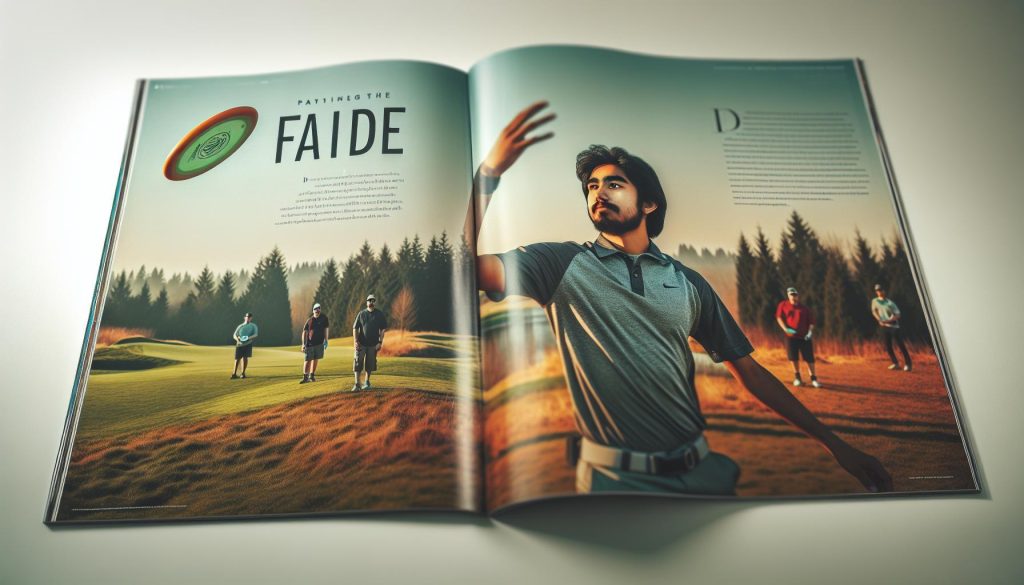
When embarking on your disc golf journey, understanding the concept of “fade” is crucial for mastering your throws and improving your game. Fade refers to the characteristic of a disc that causes it to curve to the left (for right-handed backhand throwers) as it slows down. This knowledge not only aids in selecting the right disc for various throws but also enhances your accuracy and strategy on the course. As you navigate through this article, you’ll uncover how fade impacts your playing style and learn essential tips for harnessing this flight characteristic to elevate your performance. Whether you’re a newcomer eager to impress or a seasoned player looking to refine your technique, grasping the physics of disc flight will undoubtedly enrich your experience in this vibrant and growing sport.
What Is Fade and How It Affects Disc Flight
In the world of disc golf, understanding the concept of fade is crucial for mastering your throws and navigating course layouts effectively. Fade refers to the disc’s behavior at the end of its flight, typically occurring at the end of its forward glide. It is characterized by a tendency for the disc to veer to the left (for right-handed backhand throws) as it loses speed and begins its descent. This predictable characteristic is instrumental in achieving accuracy and control over your shots, as it allows players to plan their throws around obstacles or towards specific target areas on the course.
The physics behind fade involves the disc’s design and its interaction with the air. Each disc is crafted with specific stability ratings, denoted by numbers such as 1 for a low fade to 5 for a high fade. This stability is influenced by factors such as the disc’s weight, rim width, and overall aerodynamics. A disc with a higher stability rating will generally exhibit a more pronounced fade, making it suitable for challenging winds or for shaping shots that need to finish left. Conversely, a disc with a lower fade will allow for a straighter finish, which can be ideal for long-distance drives where precision is key.
To effectively leverage fade in your gameplay, consider selecting discs that complement your throwing style and the specific demands of the course. Experimenting with different fades can enhance your understanding of how to navigate complex shots and obstacles. For example, many players find that pairing a highly stable driver with a consistent throwing technique results in reliable fade, allowing for more strategic shot placement. As you practice, pay close attention to how different discs react during play, and make adjustments based on the feedback from your throws.
In summary, fade is a fundamental attribute of disc flight that can greatly influence your strategy and performance in disc golf. By understanding and mastering fade, you can elevate your game, whether you’re just starting or competing at a higher level. Remember, the key to success in disc golf often lies in selecting the right equipment and continually refining your technique through practice and experimentation.
Understanding the Physics of Disc Flight

Understanding how a disc flies is crucial for any player looking to improve their disc golf game. The mechanics of disc flight are fascinating, as they combine principles of aerodynamics with the unique design of each disc. As a disc moves through the air, it interacts with various forces, namely lift, drag, and the thrust generated by the throw. The way these forces play out determines not only how far a disc travels but also its trajectory and, importantly, its fade.
The shape and material of a disc profoundly influence its flight characteristics. Discs are commonly rated based on their stability, which directly correlates to how they will behave as they lose speed. For instance, discs with a lower stability rating glide more consistently and finish straighter, while higher stability discs are engineered to exhibit a more pronounced fade, veering off to the left for right-handed backhand throws. This behavior is essential when planning shots, especially in windy conditions or when attempting to navigate tight fairways.
To better grasp these concepts, consider the importance of the disc’s construction. A typical disc golf disc is not a solid chunk of plastic; rather, it is purposefully designed with varying rim widths and weights that align with specific flight behaviors. When selecting a disc, pay attention to its specs-namely the speed, glide, turn, and fade ratings-each of which is fundamentally tied to the physics of flight. For example, a disc rated with a high fade may be preferred for players looking to shape sharper left turns late in their throw, while a disc with a more neutral fade can help those seeking elongated, straight shots.
Over time, as a player practices and gains experience, comprehending these principles will enhance their strategic approach on the course. Understanding the physics behind disc flight empowers players to make informed choices about their equipment and throws, ultimately facilitating smarter shot planning and execution. Embrace the science of flight-it’s not just about throwing a disc; it’s about mastering the art and precision of each throw.
Key Factors Influencing Fade in Disc Golf

The concept of fade in disc golf is not just a matter of the disc’s design; it encompasses various factors that significantly influence how a disc behaves during its flight. Understanding these influences can lead to improved performance and more strategic gameplay.
One of the primary factors that dictate fade is the disc’s stability. Discs are rated for their stability, with categories ranging from understable to overstable. Overstable discs tend to fade sharply at the end of their flight, making them ideal for controlled turns and predictable finishes, particularly for right-handed backhand throws where the disc curves left. An excellent example is the Dynamic Discs Judge, which has a noticeable fade that can help players navigate around obstacles or finish tight to the basket.
Beyond stability, the speed and weight of the disc also play a critical role. Heavier discs often maintain their flight path longer but can exhibit a more severe fade due to the greater rotational forces at play. In contrast, lighter discs might experience a gentler fade as they lose momentum. For players looking to maximize their control over fade, it’s essential to experiment with different weights and speeds to find a combination that complements their throwing style.
Another significant factor is the throwing angle and technique. A high throwing angle can result in a more pronounced fade due to gravitational pull acting more directly on the disc after peak flight. Conversely, a flatter release angle may lead to a more extended flight before the fade occurs. By maintaining proper form and adjusting angles based on the desired outcome, players can effectively manage fade to their advantage.
Lastly, environmental conditions such as wind and elevation can drastically alter a disc’s behavior. Tailwinds can push a disc further, affecting fade, while headwinds may exaggerate the fade as the disc encounters increased resistance. Players should anticipate these conditions when planning their throws, allowing them to adapt their disc choices and techniques accordingly.
By keeping these factors in mind and practicing regularly, players can harness the intricate mechanics of fade to enhance their disc golf skills, making every throw count toward a smarter and more effective gameplay strategy.
Fade vs. Other Disc Flight Characteristics
In disc golf, understanding how fade interacts with other flight characteristics can transform your game, allowing you to make more strategic choices and improve your overall performance. Fade, defined as the tendency of a disc to turn left (for right-handed backhand throws) at the end of its flight, is just one part of the complex dynamics that dictate how a disc behaves in the air. To grasp the full picture, it’s essential to consider fade alongside stability, turn, speed, and glide-these elements collectively define a disc’s flight path.
Stability and Turn
A disc’s stability is categorized into three main types: understable, stable, and overstable, each affecting how the disc behaves concerning fade. An understable disc will “turn” during its flight path, typically moving right for right-handed backhand throws, before it fades back left. In contrast, an overstable disc will handle wind better and exhibit a sharper fade, making it ideal for players seeking predictable endings on their throws. For instance, a disc like the Innova Destroyer is known for its overstable nature, allowing players to execute sharp hyzer shots where the fade is crucial for finishing near the target.
Speed and Glide
The speed and glide of a disc also play pivotal roles in its overall flight characteristics. Fast-speed discs tend to have less glide, which can lead to a more abrupt fade, as they lose momentum more quickly. Conversely, discs with higher glide can stretch out flights, allowing players to manage the transition into fade. When choosing a disc, consider how its speed rating will synergize with your desired fade. A disc with a speed of 13 and a glide of 5, like the Discraft Crank, can maximize distance while still incorporating a notable fade at the end of its flight.
Practical Application of Fade
Utilizing fade effectively in your throws requires a nuanced understanding of how these flight characteristics interconnect. For example, if you’re tackling a hole with a tight dogleg to the left, selecting an overstable disc with a pronounced fade can help you navigate around obstacles while positioning you favorably toward the basket. The key is to practice various throw angles and disc combinations to discover how they react under different conditions. A practice routine focused on experimenting with disc types and throwing techniques will enable you to develop a reliable fade strategy, enhancing your course navigation skills.
By appreciating the interplay between fade and other flight characteristics, disc golfers can better select their equipment and refine their throwing techniques. This comprehensive understanding not only elevates your game but also enriches your enjoyment of this increasingly popular sport. Whether you’re a newcomer eager to learn or a seasoned player looking to gain an edge, mastering these concepts paves the way for improved success on the course.
How to Choose Discs Based on Fade

Choosing the right disc based on its fade is crucial for mastering your throws and navigating the course effectively. With a variety of discs available, understanding how fade interacts with other characteristics like stability and speed can help you select the best option for your throwing style and the specific challenges of each hole.
When selecting a disc, start by considering the fade rating printed on its profile. Discs are usually rated on a scale from 0 to 5, with higher numbers indicating a stronger fade. A disc with a fade of 5, like the Innova Firebird, provides a sharp turn left (for right-handed backhand throws), making it ideal for sharp corners and reliable hyzer shots. Conversely, a disc with a lower fade, such as the Discraft Buzzz, offers a more gentle finish, which can be beneficial for straight shots that need a subtle turn at the end.
Another critical aspect is the stability of the disc. Overstable discs handle wind better and tend to have a more pronounced fade, making them perfect for experienced players looking for consistency in challenging conditions. In contrast, understable discs might suit beginners, who can benefit from a long flight path before the disc gradually fades left. Experimenting with different disc types during practice rounds will help you understand how each performs under varying conditions, enabling you to better tailor your choices based on the course layout and the specific shot required.
Lastly, personal preference plays a significant role. Keep an eye on how experienced players utilize certain discs based on their fade characteristics. Many players develop preferences for specific discs that complement their unique throwing styles. For example, if you observe that a player frequently employs a specific overstable model to navigate tricky doglegs, it might be worth trying it out yourself to see if it aligns with your technique. Ultimately, understanding and selecting discs based on their fade empowers you to enhance your game strategically, shaping your performance and experience on the course.
Practical Tips for Utilizing Fade in Your Throws

Mastering fade can be the difference between a good round and a great one in disc golf, especially when navigating tight fairways or tricky hazards. Fade occurs at the end of a flight, causing the disc to dip to one side-typically left for right-handed backhand throwers. This knowledge is essential for strategic throwing, allowing players to tailor their shots to the demands of the course. Here are some practical tips to effectively utilize fade in your throws.
Start by choosing the right disc for your intended fade. Different discs have varying fade ratings that significantly influence how they behave at the end of their flight. For instance, using an overstable disc like the Innova Firebird will provide a more pronounced left fade, making it suitable for sharp doglegs or when you need to finish left at the end of your drive. Conversely, an understable disc, such as the Discraft Buzzz, may offer a more gradual fade, which can be useful when maintaining a straight line with a slight finish to the left. Experimenting with different discs during practice sessions will enhance your understanding of how fade interacts with individual disc brands and types.
Technique is equally important. Adjust your throwing mechanics to better control the fade. For example, if you anticipate a strong fade, aim to adjust your angle of release slightly. Throwing with a little bit of anhyzer (angled to the right for right-handed backhand throws) can cause the disc to hold its line longer before finishing left, creating more distance and reducing the risk of an early fade mishap. Additionally, be mindful of your throw’s power and speed; a smoother, more controlled throw often results in a more predictable fade.
Finally, practice utilizing fade in various course scenarios. Remember that fade can be a strategic tool when approaching greens or tight landing zones. For instance, if there’s a tree just off the right side of a fairway, throwing an overstable disc with a pronounced fade can help you navigate around the obstruction and land safely within the target zone. By integrating fade into your approach strategies during practice, you’ll become more adept at using this feature to your advantage during competitive play.
By incorporating these tips into your practice sessions, you’ll be better equipped to harness the power of fade, enhancing your overall game and elevating your performance on the course. Engage with the community, share your experiences, and observe how fellow players utilize their discs, as collaboration and learning are key components in the ever-evolving sport of disc golf.
Common Mistakes When Managing Fade
Mastering the nuances of disc fade can elevate your game, but many players make common mistakes that hinder their performance. One prevalent error is underestimating how wind conditions affect fade. Wind can dramatically alter the disc’s flight path; a headwind can reduce fade, while a tailwind can enhance it. When facing variable wind conditions, players should consider adjusting their throwing technique and disc selection accordingly. For instance, an overstable disc that typically finishes left may behave differently in strong winds. It’s imperative to observe how the wind interacts with your disc to make necessary adjustments and mitigate unwanted fades.
Another frequent misstep is relying solely on disc ratings without considering individual throwing styles. While disc manufacturers provide fade ratings, these are guidelines and can vary based on a player’s technique, power, and grip. For example, a player with a high arm speed might experience a more pronounced fade than someone with a slower, more controlled throw using the same disc. This discrepancy highlights the importance of testing various discs and understanding your unique throwing mechanics.
Additionally, many players neglect the impact of release angle on fade. An improper angle can lead to uncontrollable flight paths. For instance, an anhyzer release may cause the disc to hold its line longer, allowing for minimal fade, whereas a flat release will expose the disc to its natural fade characteristics sooner. Focusing on consistent release angles can significantly improve your ability to manage fade effectively.
Finally, ignoring fade in course strategy is a mistake that can cost players strokes. Instead of simply aiming for the target, visualize the disc’s flight. Consider the fade when planning your approach to the basket, especially on challenging holes with hazards or tricky greens. Understanding where the disc is likely to end up can help in making smarter shot decisions and avoiding potential pitfalls. By being mindful of these common errors, players can enhance their ability to manage fade and improve their overall performance on the course.
Advanced Techniques for Mastering Disc Fade
Mastering disc fade is not just about understanding how a disc behaves at the end of its flight but also about leveraging that knowledge to enhance your performance on the course. To refine your skills with respect to fade, embracing a combination of technique, equipment selection, and environmental awareness is crucial. Here are several advanced techniques that can help you harness the potential of fade effectively.
One essential technique is to practice varying your release angles consistently. A flat release angle can often expose the disc’s fade characteristics to their full extent, allowing it to turn left (for right-hand backhand throws) at just the right moment. Experimenting with slight adjustments to your release-going from flat to a moderate anhyzer-can help you see how each angle influences the fade. Try setting up various target distances and practicing different throws to understand how these slight changes in angle affect your outcome.
Another advanced strategy involves tailoring your disc selection to match specific course conditions. Each disc has unique flight characteristics, particularly when it comes to fade. For example, using an overstable disc on a downhill shot can amplify its natural fade, potentially keeping your disc from rolling away after landing. Conversely, employing an understable disc may allow you to execute longer hyzer flips that minimize fade. Consider creating a rotation of discs in your bag that cater to varying distances and desired fade outcomes -this can significantly enhance your versatility during gameplay.
To fully utilize fade in your throws, focus on adjusting your power and throwing speed according to the distance and intended landing area. A more powerful throw can lead to a more pronounced fade, so it’s important to balance your power output with the specific fade you want to achieve. Practice developing a feel for how much power corresponds to desired line control, and tailor your strength based on the potential of your disc’s fade.
Finally, wind conditions should be an integral part of your strategy. Learning to read winds can dramatically alter how your disc behaves. In strong headwinds, it’s wise to choose a disc that will fight through the wind and produce minimal fade, while in a tailwind, an overstable disc might provide the reliable fade you desire. Spend time practicing under various wind conditions to build confidence in your ability to adjust to these environmental factors.
By implementing these advanced techniques, players can turn disc fade from an unpredictable variable into a reliable tool for achieving strategic advantages on the course. Whether you’re shaping your shots for better placement or mastering the subtle nuances of your throws, understanding how to control fade will undeniably elevate your game.
Fade’s Impact on Course Strategy
Understanding how fade affects your strategy on the disc golf course can significantly enhance your game. When players recognize the unique fade characteristics of their discs, they can plan shots that utilize these traits to their full advantage. For instance, an overstable disc typically fades more quickly at the end of its flight, which can be beneficial for navigating tight fairways or avoiding hazards. Positioning shots meticulously to capitalize on a disc’s fade can mean the difference between a quick birdie and a missed opportunity.
To effectively incorporate fade into your course strategy, consider the layout of the course itself. Are there doglegs that require precise placement? Is there a need to throw around obstacles? These scenarios often call for a disc with a pronounced fade. For right-hand backhand throwers, a disc with a strong fade can help navigate left-turning shots, allowing for more controlled landings. Additionally, assessing wind conditions can influence your choice; crosswinds or headwinds can either amplify or alter how a disc fades, impacting your trajectory and placement.
Moreover, understanding when to intentionally choose a disc with less fade can also be crucial. For example, when approaching a green with a steep slope, using a disc that will not fade excessively can help maintain a stable flight and prevent rolls that can lead to difficult putts. Familiarity with each disc’s flight patterns enhances decision-making under pressure, helping players visualize the shot before committing to it.
Building a repertoire of discs with varying fade characteristics allows players not only to adapt but also to strategize better for different courses and conditions. As conditions change-whether due to weather, course layout, or strategic positioning-having the right disc ready can empower players to execute their game plans effectively. Understanding fade, therefore, isn’t merely about physic but about crafting a tactical mindset that respects the game’s intricacies, ultimately enriching the overall experience of disc golf.
Real-Life Examples: Players and Their Fade Preferences
Understanding the preferences of professional disc golfers can offer invaluable insights into how fade characteristics influence their performance on the course. Many elite players have distinct approaches to selecting discs based on their fade, which shapes not only their strategy but also their entire throwing style.
One prominent example is Paul McBeth, a four-time World Champion, who often uses discs with a strong fade to enhance his gameplay in tight settings. His go-to disc for navigating challenging courses is the McBeth Signature Series Destroyer, known for its reliable fade. McBeth emphasizes the importance of choosing discs that will consistently finish right (for right-hand backhand throwers) on approach shots, allowing him to position his disc near the basket with precision. Such choices illustrate how understanding a disc’s fade can lead to strategic shot placement in tricky dogleg situations.
In contrast, female disc golf phenom Paige Pierce has a different philosophy regarding fade. While she acknowledges the utility of discs with a strong fade, she often selects fairway drivers that offer a less aggressive finish, especially in wooded courses where control is paramount. For her, discs like the Pierce Signature Series Fuzion Raider allow for more distance with manageable fade, enabling her to capitalize on the accuracy required in tighter fairways. By opting for a disc with a moderate fade, Pierce can shape her shots with finesse, demonstrating a keen understanding of how to manipulate disc flight to suit course demands.
For recreational players, taking a page from these professionals can enhance one’s own game. Observing how top players select discs based on fade and how they incorporate this into their overall strategy encourages a thoughtful approach to both disc choice and overall game management. Testing various discs during casual rounds can help players identify which fade characteristics suit their throwing style, ultimately leading to improved performance during competitive play.
Whether you align with McBeth’s powerful finishes or Pierce’s controlled flights, understanding and experimenting with fade can significantly impact your strategy and execution on the course. By learning from the experiences of these top-tier athletes, players at all levels can refine their skills and elevate their game.
Equipment Considerations for Different Fades
Understanding the nuances of fade in disc golf is critical for players aiming to enhance their game, but equally important is knowing how to select the right equipment to complement these flight characteristics. Each disc is uniquely designed with specific attributes that affect how it behaves in flight, including its fade. This variance can significantly influence your approach to different courses and shot styles, making equipment selection a key aspect of effective gameplay.
Discs are often categorized by two main parameters: stability and fade. Stability refers to how a disc behaves during its flight; a disc with a stable flight path will maintain a straight course, while an overstable disc will typically finish with a pronounced fade. For players looking to utilize fade effectively, it’s essential to consider the disc’s flight ratings, which can provide valuable insights. These ratings typically include speed, glide, turn, and fade (e.g., 13/5/-1/3 for a high-speed disc). The final number represents the amount of fade at the end of the flight.
When choosing discs with varying fade characteristics, it’s beneficial to consider your throwing technique and the types of throws you often make. For example, a strong backhand thrower might prefer an overstable disc with a more aggressive fade for reliable finishing left shots, like a Destroyer. Conversely, if you’re navigating wooded courses where precision and control are paramount, a disc with a gentler fade, such as a Tornado, allows for more manageable landing zones and shot shapes.
It’s also worth noting that the material and shape of the disc play significant roles in how it performs. For instance, a disc with a more domed profile might exhibit more glide and less pronounced fade compared to a flatter disc of the same stability rating. Players should take the time to experiment with various disc types to better understand how their equipment behaves under different conditions, such as wind or terrain. In essence, thoughtfully selecting your discs not only enhances your understanding of fade but can also refine your technical execution on the course.
As you consider your choices, testing various discs and tracking your performance can significantly enhance your skills. Consider setting up practice rounds where you vary discs and throwing styles, documenting how each one behaves in various circumstances. This will not only help you solidify your understanding of fade but also enable you to develop a versatile throwing strategy tailored to your unique style and the challenges of different courses.
Future Trends in Fade Design and Technology
As disc golf continues to gain popularity, the quest for innovation in disc design and technology is more vibrant than ever. Manufacturers are experimenting with advanced materials and engineering techniques to enhance disc performance, particularly concerning fade characteristics. With the proliferation of smart technology and data analysis in sports, the future of disc golf offers exciting possibilities for optimizing disc flight and player performance.
Recent trends indicate a movement toward incorporating dynamic flight profiles that adapt to player throwing styles and environmental conditions. For example, discs that feature adjustable fade can allow players to modify their disc’s characteristics based on how they intend to play a hole. This could potentially be achieved through a modular disc system where players can enhance or reduce fade by attaching different components, leading to a personalized experience that suits various skill levels.
Another forward-looking area is the integration of smart technology. Envision discs equipped with sensors to track flight patterns and provide real-time feedback via apps. Such technology would allow players to better understand how their throwing technique impacts fade, potentially leading to tailored practice regimens that optimize performance. As players collect data over time, they could refine their disc choices and throwing techniques to align more closely with their playing style and preferred flight paths.
Lastly, sustainable materials are making waves in disc manufacturing. As the community grows more environmentally conscious, manufacturers are exploring biodegradable and eco-friendly materials without sacrificing performance. This trend suggests that in the near future, players might have the option to choose not just based on flight characteristics but also on the ecological impact of the discs they throw.
In conclusion, the future of fade design and technology is looking bright. From customizable flight characteristics to smart integrations and eco-friendly materials, these advancements promise to elevate the sport and make disc golf even more exciting for players at every level. By embracing these innovations, players can enhance their skill set, making informed equipment choices that reflect their unique styles and the evolving nature of the sport.
Q&A
Q: What does fade mean in disc golf?
A: Fade in disc golf refers to the characteristic of a disc to turn left (for a right-handed backhand throw) at the end of its flight. This is due to the disc’s aerodynamic design and stability, impacting how far and accurately the disc can travel. Understanding fade is essential for mastering throw precision.
Q: How does fade affect disc selection?
A: Fade influences disc selection by determining how a disc behaves toward the end of its flight. Discs with a higher fade rating are ideal for approaches and finishing shots, while those with less fade provide straighter flights. Choose your discs based on the specific fade characteristics needed for your strategy on the course.
Q: Why is understanding fade important for beginners?
A: For beginners, understanding fade is crucial because it affects shot accuracy and course strategy. Recognizing how different discs fade allows new players to plan their throws more effectively and make informed decisions, leading to improved performance on the course.
Q: Can you control fade with throwing techniques?
A: Yes, you can control the fade by adjusting your throwing techniques. For example, releasing a disc with a slight hyzer angle can enhance the fade, while adjusting your grip and release speed can mitigate it. Practicing these techniques helps tailor your shots to your desired outcomes.
Q: How do different wind conditions affect fade in disc golf?
A: Wind conditions can significantly affect fade in disc golf. A headwind will generally increase the fade of a disc, while a tailwind might decrease it. Understanding how to adapt to different winds is essential for predicting disc behavior and making course adjustments.
Q: When Should I use discs with high fade ratings?
A: Use discs with high fade ratings when making approach shots, finishing under pressure, or executing sharp turns. These discs help ensure accuracy in navigating obstacles, especially on challenging course layouts where precision is paramount.
Q: How does fade compare to other flight ratings like turn?
A: Fade is distinct from turn, as it describes the disc’s flight at the end, whereas turn indicates its behavior earlier in the flight. Knowing both characteristics allows players to anticipate their disc’s full flight path, optimizing shot selection based on course demands.
Q: What are common mistakes disc golfers make with fade?
A: Common mistakes include underestimating or over-controlling fade, leading to miscalculations in shot planning. Players often throw discs incorrectly based on their perceived fade rather than understanding how to use it effectively, which can result in poor shot outcomes.
Future Outlook
Now that you understand the concept of fade in disc golf and how it impacts your throws, it’s time to put this knowledge into action! Remember, mastering fade can enhance your game and lead to more accurate shots on the course. If you’re looking for ways to improve your throwing mechanics further, check out our guides on disc selection and technique optimization.
Don’t hesitate to leave your thoughts or questions in the comments below-community insights can be incredibly valuable as you refine your skills. Plus, if you’re passionate about the sport, subscribe to our newsletter for regular tips and exclusive content designed to help you elevate your game. Dive deeper into the world of disc golf with us and explore articles on course strategy and competitive play-we can’t wait to see you on the course!
Get our latest guides, news, and insights highlighted in your Google Search & AI Overviews.