
How many discs for a good bag expert answer is an essential factor in modern disc golf course play, equipment setup, and tactical execution. Our comprehensive guide provides actionable course tips, disc flight mechanics, equipment recommendations, and tournament-tested strategies to help disc golfers optimize their scoring and course performance.
When it comes to disc golf, the question of how many discs you should carry in your bag is more than just a matter of preference; it’s a key factor in your overall performance on the course. The right combination of discs can enhance your game, allowing for greater versatility in different throwing conditions and course challenges. Surprisingly, many players underestimate the importance of disc selection, which can impact everything from distance to accuracy. Whether you’re a newcomer eager to improve or a seasoned competitor fine-tuning your strategy, understanding the balance of types and numbers of discs is crucial. In this article, we’ll explore expert insights on the optimal disc count for various playing styles, ensuring you have the tools you need to elevate your game. Join us as we delve into the art of crafting the perfect disc golf bag!
How to Choose the Right Number of Discs for Your Bag
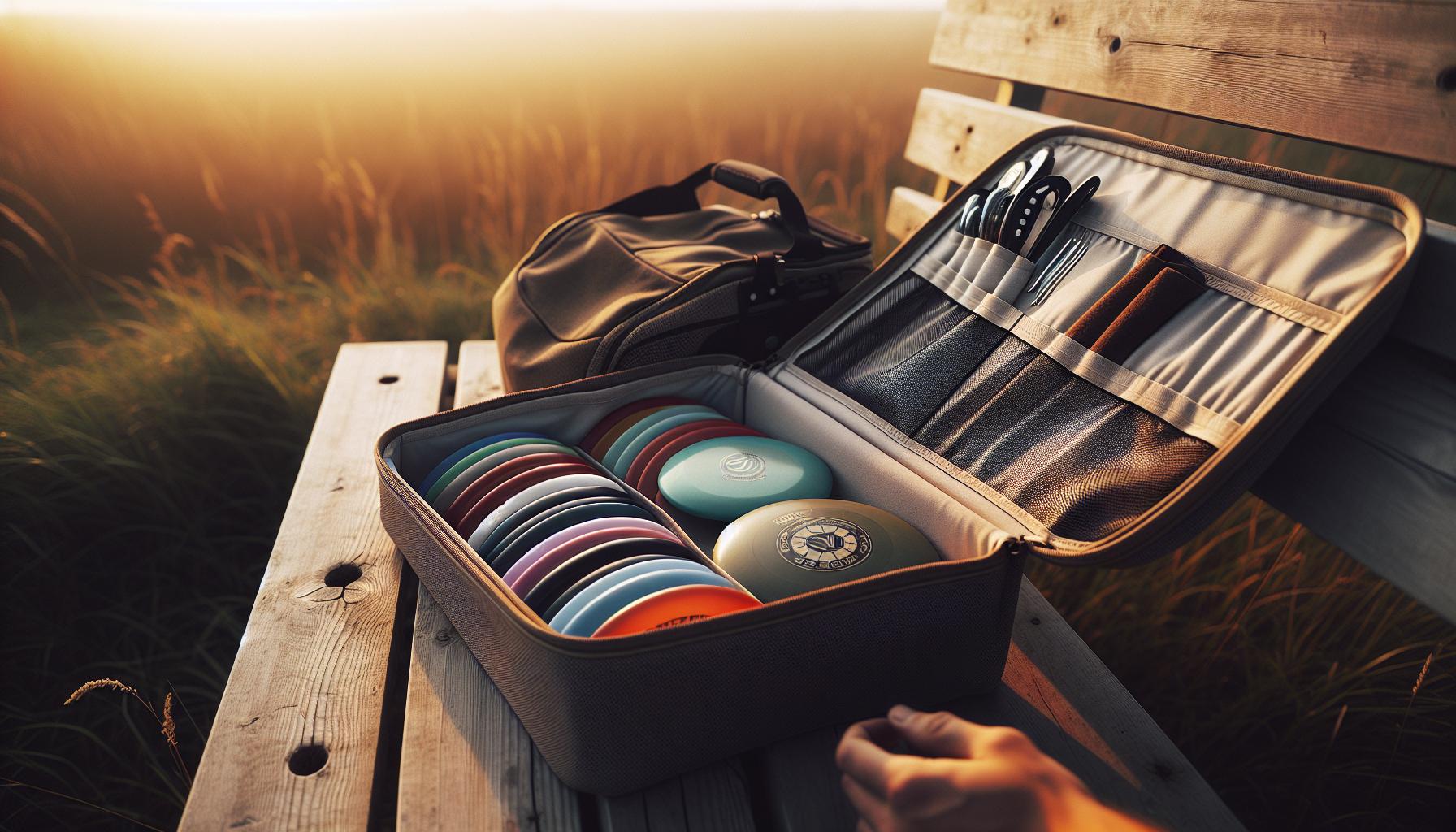
Choosing the right number of discs for your bag can significantly influence your performance on the course. It’s a crucial decision that often perplexes newcomers and seasoned players alike. The ideal number of discs typically ranges from 10 to 15, depending on your skill level, playing style, and comfort. Having too few discs can limit your shot options, while carrying too many might lead to confusion and decreased focus.
To find your optimal disc count, consider the types of courses you frequent and your desired game approach. A beginner might start with 8-10 versatile discs that cover the fundamental shots, including a driver for distance, a midrange for controlled approaches, and a putter for short-range accuracy. As your skills develop, you might add specialty discs tailored for specific shots-like an overstable driver for headwinds or an understable midrange for hyzer flips.
Additionally, think about your playstyle. If you favor technique and finesse over sheer power, a more minimalist bag might serve you better. Conversely, if you enjoy experimenting with different shots and taking risks, you may benefit from a more extensive selection. Ultimately, your bag should evolve alongside your skill and confidence, allowing you to feel prepared for a variety of course challenges.
In summary, start with a manageable collection and expand as you learn. Engage with the disc golf community, seek feedback from seasoned players, and don’t hesitate to adjust your bag as your game progresses. After all, the goal is to feel comfortable and confident in your choices, leading to improved performance and enjoyment on the course.
Understanding Disc Types: Stability and Flight Patterns
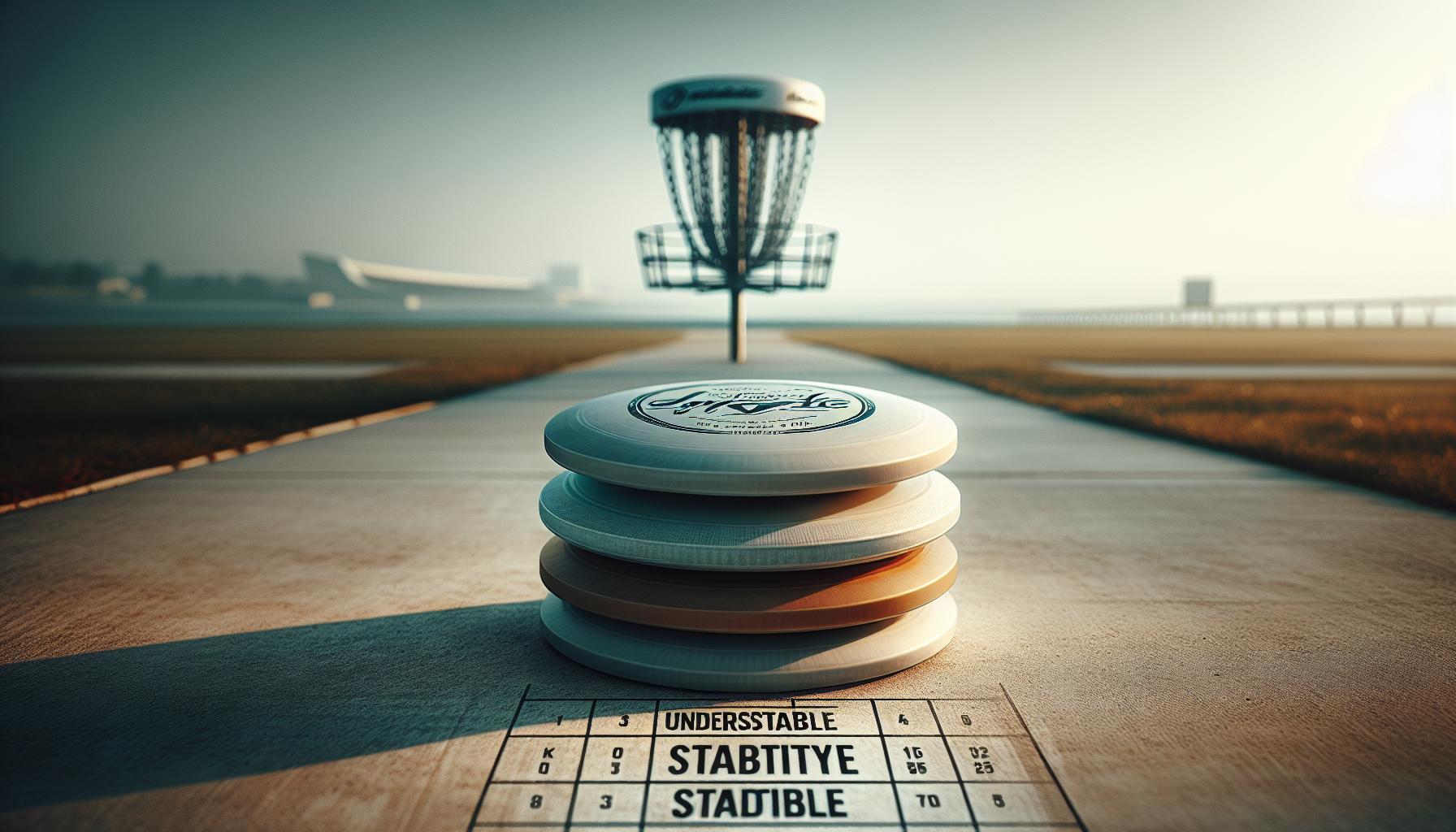
Understanding your disc options is fundamental for elevating your game on the disc golf course. The concept of stability plays a crucial role in how a disc performs during flight, determining its behavior when thrown. Discs are classified primarily into categories based on their stability: overstable, stable, and understable. Each type has unique characteristics that cater to different throwing styles and shot requirements.
Overstable Discs are designed to resist turning to the right (for right-handed backhand throws) and tend to finish left. They are ideal for players who seek reliability in windy conditions or for those who want to execute sharp hyzer shots. An example of an overstable disc would be the Destroyer, favored by many for its predictable flight path. Stable Discs, on the other hand, provide a balanced flight, maintaining a straight path with a gentle finish. This stability is perfect for beginners who are still developing their technique or for players looking to achieve straight drives. The Buzz, a popular midrange disc, exemplifies stability and is well-loved for its versatility.
Understable Discs are typically used for achieving turnovers or anhyzer shots. When thrown with power, these discs will initially turn right before finishing back toward the left, making them great for finesse shots that require accuracy. A disc like the Mako3 serves as an excellent understable option, empowering throws that need a smooth, long curve. Understanding how these stability ratings interlace with your mechanics and the environment allows you to tailor your bag to suit various courses and conditions.
The combination of disc stability, weight, and personal technique creates a complex interplay that can make or break a round of disc golf. To truly excel, players should take time to experiment with different discs and develop a distinctly personal feel for each disc’s performance. Investing in a well-rounded collection featuring each stability type can provide the versatility necessary to tackle any course with confidence. As you grow in skill, this understanding will be invaluable, allowing you to optimize your bag effectively for every challenge you encounter on the course.
Essential Discs for Every Skill Level: A Breakdown
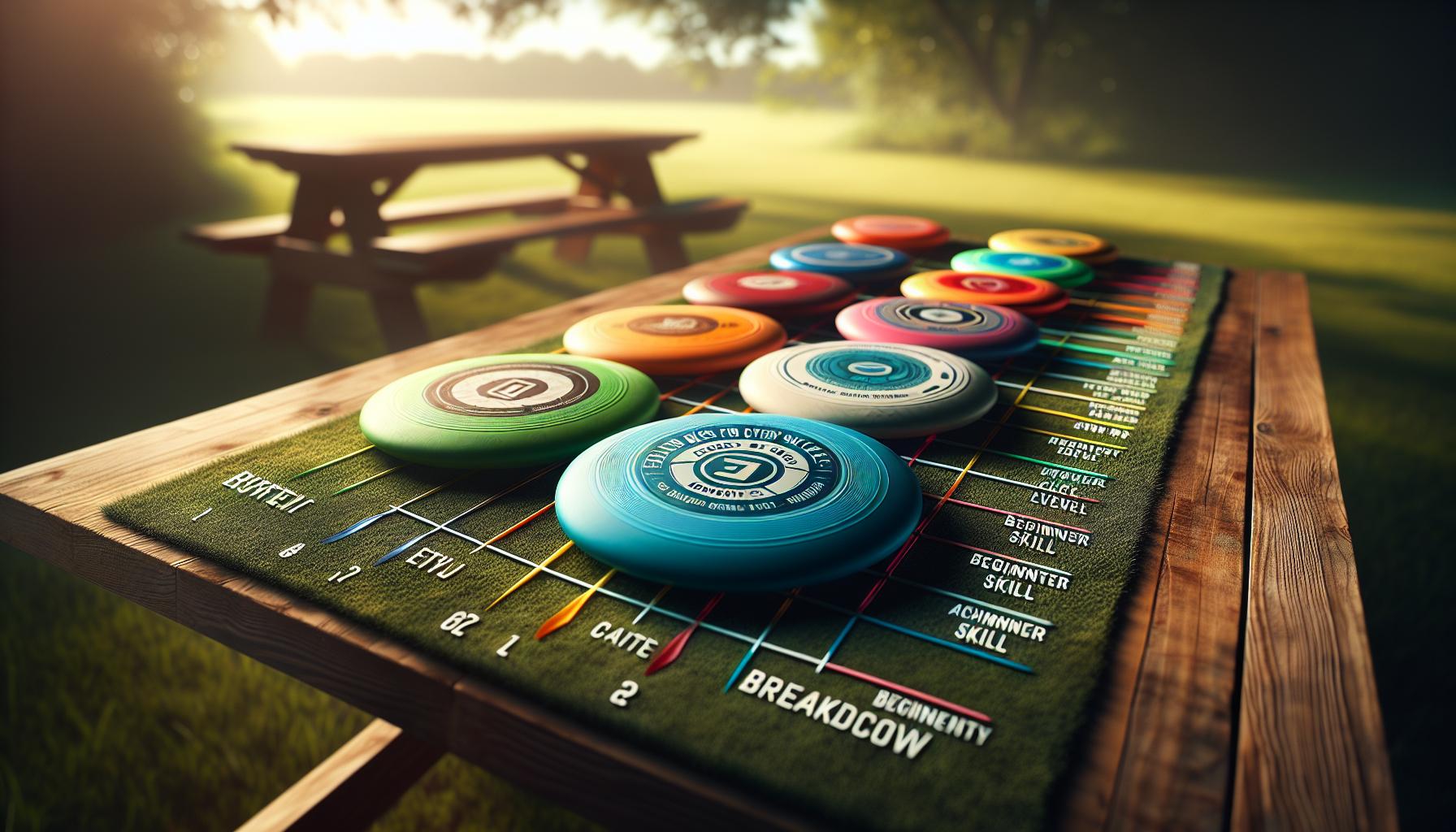
Selecting the right discs for your bag is key to enjoying and excelling at disc golf, regardless of your skill level. The essential discs you carry can greatly influence your performance and adaptability on the course. Understanding the various types of discs and their specific uses is the first step toward optimizing your disc selection.
For beginners, a foundational trio of discs is usually sufficient to cover a wide range of shots. This typically includes a driver, a midrange, and a putter. A good starter driver is often an easy-to-throw distance driver, such as the Innova Sidewinder, which provides both distance and a manageable flight path. For midrange, a versatile disc like the Buzz can help new players achieve straight, stable shots, allowing them to focus on technique without being overly penalized by disc behavior. Lastly, a reliable putter, like the Wombat, will aid players in honing their short-game skills, crucial for scoring well.
As players progress, they can benefit from expanding their collection to include more specialized discs. At the intermediate level, adding an overstable driver is vital for creating a reliable hyzer finish and managing challenging wind conditions. The Destroyer serves as an excellent choice for those necessary power throws. Meanwhile, introducing an understable driver can enhance shot variety, allowing players to execute anhyzer shots. The Mako3 is a fantastic choice that complements your evolving game.
Advanced players often customize their bags to meet their personal throwing styles and course strategies, integrating a range of discs to cover different scenarios. This might include lightweight options for increased control during lengthy courses and specialty discs designed for specific weather or terrain conditions. For example, including a specialized forehand disc can give a competitive edge in tight situations. With the right mix, experienced players focus on optimizing distance, control, and utility.
To summarize, whether you are a beginner aiming to develop your skills or a seasoned competitor looking to refine your strategy, curating the right selection of discs is crucial. By understanding the unique applications of different types of discs and how they align with your personal skill level and style, you can create a bag that not only enhances your performance but also makes every outing on the course a more enjoyable experience.
The Science of Disc Weight: How It Affects Performance
The weight of a disc can significantly impact its flight characteristics and overall performance, making it a critical factor in your disc selection process. Average throwers may not realize that even small changes in weight can lead to substantial differences in stability, speed, and control, which ultimately shape your gameplay on the course. For instance, heavier discs tend to be more stable and less affected by wind, while lighter discs can achieve higher speeds, making them easier to maneuver for various throwing techniques.
Understanding Disc Weight Classes
Discs are typically available in various weight ranges, usually from about 150 grams to 175 grams. Here’s a breakdown of how weight affects disc behavior:
- Lightweight Discs (150-165 grams): These are ideal for beginners or players seeking more distance with less power. Lighter discs can provide increased lift and easier turnover for those who are still developing their throwing technique.
- Mid-Weight Discs (165-172 grams): This range is often considered optimal for most players, balancing distance and control. Intermediate players may find that using mid-weight discs allows for better accuracy and reliability in various course conditions.
- Heavy Discs (172-175 grams): Preferred by advanced or power throwers, heavy discs offer enhanced stability and consistent performance in windy situations. They are less susceptible to being influenced by external factors, making them a solid choice for crucial shots.
Choosing the Right Weight for Your Style
When selecting the appropriate disc weight, consider your personal throwing style and the conditions of the courses you typically play. For example, if you are consistently playing in windy environments, opting for heavier discs will likely yield better control and predictability during your throws. Conversely, if you often find yourself on courses with fewer obstacles or in calm weather, lighter discs can help you maximize distance without compromising accuracy.
Ultimately, experimenting with different weights can provide valuable insights into what works best for you. Many players find that carrying a range of weights helps them adapt to various scenarios encountered on the course. Keeping your bag balanced with a mix of weights ensures you are prepared for everything from long drives to precision putts, enhancing your overall gameplay experience.
Optimizing Your Bag: Balancing Distance, Control, and Utility
Crafting a well-balanced disc golf bag is essential for players aiming to elevate their game, whether they are just starting out or are seasoned veterans. The interplay between distance, control, and utility is crucial for maximizing performance on the course. Each throw requires a thoughtful selection of discs to match not just the distance to the basket, but also the throwing style and environmental conditions.
To optimize your bag effectively, consider aligning your disc selection with these three key factors. Start by identifying your primary throwing strengths and the typical distances you face on the course. For instance, if you excel in long throws but struggle with precision, you might prioritize distance drivers with excellent glide and stability. Conversely, if control is your forte, incorporating mid-range discs that can handle different angles and speeds will enhance your performance in tight spots.
It’s also beneficial to think about the utility of each disc. A versatile bag should contain various discs that handle different situations. For example, having a couple of putters for short range, some mid-range discs for flexibility in approach shots, and a solid lineup of drivers can cover most scenarios you’ll encounter. This mixture not only prepares you for varying distances but also allows you to adapt to unexpected challenges on the course, like sudden wind changes or obstacles that require strategic throwing angles.
Finally, don’t overlook the importance of practice and experimentation. Try out different discs during casual rounds to see which ones feel best in your hand and produce the best results. Keep track of how each disc performs under various conditions and refine your selection accordingly. By maintaining awareness of your game evolution and adjusting your bag to suit your growth, you’ll be well on your way to achieving a balanced and effective disc setup that enhances both distance and control, ultimately making you a more versatile player on the course.
Advanced Strategies: Customizing Your Disc Selection
Your disc selection can redefine how you play the game. Every golfer’s journey looks different, and customizing your bag to fit your individual style is key to unlocking your full potential on the course. The process of tailoring your disc lineup involves understanding your own strengths, analyzing course demands, and becoming familiar with the specific flight characteristics of various discs. This understanding allows players to not only enhance their current skills but also to strategically target areas in need of development.
One of the first steps in customizing your selection is conducting a personal inventory of your current skill set and preferences. Ask yourself questions like: What types of throws do I excel in? Do I prefer more overstable or understable discs? What’s my comfortable throwing distance with various disc types? Start by creating a small lineup of discs that you know work well for your strengths. From there, gradually introduce new discs to experiment with how they complement or enhance your performance. Keeping a disc journal-note down your experiences with different discs-can help track which works best for you in various scenarios.
Next, consider the courses you typically play. Every course has its unique challenges, whether it’s long open holes, tight fairways, or elevated baskets. This environmental factor is crucial in custom selection as it guides you in choosing discs suited for specific types of throws. For instance, if you frequently encounter wooded courses, incorporating more reliable mid-range discs for accurate approaches can vastly improve your game. Conversely, wide-open courses may call for distance drivers capable of taking advantage of your throwing power.
Lastly, don’t shy away from asking other players or observing professionals during play. Many seasoned players are happy to share their experiences with particular discs, and watching them in action can provide invaluable insights. Pay attention to their choices based on the same throwing scenarios you encounter. This collaborative spirit strengthens the community and helps you grow faster as a player. Moreover, consider participating in local leagues or tournaments; they offer a great chance to test different discs and strategies while learning from diverse playing styles.
In the world of disc golf, your bag is not just a collection of tools-it’s an evolving part of your game. By immersing yourself in this customization process and constantly refining your choices based on personal strengths and course characteristics, you’ll not only make your playing experience more enjoyable but also become a more agile and adept competitor. Your unique setup will help create the confidence you’ll need on the course, allowing you to truly elevate your performance.
Troubleshooting Common Disc Issues: Flight Problems and Solutions

Understanding how to troubleshoot common flight problems can significantly enhance your performance on the course. Disc flight issues often stem from a combination of disc choice, throwing technique, and external factors like wind or course conditions. Recognizing these problems early allows you to make adjustments that can improve your game, whether you’re a beginner or a seasoned player.
To begin with, let’s look at inconsistent flight paths. If your disc isn’t behaving as expected, it could be a mismatch between the disc type and your throwing style. For example, if you’re throwing a driver that’s too overstable for your arm strength, it may not get the necessary lift, resulting in early fades. Alternatively, using an understable disc when you need control can lead to unwanted turnovers. Testing different discs with varying stability might help you find a more compatible option.
Another common issue is the note-worthy “nose-up” throw. This problem occurs when the nose of the disc points upward during the release. It can cause the disc to stall prematurely and result in a loss of distance. Aim to keep the nose flat by adjusting your grip and ensuring a proper follow-through. Focus on releasing the disc at a slight downward angle, ensuring a smooth, flat trajectory. Practicing this technique can drastically improve your distance.
Environmental Challenges
Disc golfers also need to adapt to changing weather conditions. Wind can severely affect disc flight; a headwind can exaggerate stability issues, while tailwinds can take a stable disc further than expected. Learn to adjust your grip and throw angles based on wind conditions. For headwinds, opt for slightly more overstable discs to help maintain control. Conversely, if you’re throwing with a tailwind, consider using more understable discs to maximize distance while keeping stability in check.
Condition-Specific Solutions
Additionally, don’t overlook the playability of the course itself. If the ground is wet or uneven, it may lead to misthrows or unintended skips. When approaching these scenarios, practice throwing more stable discs that can better handle unpredictable ground conditions. Adapting your strategy according to the course layout will enhance your overall performance.
Ultimately, keeping a disc journal can be incredibly beneficial. Document your throwing experiences, noting conditions, disc choices, and throwing mechanics when you encounter flight problems. This practice not only fosters self-awareness but also allows you to identify patterns that can lead to consistent improvement. By addressing these flight issues holistically, you’ll cultivate a deeper understanding of your disc golf game, paving the way for enhanced skills and greater enjoyment on the course.
Seasonal Considerations: Adapting Your Bag for Different Conditions
Adapting your disc golf bag for seasonal changes can significantly impact your game, helping you stay prepared and perform at your best in varying conditions. As the weather shifts, so too do the challenges you face on the course. From the crisp winds of fall to the soggy layouts of spring, understanding how to tailor your disc selection ensures you’re always equipped to tackle the day’s challenges, enhancing both your performance and enjoyment of the sport.
As temperatures drop, discs can lose their grip, making it essential to consider the material of your discs. For colder months, choose discs with a grippier feel that can handle the effects of cold weather. Additionally, the density of frisbees may change, affecting their flight paths. When the air is dense, overstable discs will tend to fly truer and maintain a reliable path. Therefore, consider integrating more overstable discs into your bag during these months to combat potential drift due to adverse weather conditions.
Wet Conditions and Your Disc Selection
Rainy or wet conditions call for extra attention to the types of discs you carry. It’s smart to have a few waterproof options to ensure they hold up better and maintain their intended flight path. Look for plastic blends designed to resist moisture; these not only help with grip in the rain but can also minimize the impact of weight gain from water absorption. When the course becomes muddy, using more stable drivers can help to mitigate unpredictable skips and throws that wet ground can cause.
Further, embracing the concept of versatility can enlighten your approach to seasonal gameplay. A well-rounded selection that includes mid-range discs and putters designed for varying environmental conditions will give you added utility. For example, discs that are slightly understable may perform well in tailwinds, while overstable options can combat headwinds. Prioritizing a mix of these types can improve your adaptability to different courses and layouts throughout the year.
By keeping a close eye on the anticipated weather and how it affects disc performance, you can make informed decisions about what to include in your bag. Remember, an experienced disc golfer doesn’t just rely on their favorite discs; they acclimatize their bags to reflect the seasons and the unique challenges each one brings. Keeping this dynamic strategy in your gameplay can turn seasonal obstacles into opportunities for skill growth and enhanced competition.
Insights from Pros: What the Experts Carry in Their Bags
Determining the right number of discs for your bag can transform not just how you play, but elevate your entire disc golf experience. Pros often fine-tune their selections with a clear focus on versatility and reliability, opting for a balanced combination of distance drivers, mid-range discs, and putters that cater to their unique throwing styles and course conditions. A common theme among expert players is cohesion in their disc choices; they ensure each disc serves a specific purpose, contributing to a well-rounded game.
Many professionals advocate for a bag that typically contains 12 to 20 discs, allowing for significant coverage of different shots without becoming overwhelming. For instance, a distance driver designed for maximum speed and glide is complemented by a more stable mid-range disc for controlled, precise throws. The balance of stability is crucial; having overstable, stable, and understable options allows players to adapt their strategies on the fly, addressing varying wind conditions and technical course layouts with ease.
Here are some insights from seasoned disc golfers on what they carry:
- Distance Drivers: At least 2-3, including one overstable for stability in the wind and another slightly understable for maximum distance.
- Mid-Range Discs: 3-4 options that include a stable workhorse and one or two specialized discs for different flight paths.
- Putter Collection: It’s common for pros to carry multiple putters-1-2 for putting, and others specifically for upshots, allowing for adjustments based on feel and performance.
Though individual preferences vary, the key takeaway is that successful players often tailor their bags to reflect their strengths and the nuances of the courses they frequent. By following their philosophies, newcomers can not only feel more prepared but also enjoy the strategic aspects of disc golf more deeply. Investing the time to understand and select the right discs transforms not just the bag, but the game itself, opening new avenues for skill enhancement and on-course enjoyment.
Creating a Competitive Edge: The Role of Specialty Discs
In the fast-paced world of disc golf, having the right tools at your disposal can make all the difference in turning a good round into a great one. Specialty discs are like the secret weapons in a player’s arsenal-these unique designs and features are tailored for specific situations, offering players a competitive edge that can be crucial in tight matches or challenging courses. Understanding how to effectively incorporate these discs into your bag can elevate your game from recreational to competitive.
Specialty discs often fall into categories like distance drivers, precision putters, or unique mid-range discs that can handle specific wind conditions, elevated shots, or tricky terrain. For instance, a *glow-in-the-dark disc* might not only be a fun novelty but also a practical choice for evening rounds, ensuring visibility during dusk or dawn. Similarly, *specialized putters* designed for deeper grips can offer a tangible advantage for players who prioritize feel and control during those high-stakes putting moments.
Integrating a few well-chosen specialty discs into your collection creates opportunities to cover a wider range of shot types. Players should consider carrying:
- Overstable Drivers: Ideal for headwinds, allowing for reliable hyzer throws when the conditions get challenging.
- Utility Discs: Discs that can perform multiple functions such as an understable disc that can be thrown forehand or backhand, adapting to various situations.
- Mid-Range Discs with Special Features: Such as those designed for specific flight paths, including flatter flights for control or more curve for finesse shots.
Ultimately, the goal is to achieve harmony within your bag-matching your specialty discs with your playing style and chosen courses. Keep experimenting with different models to discover which specs resonate best with your technique since every disc behaves slightly differently in flight. By embracing the distinct advantages that specialty discs provide, you not only expand your skill set but also enhance your strategic options on the course, setting yourself up for success as you navigate the nuances of disc golf competition.
Community Recommendations: Popular Bags and Disc Options
Building the perfect disc golf bag starts with understanding what fellow players find essential to their game. As you explore your options, community recommendations can guide your choices, highlighting the most favored bags and discs among both casual players and serious competitors. Many players agree that having a balanced selection of discs tailored to different conditions and shot types can dramatically improve performance on the course.
When it comes to backpacks, brands like Innova, Dynamic Discs, and MVP are frequently praised for their quality and functionality. Players often recommend the Innova Discarrier for its spacious design, which comfortably holds up to 25 discs while also offering ample storage for accessories. For those looking for a lightweight option, the MVP Voyager bag is celebrated for its sleek fit and ease of transport without sacrificing disc space. Each of these bags includes designated pockets for water bottles and essential gear, making them a favorite choice for day-long tournaments or casual outings.
As for disc selection, the most commonly recommended discs include reliable models such as the Innova Destroyer for distance, the Discraft Buzzz for versatile mid-range shots, and the Axiom Envy as an exceptional putter. Notably, players emphasize the importance of trying out different molds to find what feels comfortable for their throwing style. For instance, some recommend carrying a selection of overstable and understable drivers to adapt to various wind conditions and course layouts. Engaging with local communities through forums or disc golf meetups can provide invaluable insights into what’s currently working for players in your area-creating a resource pool of knowledge that enhances your own game.
Ultimately, the goal is to build a bag that reflects your unique playing style while incorporating the communal expertise of seasoned players. Whether you’re just starting out or looking to optimize your existing collection, exploring popular bags and disc options within the disc golf community can effectively elevate your game and help you navigate different courses with confidence.
Elevating Your Game: The Importance of Disc Consistency
The journey to mastering disc golf is as exhilarating as it is nuanced, and one of the foundational elements that can significantly impact your performance is disc consistency. Whether you’re a newcomer or a seasoned player, understanding how consistent disc behavior can enhance your game is paramount. A disc that flies predictably will allow you to execute your shots with greater confidence, letting you focus more on technique and strategy rather than guessing how the disc will behave in the air.
To achieve consistency, it’s essential to maintain a well-balanced bag that includes a variety of molds suited to different flight paths. Each disc in your bag should offer reliable performance characteristics across various conditions, including wind, humidity, and terrain. As players progress, they often discover that certain discs become staples because of their predictability in flight. For instance, selecting a trusted putter for all your short-range shots can make a world of difference when the stakes are high, especially during competitive play. A strong recommendation is to focus on discs with similar stability ratings to foster a more uniform response in their behavior.
- Practice Regularly: Familiarize yourself with each disc in your bag through repetitive throws. This helps to engrain muscle memory and reinforces how each disc reacts.
- Weather Adaptability: Understand how different weather conditions affect disc performance. For instance, lighter discs may become unpredictable in strong winds, while heavier ones might provide more stability.
- Shot Selection: Be strategic about which discs you choose for particular throws. Having set roles for each disc-distance driver, fairway driver, midrange, and putter-leads to better outcomes.
Another critical facet of maintaining disc consistency is the wear and tear that discs undergo over time. Discs that have been thrown extensively can develop small nicks or scratches, affecting their flight paths. Therefore, keeping an eye on the condition of your disc and retiring any that have become unpredictable is important. Regularly assessing your bag and replacing worn discs with fresh ones can ensure that you maintain that essential level of reliability.
Ultimately, consistency in disc performance helps to build trust in your equipment and increase your overall effectiveness on the course. By focusing on a handful of discs that you know well, taking care to maintain their condition, and adapting your skills according to weather and physical factors, you can elevate your game to new heights. Remember, the path to mastering disc golf is shaped not only by skill but also by the unwavering partnership you create with your discs.
Q&A
Q: How many discs should a beginner carry in their disc golf bag?
A: A beginner should start with 3 to 5 discs, which usually include a driver, a midrange disc, and a putter. This minimal setup helps newcomers focus on their throwing technique without feeling overwhelmed by choices. As skills improve, you can gradually add more discs to enhance your game.
Q: What is the ideal number of discs for an intermediate player?
A: An intermediate player typically carries 8 to 12 discs in their bag. This range provides versatility with different types of discs (drivers, midranges, putters), allowing for greater control and strategy in various course situations. It’s important to select discs that complement your strengths.
Q: How does disc weight affect my game?
A: Disc weight significantly impacts distance and control. Heavier discs tend to glide better in the wind and provide more distance, while lighter discs can offer better maneuverability and are easier to throw for beginners. Balancing weights in your bag helps adapt to different throwing conditions.
Q: Why should I customize my disc selection?
A: Customizing your disc selection allows for optimizing performance based on personal throwing styles and course demands. By understanding your strengths and preferred flight patterns, you can choose discs that enhance your overall gameplay. Consider keeping a mix of stability types in your bag for diverse situations.
Q: What types of specialty discs should I consider?
A: Consider adding specialty discs like overstable drivers for headwind throws or understable discs for turnover shots. These can provide unique advantages in specific situations or course layouts. Many professionals carry these to gain a competitive edge during tournaments.
Q: How can I organize my disc bag for efficiency?
A: To organize your bag effectively, place your most frequently used discs in easy-to-reach pockets. Group discs by their type (drivers, midranges, putters) to improve workflow during rounds. A well-organized bag enhances your readiness and confidence on the course.
Q: When should I update the discs in my bag?
A: You should consider updating discs when you notice performance issues, such as loss of stability or flight ability. Additionally, as you improve, adapt your selection to include more advanced discs that align with your evolving skill level and strategic needs.
Q: What should I do if my disc isn’t flying as expected?
A: If your disc isn’t flying as expected, first check for wear and tear. Older discs might lose their flight stability. Additionally, evaluate your throwing technique-adjusting your grip, stance, or follow-through can improve performance. Try referencing troubleshooting tips for common disc problems to further refine your throws.
To Wrap It Up
As you gear up to refine your disc golf bag, remember that the right number of discs can significantly enhance your game. With insights on disc flight characteristics and throwing mechanics, you’ve got a solid foundation to start optimizing your setup. Don’t just take this information and run; put it into practice! Head over to our guides on selecting the best discs for specific throwing styles or check out our comprehensive comparison tables to find that perfect addition to your bag.
Curious to learn more? Explore our posts on mastering advanced competitive strategies or connect with seasoned players through our community forums. Join our newsletter for exclusive tips and the latest equipment reviews-they’ll keep your skills sharp and your knowledge up-to-date. Your next throw could revolutionize your game, so act now and continue the journey toward becoming the best disc golfer you can be!
Key Course Considerations and Strategic Navigation for How many discs for a good bag expert answer
When developing a strategic approach around , players should account for essential technical and environmental factors:
- Course Layout and Terrain: Elevation changes, tree canopy density, and natural water hazards dictate whether to prioritize distance off the tee or controlled fairway positioning.
- Disc Selection and Flight Ratings: Matching disc speed, glide, turn, and fade to wind conditions and arm speed prevents costly kicks into heavy rough.
- Footwork and Release Consistency: Smooth, balanced run-ups and clean follow-throughs produce repeatable release angles on hyzer, flat, and anhyzer lines.
- Mental Strategy and Risk Management: Assessing landing zones and high-percentage scramble routes preserves par and minimizes double-bogeys during tournament rounds.
Disc Golf Equipment Specifications and Flight Matrix
| Disc Golf Element / Category | Primary Specification | Recommended Flight Characteristic | Strategic Application |
|---|---|---|---|
| Distance Driver | Speed 11–14, Wide Rim | High speed, sharp rim, controlled fade | Maximum distance off tee on open fairways |
| Fairway Driver | Speed 6–9, Moderate Rim | Neutral turn, predictable finish | Tight wood lines, tunnel shots, placement drives |
| Midrange Disc | Speed 4–5, Deep Rim | High glide, straight flight path | Accurate approach shots, control in tight gaps |
| Putt & Approach | Speed 1–3, Blunt Edge | Low glide, minimal skip, bead/beadless | Circle 1/2 putting, layups, short upshots |
Frequently Asked Questions About How many discs for a good bag expert answer (FAQ)
What is the best way to improve accuracy for How many discs for a good bag expert answer?
Focus on consistent footwork, maintaining a level reachback, and matching disc stability to your natural throwing speed rather than overpowering the disc.
How do wind conditions affect disc selection?
Headwinds make discs fly more understable (turn more), requiring more overstable discs, while tailwinds make discs fly more overstable (fade earlier), requiring lighter or more understable discs.
What equipment is essential for playing disc golf courses?
A balanced starter set with a putter, midrange, and fairway driver, along with a comfortable disc golf bag, chalk bag, and course-ready athletic footwear.
Get our latest guides, news, and insights highlighted in your Google Search & AI Overviews.