Did you know that the grip on your disc golf disc can significantly influence your throw distance and accuracy? Mastering the perfect hold is essential for both newcomers eager to improve their game and seasoned players aiming to refine their technique. A proper grip not only enhances your control but also affects the disc’s flight path, ultimately impacting your performance on the course. In this guide, we’ll explore the nuances of gripping a disc golf disc, breaking down the mechanics and providing practical tips to help you achieve that perfect hold. Whether you’re looking to boost your scores or simply enjoy a day out on the course, understanding the right grip is a crucial step in your disc golf journey. Let’s dive into the details and elevate your game!
How to Choose the Right Grip for Your Disc Golf Game
Choosing the right grip can significantly elevate your disc golf game, transforming your throws from basic to exceptional. A proper grip not only dictates the release of the disc but also influences distance, accuracy, and control. When assessing how to hold your disc, it’s essential to consider personal comfort, the type of throw you’ll be executing, and the specific discs in your bag. As you begin this journey, experimenting with different grips while remaining attentive to your throwing mechanics will provide the insights you need to find what works best for you.
One widely-used grip is the Power Grip, commonly favored by intermediate and advanced players for backhand throws. This grip employs all four fingers curled tightly against the underside of the disc, securing it firmly while the thumb presses down on top. It’s designed for maximum power and spin, resulting in longer throws. Conversely, beginners might find the Fan Grip more comfortable, where the fingers are spread out beneath the disc, allowing for better control and a more natural release, especially when learning the fundamentals of the game.
When considering your grip, also pay attention to the disc type. Heavier discs might require a firmer grip and more wrist stabilization, while lighter discs can often be thrown with a looser grip, allowing for greater finesse. Tailoring your grip to the specific disc and throw type prepares you for a variety of scenarios during gameplay. Experimentation is key; take time to analyze how different grips feel during practice rounds. This hands-on approach will not only sharpen your skills but also enhance your enjoyment of the game, fostering a deeper connection with this rewarding sport.
Essential Grip Techniques for Disc Golf Beginners
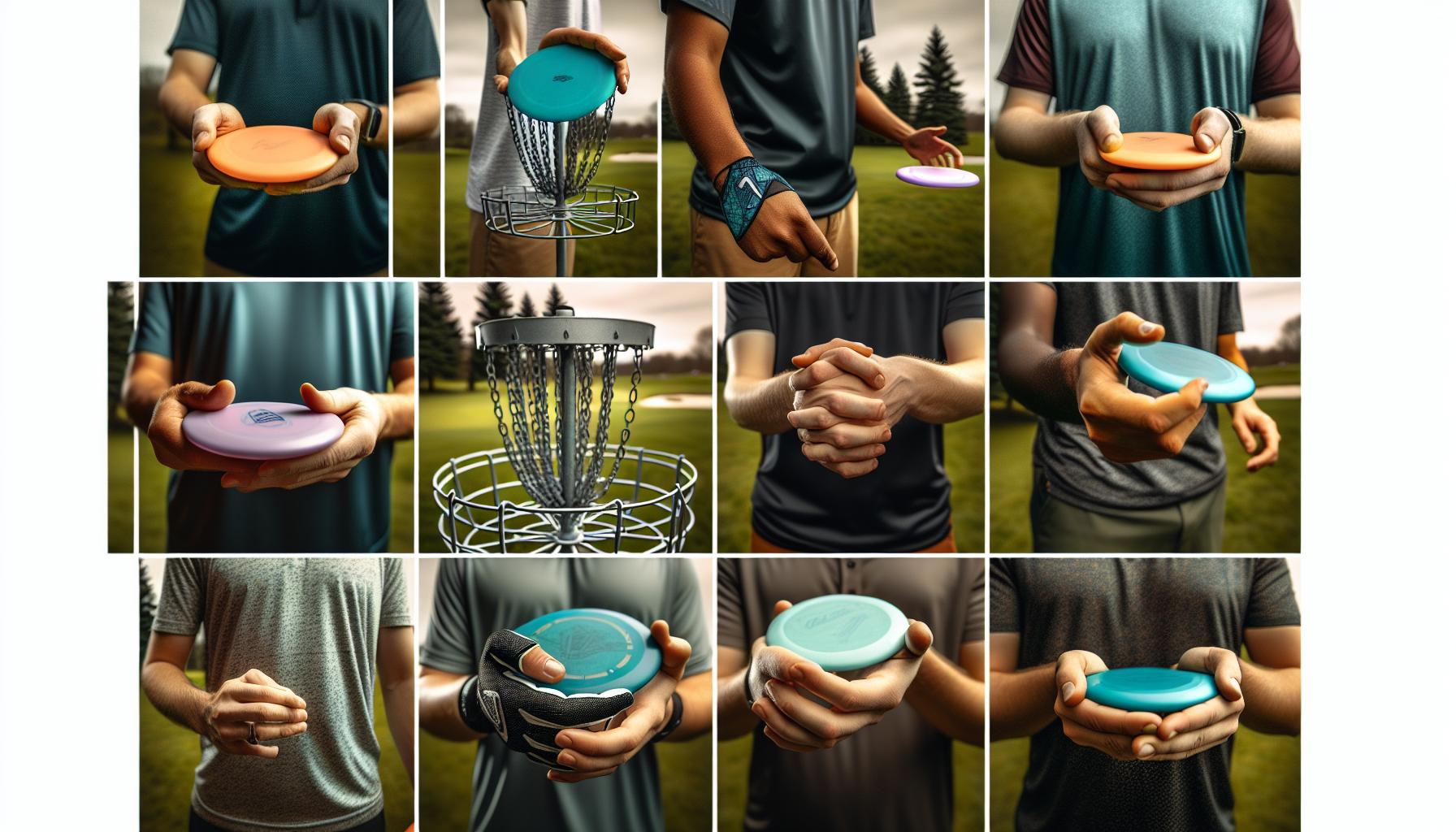
Understanding the nuances of grip can make a world of difference in your disc golf performance, especially as a beginner. Mastering the correct grip is not just about holding the disc; it’s about establishing a relationship with it that will enhance your throws and bring you joy on the course. Whether you’re launching your first disc or refining your skills, focusing on grip techniques will transform your game.
When starting out, the most important thing to remember is comfort. Grip your disc with confidence but avoid excessive tension; your hand should feel relaxed, yet secure. A widely recommended approach for beginners is the Fan Grip. In this grip, your fingers are spread out beneath the disc, enabling a more natural release and better control. This method allows you to focus on developing consistency in your throws as it encourages a fluid motion. To execute the Fan Grip, follow these steps:
- Place Discs: Hold the disc sideways against your palm, ensuring your thumb is on top and your index finger rests along the outer rim.
- Spread Your Fingers: Extend your remaining fingers flat against the underside of the disc. This creates a stable base for your throw.
- Relax Your Grip: Allow your wrist to bend slightly, maintaining a relaxed yet prepared posture.
As you progress, you might want to explore the Power Grip. This is often used by players aiming for distance, as it increases control and spin. In this grip, all four fingers curl tightly against the underside of the disc, while the thumb presses down on top. This grip is ideal for backhand throws, allowing for maximum force during release.
To develop a well-rounded approach to grip:
- Practice Regularly: Set aside time to focus on your grip and throws without distractions. Pay attention to how different grips feel during your practice rounds.
- Adjust Based on Disc Type: Each disc has its characteristics. Heavier discs may necessitate a firmer grip, while lighter discs provide room for finesse; adjust your grip accordingly.
- Seek Feedback: Connect with more experienced players or coaches. They can offer insights tailored to your style and technique.
Embolden your grip skills with intentional practice, and remember that your improvement journey is just as significant as the results you achieve on the course. By investing time in mastering these essential grip techniques, you’re setting the foundation for a successful and enjoyable disc golf experience.
Exploring Different Grips: Backhand vs. Forehand

When it comes to disc golf, the grip you choose can significantly influence your throw’s accuracy and distance. Understanding the differences between backhand and forehand grips can help you select the right technique for each situation, ensuring you maximize your potential on the course. Each grip has its unique advantages, and knowing when to use them can set you apart as a player.
Starting with the backhand grip, this is consistently the most popular choice among players for a reason. It allows you to generate more spin and leverage, resulting in greater distance and stability. The key to a successful backhand throw lies in the Power Grip, where all four fingers are positioned underneath the disc, curling against its rim, and the thumb is firmly placed on top. This grip provides the necessary control and power, especially on longer throws. To execute a backhand throw effectively, stand with your feet shoulder-width apart, rotate your shoulders back for torque, and release the disc in a fluid motion, transferring your weight forward as you follow through.
In contrast, the forehand grip, often referred to as the Flick, requires a different hand positioning and throwing mechanics. Here, the disc is held with your index and middle fingers pressed against the inner rim, while your thumb provides stabilization on top. This grip is excellent for shorter, more precise throws and can cut through the air with reduced drag. Users of this grip will benefit from a flicking motion of the wrist upon release, helping to impart spin and accuracy. The forehand throw is particularly useful when navigating obstacles or needing to quickly turn the disc in flight, offering versatility for right and left turns.
Each grip comes with its challenges. Beginners might struggle with consistency, while seasoned players may have to adjust their techniques as they experiment with new discs and throwing styles. To overcome these challenges, visualizing your throw mechanics and practicing diligently are essential strategies. Consider recording your throws to analyze your form and make necessary adjustments.
Ultimately, finding the right grip for each throw situation is about personal comfort and the specific shot you need to achieve. Whether you’re using the backhand for a powerful drive or the forehand to navigate tight corners, practicing both grips will enhance your overall game and create a well-rounded skill set for any disc golf challenge.
Understanding Grip Pressure: Finding the Perfect Balance
Grip pressure is a subtle yet critical factor in disc golf that can significantly affect the quality of your throw. Just like a musician finds the right touch on their instrument, a disc golfer must cultivate an optimal grip pressure to enhance performance. Too much pressure can tighten your hand and lead to a lack of fluidity, causing the disc to release inconsistently, while too little can result in a weak or uncontrolled throw. Finding that perfect balance is essential for both distance and accuracy.
Identifying the Right Grip Pressure
For beginners, it’s beneficial to start by experimenting with varying levels of grip pressure in practice. A solid reference point is to hold the disc with a gentle but firm grasp, which allows for control without constraining wrist movement. Typically, a good starting point is engaging your fingers and thumb with sufficient pressure to keep the disc secure, but not so tightly that your hand feels tense. A relaxed grip promotes a smoother release and better follow-through, which are crucial components for achieving optimal distance and precision.
As you progress, you’ll notice that different throws and circumstances may require slight adjustments in grip pressure. For example, utilizing a firmer grip can enhance spin during backhand throws where maximum distance is essential, while a looser grip can be advantageous for finesse shots that require subtlety and touch. The key lies in understanding your body mechanics and recognizing how a change in grip pressure alters the disc flight path.
Practical Drills to Improve Grip Awareness
To foster awareness of grip pressure, try the following drill: stand in a relaxed stance, hold the disc in your throwing hand, and practice your throw by gradually increasing and decreasing grip pressure. Focus on how changes impact your throw and flight path. You can also simulate various throwing scenarios-like navigating obstacles or executing short hyzers-while adjusting grip pressure to see what feels best in each situation.
Additionally, consider consulting with fellow players or coaches to gather insights on how they perceive and adjust their grip pressure during play. Recording your sessions can also help you visualize the relationship between grip pressure and throw success, making it easier to fine-tune your technique over time. Through diligent practice and a keen eye for detail, you’ll develop a feel for the perfect grip that complements your unique throwing style and enhances your overall game.
The Importance of Finger Placement for Accuracy
Proper finger placement is essential for achieving accuracy in your disc golf throws. The way you position your fingers on the disc not only influences how it feels in your hand but also directly impacts the disc’s flight path and stability. A common misconception is that any grip will suffice as long as you apply enough force; however, the nuances of finger placement play a pivotal role in achieving a consistent and effective release.
One effective technique involves ensuring that your thumb is positioned firmly on top of the disc. This stabilizes your grip and helps direct the power from your arm through to the disc. The remaining fingers should be positioned underneath the disc, tailored to your throwing style. For backhand throws, it’s often recommended to place your index finger along the inner rim for better control and leverage, while the middle finger should rest against the flight plate for added stability. The other fingers can curl underneath, providing additional support. This configuration not only secures the disc but also optimizes your throw’s spin and distance.
When experimenting with finger placement, pay close attention to how different positioning affects your accuracy. For instance, some players find that spreading their fingers wider can enhance power and speed, while others prefer a tighter pinch for a more controlled release. Take the time to practice with various finger placements during casual rounds, as this will help you identify the optimal grip that feels natural and effective. Remember, the goal is to create a grip that feels secure yet comfortable, allowing for a fluid motion during your throw.
Finally, incorporating finger placement drills into your practice routine can significantly improve your performance. One useful drill is to perform a series of throws focusing exclusively on how you position your fingers, varying between grips to notice their impact on the disc’s behavior. By refining your finger placement, you’ll cultivate a reliable and accurate grip that elevates your overall disc golf game.
Advanced Grip Strategies for Experienced Players
When it comes to mastering your grip in disc golf, experienced players often find that the subtleties in technique can significantly enhance performance on the course. One of the most effective strategies is adapting your grip based on the specific throw and environmental conditions. For instance, the way you grip your disc not only determines the immediate release but can also influence the flight path and stability throughout the entire throw. This nuanced understanding allows players to fully exploit their skill set and adapt to varying scenarios.
Adjusting Grip for Power vs. Control
For players looking to maximize distance, a looser grip may initially seem counterintuitive, but it can actually promote a strong snap at release. This technique can lead to increased spin and a more effortless throw. Conversely, when precision is paramount-such as when navigating tight trees or winding fairways-tightening your grip can help maintain better control over the disc’s exit angle and stability. Experimenting with various grip pressures helps players find the sweet spot that maximizes their unique throwing style.
Additionally, players should consider the importance of adjusting their grip based on the disc type. A driver, for instance, may be best served with a firm grip that allows for a powerful snap without sacrificing control. In contrast, approach putters might benefit from a relaxed grip to enable smoother, more controlled release for accuracy. Understanding the flight characteristics of different disc shapes can help enthusiasts fine-tune their holding technique.
Cues for Real-Time Adjustments
Incorporate visual and tactile cues into your practice to help create muscle memory around grip adjustments. For example, before each throw, take a moment to assess the disc-are you more comfortable with a firm grip, or does a looser hold allow for a bit more finesse? Utilize the varying textures of different disc brands to find what feels right in your hand. It’s also beneficial to train in diverse conditions, as outdoor factors such as humidity can alter the grip dynamics. By developing an intuitive feel for different grip styles in various environmental contexts, you’ll equip yourself with the versatility needed for competitive play.
Ultimately, as players grow more confident in their grip strategies, they will notice substantial improvements in both their distance and accuracy. By making refined adjustments to their grip depending on the throw type and conditions, experienced players elevate their game, gracefully blending power with precise control on the disc golf course.
Common Grip Mistakes and How to Avoid Them
Many players underestimate the significance of grip in disc golf, often leading to common mistakes that can hinder performance. A frequent error is over-gripping the disc. While it may seem that a firmer grip provides more control, gripping too tightly can actually restrict the natural snap of the wrist, which is crucial for achieving distance and spin. Instead, maintain a balance where your grip is firm enough to control the disc but relaxed enough to allow for a smooth release.
Another common mistake is inconsistent finger placement, which can greatly affect the throw’s accuracy and distance. Many beginner players may not realize how much their finger positioning influences the flight path. Ensure that your index and middle fingers are positioned snugly against the disc’s inner rim, with your thumb placed firmly on top. Practicing this finger arrangement consistently can lead to a more reliable throw. As the grip varies by disc type-drivers may require different finger placements than putters-take time to adjust your grip based on what disc you’re throwing.
Lastly, neglecting to adjust grip pressure according to environmental conditions is a mistake that can seriously impact your game. For instance, in humid weather, discs can feel slippery, and players may need to grip a bit tighter than usual. Conversely, in dry conditions, a lighter grip might be preferable. Regularly practicing in varied environments can help you develop an instinct for adjusting your grip pressure, making you a more adaptable player on the course.
To avoid these pitfalls, consider incorporating feedback loops into your practice routine. Video yourself throwing so you can analyze your grip, and don’t hesitate to seek advice from more experienced players or coaches who can provide insights tailored to your throwing style. By taking the time to identify and correct these common grip mistakes, you’ll be well on your way to a more controlled and powerful game.
Analyzing Grip Variations for Different Disc Types
Understanding the intricacies of how to grip different types of discs can significantly elevate your disc golf game. Each type of disc-be it a driver, midrange, or putter-has unique aerodynamic properties. This means the optimal grip can vary, affecting not just the distance but also the accuracy of your throws. For players looking to refine their technique, appreciating these differences is key to achieving consistent, high-quality throws.
When gripping a driver, for instance, the emphasis is often on a powerful snap and a firm hold to unleash maximum speed. The typical grip here involves a closed hand, ensuring that your fingers are snug against the disc’s inner rim. Here’s how to optimize your driver grip:
- Finger Placement: Your fingers should be spread, with your index and middle fingers nestled against the disc, and your thumb pressed down firmly on top.
- Grip Pressure: Aim for a firm grip, but avoid over-gripping, which could restrict wrist movement while throwing.
This grip allows for a crisp release and better spin, crucial for achieving distance on long fairways.
Midrange discs require a slightly different approach. These discs are designed for more controlled, tactical throws rather than maximum distance. Thus, your grip should allow for a slight adjustment in your throwing mechanics. Here’s how to approach it:
- Grip Adjustments: Keep your grip more relaxed than with a driver. A slight softening will help in executing finesse shots that require touch over power.
- Finger Orientation: Similar finger placement as the driver but consider allowing your fingers to create a bit of a curve for more touch.
This helps with making accurate approach shots where precision is more valuable than sheer distance.
Lastly, when it comes to putting, the grip is all about confidence and control. A steady, reliable grip can make all the difference in a short-range shot. Here’s the ideal way to grip your putter:
- Putter Grip: Use a more open grip, feeling confident in the release with your thumb and index finger resting against the disc’s surface.
- Balanced Pressure: The pressure should feel light yet assured-a contrast to the firmer grips used for distance throws.
This grip supports a smoother stroke and fosters confidence, allowing for a more natural follow-through.
By adapting your grip based on the type of disc you’re using, you’ll not only enhance your performance but also discover a greater level of enjoyment in the game. Each grip adjustment reflects an understanding of how the disc is meant to behave during different flight paths, ultimately leading to improved confidence and skill on the course.
Environmental Factors Affecting Your Grip Technique
The grip you choose for your disc can drastically change depending on the environmental conditions you face on the course. Factors like humidity, temperature, wind, and even the surface texture of the disc play a crucial role in how effectively you can wield your disc golf weapon. Understanding how to adapt your grip based on these elements can significantly enhance your performance and confidence.
When humidity is high, you may find that your fingers slip more easily, resulting in a less secure grip. In such conditions, consider applying a bit of chalk or grip-enhancing product to your hands before a round. This can help absorb moisture and provide a firmer hold. Conversely, in dry conditions, particularly during the sweltering summer months, your hands might feel excessively dry, which can inhibit your grip. Here, a little moisture from sweat or water can help enhance the natural grip of your fingers against the disc’s surface.
Wind is another critical factor. A strong gust can disrupt your throw if your grip isn’t secure. In windy conditions, tighten your grip slightly to ensure a more controlled release, but be careful to avoid over-gripping, which can lead to misthrows. You should also adjust your stance and angle to account for wind direction; for instance, if you’re throwing into the wind, a lower release can help maintain stability during flight.
Lastly, consider the temperature. Cold weather can lead to stiffness in your fingers, making it harder to execute your usual grip. During chilly days, take extra time to warm up your hands and fingers-simple hand exercises and keeping your hands warm with gloves can help maintain dexterity. On the flip side, hot weather might require you to reassess your grip to prevent slippage; every player has a unique solution, whether it’s frequent towel wiping or finding a disc with a more textured grip.
By remaining adaptable and aware of these environmental factors, you can refine your grip technique to suit changing conditions throughout your game. Being prepared not only impacts your throw but also contributes to a more enjoyable day on the course, allowing you to focus on your strategy and connection with fellow players.
Real Player Insights: Grip Tips from the Pros
The right grip can transform your game, making a powerful throw feel effortless and delivering accuracy that impresses. Professional players emphasize that finding your ideal grip is as personal as the discs you throw. For instance, Simon Lizotte, known for his distance, suggests focusing on how the disc feels in your hand rather than just replicating others’ grips. A strong recommendation from pros is to practice with varying disc types and weights to see how your grip adapts-for example, the feel of a lighter disc may encourage you to experiment with your hand positioning and grip pressure.
One of the common threads in grip discussions among seasoned players is the importance of maintaining a relaxed yet controlled hold. Players like Jennifer Allen advocate for a grip that feels firm enough to control the disc without causing tension in your hand, which can lead to less accurate throws. She points out that when players grip too tightly, it often results in a late release, leading to erratic flight patterns. To cultivate the right balance, players can employ a simple exercise: hold a disc at shoulder level with a relaxed grip and swing your arm in a throwing motion, focusing on letting go naturally at the optimal point in the throw.
When it comes to finger placement, pros often recommend experimenting with where your index finger rests on the rim. For example, placing it along the bottom edge can help stabilize your throw, while resting it on top may give you a bit more power. Moreover, utilizing your thumb effectively is crucial. Pro players like Paul McBeth emphasize that the thumb acts as the anchor, creating an overall stable foundation for your grip. Make sure your thumb presses firmly down, distributing the weight of the disc evenly across your fingers for maximum control.
Ultimately, the insights from experienced players reveal that successful grip techniques are not merely about mimicking others; they are about self-discovery and adaptation. Remember, your grip should be as unique as your style of play, and regular practice will not only enhance your comfort but also improve your overall performance on the course.
Disc Golf Equipment: Choosing Discs that Enhance Your Grip
Choosing the right disc for your game can significantly enhance your grip and throwing technique, allowing you to achieve greater consistency on the course. Discs come in various shapes, weights, and materials, each affecting how they feel in your hand and how they respond during throws. A well-chosen disc can boost your confidence and improve your accuracy, making it an essential component of your disc golf setup.
When selecting a disc, consider the following factors that impact your grip:
Disc Type and Weight
- Drivers: Generally, these discs are more aerodynamic and designed for speed and distance. Look for drivers with a comfortable rim width; many players prefer a smaller rim for better grip.
- Mid-range Discs: These discs balance control and distance, often featuring a more rounded edge that can feel more comfortable to grasp during throws.
- Putters: Typically the easiest to grip, putters have a wide, stable rim that allows for excellent control during those crucial short-range throws.
Grip Material and Texture
Different plastic blends also play a pivotal role in your grip. Softer materials tend to give a better tactile feedback, while harder plastics might be slippery in wet conditions. Discs like the *Dynamic Discs Judge* and the *Innova Aviar* provide a grippy feel that many players favor. Experimenting with various brands and their plastic types can help you discover which feels best for you.
Temperature and Conditions
Environmental factors like humidity and temperature can affect the material’s grip. It’s wise to carry an extra towel or have grip-enhancing sprays to ensure you maintain control during a round, especially in adverse weather conditions. Many players find that a slightly warmer day can lead to better grip with certain plastics, while colder climates may necessitate the use of softer, more flexible discs.
In summary, selecting the right disc isn’t just about brand recognition; it’s about understanding how each aspect of the disc affects your grip and throwing dynamics. By choosing discs that complement your grip style, you can improve your performance and enjoy the game better. Always remember, the best way to find the right disc is through trial and practice; your journey of discovery on the course is just as important as your preparation.
Practicing Your Grip: Drills for Improvement
Mastering your grip is essential for every disc golf player, regardless of skill level. A solid grip lays the foundation for consistent throws and improved accuracy. To hone this vital skill, a variety of drills can help you develop the muscle memory required for a perfect hold, allowing you to focus on distance and trajectory during your game.
One effective exercise is the Grip Transition Drill, which can be done at home or on the course. Start by holding the disc in your normal throwing grip, and then slowly transition to your grip for a different throw (e.g., from backhand to forehand). This exercise not only aids in familiarizing yourself with the feel of different grips but also strengthens your fingers and enhances dexterity. Aim to perform this drill for a few minutes each day, gradually increasing speed as you become more comfortable.
Incorporating Target Practice is equally beneficial. Choose various distances and targets on the course or in a field. Focus on your grip while throwing at these targets, ensuring that you consistently use the same grip for each throw. Pay attention to how your grip affects the disc flight path, which can help you make necessary adjustments. For an added challenge, try throwing with different grips, like a two-finger or a fan grip, to see how they impact your accuracy and distance.
Lastly, consider practicing with a partner using the Feedback Drill. Have your partner observe and provide feedback on your grip before and during throws. They can help identify any habits that may lead to inconsistencies. Alternatively, you can film your throws to evaluate your grip and technique later. This collaborative effort fosters a supportive community atmosphere where both players can share insights and improve together.
By dedicating time to these drills, you’ll not only refine your grip but also enhance your overall game. Consistent practice, paired with a focus on the nuances of grip, will lead to greater confidence and performance on the course, ultimately contributing to your development as a disc golfer.
Q&A
Q: What is the best grip for throwing a disc golf disc?
A: The best grip depends on personal preference and throwing style. For backhand throws, a power grip with fingertips under the rim provides maximum control and distance. Experiment with different grips to find what feels comfortable and effective for your game.
Q: How can I improve my disc golf grip pressure?
A: To improve grip pressure, practice finding the balance between too tight and too loose. A good technique is to hold the disc firmly enough to maintain control, but not so tightly that it restricts your wrist motion. Regular practice can help develop a comfortable pressure level over time.
Q: What are common mistakes to avoid when gripping a disc golf disc?
A: Common mistakes include gripping the disc too tightly, not using the correct finger placement, or not adjusting grip for different shots. Ensure your fingers are spread adequately across the disc for stability and avoid gripping it like a baseball, which can hinder your release.
Q: How does finger placement affect my disc golf shot accuracy?
A: Proper finger placement is crucial for shot accuracy. Your fingers should be positioned under the rim, providing control and stability. Experiment with different placements to find a configuration that offers the best balance between firmness and flexibility during your throw.
Q: When should I change my grip style in disc golf?
A: Change your grip style based on the type of throw you’re making or the disc being used. For example, a forehand throw may require a different grip from a backhand. Additionally, if you notice inconsistent throws or discomfort, it may be time to reassess your grip.
Q: Can environmental factors affect my disc golf grip?
A: Yes, environmental factors like humidity, temperature, and even the cleanliness of your hands can impact your grip. In dry conditions, your hands may grip better, while moisture can reduce traction. To combat this, consider using a grip-enhancing substance for better control.
Q: What grip techniques are recommended for windy conditions in disc golf?
A: In windy conditions, use a firmer grip to maintain control of your throw. Additionally, adjust your grip to enhance the stability of the disc during release. Practice forehand throws with a stable grip to reduce the disc’s susceptibility to wind changes.
Q: How can I tell if my disc golf grip is affecting my performance?
A: Signs that your grip may be affecting performance include inconsistent throws, a lack of distance, and discomfort during play. Review your grip during practice or ask for feedback from experienced players to assess whether adjustments are needed.
The Conclusion
Now that you’ve mastered the perfect grip for your disc golf throw, it’s time to put those skills to the test on the course! Remember, a solid grip can transform your throws from average to exceptional, enhancing your overall performance. If you’re eager to delve deeper into improving your game, check out our comprehensive guide on disc flight characteristics and techniques for achieving distance and accuracy. Don’t let uncertainty hold you back-experiment with different grips and find what feels best for you.
We’d love to hear about your journey! Share your thoughts in the comments, or explore our detailed discussions on disc selection and course strategy. Be sure to sign up for our newsletter to stay updated with tips and tricks that will take your game to the next level. Your next great disc golf experience awaits-let’s go out there and make it happen! Keep practicing, and happy disc golfing!
Get our latest guides, news, and insights highlighted in your Google Search & AI Overviews.