Did you know that the grip you use in disc golf can drastically affect your throw and overall performance? Selecting the right grip style is crucial for achieving optimal disc flight, precision, and distance. Whether you’re a newcomer eager to learn the ropes or a seasoned player looking to refine your technique, understanding grip styles is fundamental to mastering your throws. In this guide, we’ll delve into various grip styles, detailing their benefits and how they influence throw mechanics. By the end, you’ll be equipped with the insights to enhance your game and bring your disc golf skills to the next level. Let’s explore how the right grip can open the door to better throws and a more enjoyable experience on the course.
Understanding the Importance of Grip in Disc Golf
In disc golf, the grip is not just a technique; it’s the cornerstone of every successful throw. Understanding the nuances of grip can drastically affect your game, determining not only how far you can throw but also how accurately you land your shots. A well-executed grip ensures that the disc releases cleanly, allowing players to achieve the desired flight path. With the right grip, players can maximize their potential, harnessing the power of physics to their advantage.
When it comes to grips, there are three primary styles: the Power Grip, the Control Grip, and the Fan Grip. Each serves a distinct purpose and is suited for different throwing techniques. For aggressive drives and maximum distance, the Power Grip allows for a strong grip that provides both control and leverage. On the other hand, when precision is key-especially for shorter, more stable throws-the Control Grip offers a balance between firmness and finesse. The Fan Grip, characterized by a wider finger spread, is ideal for making consistent throws with minimal spin, ensuring that the disc flies true even in varying conditions.
Mastering these grips requires practice and an understanding of how each affects the flight dynamics of the disc. A common mistake among beginners is holding the disc too tightly, which can inhibit a clean release and alter the disc’s trajectory. Additionally, players should be aware that grip techniques may need to be adjusted based on the type of disc they’re using-putters, mids, and drivers each have unique characteristics that can influence how they should be gripped. Ultimately, the right grip not only enhances performance but also fosters a deeper connection with the sport, transforming every throw into a personal expression of skill and strategy.
For players looking to refine their technique, it’s essential to evaluate how grip choices modify disc flight. Regular practice, coupled with mindful adjustments, will cultivate a style that feels natural and boosts confidence on the course. As you progress, remember that developing your grip style is a personal journey that reflects your unique approach to the game.
The Basics: Types of Disc Golf Grips
Understanding the variety of disc grips is essential for anyone looking to elevate their disc golf game. Each grip style serves a distinct purpose, allowing players to adjust their throws based on distance, accuracy, and the specific dynamics of the disc in their hand. By mastering these different grips, players can maximize their performance and enjoy the game on a whole new level.
The primary types of grips in disc golf include the Power Grip, Control Grip, and Fan Grip. Each grip caters to different throwing needs and conditions:
Power Grip
The Power Grip is designed for maximum distance and control, commonly used during drives. Players securely hold the disc with all four fingers under the rim, while the thumb presses down firmly on top. This grip allows for a tight hold, enabling players to generate speed and spin, crucial for distance throws. By engaging the entire hand, the Power Grip helps to maintain control over the disc until the moment of release, ensuring a powerful throw that can cover significant yardage.
Control Grip
When accuracy is the priority, the Control Grip comes into play. This grip involves a looser hold compared to the Power Grip, positioning the fingers more towards the center of the disc rather than firmly against the bottom. This slight relaxation allows for smoother releases and more precise throws, making it ideal for mid-range shots or approaches. With the Control Grip, players can finesse their shots, adjusting their angles and trajectories to navigate challenging courses.
Fan Grip
The Fan Grip offers a wider finger spread, which is excellent for making stable, short throws. By spreading the fingers along the disc’s surface, players reduce the risk of excessive spin, promoting a more controlled flight path. This grip is particularly effective for putters or when executing gentle hyzer shots. The Fan Grip’s design stabilizes the throw while allowing for a soft release, making it a favorite among beginners and seasoned players alike.
Each of these grips requires practice and adaptation to find what feels most comfortable and effective. Newcomers should experiment with all three grips to discover which suits their throwing style best. Remember, the right grip is not just about comfort; it profoundly impacts how the disc flies. As players gain experience, refining their grip technique can lead to improved confidence and performance on the course.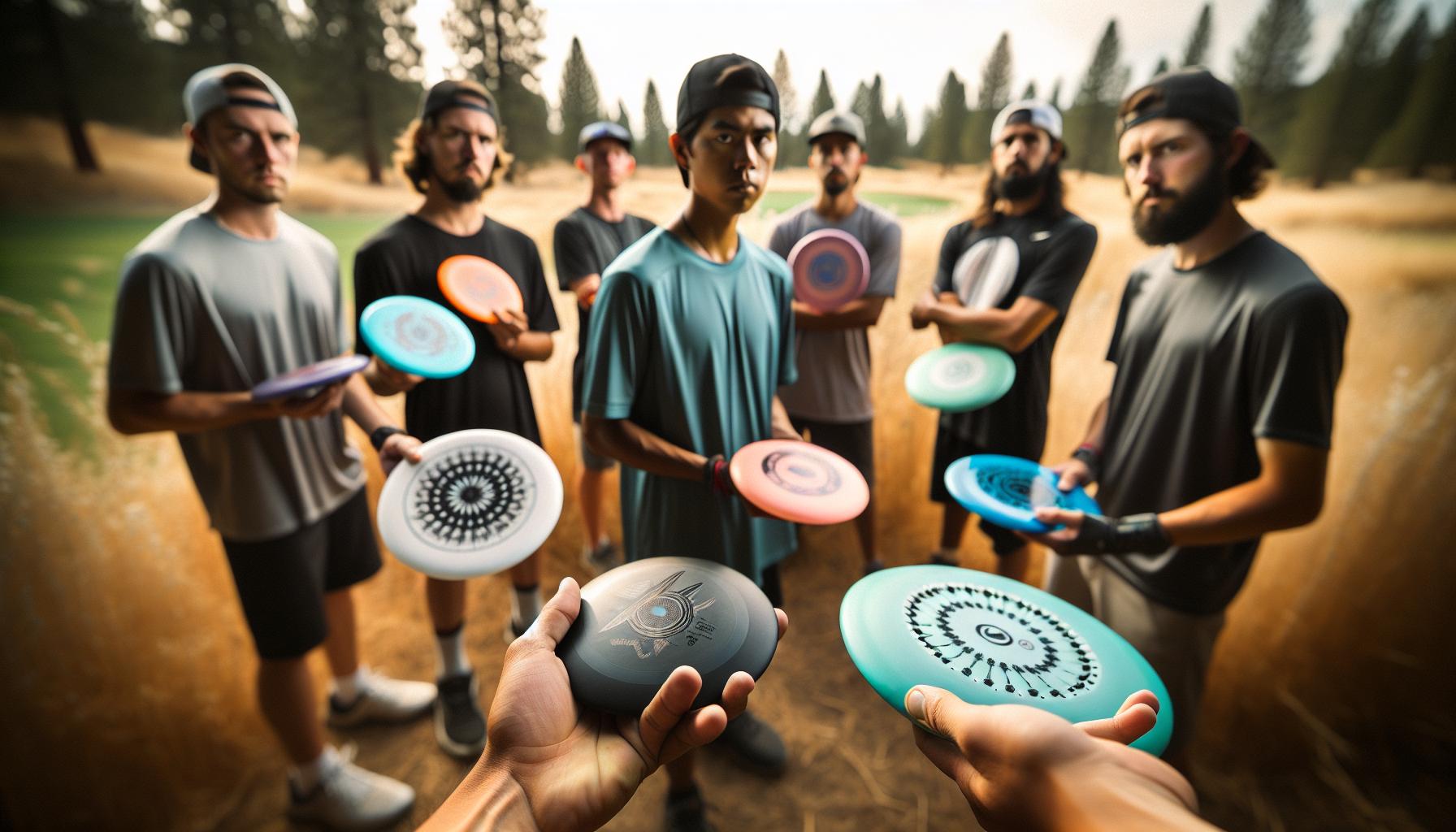
Power Grip: Maximizing Distance and Control
The Power Grip is a game-changer for any disc golfer aiming to achieve maximum distance while maintaining control. This grip requires more than just holding the disc; it’s about engaging your entire hand to generate the speed and spin necessary for long throws. When executed correctly, the Power Grip can add significant yardage to your drives and provide the precision needed to navigate through different course layouts.
To master the Power Grip, start by positioning the disc with your thumb firmly on top and all four fingers tucked underneath the rim. This secure hold allows you to control the disc during the backswing and release, reducing the chances of wobble and ensuring that the disc travels in a straight line until it peaks and begins its descent. A common mistake many new players make is to grip the disc too loosely. Instead, focus on creating a tight seal between your fingers and the disc to maximize energy transfer during your throw. As you practice, pay attention to the tension in your grip; you should feel firm but not rigid, which can lead to unwanted tension in your arm.
Key Elements of the Power Grip
- Finger Placement: All four fingers should wrap securely around the underside of the disc, with the fingers spread wide enough to apply even pressure.
- Thumb Position: Your thumb should press down firmly on the top of the disc, providing stability and preventing it from slipping during the throw.
- Wrist Action: A relaxed wrist can significantly impact your throw. As you release, a flick of the wrist can add extra spin, further enhancing distance.
It’s important to recognize the implications of your grip on disc flight. A well-executed Power Grip can contribute to a smooth and powerful release that propels the disc down the fairway. Moreover, different discs require slight adjustments in how you employ the Power Grip. For example, a heavier driver may necessitate a firmer grip compared to a lighter one, which allows for a more relaxed feel. Adapting your grip based on environmental factors, such as humidity or disc material, is essential for maintaining optimal performance.
Challenge yourself to refine the Power Grip through dedicated practice sessions. Observe seasoned players and learn how they adapt their grips based on the conditions and the throw’s intended trajectory. As you develop this grip, remember that confidence plays a crucial role in your execution. By nurturing your skills with the Power Grip, you’ll find that you not only maximize your distance but also gain a deeper appreciation for the technical aspects of disc golf as a sport, enhancing both your enjoyment and competitive edge on the course.
Control Grip: Precise Throws for Accuracy
Mastering the Control Grip opens up a world of precision in disc golf, enabling players to make those tricky shots that can change the course of a game. This grip is essential for players seeking greater accuracy and finesse, particularly when navigating tight fairways or targeting specific landing zones. Unlike the Power Grip, which prioritizes distance, the Control Grip emphasizes a softer touch and a more deliberate release, giving you the driver, mid-range, or putter control necessary in precision scenarios.
To achieve a proper Control Grip, begin by holding the disc with your thumb on top and your index finger extending along the inside of the rim, applying pressure from the side. Your remaining three fingers should wrap underneath, almost in a fan-like formation, with your middle finger pressing against the bottom portion for extra support. This grip allows for a more subtle release, permitting the disc to glide through the air smoothly, enhancing your ability to place it exactly where you want it. The gentler grip helps minimize the wobble that can lead to unpredictable flights, making it an invaluable asset for short-range and approach shots.
Key Features of the Control Grip
- Finger Positioning: Your index finger plays a crucial role by guiding the disc. Ensure it’s anchored along the rim, while your other fingers provide stability without squeezing too tightly.
- Wrist Flexibility: Maintaining a relaxed wrist is essential. This flexibility allows for smoother wrist action during release, which is critical for controlled spin and flight.
- Release Timing: Focus on releasing the disc at the optimal moment. Unlike with the Power Grip, the Control Grip should be accompanied by less force; instead, the goal is to utilize finesse over brute strength.
As you practice the Control Grip, consider how your hand positioning affects the disc’s trajectory. Spend time experimenting with different angles and weight distributions to find your sweet spot-it may take some fine-tuning to perfect. Many beginners find that using this grip not only improves their focus and accuracy but also builds confidence as they see their shots land closer to the target time after time.
By developing a keen sense for the nuances of the Control Grip, you’re not just playing disc golf; you’re enhancing your skill set and elevating your game. Whether you’re throwing a hyzer around a tree or a straight shot toward the basket, mastering this grip transforms your abilities and enriches the competitive spirit of the sport.
Fan Grip: Ideal for Stable and Short Throws
When it comes to navigating the course in disc golf, the Fan Grip stands out as the go-to technique for executing stable and short throws. This grip, characterized by a wider finger splay, offers players a unique advantage in achieving a controlled, stable flight path, making it especially beneficial for shots that require precision, such as approach throws or short drives. With its distinct finger position, the Fan Grip allows for a greater surface area contact on the disc, enhancing grip security and providing a sense of reliability in your throws.
To properly execute the Fan Grip, start by placing your thumb firmly on top of the disc, creating a stable anchor. Your index finger should rest along the inside edge of the rim, guiding the throw. The most defining aspect of the Fan Grip is the positioning of your remaining three fingers, which should spread out beneath the disc, like a fan. This configuration not only adds stability but also allows for better control over the disc’s angle at release. The more you practice this grip, the more attuned you’ll become to the subtle nuances of distance and trajectory control.
Benefits of the Fan Grip
- Increased Stability: The wider finger spread minimizes the chances of wobble during the throw, improving distance control.
- Short Range Precision: Ideal for stable, short-range shots, such as when approaching the basket.
- Enhanced Comfort: Many players find this grip to be more comfortable, allowing for longer practice sessions without strain.
Another key to mastering the Fan Grip is adjusting your throw to optimize the disc’s natural flight characteristics. Whether you’re using a putter or a mid-range disc, the grip remains consistent, but subtle variations in your wrist snap and body posture can significantly impact the throw’s success. Practicing different throws-like hyzers or anhyzers-while employing the Fan Grip will help you develop a better understanding of how each disc behaves with your grip style.
As you incorporate the Fan Grip into your game, remember that developing a consistent feel is crucial. Spend time warming up with this grip and focus on muscle memory. As you build confidence, you’ll find that your short throws become increasingly accurate, bringing you closer to the target and enhancing your overall performance on the course. Embrace the journey, and you’ll soon discover the benefits that mastering the Fan Grip can bring to your game.
Grip Techniques for Different Disc Types
With the various disc types in disc golf-from putters to drivers-adjusting your grip technique is essential for maximizing your performance on the course. Each disc has its unique flight characteristics and intended uses, which means your grip should adapt to match the disc’s purpose. Understanding where and how to grip different disc types can greatly enhance accuracy and distance, adding a new layer of strategy to your gameplay.
For putters, which are designed for accuracy and quick control, the Fan Grip often becomes the go-to choice. It allows for softer releases suited to shorter ranges, such as putts and approaches. When gripping a putter, place your thumb firmly on top and spread your fingers underneath. This technique provides the stability needed for those critical, close-range throws, ensuring a straight, easy release as you aim for the basket.
When transitioning to mid-range discs, which offer a balance of distance and control, your grip should start to shift slightly. Many players prefer the Control Grip here, as it emphasizes both the power and finesse needed for more complex throws. Your thumb should still anchor the top, but keep your index finger along the inner rim, and lightly relax the grip of your other fingers. This slight adjustment allows for a more pronounced wrist snap during your throw while ensuring that mid-range discs can capitalize on their inherent glide and distance capabilities.
For drivers, especially those intended for maximum distance and speed, the Power Grip is indispensable. In this technique, your fingers curl around the disc rim tightly, with your thumb positioned on top to exert downward pressure. This grip maximizes force during your throw while providing stability to handle the high-speed release needed to send the disc soaring long distances. With heavy drivers, it’s crucial to maintain confidence in your grip; practice is key to balancing power and precision.
An important aspect to consider across all disc types is how your grip affects the angle of release. Holding the disc slightly more or less angled can significantly influence the flight dynamics, especially with overstable or understable discs. Experimenting with these adjustments during practice can help you understand how subtle changes can affect the outcome of your throws, allowing you to make real-time adjustments on the course.
Ultimately, mastering grip techniques across different disc types not only enhances your throwing mechanics but also aids in developing your overall game strategy. By actively engaging with your equipment and practicing varied grips, you can build a versatile skill set that adapts well to any situation, empowering you to become a more competent and strategic player on the disc golf course.
Common Mistakes in Disc Golf Grip
In the journey to mastering disc golf, a solid grip is foundational, but many players, especially newcomers, often fall into common pitfalls that hinder their performance. One significant mistake is inconsistency in grip pressure. Finding the right balance is crucial; too tight a grip can lead to tension and an awkward release, while too loose can cause the disc to slip out early, disrupting the throw. Experimenting with your grip strength during practice and observing the effects on your throws can help you strike a balance that feels natural and effective.
Another frequent error lies in the thumb placement on the disc. Beginners may place their thumb too far back, which can negatively impact stability and control. For instance, a proper grip requires maintaining thumb pressure at the top center of the disc to ensure a reliable release. This primary contact point aids in generating spin, which is crucial for achieving the desired flight path. Taking time to ensure a solid thumb placement can make a difference in accuracy and distance.
Moreover, many players overlook the importance of finger positioning when adjusting between different types of throws. For example, switching from a Power Grip to a Control Grip without actively changing finger placement may result in erratic throws. Beginners should practice these transitions, paying close attention to finger alignment along the rim of the disc. The unique contours and grip of different discs deserve this tailored approach, emphasizing how vital it is to match your grip to the disc type.
Finally, neglecting the impact of grip on release angle not only leads to inconsistent throws but also affects the disc’s flight characteristics. A grip that doesn’t support an appropriate angle at release can cause unwanted hyzer or anhyzer trajectories, which may not be intended. Spending time on the practice field to experiment with how different grips influence flight traits can illuminate the correlation between grip and performance.
By recognizing and addressing these common mistakes, players can refine their technique and greatly enhance their throwing mechanics, ultimately improving their performance on the course.
How Your Grip Affects Disc Flight
Developing a solid grip on your disc can dramatically influence its flight path and overall performance. Any seasoned disc golfer can attest that what feels natural in the hand can make all the difference when it comes to flight characteristics. The way you hold your disc affects not only distance but also accuracy, stability, and the ability to execute various throwing techniques. A well-executed grip maximizes spin, ensures optimal release angle, and aligns with your intent, whether it’s for a long bomb down the fairway or a precise approach shot.
To understand how grip impacts disc flight, consider the interplay between grip strength, finger positioning, and thumb placement. A tight grip may feel secure, but it could lead to unwanted tension in the arm and wrist, potentially causing a less aerodynamic release. Conversely, a too-loose grip can cause early release, sending the disc off-course. Striking the perfect balance is essential. Your thumb should rest firmly on the disc’s top surface while your fingers align snugly against the disc’s rim, creating stability without stifling movement.
Key Grip Variables Affecting Flight
- Release Angle: The angle at which you release the disc determines whether it will hyzer (turning down toward the ground) or anhyzer (turning up away from the ground). A consistent grip aids in replicating the desired release angle.
- Spin Generation: A solid grip enhances your ability to impart spin onto the disc, which is crucial for distance and stability in flight. More spin typically results in a longer flight and less susceptibility to wind.
- Grip Type: Different grips (Power, Control, Fan) are suited for various throws, and understanding how each affects the trajectory can help you select the best grip for the shot at hand.
Understanding the correlation between grip and flight dynamics can be the key to unlocking your potential on the disc golf course. Experimenting with these variables during practice will allow you to find the grip style that harmonizes with your throwing mechanics, leading to improved distance and accuracy on each throw. Make it a habit to test different grips under various conditions to discover how subtle adjustments can lead to significant flight improvements, making your game consistently stronger.
Grip Maintenance: The Importance of Consistency
Maintaining a consistent grip is crucial for achieving optimal performance in disc golf. Just like a seasoned pianist requires a reliable touch on the keys, a disc golfer must develop a dependable grip to ensure that every throw feels natural and intentional. A well-maintained grip not only enhances control and accuracy but also provides the confidence needed to tackle challenging courses. If you’re aiming to lower your scores or simply enjoy the game more, focusing on grip consistency can lead to significant improvements in your overall performance.
To achieve this consistency, it’s essential to practice regularly and make your grip feel second nature. Start by identifying your preferred grip style-whether it’s the Power Grip for maximum distance, the Control Grip for accuracy, or the Fan Grip for short, stable throws. Once you know your grip, incorporate drills that reinforce it. For example, you might practice making throws using your favorite grip in various scenarios, such as driving off the tee or approaching the basket. The more you familiarize your hand with the grip, the more intuitive it becomes during actual gameplay.
Additionally, pay attention to the physical condition of your hands and the discs you use. Factors such as cleanliness can influence grip consistency. Keep your discs free from dirt and moisture; a sticky or slippery disc can disrupt your grip, leading to unpredictable flight paths. Regularly check for any wear and tear on your discs, especially on the rim, since this area can significantly affect how well you can hold onto your disc during a throw. Remember, even slight changes in your grip can lead to varying release angles and spin, so strive for uniformity in your technique.
Ultimately, maintaining your grip consistency is a journey that combines technique, physical conditioning, and mindful practices. Celebrate your progress along the way, and don’t hesitate to reach out to fellow disc golfers for advice and shared experiences. By focusing on grip maintenance, you’ll not only enhance your throws but also deepen your connection to the sport, making each round on the course that much more enjoyable.
Grip Adjustments for Different Weather Conditions
When it comes to disc golf, the weather can significantly influence your game, especially how you grip your disc. A grip that works beautifully on a sunny day might falter during rain or humidity. Adjusting your grip according to the conditions not only enhances control but also helps maintain precision and distance. Here’s how to tweak your grip to suit various weather scenarios, ensuring you’re always prepared to deliver your best performance.
Rainy or Wet Conditions
In rainy weather, moisture can make discs slippery, making it crucial to adapt your grip to avoid unwanted releases. Here are some adjustments to consider:
- Enhanced Tension: Maintain a firmer grip when the disc feels slippery. Avoid excessive tightness, which can hinder your throw; instead, find a balance that allows for better control.
- Grip Aids: Consider using grip-enhancing products like towels or chalk designed for wet conditions. A dry towel can help keep your hands and disc dry between throws.
- Less Pressure: Reduce the amount of finger pressure, focusing on keeping your hand relaxed. A light grip can often lead to cleaner releases even when the disc is wet.
Hot and Humid Weather
High humidity and heat can cause your hands to sweat, which impacts how well you hold onto your disc. To combat this, try the following:
- Grip Aids: While chalk can help in wet conditions, in humid weather, using sweat-absorbing grip gloves or powder can prevent slipping.
- Frequent Discs Changes: Switch out discs if they become damp from sweat. Keep a clean and dry disc handy to ensure a proper grip.
- Cooling Off: Take the time to cool your hands before throwing. Lightly shaking your hands or dipping them in cool water can enhance grip comfort.
Cold Weather
Cold temperatures can harden the plastic of your discs and reduce dexterity in your fingers. To optimize your grip in this environment, consider:
- Warm-Up Your Hands: Before your session, make sure to warm up your hands to increase blood flow and flexibility. Simple hand exercises or keeping them inside your pockets can help.
- Thicker Grip: If using gloves, opt for a grip-enhancing variety or consider a thicker glove that can help preserve your grip on the disc while protecting your fingers from the cold.
- Shorter Throws: When it’s particularly cold, focus on making shorter throws to maintain control and prevent potential slips when the discs may not feel as secure in your grip.
Regardless of the weather, being mindful of how conditions affect your grip can make a significant difference in your game. By adjusting your technique and utilizing helpful aids, you can enhance your performance, allowing you to focus more on your strategy and less on potential mishaps due to environmental factors. Prepare for the elements, and your skills will shine through in any condition!
Developing Your Unique Grip Style Over Time
The journey to mastering your grip in disc golf is akin to an artist refining their technique; it evolves with practice, experience, and understanding. Just as different painters adopt unique brush strokes, each disc golfer develops a grip style that resonates with their playing mechanics and preferences. This process can take time, but with consistent experimentation and reflection, you’ll find a grip that feels intuitive and enhances your performance on the course.
One of the first steps in developing your unique grip is to identify which grip style-power, control, or fan-best suits your fundamental throwing style and goals. Spend time practicing each grip type under different conditions and observe how your throws respond. Pay attention to factors like distance, accuracy, and how comfortable you feel with the disc in your hand. As you gauge the effectiveness of each grip, don’t hesitate to mix elements from different styles to create a hybrid approach that works for you. For instance, if you excel in distance with a power grip but find precision lacking, integrating aspects of the control grip might provide the necessary balance.
As you refine your grip, focus on consistency in practice. Set aside time during your throwing sessions to deliberately work on your grip mechanics. Establish routines that include specific grip-related drills, such as throwing at varying distances or with an assortment of disc types. Consistency will not only build muscle memory but also promote greater familiarity with how your grip influences disc flight. Additionally, keeping a journal of your grip adjustments and their impact on your game can provide valuable insights into your development, making it easier to replicate successful techniques in future rounds.
Engaging with the disc golf community can also significantly enrich your journey. Share your experiences and ask for feedback from fellow players, whether they’re seasoned pros or enthusiastic newcomers. Discussion groups, online forums, and local clubs often contain a wealth of expertise and tips that can guide your grip evolution. By embracing a culture of learning and growth, you can elevate not just your own skills but also contribute to the overall development of the sport, celebrating its competitive spirit while fostering a sense of camaraderie among players. Through dedication, experimentation, and community engagement, you’ll not only cultivate a grip style that amplifies your performance but also enhance your enjoyment of the game.
Expert Tips from Top Disc Golf Players
One important insight from top disc golf players is that developing a consistent grip is essential for achieving optimal performance on the course. Many seasoned professionals recommend practicing with a variety of grips, as this versatility can significantly enhance your overall game. For instance, Paul McBeth emphasizes how he integrates elements from all three grip styles-power, control, and fan-into his training routine. This allows him to adapt to different throwing situations, whether he’s powering through a distance shot or executing a precise approach throw.
It’s also beneficial to focus on grip pressure. Discraft’s own Nathan Queen suggests finding that delicate balance; gripping the disc too tightly can lead to tension in your arm, whereas a grip that’s too loose may result in a lack of control. He recommends practicing various grip pressures during your training sessions, experimenting with how tight or relaxed your fingers should be depending on the specific throw you’re executing. A lighter grip can be particularly effective on for touch shots where finesse is required, while a firmer grip can help in driving scenarios for maximum distance.
Another valuable tip comes from disc golf legend Ken Climo, who advises players to make sure their grip feels natural and comfortable. The pop of the disc off your fingers should be effortless. He also highlights the importance of finger placement-specifically, how the index finger rests on the rim in power grips can dramatically change the flight path. Therefore, players should experiment with where their fingers sit on the disc during practice and make adjustments based on how it feels when throwing.
Lastly, taking care of your discs is just as vital; clean grips can enhance your throwing experience. Professional player Jennifer Allen suggests using a towel or disc-specific grip product to keep your discs free from dirt and moisture, especially in humid or rainy conditions. Remember, adapting your grip to the environment can make all the difference in your performance. By embracing these expert tips and continuously refining your grip, players can elevate their game and gain a competitive edge while enjoying this growing sport.
Frequently asked questions
FAQ Section: How To Grip Disc Golf: Grip Styles Explained
Q: What is the best way to grip a disc golf disc for beginners?
A: Beginners should start with the Control Grip. This grip offers a balance of comfort and control, allowing for precise throws. Ensure your thumb is on top, fingers underneath, and a firm yet relaxed grip to maximize throw accuracy.
Q: How does grip pressure affect disc flight?
A: Grip pressure significantly influences disc flight. A firmer grip yields more snap and distance, while a lighter grip can enhance control and finesse. Experimenting with grip pressure will help you understand how it alters your throws.
Q: When should I switch between different grip styles in disc golf?
A: Switch grip styles based on the type of throw and distance needed. Use the Power Grip for long-distance throws, the Control Grip for precision, and the Fan Grip for short, stable shots. Adapting your grip enhances performance across various situations.
Q: How can weather conditions affect my grip on the disc?
A: Weather can impact your grip’s effectiveness. In humid conditions, the disc may feel slippery, necessitating a firmer grip. In dry, windy conditions, a lighter grip may help control overstable throws. Adjust your grip based on the environment to maintain accuracy.
Q: What common mistakes do players make with their disc golf grip?
A: Common mistakes include gripping too tightly or too loosely. Finding the right balance is crucial; over-gripping can lead to tension and poor throws, while under-gripping may cause instability. Focus on a relaxed yet secure grip for optimal results.
Q: Why is it important to develop a personal grip style in disc golf?
A: A personal grip style enhances consistency and comfort. As you become familiar with different grips, you’ll discover what works best for your throwing mechanics. Developing your unique grip fosters better performance and builds confidence on the course.
Q: How often should I practice my grip techniques in disc golf?
A: Practicing grip techniques regularly is essential for improvement. Aim for consistent practice sessions, ideally incorporating drills focused on different grips. This will enhance muscle memory and overall performance, leading to more successful throws during play.
Q: What grip techniques do professional disc golfers recommend?
A: Professional disc golfers suggest focusing on a stable wrist and relaxed fingers. Maintaining a consistent release point and experimenting with grip adjustments based on throw type will improve your game. Learning from experts can offer valuable insights for all skill levels.
For more detailed insights on grip techniques and styles, check out our article sections on Types of Disc Golf Grips and Expert Tips from Top Disc Golf Players. Happy throwing!
To Conclude
As you explore the exciting world of disc golf, remember that mastering your grip can significantly enhance your performance and enjoyment on the course. By understanding various grip styles, you can refine your throwing mechanics and achieve better flight characteristics. Don’t hesitate to practice what you’ve learned and experiment with different grips to discover what feels best for you!
For more tips on improving your disc golf skills, check out our comprehensive guides on throwing techniques and equipment recommendations. If you found this information helpful, consider signing up for our newsletter to stay updated on the latest insights and expert advice. Have any questions or experiences to share? We’d love to hear from you in the comments below! Keep your passion for disc golf thriving and see you on the course!