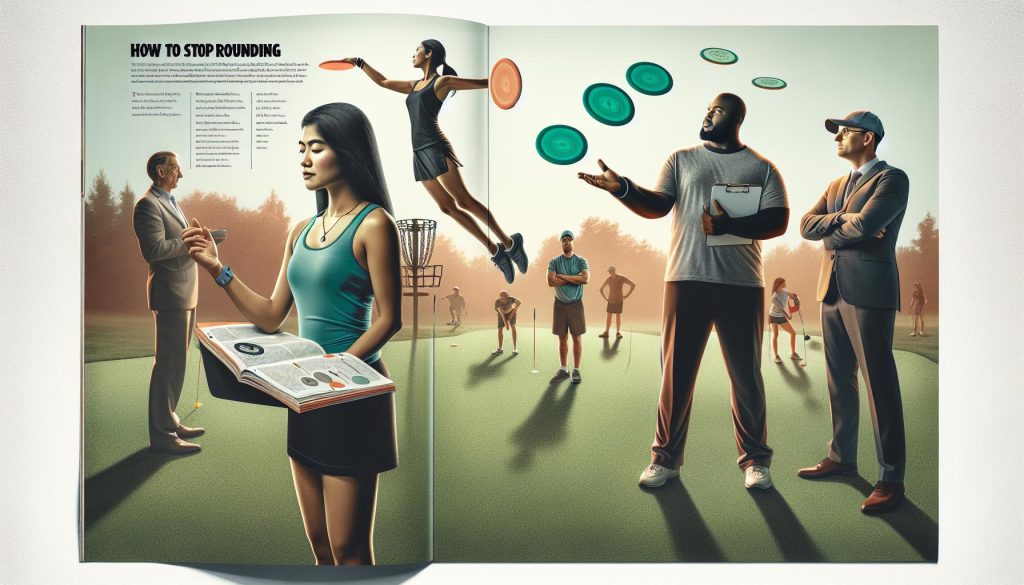
Did you know that rounding can severely affect your distance and accuracy in disc golf? Many players unknowingly adopt this common flaw, which can lead to frustrating throws and a plateau in your skills. In “How To Stop Rounding In Disc Golf: Fix It,” we’ll uncover the mechanics behind rounding and provide actionable steps to improve your form. By refining your throwing technique, you can unlock your potential and enjoy more successful rounds on the course. Whether you’re new to the game or a seasoned player aiming for better consistency, understanding and addressing this issue is key to enhancing your overall performance. Join us as we explore techniques to help you throw more effectively and elevate your game to new heights!
Understanding the Basics of Disc Golf Throwing Technique
Understanding the mechanics of throwing in disc golf is essential for anyone looking to improve their game. At its core, a successful throw combines elements of body movement, grip, and the physics of disc flight. One of the most common issues players face is rounding, which can lead to inconsistent throws and reduced distance. To prevent this, it’s crucial to grasp the fundamentals of your throwing technique.
A proper throw begins with a strong stance. Position your feet shoulder-width apart for stability and balance. As you initiate your throw, the movement should originate from your core, with your hips and shoulders leading the action. The disc should be held with a firm grip, creating tension in your arm as you bring it back in preparation for the throw. It’s all about maintaining a straight line from your elbow through your wrist, allowing for a smooth and powerful release.
The role of wrist and arm angle cannot be understated. Your wrist should remain firm, and your elbow needs to be in line with your shoulder throughout the motion. This alignment helps in achieving an optimal release angle, which affects how the disc flies through the air. Remember, each disc has a specific flight characteristic, so understanding how each disc responds to your throw can significantly improve your accuracy and distance.
By focusing on these foundational techniques, you can set the stage for more advanced skills while ensuring that rounding does not derail your progress. Practicing these elements with intentionality will lead to greater consistency, allowing you to play your best game regardless of the course’s layout.
Common Causes of Rounding in Disc Golf Throws
In the quest for distance and accuracy in disc golf, one of the most common pitfalls players encounter is rounding. This mechanic error not only hampers your performance but can also become a frustrating aspect of your game that feels almost insurmountable. Rounding typically occurs when a thrower’s mechanics falter, causing the disc to follow an unintended, curved path instead of a straight trajectory. Understanding the subtleties of this mistake is the first step toward achieving a more powerful and precise throw.
Several factors contribute to rounding, with one of the primary culprits being improper body alignment. When players fail to position their shoulders and hips correctly, the natural flow from body to disc is disrupted. This misalignment can lead players to exaggerate their arm movements and swoop around the intended release points. Additionally, the grip on the disc plays a crucial role; a poor grip can cause disc control issues and often results in compensatory movements that lead to rounding. For instance, gripping the disc too tightly or too loosely can create a chaotic throw that veers off course.
Another frequent cause of rounding stems from insufficient core engagement. Your core muscles are critical in providing stability and generating force during the throw. If players rely solely on arm strength without using their core effectively, they may inadvertently pull the disc across their body in a rounded motion. Lastly, a lack of awareness and practice regarding footwork often amplifies rounding. Foot placement and movement are integral to establishing a solid foundation; when players are unsure or inconsistent with their footwork, the entire throwing motion can become unbalanced.
To address rounding, it’s essential to analyze your form critically, starting with the mechanics of your throw. Adopting a structured practice routine that focuses on alignment, grip, and core involvement can be transformative. Utilizing specific drills that emphasize straight line throwing will further reinforce proper technique, minimizing rounding and allowing for more confident and accurate disc releases.
How Rounding Affects Your Disc Flight Path
Rounding is a fundamental flaw in disc golf throwing mechanics that can dramatically alter the flight path of your disc and lead to inconsistent results. When players round their throws-often characterized by a sweeping motion instead of a straight line-they can expect their discs to slice through the air unpredictably. Instead of achieving the powerful, linear trajectory desired for longer distances, rounding generates a curved flight path that can lead to frustrating outcomes, including decreased distance and accuracy.
Understanding how rounding impacts disc flight can directly help you recalibrate your technique. For instance, when you round your throw, the release angle is compromised. A disc thrown with a rounded release may corkscrew or hyzer flip unexpectedly, causing it to fade prematurely or even turn over completely. This affects not only the distance but also the disc’s intended target line, making it hard to predict where the disc will land. Furthermore, the added stress on your arm from this motion can lead to fatigue and potential injury over time, as your body is compensating for the mechanical inefficiency.
To visualize the consequences of rounding, consider the difference between a well-executed straight throw and a rounded throw. A straight throw allows the disc to gain maximum velocity while maintaining an optimal angle, enabling it to glide further. Contrarily, a rounded throw results in a loss of velocity and momentum, causing the disc to encounter unexpected drag and turbulence. This can lead to early ground contact or awkward skips that detract from your game performance.
Ultimately, addressing rounding can transform not just how far you can throw, but also how accurately you can place your discs on the course. By refining your technique and focusing on key aspects such as body alignment, grip, and core activation, you’ll unlock the potential to deliver more precise and longer throws, significantly improving your overall gameplay. Remember, a straight throw is not only a goal but a cornerstone of an effective disc golf game leading to both enjoyment and success.
Step-by-Step Guide to Fixing Rounding Issues
To effectively address rounding in your disc golf throw, it’s essential to understand how small adjustments in your technique can lead to significant improvements in your game. Rounding can stem from a lack of awareness about your body mechanics, and by following a structured approach, you can correct this flaw and enhance your overall performance.
Start by focusing on proper grip and stance. Your grip should be firm but relaxed, allowing the disc to rest comfortably in your hand. When standing, ensure that your feet are shoulder-width apart and that your weight is evenly distributed. As you prepare to throw, engage your core to stabilize your body throughout the motion.
Next, practice the linear scale of your throw. Emphasize a straight-line path during your reach back and follow through. To do this, think of your arm moving from your shoulder directly towards your target, with minimal lateral motion. Drill this by practicing slow-motion throws, concentrating on a straight line rather than the speed of your release.
Another crucial component is the timing of your body rotation. As you begin your throw, initiate the movement from your hips and let your shoulders and arm follow through in unison. This kinetic chain allows for a powerful and efficient throw, reducing the likelihood of rounding. To enhance this feeling, use a mirror or record your form to observe how your body aligns during the throw.
Incorporate specific drills into your practice routine, such as the wall drill. Stand a few feet from a wall and practice your throws with your back to the wall. This setup forces you to focus on maintaining a straight line without rounding, as the wall will prevent any sweeping motions. Repeat this until it feels natural, then gradually increase your distance from the wall to practice full throws.
Lastly, consolidate feedback by recording your throws and analyzing them with friends or coaches who can point out areas where rounding may occur. Sharing experiences and challenges with the disc golf community not only brings camaraderie but also valuable insights that can help you refine your techniques further.
By consistently practicing these steps, you will develop a more effective throwing motion, reduce rounding, and improve both your distance and accuracy on the course. Remember, minimizing rounding isn’t just about perfecting one motion; it’s about cultivating a holistic understanding of your body mechanics, thus elevating your overall disc golf game.
Practical Drills to Improve Throwing Mechanics
Improving your throwing mechanics is essential for reducing rounding in your disc golf game, and specific drills can significantly enhance your performance. One of the best places to start is with controlled practice that emphasizes your body’s natural movements. Here are some effective drills to incorporate into your training routine:
- Wall Drill: Position yourself a few feet from a wall with your back facing it. As you practice your throw, focus on keeping your arm movement straight and minimizing any lateral motion. The wall will prevent you from rounding your throw, as any attempt to round will cause you to hit the wall. Gradually increase your distance from the wall as you become more comfortable with the mechanics.
- Single Arm Throws: Using only one arm to throw can help you focus on your mechanics without the distraction of using both arms for balance and power. Do this from a standing position and concentrate on the proper form, allowing your hips to lead the motion. This will help reinforce the importance of body alignment and will train your other arm for consistent motion.
- Reach Back to Follow Through Drills: Practice slowly moving through your throwing motion. Start with an exaggerated reach back while maintaining a strong core and straight arm path. Once you’ve reached the end of your pull, follow through in a controlled manner, ensuring your weight shifts correctly and your body remains aligned. This slow-motion practice helps with muscle memory and reinforces the feel of a proper throw.
- Feet Placement Drill: Focus on your feet placement and balance by practicing your stance. Stand in a proper throwing position, making sure your feet are shoulder-width apart. Practice shifting your weight from your back foot to your front foot as you make your throw, making sure your hips rotate smoothly. This drill not only helps with balance but also helps eliminate rounding by forcing you to remain stable throughout the entire throw.
These drills are not only beneficial for newcomers eager to refine their skills but also for seasoned players looking to address bad habits. By dedicating time to practice these exercises regularly, you cultivate a deeper understanding of your throwing mechanics. Don’t forget to record yourself periodically; reviewing your form can reveal subtle tendencies towards rounding that you might not have felt during live practice. Embrace the journey, connect with fellow players, and celebrate every small victory on your path to mastering your disc golf game!
The Importance of Body Alignment in Disc Golf
Body alignment is a fundamental aspect of achieving consistency and power in your disc golf throws. When your body is misaligned, it can lead to a multitude of issues, including rounding, which can drastically affect your disc’s flight path. Proper alignment ensures that your energy is transferred efficiently from your body through to the disc, optimizing both distance and accuracy.
Maintaining a straight line from your feet to your throwing hand is essential. Start by positioning your feet shoulder-width apart, aligning your hips, shoulders, and head towards your target. This alignment not only helps you generate maximum torque during the throw but also minimizes the tendency to round your throw. If you find yourself opening up or leaning too much to one side, it can throw off your entire throw mechanics-leading to inconsistent results.
To reinforce the importance of body alignment, consider using drills that promote muscle memory. For instance, mirror drills can be highly effective. Stand in front of a mirror while executing your throw motion, focusing on ensuring that your body remains straight and aligned. Another effective technique is to practice your stance and weight shift without a disc. Start in your throwing position, and as you move through the motion, prioritize maintaining a solid posture without any hunching or twisting that could cause rounding.
Moreover, proper body alignment aids not just in minimizing rounding but also in enhancing your overall throwing mechanics. When your body is aligned, you’re more likely to apply force evenly throughout your motion, resulting in a cleaner, more controlled throw. Remember, the journey to mastering body alignment is ongoing; continually assess your form during practice and adjust as necessary. Over time, developing this awareness will become second nature, allowing you to throw with both confidence and precision.
Analyzing Disc Selection for Optimal Performance
Understanding the right disc selection for your throwing style is essential in enhancing your performance on the course, especially when working to correct issues like rounding. The discs you choose significantly influence your flight path, stability, and ultimately, your success in executing a clean throw. With a diverse array of discs available, each with unique characteristics tailored for different throwing styles and conditions, knowing how to select the right one can be a game-changer.
Start by familiarizing yourself with the basic flight ratings of discs, which typically include speed, glide, turn, and fade. For those struggling with rounding, it’s advisable to consider discs that provide more stability. Mid-range and stable fairway drivers, for example, can help mitigate the effects of rounding by allowing for a cleaner release, thus achieving a more consistent trajectory. Here are a few tips for choosing the right discs:
- Speed: Select a disc that matches your arm speed; slower discs can help control throws better.
- Glide: A disc with higher glide will remain in the air longer, compensating for potential extra drag from rounding.
- Turn: Choosing a disc with minimal turn can stabilize your throw, especially if rounding is causing unintended flips or rolls.
- Fade: A disc with a strong fade at the end of its flight can help maintain a straighter line, countering rounding effects.
Experimenting with different disc types, such as putters, midranges, and drivers, can also provide practical insight into how various weights and designs fit your unique style. Less experienced players might benefit from starting with more forgiving discs designed to counteract rounding, such as those that feature a straighter flight path and a good amount of stability.
Moreover, practice with specific discs that you find comfortable and effective will build your confidence. As you begin to understand how different discs react under varying conditions-like wind or slope-tailoring your disc selection can lead to significant improvements in your throws. Remember, the goal is to find a disc that complements your release mechanics and minimizes the impact of rounding, allowing you to focus on consistent and accurate throws.
Advanced Techniques for Eliminating Rounding
Mastering your disc golf game often hinges on refining your throwing technique, especially to combat rounding-a common issue that disrupts the flight path of your disc. One key approach to eliminating rounding is to focus on the release mechanics of your throw. A clean, smooth release is paramount. Start with focusing on your grip and ensuring your fingers are placed correctly on the disc. The goal is to maintain a level wrist position throughout your throwing motion, minimizing any unnecessary movements that could lead to rounding.
Another effective technique is to use shoulder rotation to aid your throw. Instead of merely using your arm to propel the disc, incorporate your full body into the motion. This involves turning your shoulders away from your target during your backswing, then explosively rotating them through as you release the disc. This full-body engagement not only increases power but also promotes a straighter, more controlled release, significantly reducing the chances of rounding.
To further enhance your technique, consider practicing with visual markers on a field or using footwork drills designed to improve your balance and stability. For example, setting up cones to define your stance can help you concentrate on maintaining a straight line as you throw. Focus on your foot placement; the pivot foot should remain grounded as your body shifts forward, helping to create a direct line to your target without excessive upper body movement that could lead to rounding.
Lastly, incorporating drills that emphasize follow-through can also make a substantial difference. After releasing the disc, your throwing arm should extend fully towards your target rather than dropping or crossing your body. Practicing this motion repetitively helps build muscle memory that stabilizes your throw technique. As you implement these advanced strategies, you’ll not only reduce rounding but also enhance your overall performance on the course, propelling your disc golf game to new heights.
Real Player Stories: Overcoming Rounding Challenges
Many players have faced the challenge of rounding in their throws, a common hurdle that can significantly affect disc flight path and overall performance. Take the story of Jenna, a once weekend-warrior who struggled with her game. Jenna found herself consistently throwing wide to the left, pushing her drives off course. Frustrated, she sought advice from more experienced players and began to recognize the commonality of rounding in her mechanics. They emphasized the importance of maintaining proper form throughout the release, including body alignment and balance.
Through dedicated practice, Jenna learned to focus on her shoulders and hips during her throws. Instead of relying solely on her arm, she incorporated her whole body into the motion, leading to a steadier release. By consciously engaging her core and aligning her body towards the target, she noticed a reduction in rounding and an improvement in disc control. Her commitment to refining her technique not only helped address her rounding issues but transformed her game, leading to impressive scores on the course.
Similarly, Mike, a player who competed at the amateur level, realized that even subtle adjustments could yield significant results. After analyzing his form through video reviews with friends, he discovered that his follow-through was lacking. Instead of extending his arm fully towards the target, it often dropped down too early, contributing to rounding. Adapting his practice routine, he set specific goals for his follow-through and incorporated drills that emphasized this aspect of his throw. With regular feedback from his friends, Mike quickly began to notice a direct correlation between his follow-through and his disc trajectories.
These real-life experiences highlight the journey many players undertake to overcome rounding challenges. By embracing a holistic approach to throwing mechanics and focusing on key aspects like balance, body alignment, and follow-through, players not only enhance their skills but also deepen their enjoyment of the game. The community spirit within disc golf fosters growth, where sharing personal stories and strategies can spark inspiration and set newcomers on the right path from the very start.
Expert Tips from Professional Disc Golf Players
In the quest for better disc golf performance, many players find themselves grappling with the issue of rounding. This common flaw can undermine a player’s throw, leading to inconsistent distances and unpredictable flight paths. To address and rectify rounding, professional disc golfers offer insights and strategies drawn from their extensive experience on the course.
One of the foremost suggestions from experts is to visualize the throwing plane before you even begin your throw. Top players emphasize the importance of keeping your arm, elbow, and shoulder on a linear path towards your target. As renowned player Paul McBeth puts it, “Imagine your arm is following a straight line to the target. If you can visualize that, it helps keep your mechanics in check.” Regular practice focused on this visualization can strengthen muscle memory and reduce rounding.
Additionally, body mechanics play a pivotal role in achieving a clean throw. World Champion Simon Lizotte often highlights the importance of a proper hip rotation. He explains that engaging the hips effectively transfers energy through the core and into the throw, promoting a smoother release. “If your upper body is leading the throw too much, your hips might lag behind, creating that rounding effect,” he notes. Practicing hip rotation through drills that separate upper and lower body movements can create a more fluid throw.
Incorporating feedback loops into practice can be incredibly beneficial. Professional player Katrina Allen suggests recording your throws and analyzing them biomechanically. “Seeing yourself throw can uncover details you might not notice in the moment,” she shares. She advises players to focus on the follow-through; a proper follow-through not only improves throwing distance but also helps maintain a straight arm trajectory, minimizing rounding.
Lastly, a supportive practice community can foster improvement. Engaging with fellow players, as Mike did, allows for constructive criticism and shared learning. Creating specific practice goals with this community can lead to significant advancements. By focusing on targeted mechanics such as follow-through and body alignment, players can facilitate their own journeys toward mastering their throwing technique.
Utilizing these strategies from seasoned professionals, players of all levels can tackle rounding effectively. Through visualization, deliberate body mechanics, self-assessment, and community support, golfers can refine their technique and enhance their performance on the course.
Understanding the Role of Footwork in Throwing
Mastering footwork is crucial in disc golf, as it serves as the foundation for a powerful and accurate throw. Players often underestimate how essential proper stance, balance, and movement are to prevent rounding. In fact, footwork can dictate the flow of your throw, allowing for better hip rotation and follow-through, which in turn minimizes rounding.
To begin with, a solid stance is key to a successful throw. Players should stand with their feet shoulder-width apart, ensuring they’re balanced and stable. This positioning acts as the launchpad for your throw, and when done correctly, allows you to transfer weight efficiently during your motion. Embrace the concept of “weight shift,” where energy is generated from your legs and flows through your core, amplifying the power of your throw while maintaining control.
As you initiate your throw, focus on your foot placement. During the run-up, use your lateral movements to gain momentum. For instance, stepping with your non-dominant foot towards your target adds stability and precision to your throw. As you pivot your back foot, feel the weight shift from the back leg to the front leg, ensuring that your hips follow suit. Proper footwork not only enhances your throwing mechanics but also contributes to your overall alignment, making it easier to maintain a straight trajectory and avoid rounding.
To further refine your technique, practicing specific drills that emphasize foot coordination and timing can provide significant improvements. Simple exercises, such as practicing your throw in slow motion while concentrating on each foot’s position, can help engrain the muscle memory necessary to achieve a more fluid and effective throwing motion. Additionally, involving a friend to provide feedback or filming yourself can uncover minor adjustments that lead to major differences in your performance.
In summary, understanding and developing your footwork lends itself to a clearer path to eliminate rounding in your throws. By focusing on balance, proper weight transfer, and specific drills, disc golfers can enhance their mechanics, ultimately leading to more consistent and powerful performance on the course. Embrace the journey of improving your footwork-it’s a worthy investment in your game that can yield profound results.
Creating a Personalized Practice Routine for Improvement
Creating a consistent and personalized practice routine can be a game changer for disc golfers looking to eliminate rounding and enhance their overall mechanics. Did you know that dedicating even just 30 minutes a day to targeted practice can significantly improve your skills over time? Tailoring your practice sessions to address specific aspects of your throwing technique allows you to focus on problem areas and track your progress effectively.
To build a personalized routine, start by assessing your current throwing skills and identifying specific challenges related to rounding. Consider these elements:
- Footwork Drills: Incorporate exercises that emphasize proper stance and weight transfer. For instance, practice your throw while paying close attention to your foot placement, ensuring that your back foot pivots and your weight shifts smoothly from back to front.
- Form Breakdown: Spend time in front of a mirror or use video recordings to analyze your throwing form. Focus on maintaining a flat plane and avoiding unnecessary lateral movements that contribute to rounding.
- Distance Control: Work on pitching different discs at varying distances, concentrating on your mechanics. This progressive approach builds muscle memory and reinforces proper technique.
A great way to structure your practice is to divide your sessions into focused blocks, with each block concentrating on a different aspect of your throw. For example, one day could be dedicated entirely to footwork, while another day emphasizes grip and release techniques. This variety keeps training engaging and prevents burnout while allowing you to hone specific skills.
In addition, collaborating with a partner or mentor can provide invaluable insights and accountability. Sharing your practice goals with another player helps keep you motivated, and they can offer feedback that even seasoned players might overlook. Combining self-reflection, structured practice, and community interactions creates a robust environment for progress, making it easier to identify areas needing improvement and celebrate milestones along the way.
By consistently implementing a personalized practice routine that targets your unique needs, you’ll find that the journey toward eliminating rounding in your throws becomes a rewarding pursuit. Embrace each session as an opportunity to refine your skills, enjoy the process, and witness the positive changes in your game on the disc golf course.
Frequently Asked Questions
Q: What are the best practices to avoid rounding in disc golf throws?
A: To avoid rounding, focus on keeping your throwing elbow extended at the start of your throw. Use drills that promote a straight line from your shoulder to your hip and engage your core for stability. Regular practice of these techniques will help refine your form and improve your overall throwing efficiency.
Q: How can I tell if I’m rounding in my disc golf throw?
A: Signs of rounding include a throw that appears more circular rather than linear, resulting in less distance and accuracy. If your disc consistently hyzers or is thrown low, it may indicate rounding. Film your throws to analyze your form or ask a knowledgeable player for feedback.
Q: Are there specific drills to help correct rounding in disc golf?
A: Yes, drills such as the “Push-Pull” drill, which emphasizes pulling the disc along a straight path, can help correct rounding. Additionally, using a wall to practice your footwork and body alignment can reinforce proper mechanics without allowing for rounding.
Q: Why does rounding negatively affect disc flight?
A: Rounding can alter the angle and release of the disc, causing undesirable flight patterns like early fade or less distance. This unpredictability can lead to inconsistent performances on the course, making it crucial to address and fix rounding for better results.
Q: What mental strategies can help eliminate rounding in disc golf?
A: Visualization is key; picture your throw as a straight line. Concentrate on your body’s movements during practice, and create a pre-throw routine that focuses your mind on technique rather than the outcome. This mental focus can help reinforce proper mechanics during actual throws.
Q: How does footwork contribute to rounding in disc golf?
A: Poor footwork can lead to improper body alignment, which often results in rounding. Ensuring that your steps are balanced and that you transition weight smoothly from your back foot to your front foot can greatly enhance the mechanics of your throw.
Q: When should I seek professional help to fix rounding in disc golf?
A: If you are consistently struggling with rounding despite self-correction attempts, it may be time to seek lessons from a professional coach. Personalized advice and feedback can provide insights specific to your throwing style and help identify issues you might overlook.
Q: How can body alignment impact my disc golf throwing technique?
A: Proper body alignment ensures that your throw is efficient and powerful. Misalignment can lead to rounding because it affects the path of your throw and decreases your throwing power. Focus on square shoulders and hips with your target to improve alignment and reduce rounding.
The Conclusion
Now that you’ve learned how to stop rounding in disc golf, it’s time to put these techniques into practice and see your game improve! Remember, the key to mastering your throw lies in consistent execution and adapting to your unique style. For more tips on refining your mechanics, check out our guides on “Improving Disc Golf Technique” and “Disc Selection for Every Skill Level.”
Don’t forget to share your progress in the comments below-your insights could inspire fellow players! Also, subscribe to our newsletter for exclusive content and updates that can further elevate your disc golf skills. Every throw counts, so take action today, and let’s elevate your game together. Happy throwing!