Did you know that mastering your throwing technique can significantly elevate your performance in disc golf? Whether you’re a beginner looking to improve your skills or an experienced player aiming for competitive excellence, understanding the mechanics of throwing is crucial. This guide will walk you through pro form step-by-step, demystifying the intricacies of grip, stance, and follow-through. By honing your technique, you’ll discover how to maximize distance and accuracy, making every throw count. Join us as we explore essential tips and strategies that cater to all skill levels, helping you connect with the disc and enhance your game. Embrace the journey to becoming a more confident and capable player, and let’s dive into the art of throwing!
Throwing Fundamentals: Key Techniques for All Skill Levels
Whether you’re just beginning your journey in throwing sports or looking to refine your technique, mastering the fundamentals is crucial for all skill levels. The essence of effective throwing lies not only in the mechanics but also in understanding how to harness your body’s natural capabilities to achieve precision and power. A well-executed throw can make the difference between a decent throw and a perfect one, making this an essential skill to develop.
To get started, focus on your grip and stance. The way you hold the disc or object you’re throwing can significantly affect your control. Start by gripping the disc comfortably, with your fingers tucked underneath for stability. Your stance should be shoulder-width apart, providing a firm base for your movements. Weight distribution is also critical; shift your weight onto your back leg before the throw to create momentum as you pivot forward.
Once you’re grounded in stance and grip, it’s time to work on your throwing mechanics. A strong throw generally involves three primary stages: the wind-up, the release, and the follow-through.
Wind-Up
During the wind-up, aim to create a full body coil. Rotate your shoulders and hips away from your target while keeping your elbow at shoulder height. This involves engaging your core, as it provides the kinetic energy needed for a powerful throw.
Release
As you release, focus on flicking your wrist and snapping the disc (or object) forward to impart spin and accuracy. The release point should be at full extension of your arm, just as you start to unwind your body towards your target.
Follow-Through
Finally, a proper follow-through not only prevents injury but also enhances control. Your body should naturally come to a stop after the throw, with your throwing arm extending toward the target and your weight shifting neatly onto your lead foot.
Incorporating drills to practice these phases will further sharpen your skills. For example, using a wall or a target can help you focus on your aim and power without the distraction of moving forward into a throw. As you improve, consider joining local communities or clubs, which can provide valuable feedback and foster a sense of camaraderie among players at all levels.
Understanding Disc Flight Characteristics for Better Throws
Understanding how a disc flies through the air is crucial for anyone looking to enhance their throwing technique. A disc’s flight characteristics are determined by several factors, including its design, the angle at which it is released, and the force applied during the throw. Familiarizing yourself with these elements not only helps in achieving longer throws but also in gaining better control and precision.
One of the most important aspects of disc flight is the disc’s stability, which is classified as either stable, understable, or overstable. Each of these characteristics explains how the disc will behave in the air:
- Stable Discs: These discs fly straight for most of their flight path. Ideal for straight shots and beginners, stable discs help you maintain a predictable flight.
- Understable Discs: These discs tend to turn to the right (for right-hand backhand throws) during their flight. They are excellent for achieving longer turns or hyzer flips and are often used for rollers.
- Overstable Discs: Overstable discs will tend to fade hard to the left (for right-hand backhand throws) as they finish their flight. They are ideal for headwinds or for players looking for reliable fade on their throws.
Another critical factor is the release angle. The angle at which you release the disc significantly influences its flight path. A few common release angles include:
Common Release Angles
- Hyzer Angle: This is when the disc is angled down towards the ground on release, which is great for achieving a stable flight with a controlled finish.
- Anhyzer Angle: Releasing the disc angled up away from the ground can help the disc maintain its understable characteristics, allowing for longer and more complex flights.
- Flat Release: This is when the disc is thrown parallel to the ground, generally yielding a straight flight when combined with a stable disc.
Understanding these principles enables you to tailor your throw based on the conditions and your desired outcome. For example, if you face a headwind, choosing an overstable disc and releasing it with a hyzer angle can maintain your line against the wind and improve your distance. Similarly, if you’re aiming for a longer, controlled turnover, an understable disc with an anhyzer release might be the key.
By practicing with various discs and experimenting with release angles, you can better grasp how to manipulate disc flight characteristics to enhance your overall throwing game. This kind of insight not only improves your technique but also deepens your appreciation for the sport, allowing you to enjoy the full breadth of what disc golf has to offer.
Essential Equipment for Optimal Throwing: A Complete Guide
When it comes to optimizing your throwing technique in disc golf, having the right equipment can make a significant difference in performance and enjoyment. The right selections not only enhance your skills but also cater to your unique throwing style and preferences. Here are some essential gear recommendations that every player, from beginner to advanced, should consider.
First and foremost, discs are the heart of your equipment. The disc you choose can influence your throwing distance, accuracy, and the type of shots you can execute. It’s essential to have a variety of discs in your bag, typically categorized into three main types:
- Drivers: These are used for long-distance throws and feature sharp edges that allow them to cut through the air effectively. Look for distance drivers if you want maximum distance, and fairway drivers for more control.
- Midrange Discs: Ideal for controlled approaches, these discs offer a balance of distance and accuracy, making them versatile for various situations on the course.
- Putter Discs: Best for short-range shots and putting, these discs have a more stable flight path, allowing for precision when scoring.
Next, the weight and plastic type of your discs matter. Lighter discs (around 150-160 grams) can be easier to throw for beginners, while advanced players might prefer heavier options (170-175 grams) for better stability and wind resistance. Additionally, disc plastic varies in durability and grip; premium plastics tend to provide better feel and performance over time.
Another critical piece of equipment is a good bag. A well-designed disc golf bag allows you to carry your discs comfortably while keeping them organized and protected. When selecting a bag, consider factors like capacity, weight, and storage for personal items like water bottles and snacks.
Lastly, investing in apparel and accessories can enhance your comfort on the course. Look for moisture-wicking clothing that provides freedom of movement, along with good footwear that offers traction on varying terrains. Additionally, items like a towel for drying discs, a marker for your lie, and even a rangefinder can contribute to a smoother experience during your rounds.
In summary, equipping yourself with the right discs, bag, and accessories tailored to your style is fundamental to mastering the art of throwing in disc golf. By understanding how each piece of gear impacts your game, you can approach each round with confidence and the potential to improve your skills consistently. Whether you’re just starting or looking to refine your technique further, the right equipment will help you achieve your disc golf goals.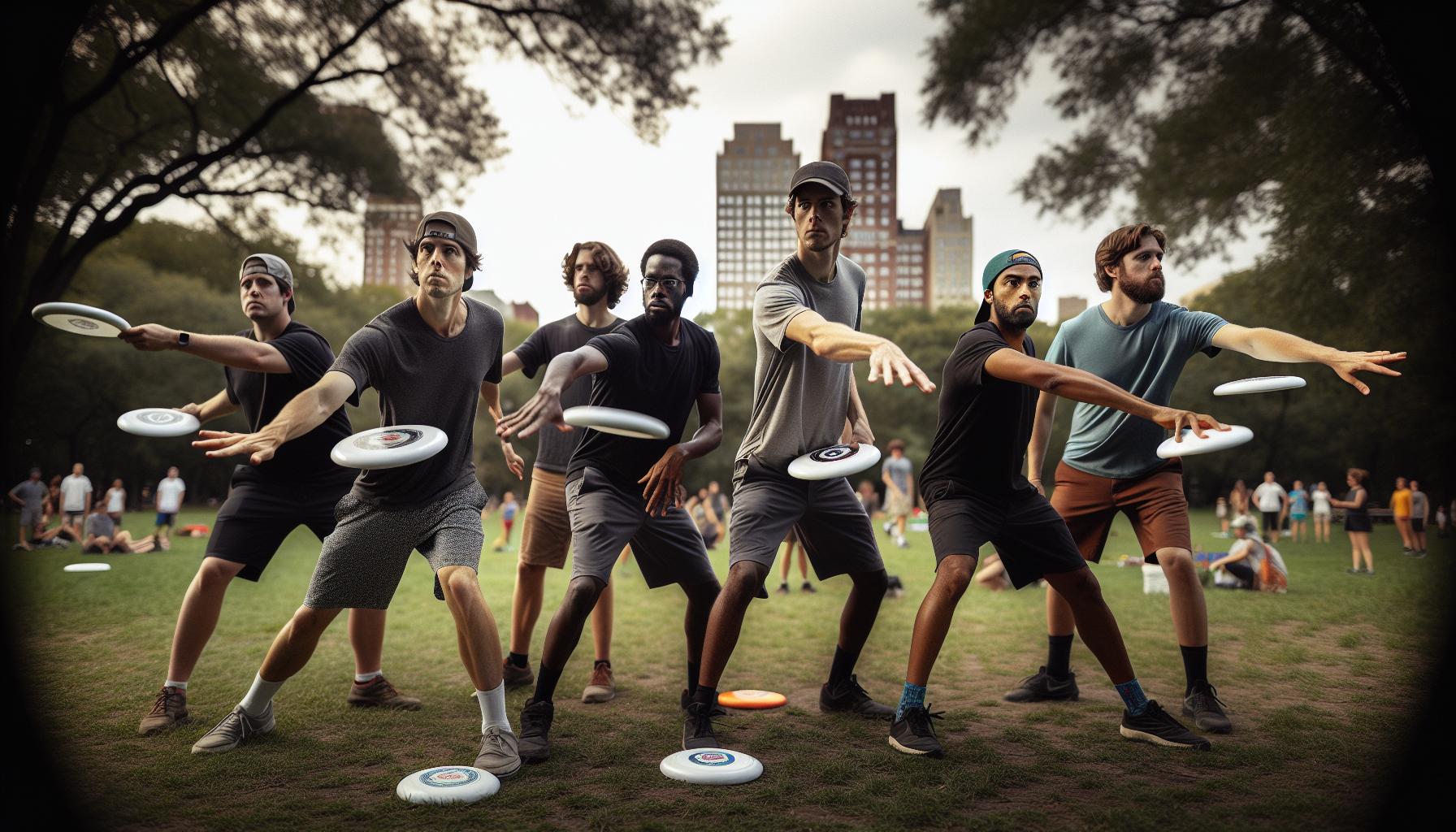
Step-by-Step Guide to Mastering the Backhand Throw
The backhand throw is one of the core techniques in disc golf, and mastering it can significantly enhance your game. Whether you’re a beginner or a competitive player, understanding the mechanics behind a proper backhand throw can unlock greater distance and accuracy, allowing you to navigate the course more effectively. It all begins with your stance and grip.
Start by positioning your feet shoulder-width apart for stability. Your non-throwing foot should be slightly ahead of the other, pointing towards your target. This positioning helps create a solid base from which to generate power. As you grip the disc, hold it firmly with your thumb on top and your index and middle fingers underneath, ensuring a clean release. The grip should be snug but not overly tight, as tension can affect your throw’s fluidity.
Once you’re set, engage your core and rotate your shoulders away from the target, keeping your elbow bent in a compact motion. This rotation is crucial for generating torque. As you initiate your throw, shift your weight from your back foot to your front foot, pivoting on your back heel. This shift of weight is where much of your power comes from. As you reach the apex of your rotation, pull the disc forward swiftly, keeping your elbow close to your body. Snap your wrist at the end of the motion to add spin to the disc-a key factor in its flight stability.
Key Aspects of the Backhand Throw
- Center of Gravity: Maintain your center of gravity during the throw. Leaning too far forward or back can disrupt your balance and effectiveness.
- Follow-through: Your follow-through is just as important as the initial throw. Allow your arm to extend fully after the release, and let your body naturally decelerate to avoid injury.
- Practice: Consistent practice is essential. Focus on form over power initially, gradually increasing the distance as your mechanics improve.
Developing a strong backhand throw not only enhances your versatility on the course but also provides a foundation for executing more complex shots in the future. With dedication and practice, you’ll watch your scores drop as your throwing technique reaches new heights. Embrace the learning process, celebrate small victories, and most of all, enjoy the journey of mastering this fundamental disc golf technique.
Unlocking the Secrets of the Forehand Technique
Mastering the forehand throw can elevate your disc golf game significantly, allowing for versatile shot-making options on the course. Many players find the forehand technique valuable, especially for navigating tight fairways or executing sharp doglegs. Unlike the backhand throw, where your body generates power through a rotational motion, the forehand relies primarily on a flick of the wrist and a strong, controlled release. This technique is particularly effective for producing shots that require a quick, decisive curve.
When preparing for a forehand throw, your stance is crucial. Stand with your feet shoulder-width apart, with your non-throwing foot slightly forward. Your grip on the disc should be with your index and middle fingers against the inside rim, while your thumb presses down on top. This grip allows for optimal finger snap, which is essential for achieving spin and control. As you initiate your throw, pivot your hips towards your target and use an explosive upper body motion to drive the disc forward. The key is to maintain a firm wrist without losing flexibility-too rigid, and you risk a flat throw; too loose, and the disc may wobble.
As the disc leaves your hand, focus on releasing it at the right angle. Ideally, your follow-through should carry your arm in the direction of your target. Pay attention to the mechanics of your throw: your body should flow naturally from the legs through to the core and then to the arm, creating a seamless motion that maximizes power and accuracy. Practicing the forehand throw consistently can lead to improvement in distance and precision, which employs not just strength but technique and timing.
Key Aspects of the Forehand Throw
- Focus on Release Angle: The angle at which you release the disc determines its flight path. Experiment with different stances and angles to find what works best for you.
- Follow-through Matters: Much like the backhand, a smooth follow-through is crucial to ensuring your disc travels straight and true post-release.
- Practicing Variability: As your forehand becomes more confident, practice varying the power and angle to better navigate different holes and obstacles.
Building a strong forehand technique not only complements your backhand but also prepares you for varied courses where flexibility becomes essential. With dedication and focused practice, you’ll find that mastering the secrets of the forehand throw opens up new avenues for scoring and strategy, making you a more well-rounded player. Enjoy the process of learning and refining this powerful throwing technique!
Improving Your Throwing Power and Accuracy
One of the keys to elevating your disc golf game lies in mastering the balance between power and accuracy in your throws. Many players focus solely on how far they can launch a disc, but achieving accuracy is just as crucial for effective shot-making. To improve both power and precision, it’s essential to understand the mechanics of your throw and to implement consistent practice routines.
To boost your throwing power, begin with a strong foundation by ensuring your grip on the disc is secure yet relaxed. A proper grip allows for a clean release, enabling the disc to maintain maximum spin and flight trajectory. To generate additional power, utilize your core and legs. Start your throw by engaging your lower body-your legs should provide the initial drive, moving upward through your core, and finally transferring that energy to your arms. Consider practicing explosive movements, such as medicine ball throws, to enhance your core strength and control.
Accuracy can be developed through repetition and focus on your release mechanics. A common tip is to pick a target and work on consistently hitting it from various distances. Consider breaking down your throwing motions into stages, focusing on one aspect at a time, such as stance, grip, and follow-through. For instance, practice throwing with a focus on maintaining your form throughout the entire motion, keeping your arm in alignment with your target and following through towards it. Additionally, paying close attention to how your body moves during the throw can highlight areas for improvement, like body tilting or momentum shifting.
Moreover, it’s beneficial to incorporate varied drills into your training routines. Set up different scenarios that mimic course challenges-throwing uphill, downhill, or into tight spaces. Utilize a range of discs to comprehend how different weights and shapes affect your throw. Keep track of your progress and adjust your techniques based on what feels most natural and effective for you.
Incorporating these steps will not only enhance your throwing power and accuracy but will also build a solid foundation for a diverse range of throwing techniques. With focused practice, you can enjoy the journey of refining your skills and witnessing your improvements on the course.
Common Throwing Mistakes and How to Avoid Them
Many players, whether beginners or seasoned competitors, encounter similar pitfalls in their throwing technique that can significantly hinder their performance. Identifying and addressing these common mistakes not only refines your skill but also enhances your enjoyment of the game. Understanding these errors creates an opportunity for improvement and elevates your game to the next level.
One prevalent mistake is an improper grip. A grip that’s too tight can restrict your wrist motion, leading to a poor release. Instead, aim for a balanced grip: firm enough to hold the disc securely but relaxed enough to allow for a smooth release. During your throw, maintain a fluid wrist snap; this will contribute to the disc’s spin and stability during flight. To practice this, try holding the disc lightly and focusing on the mechanics of your wrist motion while throwing; this can help develop muscle memory for proper grip technique.
Another common error is neglecting body alignment during a throw. Many players underestimate the power of their stance and shoulder positioning. Ensure that your shoulders are aligned with your target and your feet are planted firmly, providing a sturdy foundation. During the throw, your body should move in a coordinated sequence-starting from the legs and core, then transferring momentum to the arms. Practicing in front of a mirror can be helpful; it allows you to visualize and correct your posture in real-time.
Finally, a frequent mistake is rushing the throwing motion. In a hurry to maximize distance, players often compromise their technique, leading to inconsistent throws. Take the time to execute each step of your throw deliberately, focusing on accuracy before power. Utilize drills that emphasize slow, controlled movements, gradually increasing speed as you gain confidence in your form. This approach not only cultivates better technique but also nurtures a deeper understanding of your mechanics.
By recognizing these common mistakes and implementing corrective measures, you can significantly enhance your throwing technique. Embrace the learning process, celebrate small victories, and remember that every player, regardless of skill level, faces challenges on their journey to improvement.
Advanced Techniques: Hyzer, Anhyzer, and More
Mastering your throwing technique in disc golf involves more than just grip and stance; it’s about understanding the nuances of angle and spin when you release the disc. This knowledge can directly impact the trajectory and distance of your throws. One of the essential concepts to grasp is the difference between hyzer and anhyzer angles. Each of these throwing techniques not only affects how the disc flies through the air but can also be the difference between hitting your target or missing it completely.
The hyzer throw occurs when the disc is released with the left edge angled downward (for right-handed backhand throwers). This angle encourages the disc to fly in a natural arc, typically resulting in a stable flight path followed by a fade to the left. This type of throw can be advantageous when navigating through trees or other obstacles, allowing for a controlled approach to the basket. To effectively execute a hyzer throw, focus on your wrist angle during the release; it should tilt downwards naturally. Practicing this throw can also help beginners develop confidence and control over the disc.
In contrast, an anhyzer throw happens when the top of the disc is angled down (for right-handed throwers), encouraging the disc to turn to the right during its flight. This throw is valuable for reaching longer distances or for navigating tight corners and tricky fairways where a rightward curve is needed. Achieving an anhyzer release requires practice to ensure that you’re not imparting too much spin while still allowing the disc to maintain stability. A great way to practice this is to throw an anhyzer shot with varying levels of power; this will help you understand how slight changes in your throw affect the disc’s response.
Utilizing both techniques can significantly enhance your game strategy. Understanding when to employ a hyzer or anhyzer throw is vital. For instance, if you’re facing a sharp right turn, an anhyzer is your best bet. Conversely, when approaching a basket that’s angled to the left or surrounded by trees, a hyzer throw can keep your disc flying true.
To refine these skills, consider incorporating specific drills into your practice routine, such as aiming at targets at varying distances and angles. By committing time to practice these distinct throwing techniques, you’ll develop a more versatile and strategic game plan, enabling you to tackle a wider range of courses and challenges with confidence. Take it step-by-step, and soon you’ll find that these advanced techniques become second nature, allowing you to elevate your disc golf game to new heights.
Training Drills to Enhance Your Throwing Skills
To truly elevate your throwing skills, incorporating targeted training drills into your practice routine is essential. These exercises not only sharpen your technique but also build muscle memory, ensuring that your throws are both accurate and powerful. The key to success lies in variety; different drills can address specific aspects of throwing, from power generation to accuracy under pressure.
One of the foundational drills is the Field Goal Drill. Set two objects about 5-10 feet apart, mimicking the width of a disc golf basket. Stand back and practice your throws, targeting the space between the objects. This helps you concentrate on accuracy and release angles. As you progress, increase the distance or challenge yourself by altering your throwing stance, which forces you to adapt and maintain consistency.
Another excellent drill is the One-Step Drill. Begin by standing about 10-15 feet from your target with your dominant foot forward. Take a single step to generate momentum as you throw. This drill is invaluable for refining your form without the distraction of a full run-up, allowing you to focus on key mechanics-like weight transfer and shoulder rotation. As you become more comfortable, gradually increase your distance while maintaining control and precision.
Integrating Weighted Disc Throws into your routine can also significantly enhance your power. Using a disc that is slightly heavier than your regular disc allows you to build strength and develop better throwing mechanics. Start with short throws, focusing on form before increasing distance. Your normal disc will feel lighter, and your throwing power will noticeably improve.
Lastly, consider the Mirror Technique Drill to enhance body awareness. Perform your throwing motion in front of a mirror, checking your stance, grip, and follow-through. This visual feedback helps you identify and correct any mistakes in real-time, leading to quicker improvements in your technique.
By consistently practicing these drills, you will not only hone your throwing skills but also foster a deeper understanding of the mechanics behind each throw. Remember, practice makes perfect-so be patient with yourself as you develop these essential skills, and watch your confidence and performance skyrocket in your next rounds.
Analyzing Throwing Mechanics: Body Movement and Form
Understanding the subtleties of body movement and form is essential for any player looking to refine their throwing technique and increase their performance in disc golf. The mechanics of throwing are intricate, primarily because they involve a coordinated effort from multiple muscle groups across the body. A successful throw relies not just on arm motion but on the synergy between your legs, core, and upper body, showcasing the necessity of proper biomechanics.
A powerful throw begins with a strong foundation-your feet. Stand with your feet shoulder-width apart, ensuring a stable base. As you prepare to throw, align your body with your target, allowing your hips and shoulders to rotate in the direction of the toss. This rotation is a critical aspect of generating force and transferring energy from your legs to your arms. Focus on engaging your core, as it acts like a powerhouse, providing stability and helping to stabilize your motion.
Next, consider the role of your throwing arm. As you initiate the throw, extend your lead arm while pulling the disc back with your throwing hand. Ensure your elbow is positioned slightly above the level of your shoulder; this alignment not only helps prevent injuries but also maximizes your throwing distance. Your throwing hand should grip the disc firmly yet comfortably, enabling a clean release. As you release, snap your wrist forward with intention, directing power into the throw.
To hone your form, incorporate drills that emphasize these movements. For instance, practice the “Step and Toss” drill: step forward with your non-dominant foot while concurrently lifting your throwing arm, allowing your core to engage as you rotate. This drill targets the natural mechanics of a throw while reinforcing proper body alignment and motion fluidity. The more you practice with conscious awareness of each part of your body working together, the more intuitive your throwing motion will become, leading to improved accuracy and distance in your throws.
Ultimately, understanding and analyzing your throwing mechanics provides a pathway to elevated performance, whether you are a novice or a seasoned competitor. By focusing on body movement and form, you unlock the potential to not only improve your game but also reduce the risk of injury-a crucial aspect of any athlete’s journey in the world of disc golf.
Real Player Experiences: Learning from the Pros
Many top professional disc golfers emphasize that mastering throwing techniques is not just about physical strength; it’s about finesse, practice, and understanding the intricacies of the sport. For instance, Paul McBeth, a four-time World Champion, often shares how he meticulously analyzes his throws through video breakdowns. By watching his techniques frame by frame, he identifies small inconsistencies and works to refine his form. This attention to detail exemplifies how even the best are never fully satisfied; they continuously strive for improvement.
Understanding the flight characteristics of different discs can also significantly impact throwing success. A common tip from pros like Eagle McMahon is to familiarize yourself with a wide range of discs to understand how they behave in various conditions. For example, he suggests practicing in both calm and windy conditions to learn how to adapt your grip and release angles accordingly. This adaptability not only enhances throwing power and accuracy but also builds confidence when facing unexpected challenges in competition.
Additionally, insight from seasoned players reveals the importance of developing a unique throwing style that suits individual body mechanics. Paige Pierce, a renowned champion in the sport, advocates for finding comfort in your stance and grip. She recommends experimenting with different grips and foot placements until you discover what feels right for you. This personal touch is crucial because what works for one player might not work for another, emphasizing that there is no one-size-fits-all approach to throwing techniques.
Finally, engaging with the disc golf community can provide invaluable resources and support. Many pros encourage newcomers to attend local tournaments and clinics where they can learn directly from experienced players. Participating in discussions, watching demonstrations, and receiving feedback on your throws can accelerate your learning process. As you immerse yourself in the sport and connect with fellow enthusiasts, you’ll not only refine your skills but also gain motivation and inspiration from the diverse journeys of other players on the course.
Tournaments and Competitions: Mastering the Throw Under Pressure
In the high-stakes environment of competitive disc golf, mastering the art of throwing under pressure can be the defining factor between victory and defeat. Every competitor has faced the clammy hands and racing heart that come with crucial putts and long-range drives during tense moments on the course. Yet, professionals know that managing mental fortitude, strategic planning, and technical skills is just as crucial as executing perfect throws.
Understanding the importance of practice, many elite players advocate for simulating competition scenarios during training. For instance, incorporating time constraints while practicing allows players to replicate the feeling of competing. This approach not only hones their physical skills but also builds the mental resilience needed when the stakes are highest. The concept of “negative visualization,” where players prepare for various adverse outcomes-like missing an easy putt or dealing with unexpected weather changes-can fortify their mental game. Visualization techniques, such as imagining successful throws before executing them, can significantly enhance performance.
Preparation and Strategy
A well-thought-out strategy before and during competitions is paramount. Players are encouraged to analyze the course layout thoroughly, recognizing potential hazards and the wind conditions that could affect disc flight. Creating a course strategy that includes preferred throwing angles and disc selections can provide a solid backbone when the pressure is on. Moreover, seasoned players often refer to their “go-to” discs, those they trust to perform reliably under duress. By having faith in their equipment, competitors can focus more on their technique rather than second-guessing their choices.
Additionally, reviewing gameplay footage of professional tournaments can be enlightening. Observing how top players handle pressure situations, from clutch putts to decisive drives, can provide aspiring disc golfers with practical insights and confidence. Many pros share their adjustments made during playoff rounds, showcasing how adapting under pressure can lead to remarkable successes.
In summary, the journey toward mastering throws under competitive pressure is multifaceted, involving mental preparation, strategic planning, and the constant refinement of techniques. By embracing challenges and learning from both successes and setbacks, players can enhance their performance on the course, ultimately leading to personal and competitive growth. The real beauty of disc golf lies in this continuous journey of improvement, making every competition an opportunity for growth.
FAQ
Q: What are the best practice tips for improving throwing form in disc golf?
A: To improve your throwing form, focus on your grip, stance, and follow-through. Ensure your grip is firm but relaxed, feet are shoulder-width apart for balance, and finish your throw with your hand following through towards your target. Practicing these elements regularly enhances consistency and power in your throws.
Q: How do wind conditions affect my throwing technique?
A: Wind conditions significantly impact your throwing technique. On windy days, adjust your grip and throw angle. For headwinds, opt for a lower release to reduce lift; in tailwinds, throw higher. Understanding these factors helps control disc flight and improves your performance in varying conditions.
Q: What is the ideal stance for a backhand throw in disc golf?
A: The ideal stance for a backhand throw involves standing sideways to the target, with one foot slightly back for balance. Your knees should be slightly bent, and the weight balanced evenly. This position allows for greater torque and a more powerful throw when you rotate your hips and shoulders.
Q: When should I use a forehand throw instead of a backhand?
A: Use a forehand throw when you need to navigate tight angles, achieve sharper turns, or throw with less obstruction. It’s particularly effective for avoiding obstacles and reaching left-to-right targets if you’re right-handed. Mastering both techniques enhances versatility on the course.
Q: How can I develop muscle memory for throwing techniques in disc golf?
A: To develop muscle memory, practice your throwing techniques regularly using drills that focus on specific components like grip and follow-through. Repetition builds neural pathways. Incorporating shadow throws or practicing in front of a mirror can also help reinforce correct form and technique.
Q: What are some common misconceptions about throwing techniques in disc golf?
A: A common misconception is that more power directly translates to longer throws. In reality, technique and form are more critical. Proper body mechanics, disc selection, and release angles greatly influence distance and accuracy. Focus on refining your technique rather than just powering through throws.
Q: How does body movement influence throwing accuracy?
A: Body movement is crucial for throwing accuracy. Proper hip rotation and shoulder alignment lead to a smoother throw. Engaging your core and maintaining a stable lower body during the throw allows for better control and precision, ensuring that the disc follows your intended line effectively.
Q: What resources can help me analyze my throwing mechanics?
A: To analyze your throwing mechanics, consider recording your throws and reviewing them for form. Online coaching platforms, instructional videos, and feedback from experienced players can provide insights. Additionally, utilizing apps that track your throws can offer data to optimize your technique.
Key Takeaways
As you master the throwing techniques outlined in our “Pro Form Step-by-Step Guide,” remember that practice leads to improvement. Embrace each aspect you’ve learned, from grip to release, and apply them in your next game for immediate results. If you’re looking for more insights on enhancing your skills, check out our articles on equipment comparisons and course strategy breakdowns for a deeper dive.
Feeling inspired? Join our community by subscribing to our newsletter for ongoing tips and exclusive content tailored for all skill levels. Don’t hesitate to share your progress or any questions in the comments below-your experience can encourage others on their disc golf journey. By exploring our related resources, you’ll not only refine your throwing techniques but elevate your entire game. Let’s keep the momentum going as you turn throws into triumphs!