In the world of disc golf, a “mando,” or mandatory, plays a crucial role in shaping the strategy of a game, presenting both a challenge and an opportunity for players. Mandatories dictate a specific route for your disc to travel, which not only tests your skills but also adds excitement to each hole. Understanding how to navigate these restrictions is vital for success, whether you’re a beginner eager to learn or a seasoned competitor refining your strategy.
Missing a mando incurs a penalty, potentially affecting your score and placement in tournaments, making it essential for players at all levels to grasp these rules. By learning about mandos, you’ll enhance your game and gain insights that can elevate your performance. Join us as we delve deeper into the intricacies of mandatories in disc golf, exploring their rules, strategies for compliance, and tips to turn these challenges into triumphs on the course!
What Is a Mando in Disc Golf?
In the world of disc golf, a “mando” is short for mandatory, and it plays an essential role in ensuring that play is both challenging and strategic. When a course features a mando, players are required to throw their disc on one specific side of an obstacle, such as a tree or a post, as dictated by a mando sign. This rule creates a defined path that players must navigate, adding an extra layer of complexity to their shot selection and overall strategy on the course. Understanding mandos is critical for all players, from newcomers to seasoned competitors, as it shapes how they approach each hole.
The purpose of mandos goes beyond mere restriction; they help to control the flow of the game and can significantly influence a player’s tactical decisions. For example, if a hole features a mando that forces players to throw to the left of a tree, those who easily turn their disc left may find an advantage, while others might need to adjust their throwing technique or choose a different disc altogether to comply with the rule. Failing to adhere to a mando results in a penalty, typically one additional stroke added to the player’s score, emphasizing the importance of precision and strategy.
Navigating mandos effectively requires a combination of skill, awareness, and practice. Players must recognize not only the mandated routes but also how to leverage their strengths and enhance their technique. Overall, mandatories encourage competitors to develop a deeper understanding of their disc flight mechanics and throwing styles, ultimately contributing to their growth as players. Understanding and interpreting the rules surrounding mandos can transform a casual round into a competitive challenge that sharpens skills and elevates the enjoyment of the game.
Understanding the Rules of Mando
In the dynamic world of disc golf, understanding the nuances of mandos is essential for players looking to elevate their game. At its core, a mando, short for “mandatory,” dictates a specific path that a player must throw their disc around an obstacle, such as a tree or pole. This requirement adds a layer of strategic complexity to each hole, compelling players to think critically about their shot selection and throwing techniques before each throw. Understanding these rules not only helps players avoid penalties but also enables them to utilize the mandates strategically to improve their chances of scoring.
When encountering a mando, it is crucial to comprehend the concept of the “restricted plane.” This plane is an imaginary line that defines the boundaries of the mandated route. According to the PDGA‘s rules, if your disc touches this plane or goes to the prohibited side of the obstacle, you have missed the mando and will incur a penalty throw, which typically adds one stroke to your score [3[3]. This penalty emphasizes the importance of precision; it pushes players to refine their disc control and accuracy, as even a slight mistake can lead to a costly error in a competitive setting.
Practical Tips for Navigating Mandos
To successfully navigate mandos, players should adopt a few key strategies:
- Know Your Discs: Different discs have varying flight characteristics. Understanding these can help you select the right disc for executing mandated throws. For instance, a disc that finishes to the left can be advantageous if you need to throw to the left of an obstacle.
- Practice Specific Throws: Incorporating specific mando scenarios in practice sessions can dramatically improve your skill. Set up a practice course with obstacles and work on consistently navigating those mandos.
- Visualize Your Shots: Before attempting a throw, visualize the desired flight path. This mental mapping helps in executing a successful throw under pressure.
Through dedicated practice and a deep understanding of the rules, disc golf players can harness the power of mandatories to enhance their gameplay, adding both challenge and enjoyment to their rounds.
The Importance of Mandatories in Gameplay

In disc golf, mandatories, or “mandos,” serve as critical navigational tools that add depth and complexity to gameplay. By requiring players to throw their discs around designated obstacles, mandos not only maintain course integrity but also enhance strategic decision-making. This integration of mandatories fosters a greater focus on precision and versatility in throwing techniques, prompting players to adapt their game to tackle specific challenges presented by each hole.
Understanding the importance of mandatories hinges on the concept of the “restricted plane,” which defines the boundaries within which players must operate. Hitting or crossing this plane results in a penalty, commonly adding a stroke to the player’s score. Consequently, this rule encourages players to refine their skills and develop a keen awareness of their disc’s flight paths, ultimately pushing them to sharpen their overall technique. For example, a player faced with a mando may need to choose between a stable disc for a straight throw or an understable disc that can flex around an obstacle, demonstrating the critical interplay between strategy and execution.
Moreover, mandatories can significantly influence the overall flow of a round, requiring players to consider not just their immediate shot but the implications for subsequent throws. A well-placed mando can effectively alter a player’s approach, making decisions like disc selection and throw angle even more vital. Mastery over these elements positions players to exploit course layouts ingeniously, turning potential challenges into opportunities for lower scores.
For beginner and advanced players alike, embracing the strategic nature of mandatories helps them not only avoid penalties but also embrace the competitive spirit of disc golf. It transforms each round into a puzzle to be solved, fostering a sense of excitement and engagement with every throw. As players learn to navigate these obstacles with skill and insight, they contribute to the overall evolution and appreciation of disc golf as both a community and a serious athletic pursuit.
Common Mando Scenarios and How to Navigate Them
Navigating common mando scenarios in disc golf can often feel daunting, especially for those new to the sport. However, understanding how to tackle these challenges strategically will not only enhance your game but also provide a deeper appreciation of the course design. A mandatory (or “mando”) is a specific requirement that players must adhere to when throwing, typically involving an obstacle that must be bypassed in a prescribed manner. Failing to do so can add unnecessary strokes to your score, so knowing how to approach these situations is key.
One prevalent scenario is encountering a mando that requires a player to throw to the left of a designated tree or other obstacle. In this situation, selecting the right disc is crucial. For a straight path to the mando, consider using a stable to slightly overstable disc that can handle the line and maintain its flight without turning over. This choice helps ensure that your throw remains controlled and accurate as you maneuver around the obstacle. On the other hand, if the shot calls for a tighter turn or a more difficult angle, players may opt for an understable disc, which allows for a right-to-left turn, effectively bending around the obstacle.
Another common scenario involves a mando near a cliff or steep drop-off, adding perhaps an emotional layer to the challenge. In these cases, players may need to weigh the benefits of going for a more aggressive line versus the potential risk of disc loss. Depending on your confidence with your throw, a higher, controlled hyzer shot might provide a safer route, allowing your disc to fall gently toward the fairway while keeping it secure from the edge. Practicing these throws under varying conditions can build the necessary skills and mental fortitude to approach these scenarios calmly during a round.
Additionally, understanding how mandos are laid out across different courses can influence your strategy. Courses may vary widely in the strictness of their mando rules and how they are enforced. It’s beneficial to check with local guidelines or during pre-game discussions to clarify any specific rules regarding mandos at a course you’re unfamiliar with. Inscribing awareness of these unique course factors into your strategy aids in preparing you for what lies ahead.
Ultimately, experience will guide you through these prevalent scenarios, helping you navigate the nuances of mando-based gameplay. Embrace each challenge as an opportunity to improve your technique and strategic thinking, and watch as your skills flourish on the course.
Comparing Mando Rules Across Different Courses
Different disc golf courses can have vastly different approaches to mandatories, or “mandos,” creating a dynamic landscape for players to navigate. Understanding this variation can enhance your strategic mindset and improve your game. While the fundamental concept of a mando-requiring players to throw their disc on one side of an obstacle-is consistent, the specific rules and how they are enforced can differ significantly from one course to another.
Some courses may implement very strict mando rules, where even the slightest breach results in a penalty stroke, affecting how players approach their shots. For instance, on a course that closely adheres to PDGA guidelines, if your disc touches the restricted plane of a mando-whether in the air or after hitting a tree-you would incur a one-stroke penalty. This strict adherence demands precision and can lead to exhilarating yet nerve-wracking gameplay as players must focus intently on their lines and strategies.
Conversely, other courses may adopt a more lenient interpretation of mando enforcement. For example, certain local courses might allow a little leeway for players who miss a mando, potentially offering opportunities to avoid stiff penalties during casual play. In such environments, players might feel more at ease experimenting with different throwing techniques, knowing that a small error may not lead to severe consequences. It’s crucial to familiarize yourself with the specific rules at each course you visit, as they can dictate not just gameplay but also the mental approach to your rounds.
Another factor to consider is how the design of the course itself influences mando rules. For example, a course with natural obstacles like trees or water hazards may require more intricate mando setups to enhance the challenge, while a relatively open course may have simpler mandates. Understanding these nuances will allow you to strategize effectively, adapting your throwing style and disc selection according to the constraints of each course’s unique mando rules.
Ultimately, awareness of how mando rules differ across courses empowers players to cultivate a strategic mindset and adaptability in their gameplay. Making a habit of reviewing local guidelines or inquiring with seasoned players can provide invaluable insights, ensuring that you are not only prepared for the specific challenges of a given course but also poised to leverage those challenges to your advantage. By embracing these variations, you’ll enhance your overall disc golf experience and performance.
Impact of Mandatories on Disc Golf Strategy
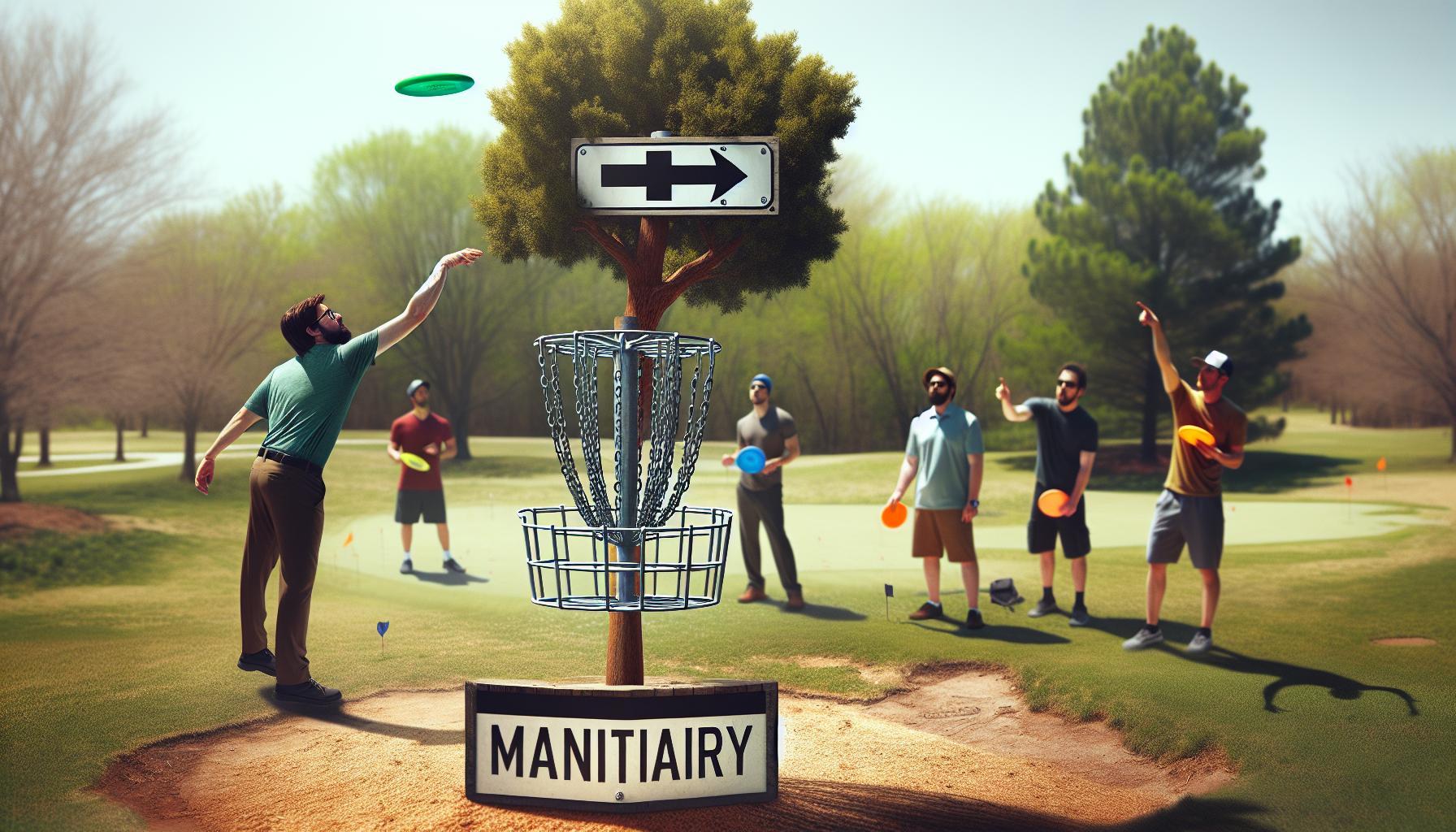
Navigating the complexities of mandatories, or “mandos,” in disc golf can significantly shape a player’s strategy, making it essential to understand their impact on gameplay. When faced with a mando, the objective is to throw the disc to one side of a designated obstacle, which adds a layer of intricacy to shot selection and execution. Mastering this aspect can mean the difference between a smooth round and a frustrating one filled with penalties.
Strategic Shot Selection
The presence of a mando can alter your approach to a hole dramatically. Players must consider not just the immediate shot but the trajectory and line that will comfortably clear the mandatory area. For example, if a tree stands in the path, you might opt for a high-arching anhyzer shot for right-handed backhand throwers to ensure clearance. Alternatively, lefties may find that a low stable hyzer keeps them within the mando’s parameters while navigating through tight spaces. The key is to analyze each mando scenario individually and adapt your technique accordingly.
Risk Management and Penalty Awareness
Understanding the rules surrounding mandos is crucial in managing risk and planning your strategy. On courses where strict enforcement of mando rules applies, missing the designated line can result in a penalty stroke. This reality encourages many players to take a conservative approach, prioritizing accuracy over distance. For instance, imagine a scenario where a player has a choice to either fire a powerful drive or lay up short of the mando to ensure compliance. Choosing to lay up may mean sacrificing a potential birdie chance but can ultimately safeguard against a costly penalty, underscoring the importance of weighing risks.
In competitions, experienced players often discuss the mental aspect of dealing with mandos. The pressure of adhering to these rules can lead to anxiety or hesitance, particularly in tight matches. Practicing under similar conditions can help alleviate such stress during actual gameplay, allowing players to focus on their mechanics rather than on the fear of penalties.
Adapting to Course Designs
Every disc golf course is a unique entity with its specific challenges, including how mandos are integrated into the layout. Some courses may feature several mandos naturally blended with the existing topography-like alongside a creek or through a densely wooded area. Understanding the nuances of how mandos are designed into courses can inform strategic decisions. Players could benefit from studying course maps or watching walkthrough videos to visualize where mandos are positioned and plan their approaches accordingly.
Embracing the Challenge
Ultimately, successful navigation of mandos not only requires technical skill and strategic insight but also the ability to embrace the challenge they present. Regardless of whether you’re a novice or a seasoned competitor, mandos add an essential layer of complexity and excitement to the game. By treating these obstacles as opportunities to increase your skillset, you enhance both your performance and your enjoyment on the course.
Tips for Practicing Mando Techniques

Practicing your mando techniques isn’t just about mastering the rules; it’s about developing a keen understanding of shot selection under pressure. Every player, from beginners to seasoned pros, should invest time honing their skills in navigating mandatories, as it can make a significant difference in gameplay. One effective practice approach is to set up controlled scenarios where you can work specifically on your throws around obstacles. Creating mock mandos in your local park or on the course can provide invaluable hands-on experience, helping you get comfortable with making precise shots.
To effectively practice your mando throws, try the following techniques:
- Obstacle Placement Drill: Position cones or markers in your practice area to simulate mando situations. Choose different angles and distances to replicate various ranges of difficulty. This drill helps you visualize your shot path while reinforcing the need to stay within the designated boundary.
- Throwing Angles and Disc Selection: Experiment with different throwing angles and disc types. Understand how each disc behaves under various conditions-like wind and angle of release. For example, using a stable disc might be ideal for straight shots through a mando, while a more understable disc can help with anhyzer shots to clear obstacles.
- Game Simulation: Play rounds with friends where you enforce strict mando adherence. Use mock scorekeeping to create a competitive environment, which can simulate the pressure of a tournament. This scenario allows you to practice your shot mechanics under real game conditions.
- Penalties Awareness: Familiarize yourself with the rules concerning mandos to reduce mental errors during practice. Knowing what constitutes a penalty and being able to visualize the “restricted plane” created by a mando can help you develop better spatial awareness on the course.
Incorporating visualization techniques into your practice can also yield significant benefits. Before taking a shot, mentally rehearse your approach-to see the path your disc should take relative to the mando and the layout of the target area. Visualizing success can help build confidence, allowing you to execute your shots with clarity and purpose when it matters most.
Lastly, don’t forget to embrace the challenge that mandos present. Reflect on each practice session-what worked, what didn’t, and how you can adjust your strategy for better outcomes. Analyzing your performance and sharing experiences with other players fosters a sense of community in the sport while contributing to your growth as a disc golfer.
Debunking Myths About Mandatories in Disc Golf
The concept of mandatories, or “mandos,” in disc golf often carries misconceptions that can mislead new players and even seasoned competitors. One common myth is that mandatories are simply arbitrary obstacles created to complicate a player’s strategy. In reality, mandos are designed to enhance the skill and strategy involved in navigating the course. They create a structured challenge that encourages players to think critically about their shot selection and disc flight characteristics, promoting a deeper understanding of the game.
Another prevalent myth is that missing a mando is a trivial error. In fact, failing to adhere to a mando can significantly impact your score, as it incurs a penalty throw. This adds a layer of importance to understanding the restriction created by the mandatory. It’s essential for players to visualize the “restricted plane,” which is the imaginary boundary that dictates the allowable path for the disc. Missing this plane, even by a fraction, can lead to higher scores and missed opportunities for achieving par or better.
Furthermore, many players believe that only advanced players need to worry about mandos affecting their gameplay. This is misguided; even beginners should recognize the importance of mandatories. By understanding and respecting these rules early on, novice players can develop better course management skills and avoid costly mistakes in tournament play. As a sport that blends athleticism with strategy, embracing the rules of mandatories fosters a mindset geared toward continual improvement.
Lastly, the misconception that all courses use mandatories in the same way overlooks the variability in design and intent among different disc golf courses. Each course may have its unique approach to implementing mandos, which can influence overall strategy and gameplay. Familiarizing oneself with the specific mando rules of each course not only enhances a player’s adaptability but also enriches their experience in the sport. Ultimately, by debunking these myths, players can better appreciate the strategic depth that mandatories bring to disc golf, leading to more enjoyable and competitive play.
Real Player Experiences: Mando in Action
When players take on the challenge of a mando, they’re often stepping into a moment where strategy meets sheer skill. Real player experiences reveal that although mandatories can seem daunting, they can enhance both novice and experienced players’ understanding of the game. For many, the first encounter with a mando can lead to memorable and sometimes humorous stories, shaping their approach to the sport for years to come.
One disc golfer, Sam, recounts a particularly challenging course that introduced a mando right in front of a dense thicket. “I was so focused on getting around the tree that I completely misjudged my throw,” he shared. Instead of a smooth hyzer, his disc faded too early, costing him a penalty throw and a sore back from stretching too hard to make the initial round. However, after that experience, Sam learned to better gauge his disc’s flight characteristics and practice his angle throws, which ultimately improved his overall game. He now looks back on that round as a vital lesson rather than a setback.
The real highlight of these encounters is not just how players navigate the physical obstacles but how they adapt their strategic thinking. Jenna, another player who frequently participates in local tournaments, emphasizes how she uses mandos to her advantage. “I’ve learned to visualize my throws in relation to the mando,” Jenna explains. “By planning my shot five throws ahead, I can anticipate not just the immediate challenge, but how it sets me up for the next hole.” This forward-thinking mindset not only helps her maintain a rhythm during competitive play but also enhances the enjoyment she gets from each round.
These stories highlight the essential role that real player experiences with mandos can play in developing a player’s strategy and confidence on the course. Each interaction with a mandatory requires distinct techniques-whether it’s a precise anhyzer to curve around a tree or a powerful forehand to avoid a penalty. Embracing these challenges creates a community of players who share tips, celebrate achievements, and continuously learn from one another, proving that disc golf is as much about building relationships as it is about improving skills.
Advanced Strategies for Competitive Players
Navigating a mandatory, or “mando,” in disc golf can be one of the most strategic elements of play, particularly for competitive players. Enhanced understanding of disc dynamics and sharp decision-making can significantly reduce the impact of these challenges on your score. By mastering the use of mandos, players can better control their game, avoid costly penalty throws, and potentially gain an edge over their competitors.
To successfully tackle a mando, first consider the angle and release point of your throw. The flight characteristics of your disc play a crucial role here. For tight mandos, a well-executed anhyzer or hyzer flip can help you achieve the desired trajectory around the obstacle. Here are a few advanced techniques to keep in mind:
- Utilize Your Grip: A power grip will help maximize distance and control. For tighter mandos, consider a modified grip to enhance stability during your throw.
- Practice Different Releases: Variations in your release point can change the disc’s flight path. Experiment with throwing from different stances (like sidearm or backhand) to find what works best for the specific mando at hand.
- Disc Selection: Choose discs that suit your skill set and the specifics of the mando. For instance, an overstable disc may help cut through wind and keep your throw on a reliable path, while a more understable disc can assist in achieving tricky anhyzer angles.
Planning your shot in advance is crucial when approaching a course layout with multiple mandatories. Competitive players often visualize not just the immediate throw but also the subsequent shots; taking time to identify potential lines of play can dramatically improve your performance. This foresight allows for the calculation of risk versus reward; opting for a safer line might mean settling for an extra throw in exchange for keeping penalties at bay.
Lastly, learn from every experience. Reviewing rounds with a focus on how mandos influenced your strategy can be enlightening. Did the choice of disc lead to a favorable result, or did that aggressive line cost you a stroke? Analyzing these decisions helps in refining your techniques and ensures continuous growth as a competitive player. By embracing mandatories as not just obstacles but opportunities to enhance your strategic depth, you can evolve into a more formidable competitor on the course.
How to Set Up a Mando for Your Course
Setting up a mandatory, or “mando,” for your disc golf course is an exciting way to enhance gameplay dynamics and challenge players. A well-placed mando can influence how individuals strategize their throws, test their throwing skills, and foster a competitive atmosphere on the course. Here are some essential tips to consider when establishing a mando at your location.
Begin by selecting the right obstacle around which to set your mando. This could be a tree, a large boulder, or even a combination of elements. The chosen obstacle should be substantial enough to force players to alter their route, adding a strategic layer to their approach. Ideally, your mando should be placed in a location that complements the overall design of the hole, maintaining a balance between challenge and playability.
Next, clearly mark the mandatory area with durable signage that indicates which side of the obstacle players must throw on. Use symbols and language that are universally understood within the sport, keeping consistent with established disc golf terminology. For instance, a typical mando sign features arrows or clear indicators showing the correct side. Ensure visibility from various angles, as this will help prevent confusion and disputes during play.
As you position the mando, think about potential flows of play. Consider how the mandatories will interact with existing fairways and greens. Placing a mando too near the basket or in close proximity to another hazard can increase frustration and lead to excessive penalties, detracting from the enjoyment. Additionally, engage local players for feedback on proposed mando placements. Their insight is invaluable; they can share firsthand experiences and preferences that can refine your approach, ensuring that the setup encourages skillful navigation rather than merely being an obstruction.
Lastly, encourage practice sessions where players can learn to navigate the new mando effectively. This can foster camaraderie and skill development, allowing all levels of players to acclimate to the changes. Use organized events or informal gatherings to get the community involved, which not only builds excitement for your course but also promotes a culture of cooperation and improvement in skill levels across the board. By thoughtfully integrating mandos into your course design, you can create a more engaging and challenging experience for everyone.
The Evolution of Mando Rules in Disc Golf
The concept of “mandatories” or “mandos” in disc golf has significantly evolved since its introduction, shaping how the game is played and strategized. Initially, mandatories were implemented to manage fairway navigation, enforcing specific throwing paths through obstacles. This transformation was largely integrated to enhance the challenge and complexity of course layouts, making it more than just a straightforward throw towards the basket. As the sport has gained popularity, so too has the refinement of mando rules to ensure fairness, clarity, and improved gameplay.
In the early days, the implications of missing a mando were less defined, leading to confusion among players about their treatment. Over time, governing bodies like the Professional Disc Golf Association (PDGA) have standardized rules regarding mandos. For instance, players now face a clear penalty-typically a one-stroke addition to their score-if they fail to comply with the established route. This evolution reflects a broader trend in sports towards enhanced competitiveness and operational clarity, tailoring the rules to suit both recreational players and serious competitors alike.
Another significant aspect of this evolution is the growing recognition of the strategy involved in mandatories. Courses are increasingly designed with the intent of fostering strategic thinking, where a well-placed mando can alter a player’s approach to throwing mechanics and disc selection. This shift encourages players to enhance their skills, balancing risk and reward. Designers now incorporate feedback from players to perfect mando placements, promoting an interactive community approach that makes course design more reflective of player needs and experiences.
As players become more familiar with the intricacies of mandos, the narrative continues to evolve. The rules adapt in response to player feedback and course experimentation, leading to a gameplay experience that remains fresh and engaging. As disc golf grows, so will the understanding and execution of mandated routes, influencing everything from casual games to professional tournaments. The result is a community that consciously engages with the rules, celebrating skill and strategy while enjoying the rich complexities of the game.
Q&A
Q: What happens if a player throws their disc the wrong way around a mando?
A: If a player throws their disc on the wrong side of a mando, it results in a penalty stroke. The player must re-throw from the previous lie, making it essential to understand the mandatory’s placement and rules to avoid unnecessary strokes. For more on mando rules, check out the section on Understanding the Rules of Mando.
Q: Are mandos used in every disc golf course?
A: No, mandos are not standard on every disc golf course. They are implemented by the course designer to increase difficulty or safety. Some courses may never incorporate mandos, while others might have multiple. Always check the course’s specific rules upon arrival.
Q: How do players strategize around mandos in competitive play?
A: Players often develop strategies based on the specific placement of mandos, selecting appropriate discs and throwing techniques to ensure they comply with the rules. Understanding the angle and type of shot needed is crucial, which can significantly influence overall game strategy.
Q: Can you adjust your throw after recognizing the mando during a round?
A: Once a player is aware of the mando, they cannot adjust their throw mid-flight; they must commit to their shot. However, players can plan for future throws based on their knowledge of mandos for subsequent rounds.
Q: Do mandos apply differently in casual versus competitive games?
A: Typically, mando rules should remain consistent between casual and competitive games, as they are part of the official disc golf rules. However, in casual play, players can agree to relax these rules for fun. Always communicate any changes with fellow players.
Q: Why are mandos considered important in disc golf?
A: Mandos are important as they add strategic elements to the game, compel players to think critically about their shots, and enhance the overall challenge. They also ensure safety by guiding players away from dangerous areas on the course.
Q: How can I effectively practice my mando techniques?
A: Practicing mando techniques involves setting up obstacles that simulate mandos and drilling throws to target compliance. Focus on precision and consistency to improve your chance of successfully navigating mandatory routes during gameplay.
Q: What defines a ‘mando’ in disc golf?
A: A ‘mando’, short for mandatory, refers to an obstacle on the course that players must throw their disc around in a specific direction. It ensures adherence to the path, adding both strategic depth and a challenge to the game. For a deeper exploration, see What Is a Mando in Disc Golf?.
Feel free to explore our sections for in-depth knowledge on disc golf strategies and techniques!
Wrapping Up
Thanks for tuning in to our deep dive into “What Is A Mando In Disc Golf: Rules Defined.” Understanding mandatories can really enhance your strategic play and elevate your game. If you found this helpful, don’t miss our guides on disc flight characteristics and throwing mechanics to further refine your skills!
Feeling motivated? Join our newsletter for expert insights and exclusive resources that keep you ahead in your disc golf journey. Have questions or tips of your own? Drop your thoughts in the comments below; we’d love to hear from you! For more content on course strategies and competitive play, check out our recent articles linked in the description. Remember, mastering disc golf is a journey-stay engaged and keep practicing!
Get our latest guides, news, and insights highlighted in your Google Search & AI Overviews.