Did you know that the right basket chains can significantly impact your game of disc golf? Understanding the standard hardware count for baskets is crucial for players at all levels. From beginners looking to set up their first course to seasoned competitors aiming for the highest performance, knowing how the number and configuration of chains can affect disc flight and scoring is essential. This article will delve into the various types of chains and their functions, providing insights that can enhance your gameplay. Whether you’re aiming to improve your technique or just curious about the mechanics of disc golf baskets, you’ll gain valuable knowledge that can elevate your experience on the course. Join us as we explore this vital aspect of the sport, ensuring you’re well-equipped for your next round!
Understanding Basket Chains: Importance in Disc Golf
Understanding the mechanics behind disc golf baskets, particularly the significance of the basket chains, is essential for both players and enthusiasts. The basket chains play a critical role in determining how well a disc is caught, which can impact your game significantly. When a disc approaches the basket, the chains help to absorb the impact and redirect the disc into the basket itself. This component is often overlooked by casual players but can be the difference between a successful putt and a frustrating miss.
Better quality chains, with appropriate spacing and a sufficient count, enhance the chances of a successful catch. Generally, a basket with a higher number of chains provides more opportunities for the disc to make contact. However, it’s not just about the quantity; the configuration and design of the chains also matter. For instance, some designs feature a staggered arrangement that increases the likelihood of capturing the disc, while others may be positioned to reduce bounce-outs.
When selecting or assessing a disc golf basket, consider its chain system as a crucial element. Examine factors like chain count, spacing, and materials. Baskets with durable chains made from rust-resistant metals will maintain their effectiveness for longer, giving players confidence during play. Ultimately, understanding basket chains can elevate your strategic approach to the game, whether you’re practicing in your local park or competing in tournaments.
Types of Basket Chains: A Detailed Overview
The effective design of basket chains in disc golf is a vital aspect that can often make or break a player’s game. Understanding the different types of chains is essential for anyone serious about improving their putting skills. Not all chains are created equal-variations in design, material, and construction significantly impact how well a disc is caught. Specifically, chains can be categorized into standard, heavy-duty, and hybrid types, each offering unique benefits.
Standard Chains
Standard chains are the most commonly found type on disc golf baskets. These generally consist of thinner links and are arranged closely together, allowing for decent catchability. They’re effective for casual play and can perform well under varying weather conditions. When investing in a standard chain basket, be sure to check its overall construction quality, as some entry-level models may compromise on durability.
Heavy-Duty Chains
For more serious players, heavy-duty chains present an excellent option. Made from thicker, sturdier materials, these chains are designed to last longer and endure harsher conditions. The added weight can help reduce bounce-outs, increasing the chances of a successful putt. Heavy-duty chains are especially beneficial in competitive settings where every throw counts. Players often prefer these for their superior catching ability, making them a smart choice for courses that experience high traffic.
Hybrid Chains
Hybrid chains combine various elements of both standard and heavy-duty chains. This design aims to optimize catch efficiency while maintaining a lightweight frame. Typically, these baskets will feature a mix of chain thicknesses, allowing for a responsive feel without sacrificing durability. Hybrid options are perfect for players who wish to experience the best of both worlds, providing versatility for any playing style.
Different chain styles also come with specific designs that can enhance gameplay. Some baskets feature staggered chains, which create a more dynamic catching area, significantly improving the likelihood of a disc being absorbed into the basket. Others may include angled or offset chains that guide the disc downward into the basket upon impact.
Understanding these distinctions helps players choose the right basket for their needs, whether they are practicing skills or gearing up for competitive play. By considering chain type thoroughly, players can elevate their game and enjoy a more fulfilling disc golf experience.
Material Matters: Analyzing Chain Durability

The durability of basket chains is a crucial factor in determining the overall performance and longevity of disc golf baskets. As players, we toss discs into these baskets countless times, and understanding how different materials affect chain resilience can significantly enhance our experience. Chains made from high-strength steel, for instance, are engineered to withstand the impacts of fast-flying discs, ensuring they retain their shape and effectiveness over time. In contrast, chains made from lower-quality materials may wear down more quickly, leading to increased bounce-outs and less reliable catching ability.
When considering chain durability, it’s essential to evaluate the thickness and type of metal used. Thicker links typically offer greater durability and resistance to bending or breaking upon impact. Players might also encounter chains that are galvanized or coated to prevent rusting, which is particularly important in regions with harsh weather conditions. These protective features not only ensure that the chains maintain their structural integrity but also help maintain consistent performance across various environmental scenarios.
Furthermore, it’s worth noting that the construction of the chain links plays a role in their longevity. Chains with welded connections instead of those using standard links may endure more stress without the risk of separating. This aspect is especially crucial for heavy-duty baskets, which are subjected to more significant wear from repeated use. Investing in quality chains can pay off in the long run, as they are less likely to need replacement, allowing players to focus on improving their skills rather than worrying about equipment failures.
Ultimately, choosing the right chain material involves a balance between personal preference, the playing style, and the environmental conditions of your local courses. Whether you are a casual player or a serious competitor, understanding these material differences can elevate your game by ensuring your basket reliably catches discs throughout countless rounds of play.
Standard Hardware Dimensions for Disc Golf Baskets
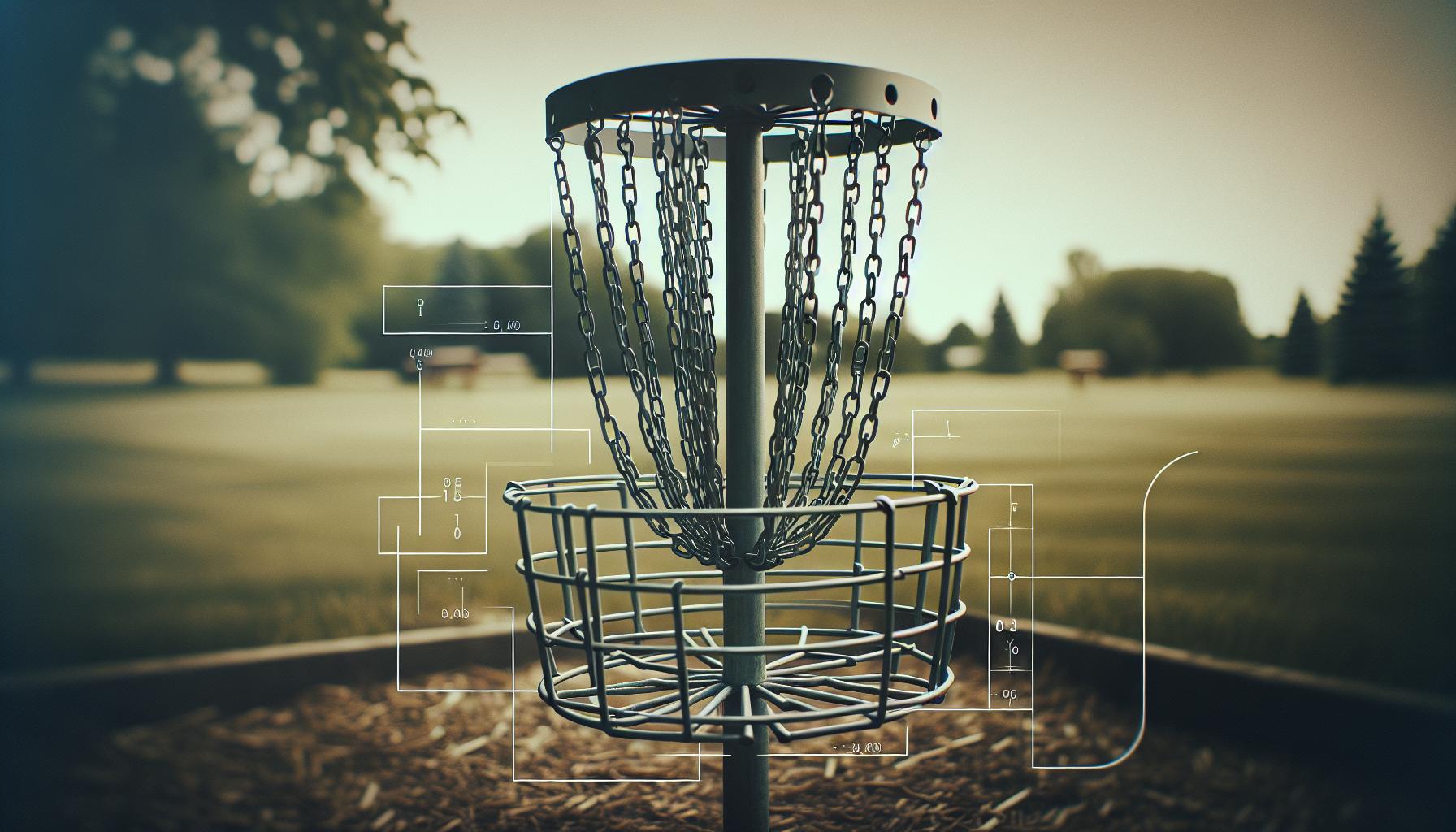
Understanding the dimensions and specifications of disc golf basket hardware is crucial for both enthusiasts and serious competitors. The standardization of hardware ensures consistency in gameplay and performance across courses and tournaments. Most regulation baskets follow guidelines set forth by organizations such as the Professional Disc Golf Association (PDGA). This uniformity allows players to have a reliable target during practice and competition, improving the overall experience of the sport.
When considering the hardware dimensions, essential factors include the height of the basket, the inner diameter of the catching area, and the chain count. A typical disc golf basket has a height of about 52 inches (1.32 meters) from the ground to the bottom of the catching area. The inner diameter generally measures around 24 inches (61 centimeters), providing a sufficient target for players. Chain count can vary, but most regulation baskets utilize 18 to 32 chains distributed evenly around the basket. More chains can enhance the catching ability, effectively reducing the chances of “bounce-outs,” which can occur when the disc deflects off the metal.
Impact of Chain Configuration
The arrangement and configuration of the chains play a pivotal role in how effectively the basket captures flying discs. Chains are typically arranged in two tiers, with an upper row and a lower row, creating a three-dimensional catching zone. This layered setup maximizes the chances of a disc hitting a chain, which increases the likelihood of it settling into the basket.
One popular design includes a mix of heavy-duty chains and lighter chains that enhance responsiveness. The heavier chains tend to absorb more energy on impact, resulting in a softer catch, while the lighter chains may offer a quicker rebound, allowing for adaptability during varied throwing styles.
Why Dimensions Matter
Selecting a basket with the appropriate dimensions and chain specifications is not just about meeting regulatory standards; it can also influence a player’s technique and strategy. For newer players, understanding these aspects enhances their ability to judge distance and angle during throws. Experienced players, on the other hand, might use knowledge of basket configurations to refine their throwing techniques, adjusting their approach depending on how a particular basket is designed.
By investing time in understanding the , players can significantly improve their performance, whether in casual play or competitive environments. So take the time to explore various models, compare specifications, and see what works best for your game!
How Chain Count Affects Disc Catching Ability
In the world of disc golf, the number of chains in a basket can significantly impact how well discs are caught. For many players, understanding the relationship between chain count and disc catching ability is crucial for both competitive play and casual enjoyment. Baskets typically feature a chain count that ranges from 18 to 32, and this variation can lead to notable differences in performance. An increase in the number of chains generally improves the likelihood of a disc being caught, as more chains create a greater surface area for impact and absorption of kinetic energy.
Baskets with higher chain counts offer unique advantages in catching capability. For instance, an 18-chain setup may suffice in many scenarios, but when wind conditions or high-speed throws come into play, a basket with 24 or even 32 chains could reduce “bounce-outs.” These undesirable occurrences happen when a disc strikes the basket and ricochets back, denying the player a successful putt. The combination of more chains with a well-designed configuration can minimize those risks, ensuring that the disc is more likely to find its way into the basket rather than deflecting away.
Interestingly, the effectiveness of chain count is also influenced by the type of chains used. Heavy-duty chains may provide a softer catch but can be slower to react, while lighter chains might offer crisper responses to varied throwing speeds. Therefore, some manufacturers might experiment with different chain types in their designs to maximize catching efficiency based on the overall construction of the basket. This flexible design strategy highlights the importance of player preference and throwing style, as what works for one individual may not be suitable for another.
Ultimately, players should consider factors such as their throwing mechanics, the types of courses they frequently play, and their competitive goals when selecting a basket. Understanding how chain count interacts with these elements will not only enhance a player’s technique but also contribute to a more satisfying and successful disc golf experience. Whether you’re a weekend warrior or an aspiring pro, knowledge of how chain count affects catching ability can help you make informed choices that elevate your game.
Comparative Analysis of Chain Designs and Styles
In the world of disc golf, not all chains are created equal, and the design and style of a basket’s chains can significantly influence a player’s performance. The variability in design not only caters to different playing styles but also affects the catching dynamics of each basket. The impact of chain design is directly tied to factors such as the angle of collision, chain thickness, and spacing, which can either amplify or diminish the basket’s ability to successfully catch discs.
One prominent factor to consider is the arrangement of chains. Baskets with inner and outer chain systems create a multi-layered catching mechanism. The inner chains are positioned directly in the path of incoming discs, creating an immediate obstruction that usually results in a more secure catch. In contrast, baskets that utilize a single set of chains may struggle with the rebound effect, leaving higher chances for bounce-outs. It’s common for players to notice that certain configurations, such as those with chains angled slightly inward, tend to increase the likelihood of successful captures, particularly during high-velocity throws.
Another aspect to examine is the material and gauge of the chains. Heavier chains can absorb more impact and provide a softer touch when the disc makes contact, potentially leading to fewer bounce-outs. However, they could also slow down response time in certain scenarios; conversely, lighter chains might react quicker but can result in more direct rebounds. When evaluating baskets, players should consider how these factors align with their throwing style – whether they prefer a more forgiving catch that allows for some level of error, or a firmer, more responsive setup that challenges their precision.
Lastly, it’s essential to recognize that players’ personal preferences play a significant role. Some disc golfers might favor baskets with a higher chain count for their increased catching efficiency, while others may prefer the challenge of lower-chain setups, believing that these setups can sharpen their skills. Whether you’re a recreational player enjoying a leisurely round or a seasoned competitor eyeing tournament success, understanding the nuances of chain design can enhance your choice of equipment, leading to improved outcomes on the course.
In summary, the design and style of chains in disc golf baskets are pivotal in determining not only the catching ability but also in shaping a player’s strategic approach to gameplay. By considering these elements, players can select baskets that resonate with their individual style and competitive needs, making informed choices that will elevate their disc golf experience.
Installation Tips for Optimal Basket Performance
When installing a disc golf basket, achieving optimal performance is crucial not just for the equipment itself, but also for enhancing the player’s overall experience on the course. The right installation techniques can significantly improve how chains interact with incoming discs, thus reducing bounce-outs and improving catch rates. To ensure your basket operates at its best, consider the following key factors.
Foundation and Stability
Start by selecting a stable, flat area for your basket. Uneven ground can lead to wobbling, negatively affecting the basket’s ability to catch discs. It’s beneficial to use a concrete or wooden base for added stability, particularly in regions that experience high winds or lot of heavy throws. If setting the basket into dirt, make sure to dig a hole that allows for sufficient depth (at least 18 inches), filling it with concrete or compacted gravel to prevent shifting over time.
Chain Arrangement
The arrangement of the chains is pivotal. Aim for a configuration that maximizes the catching abilities. Typically, baskets with an inner and outer chain layer perform better. When installing chains, ensure that they are spaced evenly and that the orientation allows for inward angles. Chains should hang freely with no more than a few inches of “give” when pulled, which helps absorb the impact of incoming discs more effectively.
Checking Chain Tension
Over time, chains can stretch or become misaligned due to impacts and environmental factors. Regularly check the tension and alignment of the chains to ensure they’re positioned correctly to capture discs. Loose chains can lead to more bounce-outs, while overly tight chains may hinder the basket’s ability to absorb impact. Adjust as necessary, maintaining optimal tension that allows for soft catches.
Regular Maintenance
Finally, build a routine around maintaining your basket. Inspect the chains regularly for rust or damage, especially if the basket is outside and exposed to the elements. Cleaning chains and lubricating the hardware can extend their lifespan and performance. A well-maintained basket not only performs better but also adds to the aesthetics of the course, inviting players to return for a quality game.
By following these installation tips, players can ensure their disc golf baskets are set up for success, enhancing both playability and enjoyment on the course. The right practices contribute not just to personal gameplay, but also to the development and enjoyment of the sport as it grows in popularity.
Basket Maintenance: Keeping Chains in Top Shape
Maintaining the chains of your disc golf basket is not just a matter of aesthetics; it significantly impacts gameplay and player satisfaction. Over time, environmental elements can wear down chains, affecting their catching efficiency. Regular maintenance ensures that the chains perform optimally, reducing bounce-outs and enhancing your overall experience on the course.
To keep your chains in prime condition, start by regularly inspecting them for signs of rust or wear. If you notice any rust, gently scrub the affected areas with a wire brush and apply a rust-inhibiting spray to protect them from further deterioration. Additionally, consider using a non-corrosive lubricant to help chains move freely, which aids in easing the impact when discs make contact.
Cleaning Techniques
In-between competitions or casual play, give your chains a thorough cleaning. Using warm soapy water and a soft cloth can help remove dirt and debris. For a deeper clean, use a small brush to get into tough spots, especially around the connection points where dirt tends to accumulate. After cleaning, rinse thoroughly and ensure they are completely dry before reattaching them to the basket to prevent rust.
Checking Chain Count and Alignment
Evaluate whether your basket meets the standard hardware count for optimal catching ability. While most disc golf baskets will have a standard number of chains, variations exist depending on brand and model. Ensure that all chains are evenly spaced and hanging freely. Misalignment can lead to poor disc catching, creating frustration during play. Regularly check the alignment and adjust the chains as necessary to keep them positioned correctly for catching discs.
By instituting these simple yet effective maintenance practices, you not only prolong the life of your basket chains but also contribute to a better playing experience. A well-maintained basket invites players of all levels to return, fostering both community and competition in the rapidly growing sport of disc golf.
Regulatory Standards for Chain Count in Competitions
In the world of disc golf, the effectiveness and reliability of a basket hinge significantly on its regulatory standards for chain count. Understanding these specifications not only fosters fairness in competition but also enhances player confidence and performance on the course. Most official bodies governing disc golf, like the Professional Disc Golf Association (PDGA), establish stringent guidelines that ensure uniformity across different courses and contests. This means that whether you’re playing at the local park or in a championship tournament, you can expect consistent gameplay experiences.
A standard disc golf basket typically features a chain count of 18 to 24 chains. This specific range is optimized to maximize disc catching efficiency while minimizing bounce-outs-an annoyance that all players seek to avoid. The arrangement of these chains plays a crucial role as well. They should be evenly spaced and might come in varying configurations, such as “top” and “bottom” chains to control how a disc reacts upon contact. For players, this consistency isn’t just about catching discs-it’s about shaping strategy, adjusting throwing techniques, and ultimately, honing their skills.
Adhering to these competitive standards is pivotal for ensuring fair play. Many tournaments will check basket specifications to confirm compliance with the required chain count and spacing. This scrutiny underscores the importance of maintaining not just personal baskets but also understanding tournament regulations. Players should take the time to familiarize themselves with the specific requirements of events they wish to enter, as failure to meet these standards can lead to disqualification.
Beyond competition, the emphasis on regulatory standards reflects a broader commitment to the sport’s integrity and growth. As disc golf continues to gain popularity, having clearly defined specifications helps legitimate the sport and facilitates a welcoming environment for newcomers while respecting the tradition and rigor sought by serious competitors. With the right knowledge about these regulations, players are better equipped to navigate their disc golf journey, ensuring both enjoyment and excellence on the course.
Innovative Designs in Basket Chain Technology
The evolution of basket chain technology is transforming the landscape of disc golf, blending innovation with performance to enhance gameplay experience. Modern manufacturers are increasingly focused on not only meeting regulatory standards but also pushing the boundaries of design to improve disc catching efficiency and minimize bounce-outs-one of the most common frustrations for players. Innovative basket designs now incorporate advanced materials and unique configurations that change how players interact with the basket, potentially impacting tournament outcomes and casual play alike.
One remarkable advancement in chain technology is the integration of multi-directional chains. These chains are designed to optimize the disc’s interaction with the basket from various angles, thereby increasing the chances of a successful catch regardless of the throw’s trajectory. Unlike traditional fixed chains, these adaptable systems can flex and reposition, providing a more forgiving surface for errant throws. This design not only improves catch rates but also encourages players to experiment with different throwing styles and techniques, catering to both beginners and seasoned athletes.
Innovative Materials for Durability
The choice of materials for chains and baskets has also seen significant improvements. Manufacturers are now utilizing corrosion-resistant metals and high-strength synthetic materials that withstand harsh weather conditions and extensive use. For instance, stainless steel chains resist rust and degradation much better than their standard counterparts, ensuring longevity and reliability. Additionally, some manufacturers are experimenting with lightweight composites that maintain structural integrity while offering improved performance. These innovations not only enhance the durability of baskets but also reduce maintenance needs, allowing players to focus more on their game.
Smart Baskets and Technology Integration
Another exciting front in basket chain technology is the advent of smart baskets that integrate sensors and connected technology. These smart systems can provide real-time feedback on disc impact angles, catch rates, and even player statistics. This level of data collection allows players to fine-tune their techniques, understand their performance metrics better, and enhance their competitive edge. Imagine being able to analyze your performance on the course through an app that tracks how often your disc bounces out versus how effectively it is caught-this level of insight can be a game-changer.
In conclusion, as disc golf continues to garner more participants and enthusiasts, the innovation in basket chain technology not only meets competitive standards but also enriches the overall player experience. By embracing new designs and materials, manufacturers are ensuring that whether you are a weekend warrior or a tournament contender, the equipment at your disposal elevates your game and fuels your passion for the sport. As you explore these advancements, you’ll find that understanding the nuances of your gear can open new avenues for strategy and enjoyment on the course.
User Experiences: Impact of Chains on Gameplay
Experiences shared by players on the impact of chains on gameplay reveal how crucial this aspect is to both enjoyment and performance in disc golf. Players often note that the number, design, and material of the chains can drastically influence how discs catch or bounce out upon impact. For instance, many seasoned players prefer baskets outfitted with a higher chain count, claiming that these provide a more secure catch, resulting in fewer frustrating bounce-outs during critical throws.
A common story within the community highlights a local tournament where a player attributed his unexpected victories to the high-quality chains on the course’s baskets. He stated that during practice rounds, the baskets with multi-directional chains allowed him to experiment with various angles and techniques without the worry of his disc bouncing out. This kind of adaptability has led to many players altering their throwing styles or practicing specific shots they feel more confident attempting, knowing that a good basket will support their efforts.
Understanding how chains affect gameplay is not just about performance; it also enhances player confidence, especially for those new to the sport. Beginners often find themselves discouraged by missed putts that could easily be made with a well-designed catching system. Observationally, newer players have noted that the feel of a successful play-hearing the satisfying “thunk” of the disc hitting the chains-is almost as pivotal to their enjoyment as the score itself. As they grow more comfortable with their gear, their enthusiasm for the game increases, leading to a more vibrant community overall.
Players emphasize that the selection of baskets and chains shouldn’t be overlooked when establishing a course. Many suggest that course designers prioritize quality chains that meet regulatory standards while also considering user feedback for basket models. In forums, they often discuss how well-constructed chains not only improve playability but also enhance the aesthetics of the course, reflecting a commitment to high-quality disc golf experiences. Ultimately, the relationship between chain design and player performance is a nuanced dialogue that shapes the way the game is played and enjoyed across various skill levels.
FAQ
Q: What is the standard chain count for disc golf baskets?
A: The standard chain count for disc golf baskets typically ranges from 18 to 30 chains. Most competitive baskets feature 24 chains, providing an optimal balance of catchability and durability. For specific details, refer to the section on Standard Hardware Dimensions for Disc Golf Baskets in the main article.
Q: How does chain diameter affect disc golf basket performance?
A: Chain diameter plays a critical role in a basket’s performance. Thicker chains tend to absorb impact better and reduce bounce-outs, enhancing catchability. If you’re looking for a basket, consider those outlined in our Comparative Analysis of Chain Designs and Styles section.
Q: Why are different chain styles used in basket designs?
A: Different chain styles are used to influence catch dynamics. Some designs prioritize a softer catch for lower speed throws, while others feature high-tensile chains that tighten the catch on faster throws. Explore these variations under Types of Basket Chains: A Detailed Overview.
Q: When should I replace the chains on my disc golf basket?
A: Chains should be replaced when they show signs of excessive wear, such as rust or deformation. Regular inspection is recommended, especially in extreme weather conditions. For maintenance tips, check out our section on Basket Maintenance: Keeping Chains in Top Shape.
Q: Where can I find regulatory standards for disc golf chains in competitions?
A: Regulatory standards for basket chains used in competitions are typically outlined by organizations such as the Professional Disc Golf Association (PDGA). Detailed standards can be found in our section on Regulatory Standards for Chain Count in Competitions.
Q: What are the advantages of using stainless steel chains in disc golf baskets?
A: Stainless steel chains offer superior rust resistance and durability compared to painted or galvanized chains. They maintain their integrity longer under various weather conditions, making them a popular choice for outdoor courses. Visit our Material Matters: Analyzing Chain Durability section for more insights.
Q: How do basket chains affect disc catch dynamics?
A: Basket chains significantly influence disc catch dynamics by providing a friction surface that slows down the disc while it drops. The configuration and number of chains determine how effectively a disc is retained. Learn more about this relationship in our section on How Chain Count Affects Disc Catching Ability.
Q: What maintenance practices can extend the life of basket chains?
A: To extend the life of your basket chains, regularly clean them to prevent rust, tighten loose links, and lubricate them if necessary. These practices will keep your chains functional and reliable. Refer to our Basket Maintenance: Keeping Chains in Top Shape for detailed guidance.
Concluding Remarks
As you wrap up your exploration of “Basket Chains: Standard Hardware Count,” remember that understanding the hardware specifications can significantly enhance your disc golf experience. With optimal chain count ensuring better disc catch, you’re not just investing in equipment-you’re honing your skills and improving your game. Ready to elevate your performance? Check out our guides on throwing mechanics and disc flight characteristics to gain invaluable insights for your next round.
If you have questions or want to share your experiences, drop a comment below! Don’t forget to join our newsletter for the latest tips, tricks, and gear updates, helping you stay at the forefront of the disc golf community. Explore our articles on course strategy breakdowns and competitive tournament insights to further elevate your game. Your journey in disc golf continues here-let’s keep pushing those boundaries together!
Get our latest guides, news, and insights highlighted in your Google Search & AI Overviews.