In the world of disc golf, choosing the right number of discs to carry can make a significant difference in your performance and enjoyment. Did you know that many players struggle with overpacking, only to find themselves overwhelmed on the course? Understanding how many discs to bring and why it matters can simplify your game and ensure you’re ready for any situation.
As you navigate different courses and conditions, the right disc limit helps you manage your options effectively, whether you’re a newcomer or a seasoned competitor. By honing in on the essentials and recognizing your throwing style, you can enhance your strategy and minimize decision fatigue. In this guide, we’ll explore the factors that determine your optimal disc limit, providing insights to help you tailor your gear to your unique needs. Embrace the simplicity of carrying just what you need, and discover how this thoughtful approach can elevate your disc golf experience.
Disc Golf Disc Types: A Beginner’s Guide
The world of disc golf can be both exhilarating and overwhelming, especially for newcomers trying to decipher the multitude of disc types available. Understanding the key categories of discs will significantly enhance your game and alleviate some of the confusion surrounding disc selection. The three primary types of discs-drivers, mid-range discs, and putters-each serve a specific role in your disc golf arsenal, making it vital to grasp their distinct characteristics to maximize performance on the course.
Drivers
Drivers are designed for distance, making them the preferred choice for tee shots. They are typically the fastest discs, with a sleek, aerodynamic design that allows for longer throws. There are two main subtypes of drivers: distance drivers and fairway drivers. Distance drivers boast a thinner profile and are suited for experienced players looking to achieve maximum yardage. Fairway drivers, while still built for distance, offer more control and stability, making them ideal for accuracy on tighter fairways.
Mid-Range Discs
Mid-range discs fill the gap between drivers and putters, providing versatility for various situations on the course. They offer a balanced combination of distance and accuracy, usually with a slightly thicker edge to help maintain control during throws. Mid-range discs are excellent for approach shots and frequently come into play for players seeking to navigate tricky obstacles or set up an easier putt.
Putters
Putters are crafted to excel at shorter distances, focusing on precision rather than power. They have a wider rim and a heavier weight, which allows for a stable and accurate flightpath when thrown with a smooth, controlled motion. Mastering the putter is crucial for any disc golfer, as many games are won or lost based on putting performance.
With a solid foundational understanding of these disc types, beginners can better assess their needs based on their playing style and typical course layouts. As a rule of thumb, carrying a balanced mix of drivers, mid-range discs, and putters will prepare players for various shots and conditions, ultimately improving their overall performance. Typically, a well-rounded bag may consist of 3-4 drivers, 2-3 mid-range discs, and 2-3 putters, providing a robust selection without overwhelming the player with too many options.
Understanding Disc Weight: What Matters?
Understanding the weight of your discs is essential for crafting a bag that complements your throwing style while ensuring optimal performance on the course. In disc golf, disc weight significantly influences flight patterns, stability, and distance, which plays a crucial role in overall game strategy. Discs typically range from 150 to 180 grams, and your choice can vary based on personal preference, skill level, and course conditions.
Choosing the right weight for your discs can depend on several factors, such as your throwing power and the specific shots you need to execute. Lighter discs (150-165 grams) are generally easier to throw for beginners, allowing for greater control and longer air time, making them suitable for shorter distances and more technical courses. Conversely, heavier discs (165-180 grams) can provide more stability and are preferred by advanced players who can impart more power on their throws, resulting in greater distance and more predictable flight patterns, particularly in windy conditions.
To effectively balance your disc golf bag, consider including a range of weights among your drivers, mid-range discs, and putters. For instance, novice players might benefit from having lighter mid-range discs and putters to improve their approach and confidence in putting, while experienced competitors might select heavier drivers that can withstand aggressive throws. A strategic approach to disc selection based not only on weight but also on the specific needs of each course can enhance your game significantly.
Weight Chart Considerations:
| Disc Weight (grams) | Best For | Flight Characteristics |
|---|---|---|
| 150 – 165 | Beginners, shorter courses | More lift, easy to throw |
| 165 – 175 | Intermediate players | Versatile performance, good control |
| 175 – 180 | Advanced players, windy conditions | Stable flight, excellent distance control |
By consciously selecting weights for different discs in your bag, you can adapt to various playing conditions and enhance your performance. This understanding not only helps in selecting the right number of discs to carry but also in building a competitive edge in your gameplay.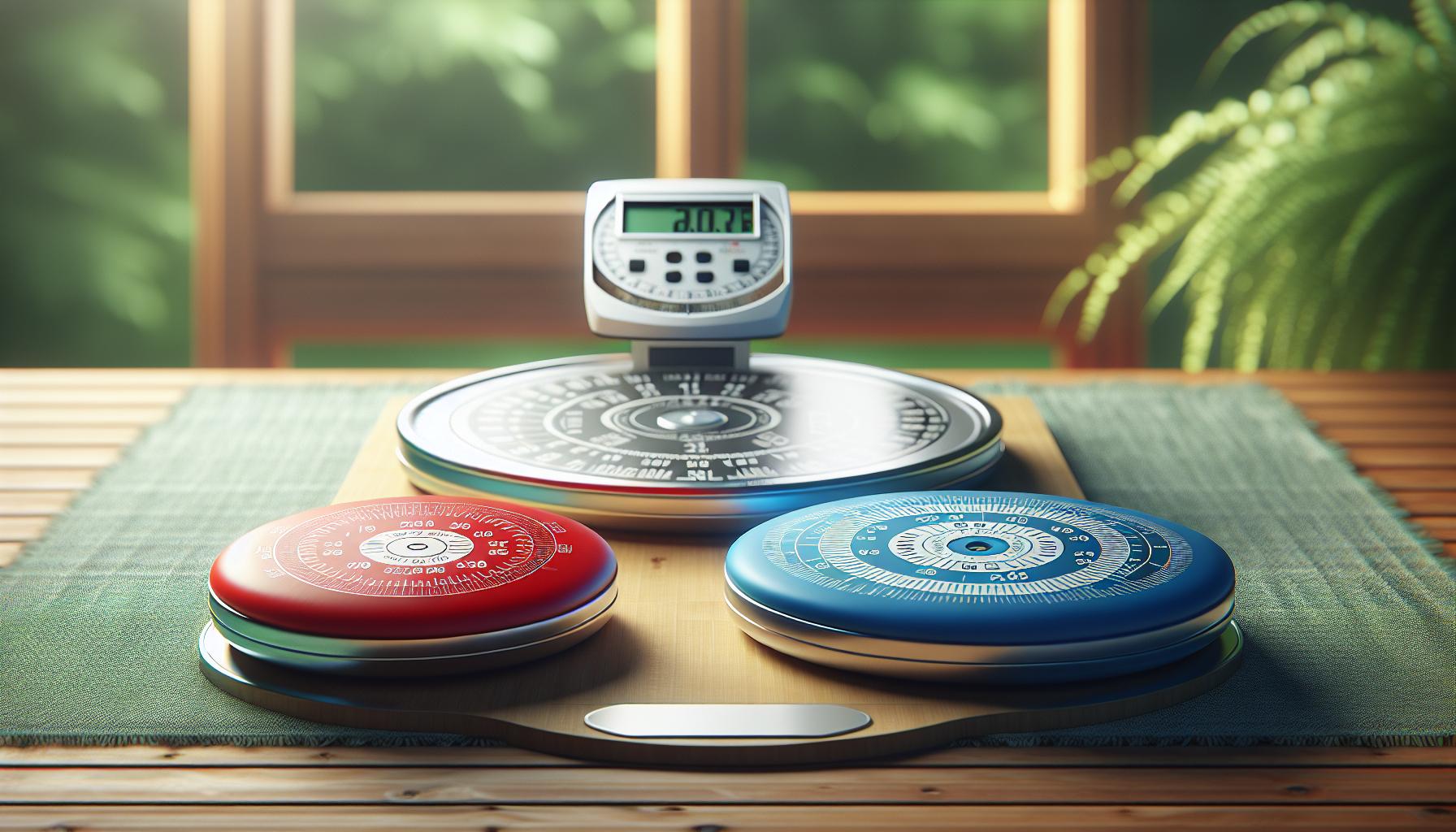
Essential Factors for Choosing Your Discs
Choosing the right discs for your bag is pivotal in shaping your performance on the course, and it involves a thoughtful consideration of several essential factors. Understanding the characteristics of different disc types-drivers, mid-range discs, and putters-will help you make informed choices tailored to your playing style and preferred course conditions. Each disc serves a distinct purpose, and selecting the right combination can greatly influence your overall success.
First, consider the stability rating of the discs. Stability affects how the disc behaves in flight: overstable discs tend to resist turning, making them ideal for reliable hooks and windy conditions, while understable discs can turn more easily, beneficial for turnover shots and hyzer flips. Selecting a mix of stable, overstable, and understable discs will give you a versatile arsenal to tackle various shots, from long-distance drives to precise approaches. For instance, a beginner might want to start with a stable putter and a slightly understable mid-range disc, progressively adopting more specialized options as they grow in skill.
Another crucial aspect is the plastic type and feel. Different plastic blends influence grip, durability, and flight characteristics. The more premium types often provide better grip and a smoother release, enhancing your throw’s consistency. For example, if you frequently play in wet conditions, opting for discs with excellent grip can dramatically improve your control. Furthermore, the disc’s rim width-how thick or thin the disc is-can also impact how it feels in your hand and how it flies.
Lastly, think about your own throwing mechanics and strengths. Are you a power thrower or someone with a more controlled release? This self-awareness will guide you toward discs that complement your unique style. A lighter disc might work well for a novice with a slower arm speed, while a more experienced player might opt for heavier discs that can endure more power and help achieve longer distances. Ultimately, building your disc collection should reflect not just the number of discs, but a well-rounded selection that supports different shot types and conditions, enhancing your overall game strategy.
By considering these factors-stability, plastic type, rim width, and your throwing style-you can optimize your disc selection and effectively curate a bag that aligns with your goals on the course. As you refine your choices, you’ll find that a well-balanced bag can lead to significant improvements in your game.
The Disc Limit: How Many Is Optimal?
Finding the perfect balance in your disc golf bag can be a thrilling journey, especially for newer players eager to explore the sport’s depth. While it’s tempting to carry quite a few discs to cover every possible scenario, the optimal number is often fewer than you might think. Many seasoned players find that maintaining a streamlined selection-typically anywhere from 10 to 15 discs-leads to greater consistency and improved performance on the course. This manageable number allows players to become intimately familiar with each disc’s unique flight characteristics, ensuring that every throw is as confident as possible.
When determining how many discs to carry, consider the roles each disc plays in your game. A well-rounded bag should ideally include a mix of drivers, mid-range discs, and putters. For example, you might carry:
- 2-3 Distance Drivers: Designed for long throws, these should include both an overstable and an understable option to handle different wind conditions.
- 2-3 Fairway Drivers: These provide control for accuracy over distance, making them great for tight fairways.
- 3-4 Mid-Range Discs: A couple of stable and understable choices can help with versatility in the middle distance.
- 2-3 Putters: Having a couple of putters can help with approach shots and putting, especially if one is more stable and one is softer.
This distribution ensures coverage for various shot types while preventing the bag from becoming overwhelming. Each disc will have its own specific role, allowing for more deliberate throws and increased confidence as you progress in skill.
Moreover, the importance of personal comfort can’t be overstated. Each player’s throwing style varies significantly, so it’s essential to adapt your bag to fit your unique mechanics. A compact selection allows you to focus on mastering your throws without being bogged down by decision paralysis. As you develop, you can experiment with adding or replacing discs to see how they affect your performance, but starting with fewer options often leads to greater understanding and improvement.
In summary, while the allure of a disc-laden bag is strong, keeping it light and purposeful will yield better results on the course. Emphasizing quality over quantity fosters a deeper connection with your equipment, ultimately enhancing your game and enjoying the remarkable community that disc golf has to offer.
Finding Balance: Power vs. Control in Your Game
Both power and control are essential elements in disc golf, and striking the right balance between the two can significantly enhance your game. Many beginners focus solely on distance, aspiring to throw as far as possible with their drives. However, the key to consistent success lies in understanding how to harmonize distance with precision. Mastering this balance allows players to navigate challenging courses effectively while minimizing the risk of errant throws.
To achieve this balance, it’s crucial to recognize your throwing style and physical capability. For instance, players with a strong throwing arm may lean towards using distance drivers with high speed ratings. Yet, without the control to place those discs accurately, they might find themselves in tricky situations more often than not. It’s advisable to incorporate fairway drivers into your bag. These discs are typically slower and more stable, offering better control without sacrificing too much distance. For example, a player might carry a couple of both distance and fairway drivers to cover various scenarios-using the distance drivers for open fairways while resorting to fairway drivers for tight lines.
Furthermore, understanding disc flight ratings can aid in balancing power and control. Discs are classified by their speed, glide, turn, and fade. Selecting discs with a lower speed can help newer players focus on developing their technique without overstressing their muscles. As you gain more experience and fine-tune your skills, integrating faster discs can add distance to your game, but only if you maintain the necessary control to use them effectively.
Practice is vital for honing the balance between these two factors. As you throw different discs under varied conditions-such as wind or varying terrain-you’ll learn how to adjust your power to fit each situation. Keeping a small, well-chosen selection of discs fosters this experimentation. Consider tracking your throws and the resulting outcomes to determine which combinations work best for your style, enabling a more targeted approach as you progress in your skills while reinforcing that all important power-control balance.
Adjusting Your Disc Selection for Course Conditions
When stepping onto the tee pad of a new disc golf course, one of the most vital decisions you’ll make involves adjusting your disc selection based on the specific course conditions. Every course presents its unique challenges, and understanding these can significantly impact your performance. Whether faced with wooded areas, open fields, or extreme weather conditions, being strategic about your discs can make the difference between a solid round and one fraught with frustration.
Firstly, assess the terrain and layout of the course. A course dominated by tight, wooded fairways may necessitate a greater emphasis on control-oriented discs, such as midranges and fairway drivers, which allow for precise navigation through obstacles. In contrast, a wide-open course might tempt players to lean on their distance drivers, maximizing that powerful arm to cover more ground. A diverse selection allows players to adapt, where midranges can handle tricky approaches, and putters are indispensable for those challenging greens.
Weather conditions also play a crucial role in your disc selection. On windy days, consider utilizing more stable discs, which can resist the gusts and maintain a straight flight path. Conversely, in calmer conditions, you might feel more comfortable experimenting with a broader range of disc stability options, including those that might turn more during flight. Additionally, rainy or humid weather can affect disc grip; ensuring you have discs made from premium rubber materials can help avoid slips during your throw.
In practice, experimenting with disc selection according to conditions is not merely beneficial-it’s essential for developing your game. Keeping a well-curated bag-say, around 15 to 20 discs-provides the flexibility to confidently tackle any course. Remember that while having options is key, overloading your bag can lead to confusion and delayed decision-making on the course. A focused selection of drivers, midranges, and putters suited for varied scenarios will enhance your ability to adapt and excel.
Ultimately, is about striking a balance between your comfort level with each disc, the specific challenges you’ll encounter, and the strategic play required to build an effective round. Engaging with the nuances of each course enhances not just your skill set, but also your enjoyment of this ever-evolving and communal sport.
The Evolution of Disc Technology in the Sport
As disc golf continues to thrive and evolve, so too does the technology behind the discs. The materials and designs of today’s discs significantly enhance performance, allowing players to fine-tune their game more than ever before. Advances in disc production have opened doors for players, melding art and science to create discs that fly farther, straighter, and with greater precision-all of which can impact how many discs a player chooses to carry.
Modern discs are often made from blends of polymers that improve their durability and flexibility. Manufacturers experiment with different plastic types to create discs that handle a variety of throwing conditions and styles. For example, some players prefer the increased grip of rubber-like plastics in humid conditions, while others may favor more rigid options for stability in windy climates. As these materials have evolved, they have also influenced the flight characteristics of discs, such as speed, glide, turn, and fade-critical factors for players to consider when selecting their optimal disc limit.
Additionally, understanding flight ratings has become more accessible due to advancements in the design and testing of discs. Each disc is given a numerical rating for its speed, glide, turn, and fade, helping players match their throwing strengths with the correct equipment. With so many options at their fingertips, players face a crucial decision: how many discs should they carry to maximize performance while maintaining clarity and focus on the course? Balancing a good mix of drivers, midranges, and putters can lead to a more effective round, but too many choices can be overwhelming, especially for newcomers who are still developing their throwing techniques.
To strike this balance, consider starting with a versatile set of 10 to 15 discs that cover various distances and shot types. As your skills grow and you become more familiar with the layout of different courses, you can adjust your selection, phasing in new models or keeping older favorites based on what yields the best results for your unique throwing style. Ultimately, the evolution of disc technology not only allows players to express their individuality and gameplay strategies but also enhances overall enjoyment of this communal sport. Engaging with this progression can provide you with a clearer understanding of how many discs work best for your game, ensuring that each round is both enjoyable and competitive.
Pro Insights: What the Top Players Carry
The best players in the world often optimize their disc selection to complement their unique throwing styles and the intricacies of the courses they play. While some high-level competitors travel with a large variety of discs, the actual number they carry can vary based on personal preference and the specific challenges of each tournament. Typically, professional players might carry anywhere from 15 to 25 discs in their bags, each meticulously chosen to serve specific roles during a round.
When examining what top players carry, several categories of discs frequently appear in their bags. Most pros emphasize the importance of having at least a few drivers, midranges, and putters, which allows for versatility on the course. For example, a common setup could include:
- Drivers: Usually, a couple of distance drivers for long throws, a fairway driver for more controlled approaches, and possibly an overstable driver for headwinds.
- Midranges: Most pros will carry several midrange discs that can handle a variety of conditions; having options that turn or fade helps them adapt to different throws.
- Putter Selection: Players often carry at least two putters for various distances and conditions, and many favor different models for putting and throwing.
The advanced understanding of disc stability and flight characteristics is crucial for elite players. For instance, a skilled player like Paul McBeth utilizes specific discs that suit their unique throwing mechanics, often gravitating towards discs that offer high control and predictability. This choice stems from extensive practice and knowledge about how different discs respond to various throws, including forehands, backhands, and hyzer flips.
While the number of discs in one’s bag can be extensive, it’s critical to establish a balance. Beginners often benefit from a more simplified selection. Starting with a core set of 5 to 10 discs that cover essential shots will help new players build their skills without feeling overwhelmed. As they advance, players can gradually add to their collection based on personal feedback and performance insights. Ultimately, whether you are a beginner or a seasoned veteran, the right disc selection can significantly enhance your performance and enjoyment on the course.
Maximizing Performance: Disc Pairing Strategies
When it comes to enhancing your performance on the disc golf course, the strategic pairing of your discs can make a significant difference in achieving optimal results. Successful players recognize that not all discs are created equal, and understanding how to complement each with one another allows for greater versatility and effectiveness during a round. By focusing on balance, distance, and shot selection, you can maximize your capabilities without overwhelming yourself with an excessive number of discs.
To develop an effective disc pairing strategy, consider the key aspects of disc types, their stability ratings, and how they align with your throwing style. A balanced setup typically includes a mix of drivers, midranges, and putters that can be used interchangeably based on the situation. For instance, if you’re on a tight fairway, pairing an overstable driver with a reliable midrange allows for precision with a controlled fade at the end of your throw. Similarly, for long-distance shots, consider coupling a distance driver with a stable putter to maximize accuracy while still maintaining control.
Creating Your Disc Pairing Strategy
Start by categorizing your discs into specific roles based on their flight characteristics:
- Distance Drivers: Choose discs that maximize distance and have minimal fade, like a highly rated speed 13 disc, which works well on open holes.
- Fairway Drivers: Opt for discs that are more stable and can handle a wide range of throwing styles; these will offer better control on tricky fairways.
- Midrange Discs: Select several midrange options with varying stability to tackle different situations-ideal for approach shots or navigating tricky landing zones.
- Putters: Carry at least two distinct putters-one designed for reliable throws and a second for long-range approaches, maximizing your ability to score.
Consider also your skill level and familiarity with each disc’s flight path. New players might benefit from fewer slots in their bag, focusing on just one driver, one midrange, and one putter until they gain confidence. As players progress, they can expand their collection and experiment with pairing strategies, enabling them to discover which combinations yield the best results in varying conditions.
By contemplating how different discs interact with one another and how they each fulfill a role, you can create an efficient and effective setup that maximizes your performance on the course. The right pairings not only improve your overall game but also foster a deeper understanding of the sport, ultimately enhancing your enjoyment of disc golf as a challenge and a community.
The Importance of Disc Stability Ratings
Understanding the stability ratings of your discs is essential for making informed decisions about your disc golf equipment, ultimately influencing your performance on the course. Each disc has a designated stability rating-typically classified as overstable, stable, or understable-that indicates how the disc will behave in flight. For instance, an overstable disc will hook to the left (for right-handed backhand throws) at the end of its flight, providing reliability in windy conditions or for players with powerful arm speeds. Conversely, understable discs are more prone to turning right before fading back to the left, allowing for longer turnover shots and hyzer flips, which can be advantageous for experienced players looking to shape their throws.
When considering the optimal number of discs to carry, incorporating a balanced assortment of stability ratings is crucial. A typical setup might include at least one overstable driver, a stable midrange, and an understable putter. This diverse selection enables players to adapt to varying course conditions and challenges. For beginners, having a couple of key discs with distinct stability ratings not only simplifies decision-making but also fosters confidence in shot selection. In contrast, more seasoned players often expand their collection to include additional discs with more nuanced stability variations, enabling them to execute complex shot shapes and tackle demanding courses.
Utilizing stability ratings effectively can also enhance your strategy during a round. For example, if you’re facing a tight fairway with obstacles on one side, an overstable disc can provide the reliable fade needed to navigate the hole safely. Alternatively, an understable disc might be your best choice when trailing a tight line but needing a gentle turn to avoid obstructions. By systematically understanding and applying the principles of disc stability, you can refine your approach to the game, allowing for greater precision and adaptability.
Ultimately, recognizing the significance of disc stability ratings fosters a deeper appreciation of the intricacies of disc golf. As players continually strive to elevate their game, attending to these characteristics ensures they are not just equipped, but truly prepared, to face the challenges presented by each unique course.
Maintenance Tips for Your Disc Collection
Maintaining your disc collection is vital for ensuring each throw is as reliable as possible. Unlike many sports where equipment can be replaced frequently, disc golf players must invest time and care into their discs to maintain performance and longevity. A well-cared-for disc can make the difference in consistently achieving your best scores, no matter your skill level.
To start, after every round, take a moment to inspect your discs for dirt, scratches, or any signs of damage. A simple rinse with water and a soft cloth can often remove dirt and debris that could affect the disc’s flight pattern. For tougher stains, consider using a gentle soap solution. Avoid harsh chemicals, as they can degrade the plastic. Regular cleaning not only preserves the disc’s surface but also enhances grip-critical for optimal throwing performance.
Storage is another crucial factor. Discs should be kept in a protective bag or container that minimizes exposure to extreme temperatures and direct sunlight. Prolonged exposure to heat can warp the plastic, changing flight characteristics. Many players find that using a disc golf-specific bag with compartments helps keep discs organized, reducing the risk of damage when out on the course.
When it comes to rotating your discs, consider regularly updating your collection based on performance and preference. Over time, you might find certain discs become less stable or responsive due to wear. Keep a log of how often you use each disc and be open to trying new options if your game evolves or your local courses change. Understanding when to retire a disc, especially one that has been with you for a while, is essential. This proactive approach allows you to keep a fresh, effective selection in your bag.
Lastly, engage with the disc golf community. Sharing tips and experiences about disc maintenance can provide valuable insights and might lead you to discover new care techniques. Listening to feedback from seasoned players can help you refine your collection for optimal performance and enjoyment. Balancing your disc count while ensuring each piece in your bag is well-maintained can help you elevate your game and ensure that every round is rewarding.
Building Your Disc Golf Bag: Essentials and Extras
Building a disc golf bag is an art as much as it is a science, and understanding how many discs to carry can greatly impact your game. While the temptation may be to fill your bag with a variety of discs to cover every possible scenario, finding the right balance between essential discs and extras is key for both beginners and seasoned pros alike. Professional players often advocate for a streamlined approach, commonly recommending a core set of between 10 to 15 discs, which includes drivers, midranges, and putters tailored to your throwing style and local course conditions.
When crafting your ideal setup, consider the purpose each disc serves in your game. A good starting point includes three categories: drivers for distance, midranges for versatility, and putters for accuracy. Newer players might benefit from a more simplified selection, as carrying too many discs can lead to decision paralysis on the course. Instead, focus on mastering a few reliable discs that perform consistently across various situations. For instance:
- Distance Driver: Choose one that offers a good mix of stability and distance.
- Fairway Driver: Opt for one that allows for precise shots with less risk of turnover.
- Midrange: A versatile disc that can handle both hyzer and anhyzer lines.
- Putting Putters: It’s smart to have at least two-one for putting and one for short approaches.
Once you have your essentials, think about adding specialty discs based on your playing style. Whether you lean towards a power thrower or favor finesse, finding discs that complement your strengths can enhance your overall performance. For example, a stable distance driver can help you achieve maximum yards, while an overstable disc can assist with controlled hyzers in windy conditions.
Stability ratings are also crucial in helping you determine which discs will work best in varying conditions. Familiarize yourself with the flight characteristics of your discs, as this knowledge will guide your decisions when facing unexpected course challenges. It’s wise to regularly examine your disc collection and rotate out any that have lost their integrity or are no longer suited to your technique.
Lastly, don’t overlook the importance of your disc bag itself. A well-organized bag with designated spaces for each disc not only protects your discs from damage but also makes it easier to locate the right disc at any moment. Keep in mind that less can often be more; maintaining a concise, well-thought-out collection of discs will streamline your game and potentially lower your score while giving you the best chance to shine on any course.
Frequently asked questions
Q: How many discs should a beginner carry in disc golf?
A: A beginner should start with 3 to 5 discs, focusing on a driver, a mid-range disc, and a putter. This simple setup allows for easier mastery of throwing techniques without overwhelming choices. As you progress, consider adding more discs tailored to your evolving skills and preferences.
Q: Why is it important to have a disc limit in your bag?
A: Having a disc limit helps maintain focus and consistency during play. Too many discs can lead to confusion and hesitance in shot selection. A well-curated selection promotes better understanding of each disc’s flight characteristics and enhances decision-making on the course.
Q: What factors should I consider when deciding how many discs to carry?
A: When deciding on the number of discs, consider your skill level, the course layout, and your throwing style. For instance, newer players might stick to fewer discs, while experienced players may carry extras for specific conditions and shot types, such as hyzer flips or rollers.
Q: How does the course type influence my disc limit?
A: The course type significantly affects disc selection. Tighter, technical courses may require fewer discs for control, while open courses might benefit from a wider array of discs to tackle various distances and challenges. Adjust your limit based on course demands for optimal performance.
Q: What is the optimal disc weight for my bag limit?
A: The optimal disc weight varies by player but typically ranges from 150 to 175 grams. Lighter discs are easier to throw for beginners, whereas experienced players often prefer slightly heavier discs for more stability and distance control. Tailor your selection based on your throwing strength and comfort level.
Q: How can I adjust my disc limit for different weather conditions?
A: Adapt your disc limit based on weather conditions by including discs that perform well in wind, such as overstable drivers, while excluding those that are less stable. For rainy days, consider adding more durable plastics. The goal is to remain versatile and effective regardless of the elements.
Q: When should I reconsider my disc limit as my skills improve?
A: Reassess your disc limit as your skills and playing style evolve, ideally after every few months or when you notice a significant shift in your game. Transitioning to carrying more specialized discs can enhance your performance based on your increasing proficiency and understanding of the sport.
Q: Can carrying too many discs negatively impact my game?
A: Yes, carrying too many discs can lead to decision paralysis, affecting your ability to make quick and confident shots. It may also contribute to a disorganized bag, making it difficult to locate and use your most effective discs. Start with a limited selection and expand thoughtfully as you gain experience.
To Conclude
In conclusion, understanding your disc limit is essential for optimizing your disc golf experience. With the right knowledge, you can enhance your performance and decision-making on the course. As you think about which discs to carry-consider experimenting with different types for various throwing conditions.
Don’t miss out on our detailed guides linking throwing mechanics and equipment specs to refine your game even further. Have questions or need personalized advice? Join our community discussions to connect with fellow enthusiasts and share experiences.
Ready to elevate your disc golf skills? Check out our resources on strategy breakdowns and technique guides to ensure you are well-equipped for your next round. Your journey in disc golf is just beginning, and the community is here to support you every step of the way. Share your thoughts in the comments below, and let’s keep the conversation going!
Get our latest guides, news, and insights highlighted in your Google Search & AI Overviews.