
Did you know that the numbers on your disc golf discs are like a secret code, guiding you to throw more effectively? Understanding these numbers-speed, glide, turn, and fade-can significantly impact your game and help you select the right disc for different situations. Whether you’re a newcomer eager to improve or a seasoned player looking for an edge, decoding these figures is essential for mastering your throws. In this article, we’ll break down what each number means, how they interact, and the best practices for using them to your advantage. Get ready to enhance your skills, boost your confidence, and enjoy the growing sport of disc golf even more!
How Disc Golf Numbers Work: An Overview
Understanding the mechanics behind disc golf numbers can transform your game, giving you the tools to select the right equipment and execute better throws. At the heart of disc golf are four primary numerical ratings that define a disc’s flight characteristics: Speed, Glide, Turn, and Fade. Each number holds specific significance, affecting how the disc behaves in the air and, ultimately, your performance on the course.
The Speed rating ranges from 1 to 14, indicating how quickly a disc can travel through the air. Higher numbers signify faster discs, which are ideal for experienced players looking to achieve maximum distance. Glide, rated from 1 to 7, reveals how long a disc can stay aloft before descending. Discs with higher glide ratings support longer, controlled flights, which is particularly beneficial for achieving distance without excessive effort.
Turn ratings show a disc’s tendency to veer to the right (for right-handed backhand throws) during its initial flight. A negative Turn value indicates a tendency to curve right, while a positive Turn suggests a more stable flight path, keeping the disc straighter. Finally, the Fade number, which ranges from 0 to 5, signifies the degree to which the disc will finish its flight by turning left at the end, providing players with the ability to fine-tune their approach on fades and finish on target.
Understanding how these numbers work together is crucial. A disc with a high Speed and Glide rating but a negative Turn may be perfect for long-distance hyzer throws, while a disc with lower Speed and a lot of Glide could assist beginners in gaining confidence with straight, controlled shots. By evaluating these ratings in conjunction with your skill level and throwing style, you can make informed decisions that enhance your gameplay and enjoyment of this dynamic sport.
Understanding Disc Flight Ratings

Understanding how discs behave in the air is essential for any disc golfer looking to elevate their game. Each disc features a set of flight ratings that provide insight into its performance characteristics. By grasping these flight ratings, you can make better-informed decisions about disc selection, tailoring your choices to your unique throwing style and skill level.
At the core of these ratings are four key metrics: Speed, Glide, Turn, and Fade. The Speed rating, ranging from 1 to 14, indicates how fast a disc can travel. Faster discs (higher ratings) are typically better suited for seasoned players who can handle the speed, while slower discs help beginners with more manageable throws. The Glide rating (1 to 7) determines how long a disc stays in the air. Discs with higher glide are fantastic for maximizing distance without extra exertion, making them a favorite for players aiming for long, controlled shots.
Turn ratings illustrate how a disc tends to veer during its flight. A disc with a negative Turn will curve to the right (for right-handed backhand throws), providing versatility for executing specific shot shapes, while a positive Turn indicates stability, ideal for straight shots. Finally, the Fade rating, which ranges from 0 to 5, describes how much the disc will hook left at the end of its flight. Understanding these nuances enables you to select a disc that complements your throwing abilities-whether you’re aiming for long drives or precise approaches.
Being able to analyze and interpret these ratings not only refines your disc selection but also enhances your overall gameplay strategy. For instance, a disc with a combination of high Speed and Glide but a negative Turn is excellent for long range hyzer throws, while a disc with lower Speed but excellent Glide can help beginners build confidence with controlled flights. By experimenting with different discs and their associated ratings, you’ll discover how to best match your disc choices with your gameplay goals, ultimately enhancing your enjoyment of this vibrant sport.
Decoding Stability Ratings: What They Mean

Deciphering the stability ratings of disc golf discs is crucial for players aiming to fine-tune their game. Stability ratings, usually indicated on the disc itself, play a significant role in how a disc will behave during flight. Understanding these ratings can provide valuable insights into your throwing style and help you make informed choices about which discs to add to your collection.
A disc’s stability rating is often denoted with a number, generally ranging from +1 to -5. A disc with a stability rating of +1 is considered stable and will fly straight with minimal turn or fade, making it suitable for controlled shots and beginners. Conversely, a disc rated -5 is highly understable, meaning it will turn significantly to the right for right-handed backhand throws, offering advanced players opportunities for creative shot-making, including hyzer flips and anhyzer approaches.
When selecting a disc, consider your own throwing mechanics and strengths. If you have a powerful throwing arm, you might gravitate towards more stable or overstable discs, which can withstand higher speeds and resist turning over unexpectedly. On the other hand, if you’re still developing your technique or seeking to maximize distance with technical finesse, opting for a disc with more under stability will allow for longer, controlled flights with the potential for greater distance as your skills progress.
Finally, don’t hesitate to experiment with different discs and their stability ratings on the course. This hands-on approach will not only enhance your understanding of how stability impacts flight but also help you find the perfect disc for various shot scenarios. Combining these insights with practice can significantly elevate your performance, fostering a deeper appreciation for the intricacies of disc golf as you embrace this exhilarating sport.
The Importance of Distance Ratings in Performance

Understanding how distance ratings impact performance in disc golf is crucial for players at all skill levels, from newcomers to seasoned competitors. The distance rating of a disc, indicated on its label, reflects its ability to achieve maximum flight length under optimal conditions. Generally, this number ranges from 1 to 14, with higher numbers denoting greater potential distance. For instance, a disc rated at 12 is designed to travel farther than one rated at 8, making distance ratings a critical component for players looking to improve their game.
Choosing the right distance-rated disc begins with assessing your own throwing mechanics. A player with a strong, fast throw may find that high-distance discs help maximize their power, providing the velocity necessary to take advantage of the disc’s design. Conversely, if you’re still developing your technique or lack the arm speed to generate sufficient velocity, selecting a lower-distance disc may provide more control and better accuracy. This balance between distance and control is paramount, as a disc that exceeds your current capability can result in inconsistent throws and frustration.
In practice, understanding distance ratings can also lead to strategic choices on the course. Consider the following when selecting a disc based on distance ratings:
- Course Layout: If a hole is particularly long, opting for a disc with a higher distance rating could be beneficial to reach the basket in fewer throws.
- Wind Conditions: High-distance discs may struggle in windy situations; knowing when to use them can make a difference in your performance.
- Throwing Styles: Different types of throws, such as backhand, forehand, or overhead, satisfy different distance preferences; some discs perform better with specific techniques.
Incorporating this understanding of distance ratings into your practice sessions will not only enhance your game but deepen your appreciation for disc golf as an athletic pursuit. Experimentation is key-try pairing different discs with specific distance ratings in various scenarios to discover what feels best for your unique throwing style. This hands-on approach to learning will contribute to your growth in the sport and help solidify your place in the welcoming, yet competitive, disc golf community.
Speed, Glide, Turn, and Fade: Key Metrics Explained
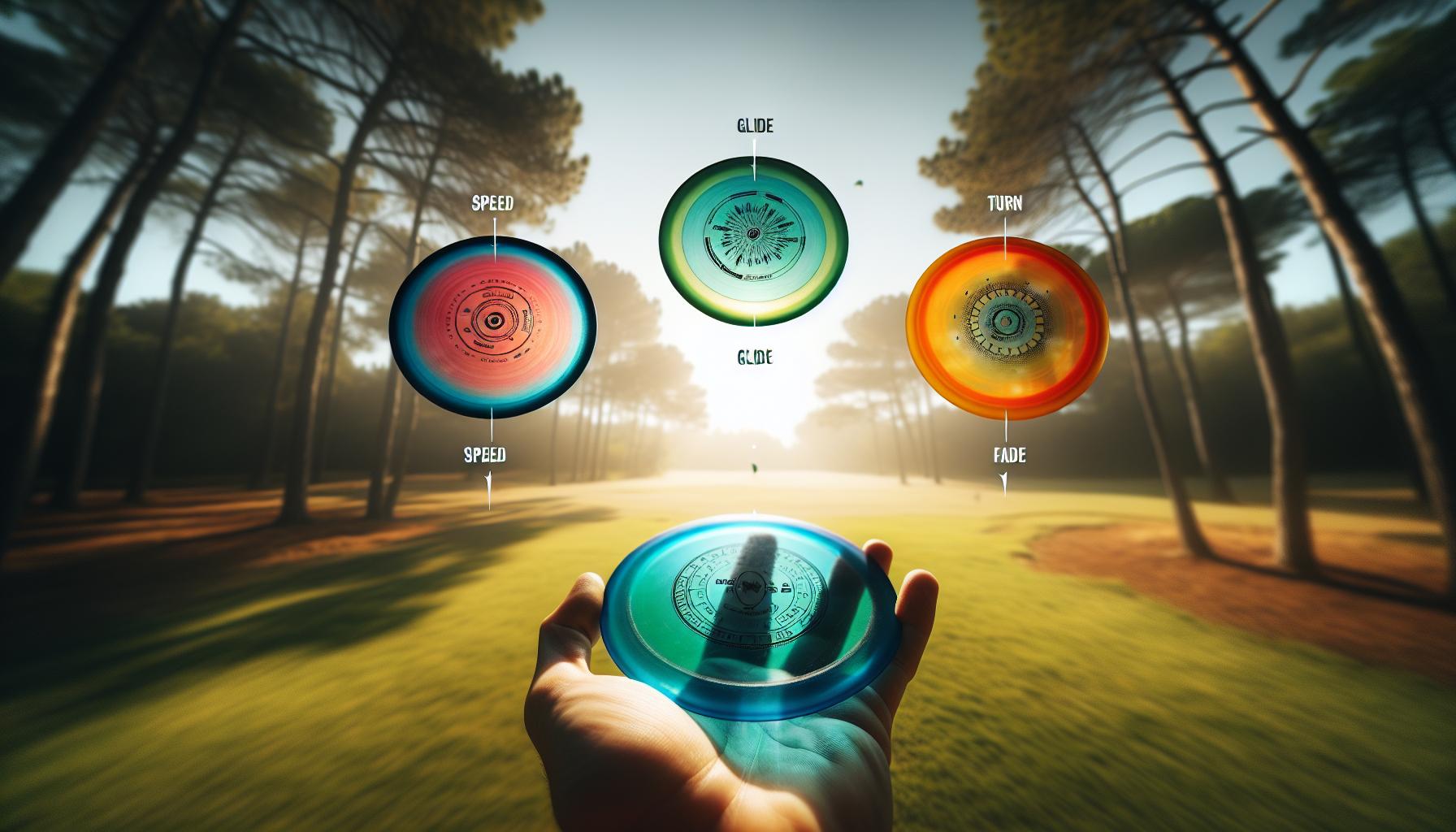
Understanding how speed, glide, turn, and fade work together is essential for mastering your disc golf game. These four metrics are critical aspects of disc flight ratings and each plays a vital role in how a disc behaves during its flight path. By tapping into these characteristics, you can make more informed decisions when selecting discs that complement your style and the demands of the course.
Speed refers to the disc’s ability to maintain velocity once it’s released. Discs are rated on a scale from 1 to 14, with higher numbers indicating a faster disc. A speed rating of 13 or 14 typically means the disc is designed for long throws and can handle substantial arm speed. If you’re still honing your techniques, a lower-speed disc (around 5-7) can offer greater control and allow you to focus on form rather than overpowering your throws.
Glide measures how well a disc stays in the air after it’s thrown. Glide ratings range from 1 to 7, with higher ratings adding more distance to your throws as the disc maintains its lift longer. For instance, a disc rated with a glide of 5 will stay aloft longer than one rated with a glide of 2. This is particularly advantageous on longer throws where you benefit from that additional airtime to cover more ground toward the basket. If you want to maximize your distance with minimal effort, look for discs with higher glide ratings.
Turn and fade are essential for understanding how a disc’s flight path will react to the throw and environment. A negative turn rating (e.g., -2 or -3) indicates that the disc will veer to the right (for a right-handed backhand throw) during the initial part of its flight. This can be beneficial for players seeking to execute long hyzer flips or glide-rounder shots. A positive turn rating (0 or above) means the disc will stabilize or even turn left. Fade measures the stability of the disc during the final portion of its flight, represented by a scale of 0 to 5, with higher ratings indicating a sharp left finish. A disc with a fade of 3 or 4 will forcefully respond to your throw, making it useful for reliable finishing lines, especially on challenging putts.
Mastering the combination of these ratings allows players to select discs that better fit their unique throwing techniques and the specific challenges of any given course. As you experiment with different discs, pay attention to their metrics and how they affect your throws. Not only will this increase your comfort and confidence on the course, but it will also deepen your overall appreciation for the sport. Using the interplay of speed, glide, turn, and fade will undoubtedly advance your skills and enhance your enjoyment of disc golf, making it a rewarding athletic pursuit.
How Numbers Affect Your Disc Selection
Understanding how to leverage the specific numbers associated with disc golf discs can truly enhance your game. Each disc has a set of flight ratings expressed as a four-digit number representing speed, glide, turn, and fade. This quartet of ratings is more than just numbers; they are indicators of how the disc will behave in flight, ultimately affecting your throwing strategy and success on the course.
When selecting a disc, it’s essential to consider your skill level and throwing style. For instance, if you’re a beginner, you might want to choose discs with lower speed ratings-around 5 to 7-coupled with higher glide ratings. This combination often results in greater control and distance, as the disc will stay airborne longer, giving you a better chance to practice your form. Conversely, experienced players can benefit from faster discs (speed ratings of 13 or higher) that require well-honed technique to unleash their full potential. A disc’s higher speed can lead to longer throws, but without the requisite skill, you might sacrifice accuracy.
Choosing Based on Flight Ratings
The turn and fade ratings are equally critical in your disc selection process. Discs with a negative turn rating (e.g., -2) are excellent for executing controlled hyzer flips, as they will initially veer to the right, then curve back for a left finish-ideal for right-handed backhand throws. Conversely, if you regularly encounter courses with tight fairways or tricky corners, consider discs with a fade rating above 3, as these will produce a more dependable finish line, helping you navigate challenging holes.
Experimenting with different discs according to their numerical ratings can help you better understand how each disc reacts under various conditions. For instance, a player might find that a disc with a high glide works well in wind conditions, allowing for longer throws despite adverse weather. In contrast, practicing with discs that have higher fade ratings can improve your ability to handle precise approaches and challenging putts.
| Flight Ratings | Effect |
|---|---|
| Speed (1-14) | Indicates how fast the disc can fly. Higher numbers are for advanced throws. |
| Glide (1-7) | Measures how long the disc stays in the air, with higher numbers providing more distance. |
| Turn (-5 to +1) | Affects initial flight direction; negative values curve right, positive stabilize left. |
| Fade (0-5) | Indicates the disc’s finishing left; higher numbers mean a sharper angle at the end of flight. |
Ultimately, tapping into these numbers allows for a more tailored disc selection aligned with your unique throwing style and the demands of specific courses. As you grow more familiar with how these ratings influence your performance, you’ll find that knowing your discs can lead to more strategic choices and improved outcomes on the course.
How to Choose the Right Disc for Your Skill Level
Selecting the right disc can feel overwhelming, especially with the diverse options available in disc golf. The key to making an informed choice lies in understanding your own skill level and how it aligns with various disc characteristics. An effective approach starts by assessing the interplay between your experience, technique, and the specific demands of the courses you frequent. For beginners, choosing discs designed for easy handling and stability will enhance your learning experience and promote confidence, while advanced players may seek discs that challenge their skills and boost performance.
For newcomers, it’s beneficial to focus on discs with lower speed ratings, typically between 5 and 7, paired with higher glide ratings, around 5 or more. This combination maximizes control and ameliorates distance, as these discs will remain airborne longer, allowing for more forgiving throws. For example, a disc like a Innova Leopard, with a speed of 6 and a glide of 5, is perfect for those still honing their technique. These discs are generally more forgiving of less-than-perfect throws, helping you build foundational skills without getting frustrated by extreme flight paths.
As players gain experience and develop their unique throwing styles, it’s essential to embrace the numbers that define more advanced discs. Skilled players might gravitate towards discs with speed ratings above 11, which require precision and technique to master. A disc like the Dynamic Discs Trespass, with a speed of 13, a glide of 5, a turn of -1, and a fade of 3, can add serious distance when thrown correctly but demands a degree of skill and understanding of flight mechanics. Utilizing discs with a negative turn rating also allows proficient players to execute specific shot types, like hyzer flips or long anhyzer throws, adding versatility to their game.
Ultimately, taking the time to experiment with different discs, while also observing their flight characteristics in relation to your own abilities, will help you choose discs that not only enhance your skills but also elevate your enjoyment of the sport. By aligning your disc selection with your skill level and personal preferences, you’ll find yourself developing a more strategic approach to your game and discovering how the right disc can greatly impact your performance on the course.
Reading Disc Golf Labels: A Step-by-Step Guide
Understanding how to interpret disc golf labels is crucial for every player, whether you’re just starting or looking to refine your game with advanced considerations. Each label comes loaded with numeric ratings that describe a disc’s performance characteristics, allowing players to select the appropriate disc for their skill level and throwing style. Knowing what each number represents can dramatically impact your disc selection and overall performance on the course.
The basic flight ratings typically consist of four key numbers: Speed, Glide, Turn, and Fade. Each number serves to inform your choices based on the type of shots you want to execute. Here’s a clearer breakdown:
Flight Ratings Explained
- Speed (1-14): This measures how fast a disc can travel. Higher speed discs (11-14) require power and technique but offer greater distance when thrown correctly.
- Glide (1-7): This indicates how much lift the disc generates while in the air. A higher glide rating means the disc will stay aloft longer, beneficial for controlled throws.
- Turn (-5 to 1): This represents how much the disc will turn to the right (for right-hand backhand throws) as it flies. A negative number (e.g., -3) indicates more turn, facilitating hyzer flips and longer anhyzer shots.
- Fade (0-5): This describes how much the disc will fade to the left at the end of its flight. A higher fade means a more abrupt finish, helpful for certain approach shots.
Step-by-Step Guide to Reading Labels
- Identify the Numbers: Look for the four numerical ratings usually printed on the disc. These are often preceded by the term “Flight Ratings.”
- Understand Your Needs: Think about the type of shots you want to execute. If you need a longer throw that stays in the air, focus on discs with high glide.
- Match Your Skill Level: Beginners may want to stick with lower-speed, higher-glide discs to build confidence, while advanced players can experiment with higher-speed options that necessitate greater throwing precision.
- Experiment and Adjust: Try various discs and see how each one flies based on its ratings. This experimentation is crucial, as real-world performance can differ from numerical expectations based on individual throwing mechanics.
By taking the time to familiarize yourself with what these ratings mean and how they apply to your game, you’ll be able to make more informed decisions about which discs can help you improve your skills and enhance your overall enjoyment of disc golf. It’s not just about playing; it’s about playing smart and strategically leveraging the numbers to elevate your performance on the course.
Comparing Discs: Analyzing Numbers and Performance
When it comes to selecting the right disc for your game, understanding how to compare different discs based on their numerical ratings is essential for optimizing performance on the course. Each disc’s unique combination of speed, glide, turn, and fade defines how it will behave during flight, allowing players to tailor their choices to their specific throwing styles and course conditions. By analyzing these numbers, you can more effectively predict how a disc will perform in various situations, ensuring that your disc selection aligns with your playing strategy.
To compare discs effectively, start by examining their flight ratings in detail. For instance, a disc with a high speed rating (such as 13 or 14) is designed for players with the strength to achieve long distances, whereas a lower speed disc (like 7-9) is more suitable for beginners or those looking for control over distance. Glide also plays a vital role; discs with a glide rating of 5 or higher will stay in the air longer, which is beneficial for those seeking precision in approach shots or putting.
Consider the turn and fade ratings as well when performing comparisons. A disc with a turn rating of -2 or -3 is generally favorable for advanced players seeking to execute anhyzer shots, while a disc that falls within a range of 0 to 1 will maintain a straighter flight path. Finally, look at the fade rating to determine how the disc will finish its flight – a disc with a higher fade rating will have a more abrupt left turn, making it ideal for finishing shots that navigate around obstacles.
When trying to select the best disc for yourself, it’s often helpful to create a comparison chart that outlines the key metrics for your options. By visualizing the different flight paths and behaviors associated with each disc, you can make informed decisions based on your desired shot types. Additionally, testing these discs in practice can help you develop a better understanding of how theoretical numbers translate into real-world performance. Embrace the nuances of these ratings, and you’ll empower yourself to enhance your skills and enjoyment within the disc golf community.
Advanced Strategies: Using Numbers to Improve Your Game
Understanding the numerical flight ratings of your discs can be the key to elevating your game and achieving the performance you desire on the course. By leveraging these numbers, players can adopt advanced strategies that align their disc selection with specific course layouts, weather conditions, and personal throwing styles. The more you familiarize yourself with the metrics of speed, glide, turn, and fade, the more effectively you can dissect each shot’s potential and make informed strategic decisions.
One essential strategy is to track and analyze your throws. Keep a log of your disc selections paired with the various conditions under which you experienced different results. For instance, did you use a high-speed disc and achieve longer distance under calm conditions, but struggle with accuracy in windy situations? By recognizing patterns, you can refine your disc choices based on the course and weather. Consider creating a simple chart or spreadsheet that includes the date, disc used, conditions, and performance observations. Over time, this will paint a clearer picture of which discs perform best for you under various circumstances.
Another crucial aspect is experimenting with different disc types during practice sessions. Choose discs that cover a range of flight ratings-from overstable to understable-and take the time to throw them in similar conditions. Assess how each disc responds to your throwing mechanics. For example, when attempting a hyzer flip, you could test both a stable mid-range disc and an understable driver to see which provides the desired flight path and distance. This hands-on experience is invaluable and helps you develop a feel for which numbers translate to which flight behaviors.
Moreover, don’t overlook the importance of complementing your arsenal with specialized discs tailored for particular scenarios. Armed with your knowledge of flight ratings, you can select the perfect disc for specific situations-be it a long, straight drive or a finesse approach shot. For those rainy days or during robust winds, you might opt for more stable discs, while the calm sunny days could be ideal for showcasing more understable picks. Organizing your bags into categories based on how you plan to use each disc could be your secret weapon.
Incorporating this strategic mindset into your practice not only enhances your understanding of disc flight dynamics but also builds confidence. Just as athletes in other sports study their performance metrics, disc golfers too can benefit from this analytical approach-transforming data into actionable strategies that take your game to the next level. Embrace the analytical fun of disc golf numbers, and you’ll find that the path to improvement is just as rewarding as the game itself.
Expert Insights: Pro Players Share Their Tips
One key to mastering disc golf lies in understanding the perspective shared by seasoned professionals. Many pro players emphasize the importance of evaluating and adapting your disc choices based on the conditions you encounter. They often suggest keeping a diversified bag of discs that caters to a variety of flight ratings and scenarios. For instance, a player might recommend having a stable disc for windy conditions while carrying an understable disc for more controlled shots on calm days.
Embrace the Feel and Feedback
Veteran players also stress the importance of feel when selecting discs. This involves knowing how a particular disc responds to your throwing mechanics. Prodigy disc golfer Kevin Jones emphasizes that players should aim to throw each disc at least a few times in similar conditions to truly gauge its performance, focusing not just on the numbers but on how the disc feels throughout the throw. This sensitivity to feedback can significantly enhance confidence and encourage experimentation with different throws.
Practice with Purpose
Another invaluable insight comes from the practice routines of elite players. They often advise incorporating drills that focus on specific flight ratings to understand how different discs behave. One such drill could involve practicing hyzer flips with both stable and understable discs to see firsthand how each reacts to similar throwing techniques. Paul McBeth, one of the most successful players in the sport, suggests consistency is key; by dedicating time to specific skills involving various discs, players can better manage their performance on different courses.
Mastering Course Strategy
Lastly, many professionals highlight the significance of adapting your disc selection based on the course layout. Analyzing the course can give you a sense of which discs you’ll need for specific holes. Players often carry a few key discs to tailor their game to the course’s demands. For example, they might choose a disc with a higher glide rating for long, open fairways while opting for discs with a more stable flight for tight placements through trees. Understanding the role of each number on your disc can illuminate the best choices, ultimately enhancing your competitive edge on the course.
Common Misconceptions About Disc Golf Numbers
Understanding the numerical ratings of disc golf discs can be a source of confusion for many players, both new and seasoned. One common misconception is that higher numbers always equate to better performance or greater distance. However, it’s essential to realize that these numbers represent specific characteristics of each disc rather than a direct scale of quality. The flight numbers-speed, glide, turn, and fade-work together to define how a disc behaves in the air, and knowing how to interpret them correctly is crucial for selecting the right disc for your game.
Many players mistakenly believe that more stable discs are universally superior, especially in all conditions. In truth, “stability” is context-dependent. A stable disc is advantageous in windy conditions as it resists flipping over, while an understable disc can offer more control for finesse shots or when throwing with less power. Recognizing the right time to utilize each type is key to success on the course. Additionally, the perception that disc flight ratings are static is another common fallacy; discs can break in over time, meaning their flight characteristics might change as they wear, making it critical to reevaluate your disc selections periodically.
Moreover, some players assume that any disc with a high speed rating will automatically achieve greater distances. While speed contributes to potential distance, other factors like form, technique, and the disc’s glide play equally vital roles. A beginner might find better results with a lower-speed disc that has a significant glide, which allows for more margin of error in their throwing style. Understanding how each number works in conjunction with others can enhance performance, thus merging the craft of throwing with the science of flight.
Lastly, the numeric ratings can seem overwhelming, leading some players to overly rely on them instead of focusing on practice and feel. Experienced players highlight the importance of integrating these numbers with personal feedback and real-world experience. Choosing a disc isn’t just about matching numbers; it involves developing an intuitive sense of how each disc responds to different throws and conditions. As players continue to practice and experiment, they discover that nuance often trumps numbers in achieving consistency and improving their overall game.
Q&A
Q: What do the numbers on a disc golf disc mean?
A: The numbers on a disc golf disc represent four key flight characteristics: Speed, Glide, Turn, and Fade. Understanding these numbers helps players choose the right disc for their throwing style and course conditions. Each number influences how the disc behaves in flight.
Q: How does disc stability affect my game?
A: Disc stability affects how the disc performs during flights. Overstable discs tend to finish left (for right-hand backhand throws), while understable discs finish right. Knowing your disc’s stability can enhance your accuracy and help in various course situations, enabling you to manage your throws effectively.
Q: When should I use a disc with higher speed ratings?
A: Discs with higher speed ratings (typically 13-15) are best used for long-distance drives. Players with a stronger arm can handle these speedier discs, providing a greater distance potential. However, beginners may find them harder to control. It’s best to choose speed ratings according to your skill level and throwing power.
Q: What is the difference between glide and fade?
A: Glide indicates how well a disc maintains its height during flight, while fade refers to the disc’s hook at the end of its flight. A disc with high glide will stay airborne longer, whereas one with a strong fade will drop sharply and curve at the end, affecting your approach shots and putts.
Q: How can I adjust my disc selection based on weather conditions?
A: Adjust your disc selection based on wind and rain. In strong winds, choose more stable discs that can handle gusts. For rainy or wet conditions, opt for discs with better grip and stability to maintain control. Understanding weather conditions allows you to strategize your throws effectively.
Q: Why is understanding disc numbers important for beginners?
A: For beginners, understanding disc numbers is crucial for making informed choices. Knowing how speed, glide, turn, and fade affect flight can help new players select the right discs for their skill level, leading to improved performance and enjoyment while playing.
Q: How can advanced players leverage disc flight numbers?
A: Advanced players can leverage disc flight numbers to tailor their game strategies. By understanding how different numbers interact, players can select discs that complement their throwing mechanics and course strategies, allowing for greater precision and adaptability during competition.
Q: What should I consider when comparing discs and their numbers?
A: When comparing discs, consider their overall balance of speed, glide, turn, and fade. Look for how each disc’s characteristics fit your throwing style and the course layout. Analyzing these numbers enhances your ability to make strategic choices and handle various throwing situations effectively.
Insights and Conclusions
By now, you should feel more confident in decoding the numbers on your discs and understanding how they influence your game. Remember, mastering disc golf is about practice, so don’t hesitate to experiment with different discs to see how their unique flight characteristics affect your throws. For a deeper dive, check out our guides on “Essential Throwing Techniques” and “Choosing the Right Discs for Your Style.”
Don’t miss out! Sign up for our newsletter to get the latest tips, tricks, and community stories delivered straight to your inbox. Have questions or want to share your own disc golf journey? Join the conversation in the comments below! The world of disc golf is continually evolving, and by staying engaged, you’ll keep your skills sharp and your passion alive. Keep throwing, keep learning, and let’s elevate our game together!