
Doubles play in disc golf is not just a fun twist on the sport; it’s a strategy-rich format that can deepen your appreciation for teamwork and skill. Whether you’re a seasoned pro or a newcomer, understanding the various formats, rules, and strategies inherent in doubles can enhance your game immensely. The thrill of collaborating with a partner, making decisions on when to take risks, and learning from each other’s strengths opens new avenues for improvement and enjoyment on the course. As you dive into the nuances of doubles play, you’ll discover how strong communication and strategic thinking can significantly impact your score. Get ready to elevate your game and experience disc golf in a whole new light!
Doubles Format Basics: Understanding the Fundamentals
In the world of disc golf, the doubles format offers a thrilling blend of teamwork and strategy, making it both accessible for newcomers and competitively engaging for seasoned players. Understanding the fundamentals of this format is essential for players looking to maximize their skills and enjoyment on the course. Doubles play typically involves teams of two players each, with each member contributing to the team’s overall score. This format often brings an added layer of excitement, as each player must not only focus on their own performance but also synergize with their partner’s strengths and styles.
The basic rule in a traditional doubles game requires that both players on a team throw their discs from the same lie after the first throw is taken. Teams take turns selecting which of their two throws to use for the next shot, offering opportunities to strategize based on the positioning of their discs relative to the basket and the course layout. Scoring is straightforward: it includes the total number of throws made by the team on that hole, with any penalty strokes added for infractions, creating an inherent pressure to minimize errors while maximizing optimal shots.
In doubles play, communication between partners is key. Vocalizing strategies, discussing disc selections, and understanding each other’s throwing preferences can greatly enhance the team dynamic. It’s vital for both players to be attuned to each other’s capabilities-this alignment can transform potential weaknesses into strengths. For example, a player who excels at long drives can set up the play, while their partner, who may be better at putting, can finish the hole with precision. This interplay not only fosters camaraderie but also harnesses the full potential of a team’s combined skills, propelling them toward victory in competitions or casual play alike.
By delving into the doubles format’s basics, players can develop a foundation that encourages teamwork and enhances strategic thinking, creating a fulfilling experience on the course. As the spirit of disc golf thrives in collaboration and sportmanship, mastering these fundamentals is an essential step for anyone looking to make the most of doubles play.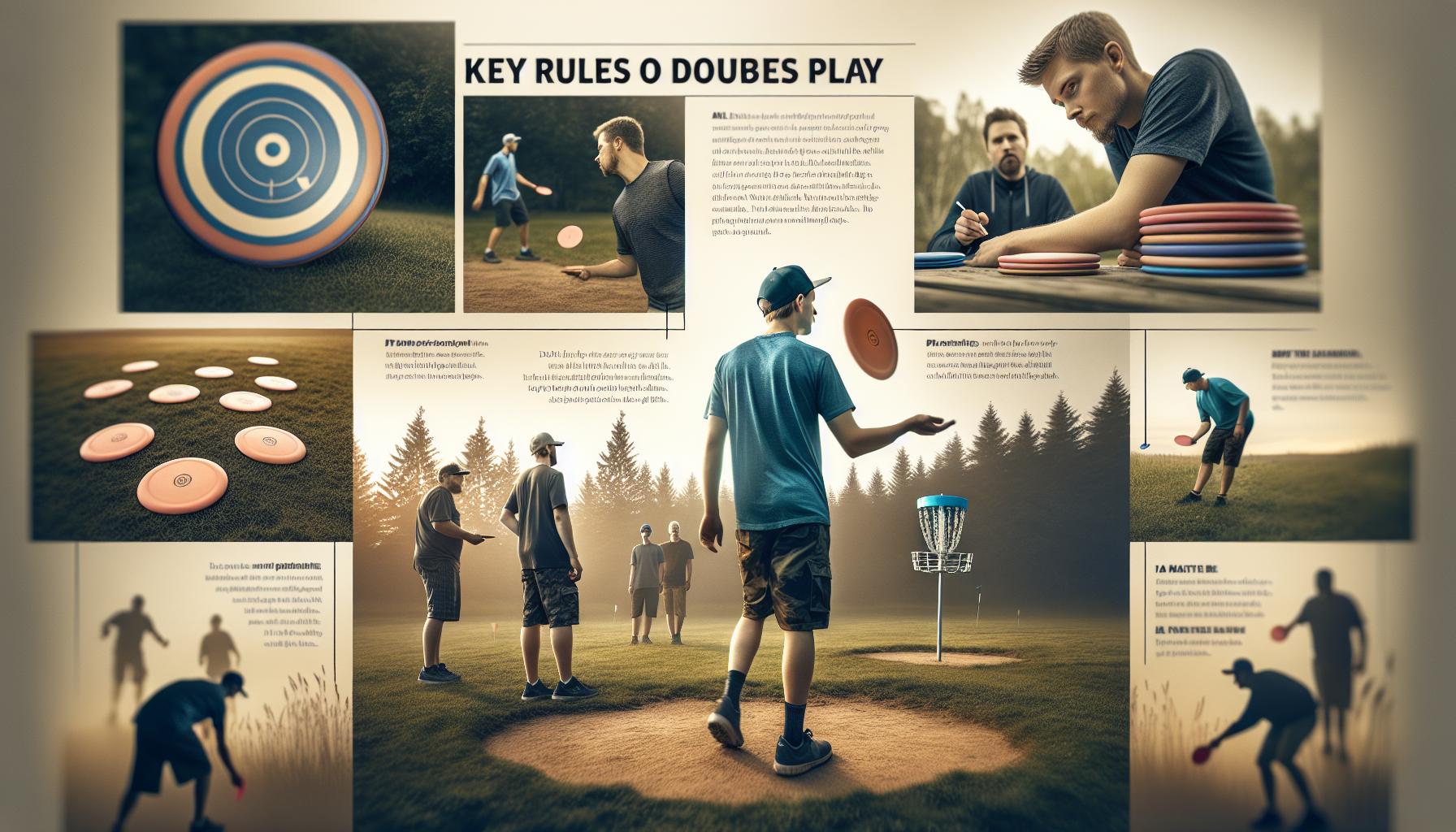
Key Rules of Doubles Play in Disc Golf
In doubles disc golf, understanding the key rules is essential not just for competitive play, but also for fostering a spirit of teamwork and camaraderie. Doubles matches typically feature two-player teams, and the scoring system emphasizes collaboration with a unique set of guidelines designed to enhance the experience on the course. One of the initial and most critical rules is that after the opening throw, both players on a team will throw from the same lie for all subsequent shots. This means that strategy becomes vital, as teams must decide which throw to prioritize based on position, distance, and terrain challenges.
Each team alternates selecting which of their disc throws to proceed from, allowing for dynamic decision-making that incorporates both players’ strengths. For instance, if one player has excelled in delivering a powerful drive while the other is skilled in precision putting, teams can develop strategies that leverage these abilities effectively. Additionally, to keep the pressure at bay, understanding scoring is straightforward: you tally the total number of throws used, incorporating any penalties if they occur. This process elevates the stakes, as every decision and each throw counts significantly toward the team’s final score.
Another crucial aspect of doubles play is the importance of communication. Teams that discuss their strategies openly, share insights on disc selection, and understand each other’s playstyles often fare better on the course. This open line of communication not only builds trust but also encourages players to provide constructive feedback, which can be pivotal during tense moments in a match. It’s also advisable for partners to establish clear signals or phrases to indicate preferences or strategies quickly, keeping discussions succinct and relevant.
Lastly, it’s worth acknowledging the one foundation rule that binds everyone together in doubles play-sportsmanship. Whether in a friendly match or a tournament context, maintaining a respectful attitude towards one’s partner and opponents can greatly enhance the experience for everyone involved. The blend of tactical gameplay, mutual respect, and the joy of shared victories (or defeats) truly embodies the spirit of doubles disc golf, making it a remarkable community-driven sport.
Optimal Team Strategies for Winning Doubles Matches
In doubles disc golf, the synergy between teammates can dramatically influence performance, making optimal strategies essential for prevailing on the course. To start, understanding each player’s strengths and weaknesses is crucial. Teams should take time to evaluate their disc skills-whether driving, approaching, or putting-and decide who excels where. For instance, if one teammate has a powerful drive while the other excels in accuracy with shorter throws or putting, they can structure their game around leveraging these strengths.
One efficient strategy is to adopt a “high-low” approach, where one player plays aggressively from the tee while the other manages risk, particularly on tricky holes. This method allows the aggressive player to take risks that might yield better positioning, while the more conservative player can ensure the team stays on course if risk-taking doesn’t pan out. In situations where one teammate is in trouble after a bad throw, the other can then provide the stability the team needs to recover effectively.
Communication is an equally vital component of successful doubles play. It is important for teams to establish a quick, effective dialogue about strategy and disc selection before each throw. Simple phrases or signals can streamline the decision-making process and reduce second-guessing. For example, a teammate can signal their disc choice or indicate who will take the next throw, allowing for a smoother flow of play. This layer of communication helps alleviate pressure and build a cohesive strategy that resonates with both players, ultimately leading to a more enjoyable and successful experience.
Finally, practicing together is key to refining these strategies. By simulating match conditions during practice rounds, teams can adjust their tactics based on specific course challenges and hone their collaborative skills. Adjustments might include course layout analysis, such as identifying which angles or terrain types each team member feels more comfortable with, and determining if certain discs work better for each player under given conditions. In doing so, doubles teams can enhance their effectiveness, foster trust, and approach their tournaments with confidence. Ultimately, the combination of strategic planning, open communication, and dedicated practice forms the backbone of a formidable doubles team in disc golf.
Communication Techniques for Successful Doubles Teams
In the high-stakes world of doubles disc golf, communication can often be the deciding factor between victory and defeat. The ability to convey thoughts, strategies, and adjustments effectively can enhance teamwork, allowing both players to play to their strengths and compensate for weaknesses. Open lines of communication encourage confidence and improve overall performance, making it essential for teams to establish well-defined techniques that facilitate seamless dialogue on the course.
A critical aspect of successful communication is the use of pre-established signals or coded phrases. This strategy can be particularly effective when navigating challenging decisions in the heat of gameplay. For example, one player might use a simple hand gesture to indicate their disc choice-whether opting for a driver or a putter-without verbalizing it, allowing for quick adjustments based on the situation. Similarly, players can agree to a set of phrases that specify their intended strategies, such as “Play safe” for conservative plays or “Go for it” when they want to take risks, helping streamline decision-making under pressure.
Regular practice sessions can also serve as invaluable opportunities to refine communication techniques. By simulating tournament conditions and experimenting with various scenarios, teams can identify which communication methods work best for them. During these practice rounds, discussing disc choices and shot strategies in real-time helps create a responsive communication system that enhances synergy on the course.
Another beneficial technique involves active listening during gameplay. Acknowledging and reaffirming each teammate’s suggestions not only fosters respect but ensures that both players feel valued. For instance, rather than dismissing a suggestion outright, a player might say, “I like that idea, but what about this approach instead?” This constructive dialogue can lead to greater cooperation and open up opportunities for surprising tactics.
By incorporating these communication techniques, doubles teams can create a dynamic that maximizes their performance. Enhanced understanding between teammates can transform the game experience, solidifying a foundation of trust and camaraderie that is essential in competitive disc golf. In turn, this vibrant communication environment promotes a thriving community where players can continually grow and improve together.
Selecting the Right Equipment for Doubles Play
Choosing the right equipment is essential for success in doubles disc golf, as it can greatly affect your performance and strategy on the course. With both players working together to achieve the best score, selecting discs that complement each other’s strengths is crucial. Every player’s throwing style and skills can vary significantly; thus, having a well-rounded bag of discs leads to a more cohesive team dynamic.
When it comes to selecting discs for doubles play, consider the following categories that can enhance your overall game:
Driver Selection
- Distance Drivers: Opt for a few high-speed distance drivers if you both excel in power throws. These discs are ideal for long fairway shots and can provide that necessary edge on longer holes.
- Control Drivers: If accuracy is more your focus, especially in tight fairways, choose control drivers that provide better stability and predictability.
Midrange Discs
Midranges are incredibly versatile and should be a staple in your bag. Having a couple of different midrange discs can help with approach shots and navigating technical holes. They allow for a variety of throwing techniques, making it easier to adapt to course conditions.
Putter Options
Having the right putters is fundamental in doubles play since both players will need to be confident in their putting to secure vital points. It’s often helpful to use one putter for throwing approaches and another solely for putting, as this allows your team to cover all bases on the green.
Bag Organization and Carry
Consider how you will carry and organize your discs. A functional disc bag that accommodates quick access to your equipment will make communication and coordination easier during play. Furthermore, having a separate pocket for each team member’s specialty discs can ensure there’s no confusion when it’s time to throw.
Ultimately, selecting the right equipment not only involves picking the right discs but also understanding how to effectively work together as a team. Take the time to practice with your partner using the same set of discs, focusing on how each disc performs in various scenarios. This familiarity will enhance how you both play and strategize together during actual rounds, allowing you to make the most of your skills and equipment.
Analyzing Course Strategies for Doubles Competitions
Understanding the course layout and how it influences your strategy can make all the difference in a doubles disc golf match. Unlike singles play, where individual performance reigns supreme, doubles require synergy and coordinated tactics. Knowing which holes favor your strengths and where to manage risks is essential for creating an effective game plan.
Evaluating the course starts with analyzing each hole’s design. For instance, if a hole has a tight fairway with a low ceiling, it may favor players who excel in accuracy over distance. Conversely, long, open holes provide opportunities for players who can reliably launch powerful drives. Compiling this information about each hole allows teams to strategize which player is best suited to tee off or handle crucial shots. Establishing a clear approach based on past performances on specific hole types can significantly enhance your game.
Shot Selection and Risk Management
In doubles, the combination of shots played by each partner can significantly impact the team’s score. For instance, one player might take a safer, controlled shot to position themselves well, while the other goes for a riskier throw that could yield a more significant reward. This strategy can effectively manage the pressure of high-stakes shots. Teams should be vocal about their shot preferences and engage in discussions about whether to try for an aggressive play or to play it safe. Knowing each partner’s comfort level with various discs and shots can streamline decision-making and amplify confidence during the round.
Adapting to Course Conditions
Wind and weather conditions can drastically shift the course dynamics. A calm day might allow for aggressive throws, while high winds necessitate more controlled shots. Teams must communicate about how they plan to adapt to these elements. This includes discussing adjustments in disc selection based on wind directions or humidity levels affecting flight patterns. A wind tunnel could turn a moderate throw into an overthrown shot; therefore, adjustments must be evaluated based on immediate observation.
Finally, practice rounds on the course prior to the competition are invaluable. They not only allow teams to familiarize themselves with the terrain but also to discuss different strategies tailored to each hole’s unique challenges. This preparation will pay off when it counts, giving players the confidence they need to make strategic decisions even under pressure during actual competitions. In developing a united front for navigating course challenges, you solidify your chances of success in any doubles event.
Common Mistakes to Avoid in Doubles Disc Golf
In the dynamic world of doubles disc golf, even seasoned players can fall prey to various pitfalls that could hinder their performance. Missteps in teamwork, communication, and strategy can quickly turn a promising game into a frustrating experience. Recognizing and addressing these common mistakes is crucial for mastering the art of doubles play and elevating your team’s success.
One prevalent blunder is the lack of communication between partners. Effective dialogue is essential in doubles, as players need to voice their strengths, preferences, and play styles to align their strategies. Failing to discuss individual playing styles can lead to disagreements on shot selection or roles during crucial moments, such as deciding who should approach the basket on a challenging hole. To avoid this, establish clear communication norms before the game and adapt as the match progresses. Discussing shot preferences and potential risks openly can enhance teamwork and boost confidence.
Another mistake teams often make is underestimating the importance of utilizing each player’s strengths. It’s tempting to go with a well-worn strategy, but this can lead to missed opportunities. For instance, if one partner excels at long drives while the other masters tricky putts, teams should leverage these strengths accordingly. Rather than having both players tee off from areas where they excel, consider taking calculated risks and playing to each partner’s advantages to optimize scoring potential.
Additionally, ignoring the course conditions can lead to disoriented play. Whether dealing with wind changes, uneven terrain, or obstacles, relying solely on personal strengths without adapting to the environment often backfires. Instead, take a moment to evaluate how the conditions affect your throws and adjust your strategy accordingly. For example, if the wind picks up, it might be wise to opt for more stable discs or to modify your throw technique altogether.
Finally, playing without a clear tactical game plan can be detrimental. It’s easy to get caught up in the excitement of the game and forget to stick to the agreed-upon strategies. A well-thought-out plan includes not just what shots to take but also how to respond to changes during play. Stay adaptable and be willing to revisit your strategy as needed. Remember, the goal of doubles play is to collaborate effectively and enjoy the game while striving for a win. By avoiding these common mistakes, you can enhance your performance, deepen your bond with your partner, and make every round a rewarding experience.
Psychological Aspects of Playing Doubles
The psychological dynamics of playing doubles in disc golf can often be as crucial as the physical skills involved. Understanding how mental strategies influence performance can significantly enhance your game, whether you’re a newcomer or a seasoned competitor. The interplay between partners creates a unique mental landscape that demands not only skill but also emotional intelligence, support, and synergy.
Building a strong psychological partnership is key. Setting a positive tone from the outset can foster an environment where both players feel comfortable and confident. This includes celebrating successes together, no matter how small, and providing constructive feedback rather than criticism. By actively affirming each other during play, you can maintain morale even when the game doesn’t go as planned. It’s important to remember that every player can have an off-day; maintaining composure under pressure often differentiates winning teams from those that falter.
Moreover, the importance of mental preparation cannot be overstated. Engaging in visualization techniques can greatly enhance focus and performance. Before the round, take a moment to visualize successful shots and team dynamics. Imagining the perfect drive or sink can reinforce a positive mindset and reduce anxiety. Additionally, developing a mental checklist or routine can help instill confidence. For example, before each hole, remind yourself of a successful strategy you executed in the past or focus on what each partner brings to the table.
Team Roles and Whether to Share Pressure can also play a crucial part in how psychologically effective your partnership can be. Understanding and openly discussing each player’s strengths can help in assigning roles that align with personal comfort levels. For instance, if one player is better suited for aggressive plays while another thrives in a more methodical approach, playing to those strengths can alleviate pressure and promote a sense of fluidity. Ultimately, recognizing that the psychological landscape can shift from hole to hole-due to performance or even external factors like weather-can aid in adaptive teamwork, ensuring that your partnership remains flexible and resilient.
Emphasizing teamwork through communication-both verbal and non-verbal-is vital for creating psychological cohesion. Regularly checking in with each other about how you feel on certain shots or strategizing collaboratively allows for a flow of ideas that can inspire confidence and innovation, leading to a more cohesive play style. Working together not only enhances performance but also deepens the connection between partners, making the game more enjoyable and fulfilling.
By understanding and harnessing the psychological aspects of doubles play, teams can not only improve their chances of winning but also cultivate a deeper camaraderie that enriches the entire disc golf experience.
Advanced Doubles Tactics for Competitive Play
Navigating the competitive landscape of doubles disc golf is not merely about throwing discs; it involves strategic planning, synergy with your partner, and adapting to the course dynamics. Advanced tactics can significantly enhance your team’s performance, transforming a good game into a winning one. Start by recognizing that each player brings unique skills to the table. Instead of merely relying on personal strengths, effective teams blend these abilities into cohesive strategies. For example, if one partner excels at driving and the other at putting, a common tactic is to allow the stronger driver to tee off, laying the groundwork for the shot while the putting specialist prepares for the crucial sink.
Optimizing Course Management
Understanding the course is equally important in competitive play. Spend time assessing which holes require aggression and which demand a more conservative approach. It’s beneficial to map out a plan for each hole prior to your round. For instance, on shorter pars that are reachable, both players can take aggressive shots, while on longer or more technical holes, you might decide that one player goes for the riskier throw while the other plays it safe. Creating a strategy based on the fundamental strengths of the course and your playing styles can lead to more consistent performances and fewer mistakes.
Leveraging Communication
Effective communication is a cornerstone of advanced tactics. Open dialogues before and during the game about shot decisions can create a better understanding of expectations. Use hand signals or established verbal cues to indicate confidence in a shot or to suggest alternatives without disrupting flow. An example might be using a thumbs-up to signal agreement on a shot selection or a particular play. This non-verbal communication can help maintain rhythm and minimize distractions.
Adapting on the Fly
Finally, embrace flexibility. Conditions on the day of play, such as wind patterns or course wear, can shift rapidly and may require on-the-fly adjustments to your strategies. Being attuned to your partner’s mental state and performance can also dictate strategic changes. If one of you is struggling, switching roles-for example, allowing the stronger partner to handle the more challenging shots-can lift morale and refocus team efforts.
Ultimately, the most successful doubles teams foster not just skills, but an atmosphere of trust, adaptability, and shared goals. These principles convert talent into teamwork, elevating the overall experience of the game while drastically improving your odds of success.
Inspiring Doubles Highlights from Professional Tournaments
The thrill of the doubles format in disc golf is showcased perfectly during professional tournaments, where strategy and teamwork collide to create unforgettable moments. One highlight that often stands out is the incredible synergy displayed by top teams, demonstrating how complementary skills can elevate the game. For instance, during the 2023 Disc Golf Pro Tour, the dynamic duo of Paul McBeth and teammates unleashed breathtaking drives followed by deft putting, showcasing how effective communication and pre-planned strategies can lead to jaw-dropping plays. Their ability to adapt to course conditions while maintaining a synchronized approach exemplified the essence of doubles play.
Within these competitions, spectators often witness nail-biting finishes where every throw counts. A memorable example occurred in the 2024 PDGA Doubles Championship, where a last-hole scramble saw one team secure victory with a clutch approach shot followed by a putt made under immense pressure. This moment not only highlighted the importance of mental fortitude but also illustrated how teams that trust and support each other can overcome any obstacle. Each player’s role came into sharp focus, with one daring to attempt a risky play while their partner stayed poised to capitalize on whatever the outcome was-showing the true power of teamwork.
In addition to showcasing skill and strategy, professional tournaments pave the way for community engagement. The camaraderie among players during these events encourages spectators to embrace the sport, prompting local clubs to host their own doubles events inspired by what they see. This grassroots movement not only helps grow the sport but also fosters a deeper appreciation for the nuances of the game, such as selecting the right equipment and honing communication techniques, crucial for any aspiring doubles team.
Ultimately, the inspiring highlights from these professional tournaments serve to motivate both newcomers and seasoned players alike. They remind us that disc golf doubles is more than just a game; it’s a vibrant community experience that thrives on collaboration, mutual respect, and shared passion. Whether you’re cheering from the sidelines or participating on the course, the heart and spirit of doubles play create lasting memories that resonate far beyond the final score.
How to Create a Thriving Doubles Community
Creating a vibrant and thriving doubles community in disc golf is an endeavor that combines social interaction with the exhilaration of competition. At its core, community building revolves around fostering connections among players, whether they are seasoned competitors or newcomers eager to learn the ropes. One of the most effective ways to start is by organizing regular doubles events that are accessible to players of all skill levels. This ensures a mix of experienced and novice players, which can enhance learning and uphold a welcoming atmosphere.
To make these events successful, it’s essential to establish a clear format and consistent schedule. Utilize local parks or disc golf courses to host weekly or monthly doubles rounds. Advertise these events through social media platforms and local disc golf organizations to attract a steady stream of participants. Incorporating different formats such as best score or best throw can keep the experiences fresh and exciting, drawing in both casual players and those looking to improve their skills.
Moreover, creating a supportive environment extends beyond the course. Consider setting up a dedicated online forum or social media group where players can share tips, discuss strategies, and arrange practice sessions. Regular meetups, whether virtual or in-person, can cultivate friendships and foster teamwork among players who may otherwise compete alone. Highlight the importance of communication during gameplay, as a solid understanding between partners can dramatically improve performance and enjoyment.
Additionally, inspiring stories from local disc golf tournaments can motivate members and attract newcomers. Celebrate players’ achievements, whether large or small, and highlight their journeys in the sport. You can host guest speakers at community gatherings or share video highlights of standout doubles matches to spark enthusiasm. Keep the competitive spirit alive while enjoying the camaraderie that doubles play inherently promotes; this balance is critical to establishing a strong foundation for any community.
Ultimately, a thriving doubles community is characterized by inclusivity, engagement, and a shared passion for the game. Encourage players to invite friends, participate in local leagues, and attend tournaments together. With each event and interaction, you foster an environment where both competition and fellowship flourish, ensuring that everyone leaves the course feeling inspired to return.
Tips for Organizing Your Own Doubles Events
Organizing your own doubles events in disc golf can be an immensely rewarding experience, bringing together players of varying skill levels and fostering a sense of community around the sport. Start by selecting a suitable location that accommodates all players comfortably; local parks or dedicated disc golf courses work best, as they provide the necessary infrastructure for gameplay. Aim to create an inviting atmosphere that encourages both seasoned competitors and newcomers, ensuring everyone feels welcome to participate and improve their skills.
Next, establishing a clear format is essential. Different formats, such as best score (where each player plays individually and the lowest score is counted) and best throw (where teams play together and select the best shot to continue from), can cater to different levels of experience and keep the gameplay exciting. Create a regular schedule-weekly or monthly events are a great start-and promote them via social media and community boards. This consistent engagement not only attracts participants but also builds anticipation for upcoming rounds.
To enhance communication and camaraderie during your events, consider forming dedicated online groups or message boards where players can discuss strategies, share tips, and coordinate practice sessions. This can be pivotal in creating bonds among participants, as they can support each other both on and off the course. Moreover, encourage participants to share their experiences or successes, creating a lively community narrative that new players can connect with.
Lastly, it’s crucial to celebrate the achievements of players, no matter how small. Highlight standout performances, whether in informal gatherings or through social media shout-outs. This positive reinforcement helps maintain high morale and motivates players to return. By weaving these elements together, your doubles events can thrive, creating an ongoing cycle of engagement, improvement, and enjoyment in the sport of disc golf.
Frequently asked questions
Q: What are the key strategies for success in doubles format play?
A: Key strategies include effective communication with your partner, understanding each player’s strengths, and making strategic decisions based on course layout. Focusing on consistent play and setting clear goals can enhance your team’s performance in competitive matches.
Q: How can teams effectively communicate during doubles matches?
A: Effective communication in doubles can be achieved through pre-established signals for plays and discussing strategies between throws. Regularly checking in with each other ensures both players are aligned in their approach and adjustments during the game.
Q: What should players look for when selecting the right equipment for doubles play?
A: Players should choose discs that complement each other’s throwing styles. Consider factors like disc stability, weight, and comfort. It’s also beneficial to have a range of discs available for different shot requirements based on the course and conditions.
Q: What common mistakes should teams avoid in doubles disc golf?
A: Teams should avoid lack of communication, being overly aggressive, and neglecting their partner’s input. Focusing too much on individual play rather than team strategies can hinder overall performance. It’s crucial to maintain a supportive and cohesive team dynamic.
Q: How does the psychological aspect of playing doubles impact performance?
A: The psychological aspect plays a vital role; players must manage pressure and maintain focus throughout the game. Building a positive team atmosphere and supporting one another can enhance confidence and foster better decision-making under stress.
Q: What tactical considerations should teams analyze for doubles competitions?
A: Teams should analyze course layouts for obstacles and wind conditions, evaluate opponents’ playing styles, and adjust strategies accordingly. Gathering insights from previous rounds can help in planning effective gameplay for maximum advantage in future matches.
Q: How can players inspire each other in a doubles setting?
A: Players can inspire each other by celebrating small successes, offering constructive feedback, and maintaining a positive attitude. Sharing personal stories and previous experiences can boost morale and strengthen the bond necessary for teamwork in doubles.
Q: What are some advanced tactics for enhancing doubles play in disc golf?
A: Advanced tactics include setting positional plays, where one player sets up strategic shots to aid the other, and practicing specific scenarios that teams might face. Analyzing opponent patterns and adapting plays in real-time can significantly elevate a team’s competitive edge.
Wrapping Up
As we wrap up our exploration of the “Doubles Format: Rules & Playing Strategy,” remember that mastering these techniques can significantly enhance your game and team dynamics. Whether you’re a novice eager to start or a seasoned player looking to refine your skills, implementing these strategies will elevate your performance on the course. Don’t miss out on taking your game to the next level-dive into our related guides on Disc Flight Characteristics and Advanced Throwing Mechanics to build a solid foundation and develop your skills even further!
Before you go, share your thoughts in the comments below or check out our Disc Golf Equipment Comparison to ensure you have the best gear for your matches. Join our community by signing up for our newsletter for the latest tips, tricks, and updates in the world of disc golf. Your journey to becoming a doubles champion starts now-leverage these strategies and watch your game transform!
Get our latest guides, news, and insights highlighted in your Google Search & AI Overviews.