Did you know that grip pressure can dramatically affect your performance in sports and everyday activities? Whether you’re launching a disc in a competitive round of disc golf, scaling a rock wall, or simply trying to open a jar, finding your ideal grip pressure is crucial. Too much grip can lead to tension and fatigue, while too little can result in a lack of control. This article will guide you through the nuances of grip pressure, helping you discover the perfect balance for your needs. We’ll explore techniques for adjusting your grip, tips for specific activities, and insights from experienced athletes. By understanding and mastering grip pressure, you’ll enhance your performance and enjoy a more comfortable and confident experience in your pursuits. So, let’s dive in and unlock the secrets to achieving your perfect hold!
Grip Pressure: Understanding the Basics of Your Hold
Understanding grip pressure in disc golf is crucial for achieving consistent throws and maximizing the distance and accuracy of your drives. A common misconception is that a tighter grip guarantees a better throw; however, the right amount of pressure can significantly influence the flight path of your disc. The grip serves not only as a means of control but also as a conduit for transferring your power into the throw. When the grip is too tight, it can lead to tension in your arm and shoulder, which may result in discomfort and decreased throwing efficiency. Conversely, a grip that is too loose may cause the disc to slip from your hand, compromising your throw’s stability.
To find your optimal grip pressure, it’s essential to practice feeling the difference between a light, controlled hold and a firmer grip that still allows for flexibility. Many players recommend a grip that is firm enough to maintain control without creating strain. As a rule of thumb, aim for a grip that feels secure but allows the disc to move smoothly through your throwing motion. Pay attention to how your grip affects your throw’s trajectory. A well-executed shot will often have a comfortable grip-neither too tight nor too loose-resulting in better disc flight characteristics.
- Start with a neutral grip: your palm should face up, with fingers wrapped comfortably around the disc.
- Focus on a relaxed hand: try to minimize tension in your grip while still ensuring you can control the disc.
- Experiment in practice: during your training, test varying levels of grip pressure to discover what yields the best results.
Ultimately, understanding and adjusting your grip pressure is a fundamental aspect of improving your disc golf game. This knowledge allows for a fluid throw, leading to better distance control and accuracy, making your practice sessions more productive and enjoyable. As you integrate these concepts into your routine, be sure to reflect on how grip pressure impacts your overall throwing mechanics. Your continuous adjustment and awareness will help you develop a personalized approach to grip, which is as unique as your style of play.
The Science Behind Grip Pressure in Disc Golf
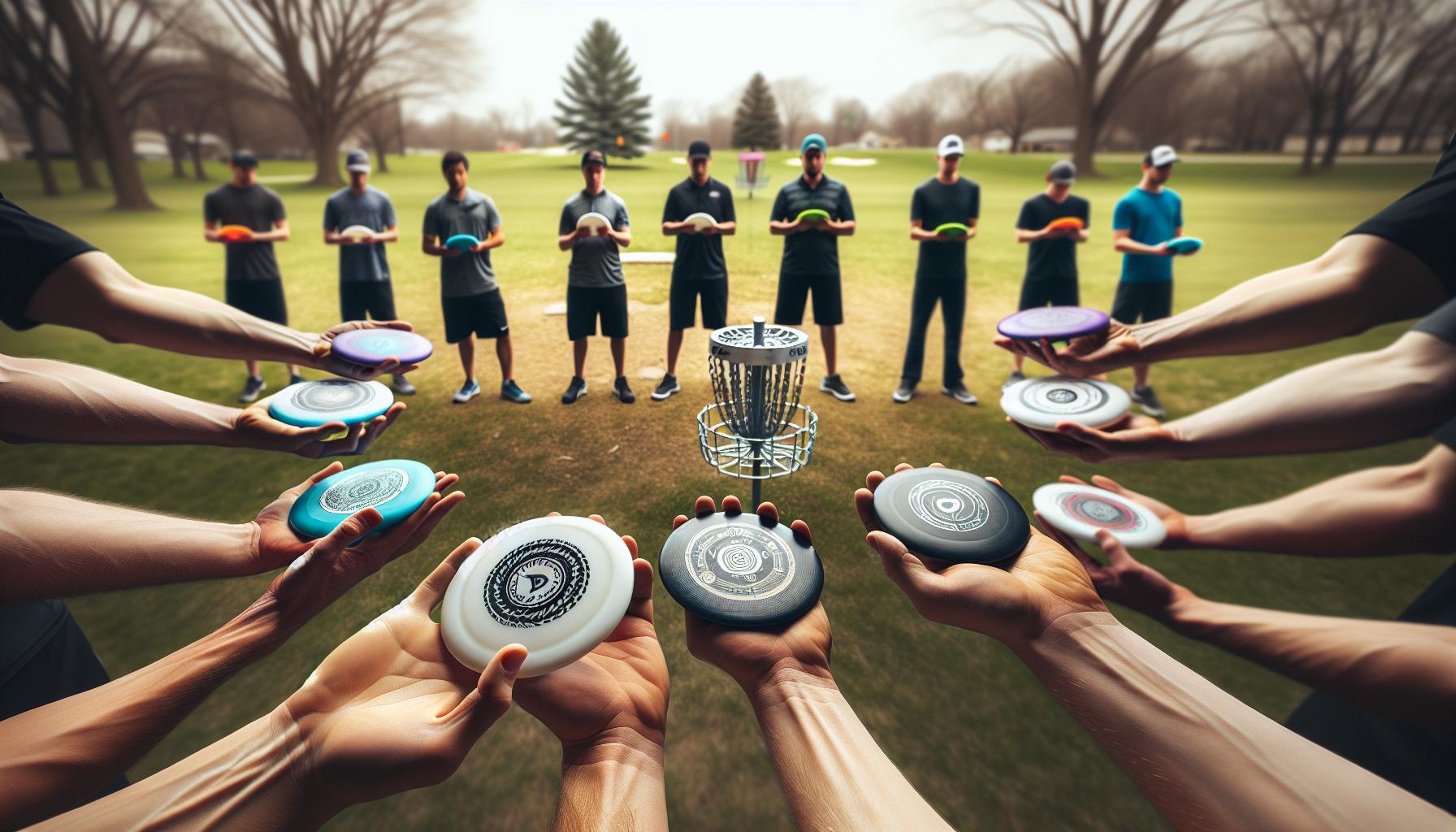
Understanding the intricacies of grip pressure can significantly influence your performance in disc golf. Essentially, grip pressure not only aids in control but also acts as a crucial link in the kinetic chain that transfers your body’s energy to the disc during a throw. A scientific approach to grip pressure reveals that the ideal firmness can change depending on various factors, including the type of throw and personal comfort, ultimately affecting trajectory and distance.
When you grip a disc, the physics of your hold start with the fingertips, which should make initial contact with the disc’s surface, allowing for a better sense of control. As you prepare to throw, this pressure needs to be fine-tuned. Research shows that a firmer grip can enhance initial speed but may counterintuitively lead to decreased distance if too much tension is created in your forearm or shoulder. Tension can restrict your natural throwing motion, possibly resulting in decreased accuracy and an erratic flight path. Conversely, undergripping can lead to a lack of control, causing the disc to flip or wobble mid-flight.
Another key element in grip pressure science is understanding the certain types of throws you might utilize. For instance, a forehand throw typically requires a different grip engagement than a backhand throw. With a forehand, a firmer grip can stabilize the disc more effectively during the snap, whereas a backhand throw might benefit from a touch of looseness before the release-this helps maintain a more fluid transition and enhances spin. To determine your best grip for various throws, players should engage in practice sessions specifically aimed at controlling grip pressure.
In practice, begin experimenting with your grip by positioning your hand around the disc and applying different pressures. Keep in mind to relax your wrist and forearm muscles to avoid unwanted tension. Use subtle adjustments to find the sweet spot where your grip feels secure yet allows for flexibility, helping you achieve optimum control and power for your throws. By observing how slight changes in grip pressure affect your disc’s flight, you will become more attuned to the biomechanics of your throws, enhancing your overall game performance as you progress in this exciting sport.
How Grip Pressure Affects Throwing Mechanics

Understanding how grip pressure affects your throwing mechanics is crucial for improving your disc golf game. When you grip the disc, the way you hold it not only determines the immediate control you have but also influences the entire throwing motion, including speed, stability, and ultimately distance. The connection between grip pressure and mechanics is all about optimizing the transfer of energy through your body to the disc during the throw.
A firm grip can indeed generate more initial speed, which may seem advantageous; however, excessive tension can hinder your natural throwing motion. For instance, if your grip is too tight, it can create unwanted stiffness in your forearm, reducing fluidity and leading to suboptimal accuracy. Picture a coiled spring: if it’s squeezed too tightly, it loses its ability to release energy effectively. Instead of launching the disc with a clean, controlled snap, you may end up with a wobbly throw that fails to maintain its intended flight path.
Conversely, an excessively relaxed grip-often referred to as undergripping-can lead to issues like the disc flipping or fluttering mid-flight. This is particularly prevalent when throwing backhand, as a touch of looseness prior to release can facilitate a more fluid motion, enhancing spin and stability. Achieving the right balance between firmness and relaxation is key. Start by practicing various grip pressures while throwing different types of shots; observe how these pressures impact your throws. Keeping your wrist and forearm relaxed can prevent unnecessary tension, allowing for a more efficient release.
As you refine your understanding of grip pressure, incorporating practice drills specifically designed to adjust and evaluate your grip can lead to significant improvements. For example, experiment with different grip pressures while engaging in forehand and backhand throws, noting how slight changes can lead to notable differences in flight characteristics. This exploration fosters a deeper comprehension of your biomechanics, ultimately enhancing your performance on the course. As you become more adept at controlling your grip, you’ll find that not only does your accuracy improve, but your confidence will soar, making each round a more enjoyable experience.
Identifying Your Ideal Grip Pressure

Finding the perfect grip pressure is a nuanced process that can dramatically improve your performance on the disc golf course. It’s not just about holding the disc; it’s about developing a feel for how different pressures affect your throw’s speed, stability, and accuracy. Many players often overlook the importance of this aspect, but understanding how to identify your ideal grip pressure can enhance both your comfort and your ability to execute various shots effectively.
To determine what grip pressure works best for you, start by conducting simple experiments with different levels of pressure. Begin with a firm grip, holding the disc with a tightness level that feels secure but not overly strained. Notice how this affects your throw-does it feel powerful, or does it lead to stiffness in your wrist and forearm? As you release the disc, pay attention to the flight path: does it maintain stability and distance, or does it wobble and lose accuracy?
Next, gradually loosen your grip. Find that sweet spot where the disc feels secure in your hand but allows for a natural, fluid motion. In this relaxed state, aim for a gentle but firm feeling that allows your fingers to articulate and your wrist to snap freely upon release. You might find that a relaxed grip enhances your throwing mechanics, improving spin and accuracy while providing better feedback during the throw.
To further refine your ideal grip pressure, consider your throwing style and conditions. For instance, when throwing backhand, a little looseness can increase your disc’s spin, leading to a more controlled flight. Conversely, for forehand throws, you may prefer a firmer grip to maintain stability and reduce the risk of the disc flipping over. Keep a journal of your practice sessions, documenting the grip pressure used and the outcomes of each throw to help you identify patterns and preferences.
Ultimately, is a personalized journey, one that connects you more deeply with your disc golf game. Embrace the process-experiment, reflect, and refine. As you learn what feels best, you’ll likely notice improvements in not just your throws but also your confidence and enjoyment on the course.
Common Grip Pressure Mistakes to Avoid
It’s easy to underestimate the impact of grip pressure on your disc golf game, but many players unknowingly make mistakes that hinder their performance. One of the most common pitfalls is over-gripping the disc. When your hand is too tight around the disc, it can create tension in your wrist and forearm, which may result in an awkward release. This stiffness can lead to erratic flight paths, causing your disc to veer off course. Aim instead for a balance where your grip is firm yet relaxed, allowing for a natural wrist snap upon release.
Another frequent error is failing to adjust grip pressure based on throwing conditions. Many players stick to a single pressure regardless of the weather or terrain. For instance, in windy conditions, a firmer grip can provide stability, while in humid or rainy weather, a too tight grip might lead to loss of control as your hand slips. It’s vital to experiment and adapt your grip depending on the environmental factors to maintain control over your throws.
Many also struggle with consistency from throw to throw. It’s important to find a routine for gripping the disc that you can replicate. If you constantly change how you hold the disc, it affects your muscle memory, which can be detrimental to your performance during a game. Developing a consistent grip pressure for both backhand and forehand throws allows for a more predictable release and improved accuracy.
Lastly, avoid the temptation to grip the disc differently each time to “compensate” for previous mistakes. This erratic approach only perpetuates inconsistency. Instead, practice maintaining your ideal grip. Use a journal during practice sessions to identify which grips work best and consistently apply those lessons in your throws. By being mindful of these common grip pressure mistakes and adjusting accordingly, you can enhance both your technique and overall enjoyment of the game.
Adjusting Grip Pressure for Different Throws
Adjusting your grip pressure can significantly affect the outcome of different throws in disc golf. The right grip allows for optimal power transfer, control, and accuracy, enabling your disc to fly as intended. Recognizing how to modify your grip for optimal performance can be a game-changer, especially when dealing with various throws like backhands, forehands, and specialty shots.
For a basic backhand throw, focus on a grip that maintains enough tension to hold the disc firmly yet allows for a natural wrist snap. Aim for a medium grip pressure-tight enough to prevent slippage but relaxed enough to allow for a smooth release. This balance ensures that you can generate the necessary snap without fighting against your own tension. Ideally, when you’re ready to release, your index finger should dig into the rim, helping to redirect the force in your throw.
When it comes to the forehand throw, the grip differs slightly. It often requires a firmer hold to stabilize the disc as you generate torque. Use a grip that secures the disc without over-tightening your fingers, which could lead to premature release or loss of accuracy. Consider the “pinch grip” where your thumb and index finger work together to control the disc’s trajectory. A slightly firmer grip here can help counteract the rotational forces at play during the throw, enhancing distance and accuracy.
Specialty Throws and Adjustments
- Anhyzer and Hyzer Throws: For anhyzer shots, a looser grip allows for a natural flip of the disc, creating the desired turn. Conversely, for hyzer shots, a firmer grip will help maintain the disc’s angle through the release phase, promoting a reliable consistent fade at the end of the flight.
- Touch Shots: When working on short-range or touch shots, such as approaches or delicate upshots, you’ll want to reduce your grip pressure significantly. A lighter touch fosters a softer release, which can help control distance and placement.
- Windy Conditions: In adverse weather, particularly windy conditions, increasing grip pressure can provide added stability. A firmer grip helps mitigate unpredictability, allowing you to have more control over your throw despite the external forces at play.
Experiment with these varying levels of grip pressure in your practice sessions. It’s beneficial to integrate this exploration into your routine, as it helps develop a feel for how different grips impact throw dynamics. By cultivating awareness around your grip and its modification based on the throw type, you can elevate your disc golf game to new heights. Consistent practice will not only foster muscle memory but also allow for a greater understanding of your unique throwing style and how grip influences each throw.
The Role of Grip Pressure in Distance and Accuracy
Understanding how grip pressure affects the distance and accuracy of your throws can be the key to unlocking your potential in disc golf. Just a slight variation in how tightly you hold the disc can drastically alter its flight path, influencing everything from stability to control. When you’re clutching the disc too tightly, you may inadvertently restrict your natural wrist movement, disrupting your throw’s fluidity and resulting in less distance. Conversely, an excessively loose grip can lead to instability, causing the disc to slip from your fingers prematurely.
Finding that sweet spot requires practice and adjustment based on your throwing style and the demands of each shot. For example, while performing a backhand throw, a medium grip pressure is often ideal; it allows for enough tension to maintain control while still being relaxed enough to enable a proper wrist snap during release. This grip helps facilitate a clean and powerful throw, maximizing distance by transferring energy efficiently into the disc’s movement.
In contrast, different throwing techniques necessitate distinct grip pressures. For forehand throws, where an added torque is often required, a firmer grip can help stabilize the disc and mitigate the risk of torque-induced inaccuracies. Similarly, when facing tricky wind conditions, a stronger grip can prevent unwanted disc movement upon release, ensuring that your throw remains straight and true despite external challenges. Experimenting with these variations will help develop a better understanding of how grip pressure directly influences your performance.
It’s crucial to incorporate these exercises into your practice sessions. Start by focusing on your grip during throws of varying distances and conditions. Note how changes in grip result in variations in disc flight, helping you cultivate an intuitive sense of the optimal grip pressure needed for each type of shot. This awareness, combined with consistent practice, will elevate your skills, translating into improved results on the course.
Tools and Techniques to Measure Your Grip Strength
Measuring grip strength is essential for any disc golfer looking to optimize their performance, as the right grip pressure can lead to improved throw mechanics and increased accuracy. Various tools and techniques can help players evaluate their grip strength effectively, allowing them to fine-tune their grip and enhance their overall game.
One of the most straightforward tools for measuring grip strength is a hand dynamometer. This device provides a quantitative measure of grip strength, enabling golfers to track improvements over time. To use a dynamometer, simply follow these steps:
- Set up the dynamometer: Adjust the device to accommodate your hand size and ensure it’s calibrated correctly.
- Grip the handle: Hold the dynamometer with your dominant hand, ensuring a comfortable grip that mirrors your throwing stance.
- Squeeze firmly: Apply maximum pressure while squeezing the handle, maintaining your form as if you were holding a disc.
- Record your results: Note the reading displayed on the dynamometer. This serves as a baseline for future strength comparisons.
Beyond specialized equipment, grip strength can also be assessed through practical exercises. Grip tests can be performed using ordinary objects readily available to most athletes:
- Squeeze test with a tennis ball: Hold a tennis ball in your throwing hand and squeeze as hard as you can. The amount of time you can maintain the squeeze without dropping the ball can indicate your grip endurance.
- Plate pinches: Pinch together two weight plates (or any heavy, flat objects) between your fingers and hold for as long as possible. This exercise builds both strength and endurance in the fingers and grip.
Creating Personal Benchmarks
When measuring grip strength, it’s crucial to establish personal benchmarks that align with your current skill level and goals. Regularly engaging in grip strength assessments not only motivates improvement but also helps you identify areas where technical adjustments can be made. As you develop a stronger grip, you’ll likely notice increased control over your throws, allowing for more precise releases and varied grip applications across different types of shots.
Remember that grip strength is not just about how hard you can squeeze but also about finding the balance between tension and relaxation. Incorporating grip training into your routine can help you develop the ideal grip pressure suited to different throwing styles, enhancing your confidence and performance on the course.
Building grip strength is a journey filled with experimentation and adaptation; embrace the learning process and enjoy the improvements it brings to your game.
Grip Pressure Adjustments for Varying Weather Conditions
Changing weather conditions can dramatically affect your grip pressure while playing disc golf, and understanding how to adjust can enhance your performance on the course. For instance, high humidity can lead to sweaty hands, requiring a firmer grip to maintain control of the disc, while cold temperatures can cause your fingers to lose dexterity, often necessitating a looser grip to avoid tension and strain. Adapting your grip pressure not only aids in maintaining the integrity of your throw but also helps in achieving the desired disc flight path.
In humid conditions, moisture can create a slippery feel, making it harder to maintain a secure hold on your disc. In such instances, it is beneficial to increase your grip pressure to counteract this slipperiness. This can be further assisted by using grip-enhancing products (like specialized gloves or hand grips) or regularly wiping your hands on your attire to keep them dry. Staying aware of your grip throughout your throw is crucial-overgripping can lead to tension, which hampers your throwing mechanics.
Conversely, in colder weather or windy conditions, the need to decrease grip pressure becomes essential. A too-tight grip can result in reduced sensitivity and control, causing you to misthrow. To counteract this, practice a lighter hold-you want enough pressure to keep the disc secure without it slipping, but light enough to allow for a fluid release. Wearing gloves designed for disc golf can also help you maintain warmth without compromising your ability to feel the disc in your hand.
Make a habit of assessing weather conditions before you play, both for yourself and your equipment. Being prepared with the right techniques and tools-be it towels for humidity or gloves for cold-will make a significant difference. By consciously adjusting your grip pressure based on the weather, you can ensure that your throws remain as consistent and accurate as possible, ultimately leading to a more enjoyable and successful round on the course.
Expert Tips from Pro Disc Golfers on Grip
Understanding how to perfect your grip can be the differentiator between a good throw and a great throw, and many pro disc golfers have shared valuable insights to help elevate your game. Notably, renowned players emphasize the importance of a consistent grip pressure that adapts to your personal comfort and the conditions of play. Just like tuning a musical instrument, your grip requires fine adjustments to resonate with the flight characteristics of your disc.
One common recommendation from elite players is to prioritize a relaxed grip during the initial phase of your throw. A too-tight grip can lead to unnecessary tension, which can adversely affect your mechanics and timing. Instead, focus on achieving a comfortable balance where you can feel the disc’s weight in your hand without it slipping. For many pros, this translates to a grip that feels secure but allows for fluid motion and release. A relaxed grip can help in maintaining the rotational dynamics needed for different types of throws, especially when executing finesse shots.
Pro players also advocate for experimenting with grip styles to find what feels best for you. For instance, while some players prefer a power grip for distance throws, others might find that a modified grip better suits touch shots or approaches. Practicing different grips during casual rounds can help you discover variations that enhance your performance in competitive environments. Utilizing drills that target grip adjustment, such as throwing with both a loose and tight grip at varying distances, can sharpen your feel for what works best based on the current conditions.
Lastly, top athletes suggest remaining mindful of your grip throughout the entire throwing process. This means paying attention not just at the moment of release but also as you wind up for the throw. Regular reflection and adjustment, both mentally and physically, can lead to consistent improvements. Whether you’re in a casual game or at a tournament, taking the time to assess and tweak your grip can lead to significant gains in both accuracy and distance. Aspiring to these expert insights can empower players of all levels to better master their grip pressure and enhance their overall disc golf experience.
Practice Drills to Perfect Your Grip Pressure
To truly master grip pressure in disc golf, practical drills can significantly enhance your understanding and execution. A well-regulated grip not only improves your accuracy and distance but also amplifies your overall confidence on the course. Here are some structured drills designed to help you fine-tune your grip and discover what works best for your throwing style.
One effective exercise involves multi-grip throwing. This drill allows you to explore how different grips affect your throws. Start with your usual grip and throw a series of discs from the same spot, paying attention to your distance and accuracy. Then, switch to a looser grip and repeat the throws. Finally, try a firmer grip. This sequence will help you feel the nuances of grip pressure on your throw dynamics. Track your results to see how each grip impacts your performance.
Another engaging drill is the “change-up” drill. In this exercise, practice throwing different types of shots-such as hyzers, anhyzers, and straight shots-all while adjusting your grip pressure. Begin with a comfortable grip and execute a series of each shot type. Then, alter your grip slightly for each shot, such as tightening for a power shot or loosening for a finesse throw. This variability not only conditions your muscle memory but also allows you to adapt your grip pressure depending on shot requirements.
Lastly, consider incorporating a “touch and feel” session into your routine. Find a variety of discs with different weight and stability characteristics, such as a light putter or a heavy driver. Spend time simply holding the discs before throwing them, allowing yourself to adjust the grip until it feels instinctive. Practice throwing these discs from various distances, adjusting your grip pressure as you go. Notice how the feedback from each disc guides you toward your ideal grip pressure for different scenarios.
Each of these drills is an opportunity to deepen your connection with your equipment and enhance your feel for the game. Regular practice will not only improve your technical skills but also instill a sense of confidence and intuition, enabling you to express your unique throwing style during competition or casual play. As you explore these drills, remember that comfort in your grip can be as vital as technique, paving the way for consistent performance on the disc golf course.
Advanced Techniques for Competitive Players’ Grip
Mastering grip pressure is essential not only for accuracy but also for achieving optimal distance and control in competitive disc golf. Advanced players often experiment with nuanced grip techniques that can vary significantly depending on the situation at hand. For instance, understanding the difference between a power grip and a finesse grip can drastically change the outcome of a throw.
One advanced technique involves utilizing a “palm-up” grip during forehand throws. This method allows for additional snap and spin, which can give your disc a more stable flight path. To execute this grip, position your palm facing upward at the moment of release, ensuring your thumb is firmly pressing down on the disc for a stronger grip. This subtle change can enhance your control over the disc’s angle, especially with drivers that typically require more accuracy to avoid unwanted turnovers.
Another effective practice involves the “silent grip” technique. This method encourages players to focus on maintaining a consistent grip pressure throughout their throw without unnecessary tension. Before your next competitive round, take some time to practice this by throwing while consciously relaxing your grip just before the release. This can help your throws feel more fluid and natural, reducing the risk of grip-related errors like overgripping, which can lead to inaccurate results.
For players looking to measure and refine their grip pressure scientifically, consider using a grip strength dynamometer. This device can provide quantitative data on your grip strength and help you establish benchmarks to track improvements over time. Regularly using this tool can assist in identifying patterns in how your grip pressure impacts your shot mechanics, ultimately helping you adjust your throws in a competitive setting.
Lastly, competitive players often benefit from a thorough understanding of how different grip pressures influence disc flight characteristics. For example, while a tighter grip generally results in more distance due to increased snap, a lighter grip can facilitate delicate, precision shots. Striking the right balance between these two extremes is key in adapting to various course conditions and shot requirements, enabling players to feel confident in their grip decisions under competitive pressure.
FAQ
Q: What is the ideal grip pressure for disc golf?
A: The ideal grip pressure in disc golf balances control and distance. Generally, a firm but relaxed grip is recommended-too much pressure can restrict your throwing mechanics, while too little can lead to slips. Experiment with varying pressures during practice to identify what feels best for your style.
Q: How can grip pressure affect my disc flight?
A: Grip pressure significantly influences disc flight. A consistent grip ensures a stable release, contributing to accuracy and distance. Adjustments in grip pressure can alter the angle and spin of your throw, affecting flight paths. Understanding these changes is crucial for mastering different shots.
Q: Can grip pressure help prevent injury?
A: Yes, proper grip pressure can help prevent injuries by reducing strain on your muscles and joints. An overly tight grip can lead to tension and fatigue. Focus on maintaining a relaxed grip, especially during longer sessions, to minimize the risk of overuse injuries.
Q: How do I know if I’m using the right grip pressure?
A: To determine if you’re using the right grip pressure, pay attention to the feel during your throws. Your grip should feel firm enough to maintain control but not so tight that it causes discomfort. Practicing with various pressures and receiving feedback can help refine your ideal grip.
Q: What grip pressure adjustments should I make in different weather conditions?
A: In wet conditions, increase grip pressure slightly to prevent the disc from slipping out of your hand. Conversely, in dry or windy conditions, you may want to relax your grip a bit to allow for natural wrist movement and better control of the disc’s flight path.
Q: How can I practice finding the right grip pressure?
A: To practice finding the right grip pressure, use drills that involve throwing with varying pressures. Start with moderate pressure, then gradually adjust to lighter and tighter grips. Record the outcomes and your feelings after each throw to identify what provides the best results.
Q: Are there specific grip techniques that can enhance my performance?
A: Yes, adopting grip techniques like the “power grip” or “fan grip” can enhance performance depending on the type of throw. The power grip allows for maximum control during drives, while the fan grip can be more effective for putting. Experiment with these grips to see which suits your throwing style.
Q: What role does grip pressure play in forehand vs. backhand throws?
A: Grip pressure plays a distinct role in forehand and backhand throws. A firmer grip is often beneficial for forehands to ensure a controlled release, while a backhand may benefit from a slightly softer grip to facilitate smoother wrist action and greater distance. Adjust as per your comfort and style.
Wrapping Up
As you embark on your journey to mastering grip pressure and optimizing your hold, remember that every throw is an opportunity to refine your technique and improve your performance. Whether you’re just starting out or looking to take your skills to the next level, understanding the nuances of grip can significantly enhance your overall game. Dive into our in-depth guides on throwing mechanics and disc flight characteristics to further your knowledge and elevate your gameplay.
Don’t miss out on exclusive tips and community insights-sign up for our newsletter to stay informed and connected! Ready to explore more? Check out our expert reviews on the best equipment for your style, or discover strategic approaches for competitive tournaments that can lead you to victory. Your perfect grip is just the beginning; take action now and unlock your full potential in disc golf!
We invite you to share your thoughts and experiences in the comments below or connect with fellow enthusiasts in our forum. Keep pushing your limits and remember, every great player started with the basics-let’s grow together in this amazing sport!
Get our latest guides, news, and insights highlighted in your Google Search & AI Overviews.