Did you know that the official size of a disc golf basket can significantly impact your gameplay experience? Understanding the dimensions of a disc golf basket is crucial for both beginners and seasoned players. It affects everything from your putting strategy to how you approach course design. With the sport rapidly gaining popularity, ensuring you’re equipped with knowledge about equipment specifications and standards can elevate your game and your understanding of disc golf as a competitive pursuit. Join us as we delve into the specifics of basket sizes, how they influence play, and why knowing these details can help you become a more skillful and strategic player. Explore the nuances of disc golf baskets and unlock insights that can transform your approach to the game!
Understanding Disc Golf Basket Dimensions and Standards
Understanding the dimensions and standards set for disc golf baskets is vital for both aspiring players and seasoned professionals. The standard height of a disc golf basket is 52 inches (132 cm) from ground level to the top of the central pole, with the inner basket diameter measuring approximately 21.5 inches (55 cm). These specifications are designed to create a consistent experience across courses, ensuring that players can hone their skills in a standardized environment.
As you explore the world of disc golf, you’ll discover that the design and size of the basket can significantly influence gameplay. Baskets feature a number of chains-usually 18-that help catch and hold the disc. The distribution, type, and number of chains can vary, impacting how “catchable” a basket is. For example, baskets with fewer chains may allow discs to bounce out more frequently, adding an extra layer of challenge and excitement during play. Additionally, the size and spacing of the basket’s neck (the funnel shape leading into the basket) can also affect how discs settle in after a throw, making the design aspects just as crucial as their dimensions.
Choosing a basket that adheres to these standards is essential for facilities looking to establish official disc golf courses, as many tournaments require PDGA-approved equipment. In fact, understanding these dimensions not only aids in course design but also enhances your personal gameplay by familiarizing you with the target size you’ll encounter during official competitions.
For newcomers, grasping the significance of these standards is a gateway into the sport’s intricacies, heightening the appreciation of both its competitive nature and recreational appeal. Finding a basket that meets these regulations ensures you’re well-equipped to tackle challenges on the course, and it can also provide invaluable practice time. Whether you’re eyeing a permanent setup for your backyard or a portable option for local parks, knowing the right dimensions will serve as a strong foundation for your disc golf journey.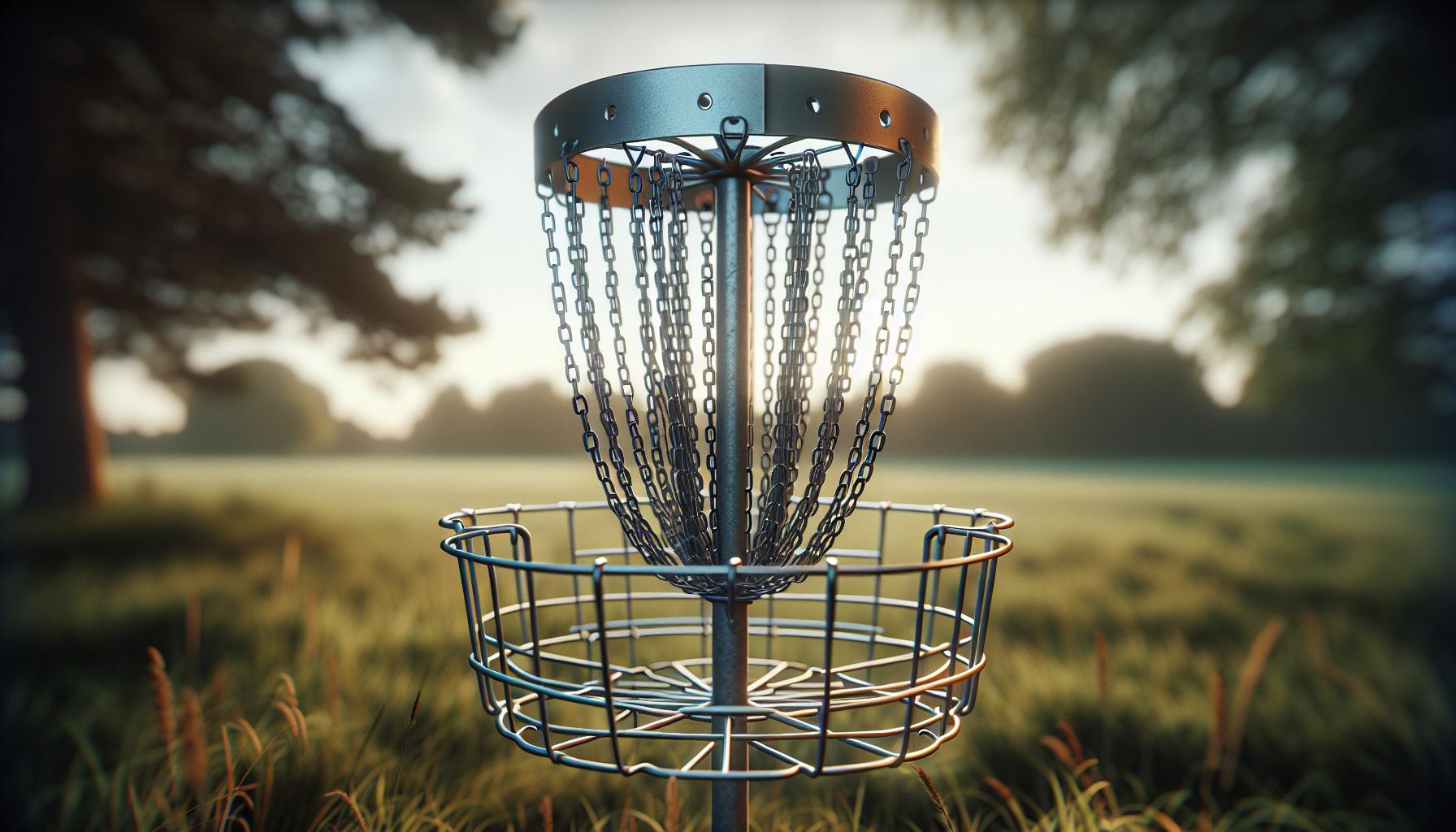
The Anatomy of a Disc Golf Basket Explained
When stepping onto the disc golf course, one of the first things you’ll encounter is the iconic disc golf basket. This crucial piece of equipment is not just a target; it’s a carefully designed structure that influences gameplay and challenge levels. A standard disc golf basket is composed of several key components: the pole, the basket itself, the chains, and the catching area. Understanding these elements can significantly enhance your appreciation of the game and inform your choice of equipment.
At the top of the basket, the central pole stands at a regulation height of 52 inches (132 cm), providing a uniform target height for every player. This central support is crucial for the entire structure, tapering down to a robust base that keeps the basket stable during use. The inner diameter of the basket is approximately 21.5 inches (55 cm), a size meticulously engineered to encourage successful putts while providing enough challenge that players must refine their throwing techniques.
Chains play an essential role in the basket’s effectiveness. Most baskets feature 18 chains strategically arranged to create a “catch area” that helps capture the disc. The arrangement and type of chains can vary, affecting how a disc interacts with the basket. For instance, some players prefer baskets with more chains, which offer a higher likelihood of successful catches, while others enjoy the challenge presented by baskets with fewer chains, where disc bounce-outs might occur more frequently. Additionally, the neck of the basket-where the funnel shape leads into the base-greatly impacts how discs settle into the basket, adding another layer to the intricacies of basket design.
Understanding the anatomy of a disc golf basket not only helps players make informed decisions about purchasing or practicing with different models but also enhances gameplay strategy. Knowing the specifics of how a basket is constructed can guide players on throw techniques, what to expect in terms of catching potential, and ultimately how they can elevate their game. As disc golf continues to grow, so does innovation in basket design, making it ever more exciting for both newcomers and seasoned veterans alike to explore the nuances of this fantastic sport.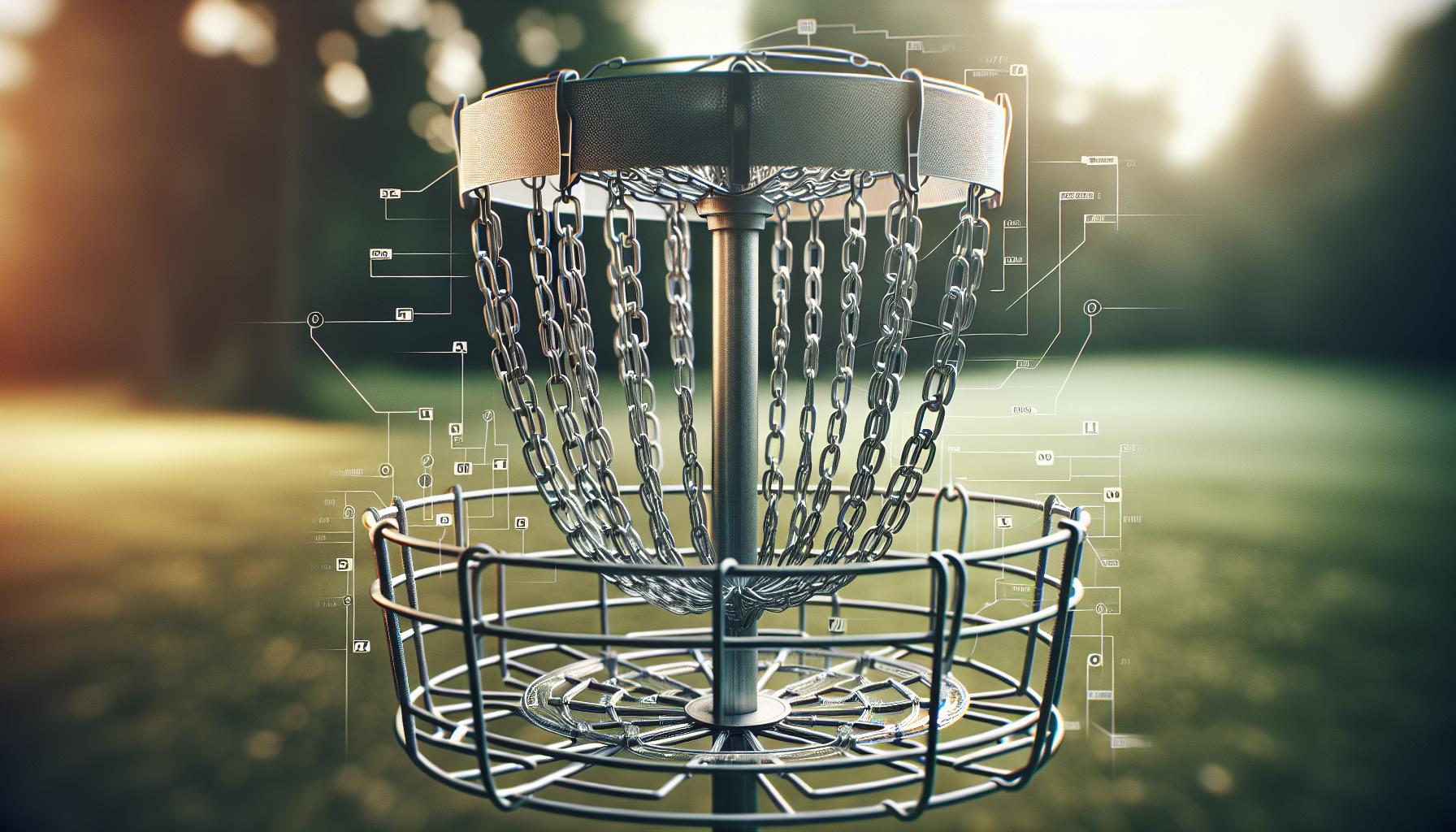
Why Size Matters: Impact on Gameplay
The size of a disc golf basket plays a pivotal role in shaping the dynamics of gameplay and can significantly influence a player’s strategy and performance on the course. With a standard inner diameter of approximately 21.5 inches (55 cm), the basket is designed not just as a target, but as a key component that challenges players to hone their skills. This specific dimension is crucial because it provides a balance between accessibility for successful putts and the need for precision and technique, pushing players to develop their throwing mechanics.
One of the primary ways size impacts gameplay is through what players refer to as “catchability.” A standard basket’s design, including its height and the arrangement of its chains, directly affects how discs enter the basket. A larger catching area may lead to a greater number of successful putts, boosting a player’s confidence, especially at the beginner level. On the other hand, baskets that are slightly larger or have fewer chains can introduce more variability, forcing players to adapt their throwing strategies. For seasoned competitors, this could mean recalibrating their approaches to account for bounce-outs or unexpected deflections, thereby fostering a more strategic play style.
Furthermore, the construction and dimensions of the basket can shape how players perceive distance and angle. When assessing their throwing techniques, players mentally adjust their power and precision based on the target’s size and how it feels to miss versus successfully land a shot. Many players report that practicing on varied basket sizes-whether larger, smaller, or even homemade-has helped them improve their control and distance estimation.
Ultimately, while the standardized size of disc golf baskets ensures uniformity across courses, players at all levels can benefit from understanding how these dimensions impact their game. By experimenting with different basket types and sizes, from local courses to tournament setups, players can gather insights that improve their throwing techniques and overall performance, solidifying disc golf not only as a recreational pursuit but as a serious competitive activity.
Comparing Disc Golf Basket Sizes: What Players Prefer
The size and design of disc golf baskets can drastically influence player preferences and performance on the course. With standard dimensions typically hovering around an inner diameter of 21.5 inches (55 cm), players often find a sweet spot that balances between ease of target acquisition and the challenge of precision putting. When comparing various basket sizes, players frequently weigh factors such as the catching area, height, and chain configurations that can impact disc trajectory and successful landings.
Many disc golfers appreciate the standard size baskets for their consistency across public courses and tournaments, allowing players to build confidence through familiarity. Beginners might favor baskets that are slightly larger or have a softer chain setup, as these features can result in higher success rates for putts, thus enhancing their overall enjoyment and confidence. Conversely, advanced players often seek out different sizes to push their limits, searching for that delicate tension between challenge and skill. The variability offered by smaller or custom baskets can lead to a more refined throwing technique, as players must adapt to account for reduced catching areas and the potential for bounce-outs.
Preferences Based on Experience Level
Players’ preferences can also be shaped by their experience and goals. For beginners, the excitement of a basket that feels welcoming may be pivotal. Larger baskets with wide-spaced chains often make for a more forgiving target, reducing frustration and encouraging practice. Experienced players, however, may thrive on the challenge presented by more compact baskets that require sharper accuracy and enhanced control over their throws.
Furthermore, personal anecdotes from players reveal diverse opinions; some swear by practicing on various sizes to better gauge their throwing strength, while others suggest that consistently practicing on standard-sized baskets can instill essential skills transferable to tournaments. Ultimately, experimenting with different basket sizes not only enhances technical abilities but also enriches the playing experience, driving home the importance of community engagement through shared challenges.
In conclusion, players should evaluate their own goals, skill levels, and the environments in which they practice. Whether choosing standard dimensions or exploring unique basket sizes, understanding personal preferences aids in creating a more enjoyable and competitive disc golf experience.
Regulatory Standards for Disc Golf Baskets
Regulatory standards play a crucial role in ensuring that disc golf baskets maintain a level of consistency and fairness across the sport. In competitive play, adhering to these standards not only fosters a shared understanding among players but also elevates the integrity of the game. The Professional Disc Golf Association (PDGA) defines specific criteria that all approved baskets must meet, impacting both casual and tournament play.
Key dimensions outlined by the PDGA include an inner diameter for the catching area of 21.5 inches (55 cm), with the minimum height from the ground to the top of the basket set at 30 inches (76 cm). These measurements are essential for cushioning the disc effectively, allowing for reliable results whether a player is a novice or an expert. The standardization of these dimensions also facilitates the uniformity of competition, as players can expect consistent performance from baskets regardless of location.
Beyond dimensions, the PDGA also regulates the chain configuration and overall design of the basket. A minimum of 12 chains is recommended to help maximize the catching efficiency and minimize bounce-outs, ensuring that the baskets perform reliably under a wide range of playing conditions. Newcomers to the sport should be aware that not all baskets meet these PDGA standards; thus, when selecting baskets for personal use or for setting up a new course, it’s wise to seek out those that are PDGA-approved.
As disc golf continues to grow in popularity, understanding these regulatory standards becomes increasingly vital for players at all levels. Knowledge of what constitutes an official basket can help aspiring tournament players feel confident in their training environments and ensure they are prepared for competitive situations. Whether participating in recreational play or aiming for the tournament scene, familiarizing oneself with these guidelines can enrich the playing experience, offering insights that may influence not just basket choice, but also throwing techniques and overall game strategy.
Common Materials Used in Disc Golf Baskets
The materials used in the construction of disc golf baskets significantly influence their performance, durability, and overall user experience. Understanding these materials can not only help players choose the right basket for their needs but can also impact the gameplay itself.
One of the most common materials used for disc golf baskets is steel, typically galvanized to prevent rust and corrosion. Steel’s strength ensures that baskets can withstand the elements and frequent impact from discs. The chains, which are critical for catching discs, are often made from heavy-duty steel as well. This resilience means that players can expect consistent performance regardless of weather conditions. Additionally, high-quality steel baskets can often be painted or coated, allowing for various aesthetic options while maintaining their functionality.
Another important characteristic to consider is the design of the catching area, which can significantly affect your gameplay. Baskets with thicker or more strategically placed chains will better catch discs, reducing the chances of bounce-outs. Moreover, the design may include additional features such as inner rings or chain assemblies that enhance the catching capability, ultimately enriching the player’s experience.
For those looking at transportable options, you may find plastic and lightweight metal baskets on the market. These materials make baskets easier to set up and take down, catering to casual players who want a portable solution for fun on the go. However, it’s important to note that lighter materials might not provide the same level of stability or catching efficiency as their heavier counterparts. Players should weigh the importance of portability against the potential compromises in performance.
Choosing the right material for a disc golf basket can have a profound impact on one’s playing experience. Local conditions, including climate and terrain, should also influence your choice. For instance, investing in a robust steel basket may serve you well in harsh outdoor conditions, while a lightweight plastic option could be ideal for casual play in a backyard setting. By understanding the various materials, players can make informed decisions that complement their playing style and needs.
Setting Up Your Disc Golf Basket: Best Practices
Setting up your disc golf basket properly is crucial for maximizing playability and enjoyment. Whether you’re setting up in your backyard for casual practice or establishing an official course, adhering to best practices can enhance the experience for everyone involved. Did you know that the standard height of a disc golf basket from the ground to the top of the band is 45 inches? This height is specifically designed to provide a challenge while being accessible for players of all ages.
When determining the placement of your basket, consider the following factors:
- Terrain: Choose a flat, stable area to ensure the basket remains upright and secure. Soft or uneven ground can result in instability, affecting gameplay.
- Obstacle Placement: Incorporate nearby trees, bushes, or other natural features to create interesting throwing angles and challenges. Aim for a blend of open and tricky holes.
- Safety: Ensure that the area around the basket is clear of hazards, such as roads or steep drops, which might pose risks to players retrieving discs.
- Visibility: Position the basket where it can be easily seen from a distance. This allows players to line up their throws better and adds to the visual appeal of the course.
In addition to the right location, sturdy installation is key. For portable baskets, make sure they are securely anchored to avoid tipping or falling during play. If you’re installing a permanent basket, follow the manufacturer’s guidelines for depth and anchoring to withstand wind and impact. Including concrete foundations for permanent setups can also provide extra stability.
By taking the time to evaluate these factors, you can create a more engaging and enjoyable disc golf experience-whether for serious competition or leisurely practice. The proper setup not only enhances gameplay but also fosters a sense of community among players, bridging the gap between fun and competitive spirit. When everyone can navigate the course confidently, the game thrives, making disc golf not just a sport but a beloved pastime.
Impact of Basket Size on Throwing Techniques
The size of a disc golf basket plays a vital role in shaping throwing techniques and strategies. Understanding how different dimensions affect gameplay can help players tailor their throws to become more effective on the course. A standard basket has an overall diameter of 21 to 25 inches and a catching area designed to trap discs effectively. This relatively small target in comparison to the vast open spaces of a disc golf course requires precision and strategic thought in approach.
For instance, when confronting a larger basket, players might feel emboldened to use their power throws, knowing there’s a slightly higher chance of the disc sinking in. Conversely, when aiming for a standard-sized basket, players are encouraged to adopt a more controlled, pinpoint technique. This often entails focusing on the disc’s angle of release and the spin mechanics, which provide optimal lift and stability. Many players find that varying their throwing styles-whether backhand or forehand-based on basket size allows for improved performance.
Moreover, basket size impacts the mental aspect of gameplay. A smaller basket might create a feeling of pressure, enhancing the focus required during a critical part of a round. As players adapt to the perceived difficulty, they learn to improve their mechanics-working on their speed, release points, and overall throwing rhythm. This psychological dynamic can provide valuable lessons in not just disc golf but any sport, teaching players how to manage pressure and adapt to varying circumstances.
In practice, players may also notice that the size can affect the types of discs they choose. Lighter or more stable discs are often favored near baskets, while heavier, more overstable discs are used for longer throws. Ultimately, understanding the relationship between basket size and throwing techniques fosters not only individual skill development but also a deeper appreciation for the strategic elements inherent in disc golf. Balancing power and precision is the key, ensuring players develop both physically and mentally on their quest for better scores.
Real-Life Experiences: Players Share Their Thoughts
In the spirited world of disc golf, players frequently share compelling stories about how basket size shapes their experience on the course. One avid player noted that early on in their disc golf journey, encountering buckets larger than the standard dimensions filled them with newfound confidence. “I specifically remember the first time I threw at a wider basket,” they reflected. “It felt like aiming for a target you could actually hit, which gave me the bravery to step up and really launch my drives without second-guessing myself.” This sentiment resonates with many who view larger baskets as an opportunity to push their limits and experiment with different throwing techniques.
Another player, however, highlighted a contrasting experience with smaller baskets: “Every time I see one of those tight, regulation-sized baskets, my focus sharpens. It’s almost like they become a mental exercise in precision.” This player utilizes these moments to refine their form, focusing intently on release angles and spin control. They articulated that mastering throws into smaller targets built their confidence and skill, which translated into greater success when playing with standard-sized baskets. The mental gymnastics of adjusting to different basket sizes provide rich lessons on adaptability and focus in practice.
The collective insights from the disc golf community frequently emphasize not just personal growth but also the camaraderie fostered through these experiences. Players often share tips and tricks on forums or during casual rounds, such as recommended discs for various basket sizes or throwing techniques perfected through trial and error. One popular strategy involves using specific disc weights depending on basket size; for example, players might lean towards lighter discs close to the basket to allow for better control, while opting for heavier ones for longer approaches. These shared practices highlight the importance of community and knowledge exchange among disc golf enthusiasts, transforming individual challenges into collective learning opportunities.
Ultimately, the stories shared among players underscore that the size of a disc golf basket is not merely a statistic; it is a dynamic element that impacts gameplay, strategy, and personal growth. As players continue to navigate their own disc golf journeys, their diverse experiences with basket sizes enrich the game, making each round not just about scores and accolades, but also about community, skill development, and shared passion. Embracing these various perspectives fosters a welcoming environment for newcomers while respecting the enriching challenges faced by seasoned competitors.
Elevating Your Game: Choosing the Right Basket Size
Choosing the ideal size for your disc golf basket can significantly enhance your gameplay and overall experience on the course. Baskets come in various dimensions, predominantly defined by their diameter and height; the most common regulation size is 21.5 inches in diameter and 45 inches in height. However, personal preference and skill level can dictate the best choice for you. Players often find that practicing on different sized baskets helps develop their accuracy, as each size presents unique challenges and benefits.
For beginners, larger baskets are usually more forgiving, providing a psychological boost while learning essential throwing techniques. For instance, a player might feel less pressure when aiming for a wider target, leading to more confident throws and better practice sessions. Conversely, seasoned players may prefer regulation-sized baskets to refine their skills and challenge themselves. This focus can result in a sharper, more precise game as they learn to adjust their throws to hit tighter targets. Regardless of experience level, incorporating a variety of basket sizes into practice routines can cultivate adaptability and improve overall skills.
When deciding on a basket size, consider how it will affect your throwing mechanics. For example, wider baskets might encourage a more relaxed throwing style, while smaller ones will force you to pay closer attention to your release point and follow-through. Additionally, it’s vital to think about the materials and durability of the basket you choose, as this can influence your practice frequency and longevity of use. Many players also enjoy customizing their baskets, whether through color choices or personalized logo placements, which can foster a deeper connection to the equipment they use on the course.
Ultimately, selecting the right disc golf basket size isn’t just a matter of dimensions; it’s about enhancing your personal journey in this dynamic sport. By understanding the implications of size on skill development and gameplay, you can make an informed choice that aligns with your goals, whether you’re looking to build confidence as a beginner or sharpen your technique as a competitor. Embracing this knowledge will not only elevate your game but also enrich your experience within the vibrant disc golf community.
Customizing Your Disc Golf Basket: Options and Ideas
Customizing your disc golf basket can be an exciting venture that not only personalizes your gameplay experience but also enhances your connection to the sport. Whether you are a casual player wanting to add some flair to your setup or a competitive player looking to optimize your practice tools, there are numerous options to consider when it comes to making your basket uniquely yours.
One effective way to customize your basket is through color choices and patterns. Many manufacturers offer baskets in a variety of colors, allowing you to select a hue that resonates with your personal style or represents your favorite team. For players who enjoy a DIY approach, spray painting or using non-toxic outdoor paint can transform a standard basket into a vibrant piece of functional art. Additionally, using decals or stickers can create a unique look tailored to your interests, whether that’s showcasing your favorite disc golf brand or displaying a personal logo.
Another avenue for customization is adding practical accessories that enhance gameplay. Items like *LED lights* for night play, removable flags for marking distances, or durable bags to carry your gear can elevate your experience. There’s also the option to invest in portable baskets that can be easily set up and taken down, perfect for home practice or backyard games with friends. These additional features not only beautify your setup but also contribute to a more enjoyable and efficient practice environment.
Considerations for Customization:
- Durability: Ensure that any modifications are weather-resistant and capable of withstanding the elements if you plan to keep your basket outdoors.
- Compliance: If you’re participating in tournaments, check the regulations regarding basket modifications to ensure your customized setup is compliant with official standards.
- Community Engagement: Sharing your customized basket on social media or local disc golf forums can inspire others and connect you with fellow enthusiasts who appreciate both the aesthetic and functional aspects of custom setups.
Ultimately, customizing your disc golf basket is about reflecting your personality and enhancing your play. The options are limitless, whether through aesthetic choices, practical add-ons, or a combination of both. By embracing this creative process, you’ll not only enjoy a more personalized experience on the course but also foster a deeper connection to the disc golf community.
Where to Buy Disc Golf Baskets: Reviews and Recommendations
Finding the right disc golf basket can significantly enhance your gameplay and practice experience. Whether you are a novice eager to dive into the sport or a seasoned pro looking for an upgrade, the variety of options available can be overwhelming. Not only does the size of the basket matter-impacting how you practice your throws-but also the quality and specifications provided by different vendors can influence your game.
One excellent place to start is Disc Golf Baskets, where you’ll find a wide selection of both permanent and portable baskets at competitive prices. They guarantee the lowest prices and offer free shipping sitewide, making it attractive for bulk purchases if you’re considering setting up a course. Their offerings include comprehensive product descriptions that detail basket dimensions, helping you find the perfect fit for your practice needs and available space.
For those leaning towards versatility, Amazon provides extensive user reviews and ratings, allowing you to gauge the performance of various baskets based on real-world experiences. Products like the Disc Golf Starter Kit, which includes auto-retractable baskets, are perfect for on-the-go players. You can also find accessories here that complement your basket, from storage bags to adjustable feet.
If you’re focused primarily on quality and price, Disc Store is known for offering the best prices on an array of baskets, including the popular GrowTheSport Permanent Disc Golf Basket, praised for its durability and functionality. They often have special deals which can lead to significant savings if you’re planning to buy multiple units for a course setup.
In selecting your disc golf basket, remember to consider not just the purchase price, but also the quality and the support provided by the seller. Engaging with local disc golf communities online can also yield recommendations based on firsthand experiences. Finding the right basket will not only enhance your enjoyment of the game but also improve your skills as you enjoy the unique challenge that each size and style of basket presents on the course.
FAQ
Q: What are the official dimensions of a disc golf basket?
A: The official dimensions for a disc golf basket include a minimum height of 45 inches and a diameter of 24 inches for the target. The catching area typically consists of at least 18 inches of inner diameter with spacing that accommodates the basket’s inner chains.
Q: How does basket size affect gameplay in disc golf?
A: The size of a disc golf basket can impact player strategy and throwing techniques. A larger basket might encourage more aggressive shots, while a standard-sized basket challenges accuracy and control. Understanding these dynamics can enhance overall gameplay experience.
Q: What materials are commonly used for disc golf baskets?
A: Disc golf baskets are primarily made from metal and plastic. Metal construction ensures durability, while plastic parts may be used for lightweight options or colored aesthetics. Each material offers unique benefits in terms of portability and stability.
Q: What is the height of a disc golf basket from the ground?
A: The standard height of a disc golf basket is 45 inches from the ground to the top of the basket. This consistent height ensures fairness and uniformity across different courses, contributing to a standardized playing experience.
Q: Can disc golf baskets vary in size for casual play?
A: Yes, while official tournaments follow strict size regulations, casual play allows for flexible basket sizes. Many recreational players use adjustable or smaller baskets which can enhance enjoyment and accommodate varying skill levels.
Q: Why are there different sizes of disc golf baskets available?
A: Different sizes of disc golf baskets cater to various playing environments and skill levels. Smaller baskets may be used in casual games to increase fun, while standard-sized baskets are used for serious play and tournaments, ensuring challenges are consistent.
Q: Are there specific regulations that govern disc golf basket sizes?
A: Yes, major disc golf organizations like the PDGA have specific regulations outlining the dimensions and construction of baskets. Adhering to these standards ensures that all players experience an equitable playing environment.
Q: How can I choose the right size basket for my needs?
A: When choosing a disc golf basket, consider your primary use: casual games may benefit from smaller or adjustable sizes, while serious players should opt for PDGA-compliant models. Assess available space, budget, and desired features before purchasing.
Future Outlook
Now that you know how big a disc golf basket is and the specific size details, it’s time to put that knowledge into action! Whether you’re setting up your course or refining your putting skills, understanding basket dimensions can significantly impact your gameplay. Don’t let uncertainty hold you back-take the leap and explore our guides on disc flight characteristics and throwing mechanics for a deeper dive into your disc golf journey.
Looking to take your skills further? Consider checking out our equipment comparison tables or step-by-step technique guides tailored to your skill level. Join our community by signing up for our newsletter so you never miss out on the latest tips and insights. Keep swinging for those chains, and remember, every round is a chance to improve and enjoy this fantastic sport! If you have questions or want to share your disc golf experiences, we’d love to hear from you in the comments. Happy disc golfing!
Get our latest guides, news, and insights highlighted in your Google Search & AI Overviews.