Did you know that the average length of a disc golf hole is around 300 to 400 feet? Understanding how long disc golf holes are is crucial for players of all skill levels, as it impacts strategy, throwing technique, and course navigation. Whether you’re a seasoned pro or just starting out, knowing the layout and distance of each hole on a course not only enhances your gameplay but also contributes to your overall enjoyment of this rapidly growing sport. In this guide, we’ll explore the various lengths of disc golf holes, discuss the factors influencing these distances, and provide tips on how to tackle each type of hole effectively. By mastering this aspect of the game, you’ll be better equipped to elevate your skills and truly appreciate the intricacies of disc golf. So let’s dive in and take your game to the next level!
Understanding Disc Golf Hole Lengths: A Comprehensive Overview
Understanding the length of a disc golf hole can greatly enhance your game strategy and overall experience on the course. Just like traditional golf, disc golf holes vary dramatically in distance, generally ranging from 200 to over 1,000 feet. This variation is not arbitrary; it reflects a blend of course design philosophy, player skill levels, and the natural landscape. Each hole’s length is crafted to challenge players’ throwing abilities while maintaining a fun and engaging environment.
Longer holes typically test a player’s distance and control, requiring strategic throws that can navigate obstacles like trees, water, or elevation changes. Conversely, shorter holes often prioritize precision and finesse, encouraging players to focus on their putting accuracy and technique. Understanding these dynamics helps players adjust their strategies and choose the appropriate discs for different lengths. When planning your throws, consider both your personal skills and the demands of the hole.
For instance, if you’re faced with a longer hole featuring a tight fairway, you may opt for a driver that offers stability and distance but requires control to avoid hazards. Meanwhile, on shorter, more technical holes, a mid-range or putter can be more effective, allowing for greater accuracy with less risk. Being adaptable to the varying distances and challenges of each hole is vital, and as you play more, you’ll naturally begin to read the course better and select the right discs more instinctively.
Ultimately, the diversity in hole lengths across disc golf courses is designed not only to challenge players of all levels but also to foster a deep appreciation for the sport as both a recreational pastime and competitive discipline. Engaging with these unique challenges can enhance your skills, making each round an opportunity for growth, camaraderie, and enjoyment in the great outdoors.
Factors Influencing Hole Length in Disc Golf
Understanding the factors that influence hole length in disc golf is essential for both players and course designers. The length of a disc golf hole is not just a number; it is a carefully considered element that incorporates various aspects of the sport, including player skill level, environmental features, and design philosophy.
One of the primary considerations is the skill level of the intended players. Courses designed for beginners often feature shorter holes to allow players to build confidence and hone their skills. Conversely, advanced courses may present long, challenging holes that require a higher level of precision and distance. This variance encourages inclusivity, making the sport accessible to newcomers while also catering to seasoned competitors.
Additionally, the natural landscape plays a significant role in determining hole length. Elevation changes, wooded areas, and water bodies can all influence the distance that players need to throw. For instance, a downhill hole might be shorter in distance but could require more accuracy, while an uphill hole could be longer due to the added challenge of overcoming elevation. Designers must consider these geographical features to create a balanced and enjoyable experience that tests various skill sets.
Lastly, strategic design principles are vital in shaping hole lengths. A well-designed course will offer a mix of hole lengths and styles to keep players engaged. This includes designing certain holes to encourage specific throwing techniques or gameplay strategies, such as risk-reward scenarios where players must decide whether to play it safe or go for a longer, more difficult shot. By thoughtfully mixing shorter and longer holes, course designers contribute to a dynamic landscape that challenges all players, creating a rich tapestry of gameplay that allows for strategic diversity and personal growth on the course.
In summary, the interplay of skill level, environmental factors, and strategic design culminates in the fascinating variety of hole lengths found in disc golf. Understanding these influences not only enhances performance but also deepens appreciation for the game.
Standard Disc Golf Course Layouts Explained

When stepping onto the course, players are greeted not only by the beauty of the landscape but also by the variety of layouts that define the game of disc golf. Understanding standard course layouts is essential for players hoping to maximize their performance and enjoyment. Generally, a disc golf course is structured around a set of designated tee pads, fairways, and basket locations, but the specific layout can vary greatly, providing distinctive challenges and experiences.
Courses typically feature a mix of hole lengths and types that cater to different skill levels and strategies. A common layout structure involves a combination of short, medium, and long holes, often segmented into groups of par 3, par 4, and par 5 holes. For example:
- Par 3 Holes: These are usually the shortest holes on the course, typically ranging from 200 to 400 feet. They encourage precision and accuracy, as players often aim to reach the basket in one throw.
- Par 4 Holes: Slightly longer, ranging from 400 to 600 feet, these holes require players to make strategic decisions mid-course, balancing risk and reward as they decide how to approach the basket.
- Par 5 Holes: These holes are the longest, often exceeding 600 feet and presenting unique challenges such as doglegs, elevation changes, and hazards. They usually require two or more shots to reach the basket.
The layout also includes factors such as elevation changes and natural obstacles like trees, water hazards, and slopes, which can profoundly affect gameplay. For instance, a hole that is flat may favor players who excel in distance throwing, whereas one that incorporates elevation changes could benefit those with strong approach and accuracy skills. Additionally, some courses implement “island holes,” where baskets are surrounded by out-of-bounds areas, intensifying the need for precision.
It’s important for designers to think critically about the sequence of holes, as this can impact the rhythm and flow of play. The best layouts are those that guide players through varied experiences, reducing monotony and encouraging the use of different throwing techniques. For example, a course might start with forgiving short holes to build confidence and gradually introduce more challenging par 4 and 5 holes as players progress through the course.
Overall, understanding standard disc golf course layouts helps players plan their strategy and prepare mentally for the challenges ahead, fostering a deeper appreciation for this engaging sport. By familiarizing themselves with the variety of hole designs and their implications for gameplay, players of all levels can enhance their skills and enjoy every round on the course.
Average Lengths for Different Disc Golf Holes
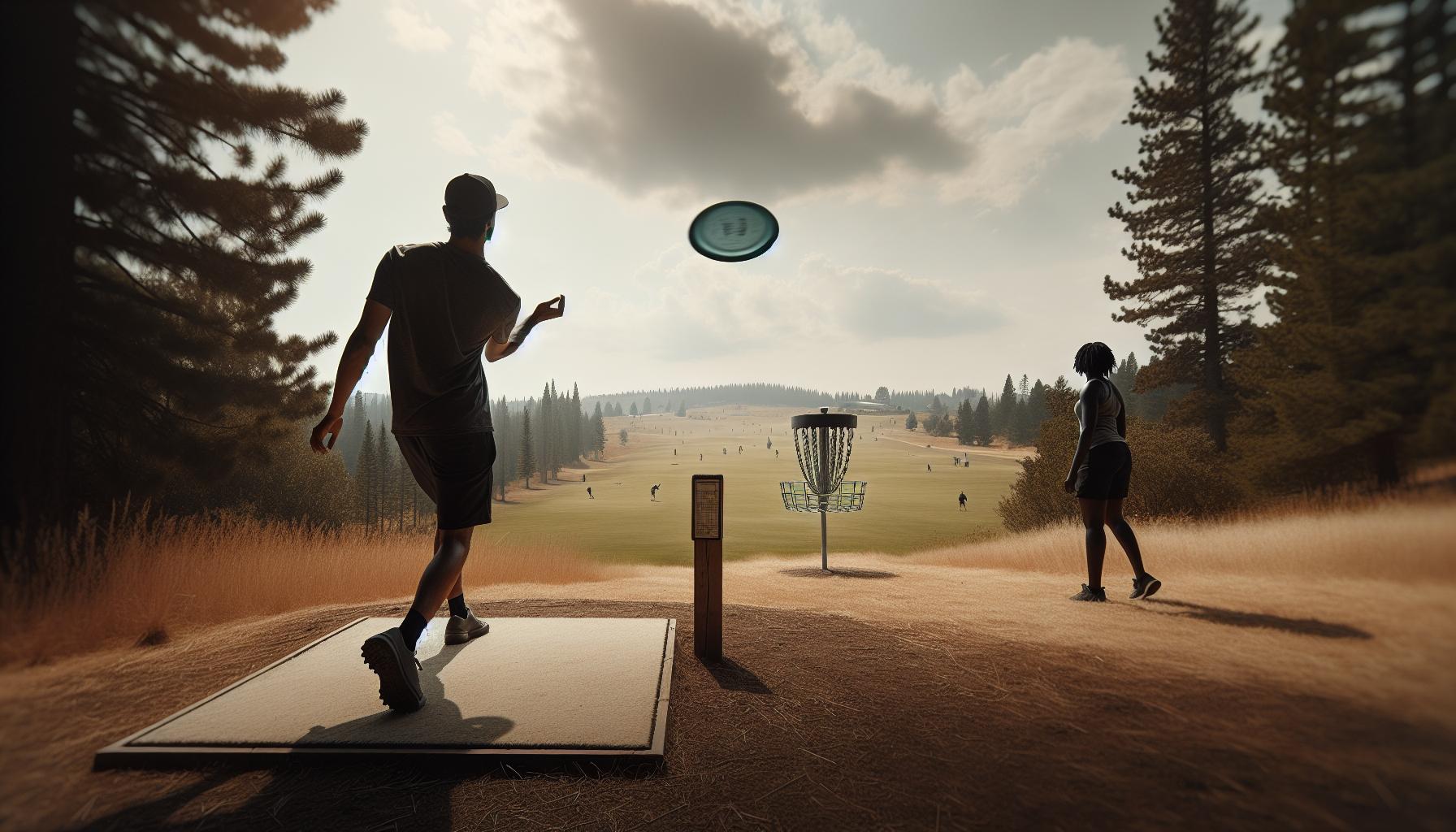
The diversity of hole lengths in disc golf shapes not just the gameplay but also the strategies players must employ to tackle each course effectively. Understanding the average lengths of different types of holes can significantly influence a player’s approach and decision-making process on the course. Most disc golf courses include a mix of par 3, par 4, and par 5 holes, each with unique characteristics that cater to various skill levels and playing styles.
- Par 3 Holes: Typically measuring between 200 to 400 feet, par 3 holes challenge players to rely on accuracy and precision, as the objective is to reach the basket with a single throw. Many players view these as opportunities to practice their short game, honing their skills with mid-range and putter discs.
- Par 4 Holes: Ranging from 400 to 600 feet, par 4s require players to make strategic decisions regarding their throws. The length demands a combination of distance and accuracy, often necessitating a strong drive followed by a precise approach. Players must weigh the risk of going for the basket in two throws against the possibility of landing safely in favorable terrain.
- Par 5 Holes: These holes are usually greater than 600 feet and can exceed 1,000 feet on some courses. Par 5 holes often include a variety of challenges, such as tight fairways, elevation changes, and strategically placed obstacles that require thoughtful shot planning and extraordinary skills to navigate successfully.
While these lengths provide a general guideline, it’s essential to consider the context of the course, including the terrain and layout. For instance, a par 3 hole on an uphill slope may require much more power than a flat par 4. Similarly, the presence of water hazards or dense trees can add complexity to seemingly straightforward holes, influencing not just their length but how players choose to approach them.
Ultimately, grasping the average lengths and associated strategies for different disc golf holes enables players to tailor their training and increase their success on the course. By becoming familiar with how distance plays a critical role in shot selection and gameplay, players can elevate their performance and grow their enjoyment of this dynamic sport.
The Importance of Hole Placement on Courses

Strategically positioning holes on a disc golf course can dramatically alter the playing experience, as the placement significantly affects both the difficulty of the hole and the strategic decisions players must make. For instance, a basket placed atop a hill not only creates a physical challenge but also tests a player’s ability to gauge elevation changes and adjust their throws accordingly. This nuance is crucial for developing a well-rounded skill set, as players often must navigate varying terrain and weather conditions throughout a round.
Effective hole placement involves a delicate balancing act between challenge and accessibility. Placing a basket behind a cluster of trees may encourage technical shots and precision, while another course designer might opt for a more open placement that rewards powerful drives. Typically, the layout is tailored to ensure that players of all skill levels can enjoy the game, but devising placements that push boundaries is also essential to increasing competition.
In addition to affecting player strategies, hole placement plays a vital role in course aesthetics and flow. An appealing course layout can enhance the disc golf experience, with holes that weave through natural landscapes or highlight unique features of the terrain. For instance, integrating a water feature forces players to make calculated risks, while visually spectacular placements at scenic overlooks can create memorable moments for those on the course.
It’s also important to consider the aspect of shear distance when placing holes. A long par 4 or 5 can be balanced by strategic obstacles that force players to think about shot selection, not simply distance. Experienced players often have a wealth of strategies for tackling such challenges, utilizing specific disc types or techniques to achieve optimal results. Holes that require a blend of distance, accuracy, and skillful maneuvering can enrich the gameplay, challenging players to constantly evolve and refine their techniques.
By understanding the nuances of hole placement, players can develop more effective strategies for each hole, enhancing their overall enjoyment and performance. Engaging with the course environment and adapting their gameplay to the unique characteristics of each hole allows disc golfers to elevate their game and expand their appreciation for this ever-growing sport.
How to Measure Disc Golf Holes Accurately

Measuring the length of disc golf holes accurately is crucial for both course designers and players. It influences not only the overall layout of the course but also the strategies employed by players during a round. A well-measured hole provides clarity on par designations, challenges, and distances that help players prepare effectively. With a growing number of courses around the globe, establishing standard protocols for measurement can enhance uniformity and fairness in the sport.
To measure a disc golf hole, professionals typically use a measuring wheel or tape measure for precise readings. The measurement should start from the tee pad to the basket in a straight line, taking into account any obstacles that may affect the shot. It’s essential to measure in a way that reflects the intended play trajectory, as the direct line often differs from the shot path due to terrain features like elevation changes or natural barriers. For courses with varied terrain, consider making measurements from multiple angles to average out potential discrepancies.
In terms of standard lengths, typical disc golf holes vary: par 3 holes generally range from 200 to 400 feet, par 4 holes from 400 to 600 feet, and par 5 holes can stretch beyond 600 feet. However, localized rules or course ratings may also play a role in defining these lengths, considering the skill level aimed at by the course. For competitions, detailed scorecards with the measured lengths can help competitors strategize their rounds better, allowing them to select appropriate discs and throwing techniques.
A good practice is to regularly review and update the measurements of each hole, especially after environmental changes such as storms or land development, to maintain course integrity and safety. By taking these systematic steps, you not only ensure that players are aware of what to expect but also contribute to the growth and professionalism of the sport, welcoming players of all levels to enjoy the challenge of an accurately measured disc golf course.
Variations in Hole Length for Different Skill Levels
Disc golf is a sport that welcomes players of all skill levels, and the variations in hole lengths help accommodate this wide range. Understanding how different hole lengths affect gameplay can improve your overall experience on the course. For beginners, shorter holes-typically categorized as par 3s-are not only less intimidating but also offer an excellent opportunity to hone fundamental skills like putting and short-range throws. These holes, generally ranging from 200 to 300 feet, serve as a perfect entry point, allowing new players to gain confidence in their abilities without feeling overwhelmed.
As players progress and become more comfortable with their throwing mechanics, they can enjoy longer holes that require more advanced skills and strategies. Par 4 holes often stretch from 400 to 600 feet and introduce additional complexities such as positioning for a second throw and navigating obstacles. These longer distances encourage players to utilize their power and precision, making decisions on disc selection and shot angles vital for success. Competitive players often seek out courses with varied hole lengths to challenge themselves in all aspects of the game, enhancing their strategic thinking and adaptability on the course.
Experienced players often prefer holes that test both technical skills and strategic planning. Par 5 holes can exceed 600 feet and usually involve multi-stage strategies, considering factors like wind conditions and terrain changes. Navigating these longer holes requires thorough course knowledge and the ability to judge distances accurately, reinforcing the idea that precision and planning are just as critical as power. Many players report that mastering longer holes significantly boosts their overall game, translating to better performance on shorter holes as well.
Incorporating these varied hole lengths not only benefits individual players but also contributes to the overall accessibility and enjoyment of disc golf as a sport. By designing courses that range from beginner-friendly to highly challenging, course designers can create an inclusive environment that encourages community growth. Players are invited to adapt their skills progressively, fostering a culture of learning and camaraderie that elevates the sport as a whole. Embracing these variations allows all players to celebrate their unique journeys on the disc golf course.
Designing a Balanced Disc Golf Course
requires a strategic approach that not only caters to varying skill levels but also enhances the overall experience for all players. An effective layout combines multiple hole lengths, diverse terrain, and thoughtfully placed obstacles, creating a dynamic environment that challenges novices and seasoned competitors alike. One of the secrets to a successful course lies in understanding how different hole characteristics influence gameplay and player development.
Start by ensuring a mix of hole lengths across the course. Shorter holes (typically par 3) encourage beginners to develop their fundamental skills, while longer holes (par 4 and par 5) push more experienced players to refine their throw accuracy, power, and strategic thinking. As players navigate through diverse lengths, they learn to adapt their techniques and disc choices, enriching their gameplay. For instance, placing a challenging par 3 with a tight fairway after a series of longer holes can refocus players’ attention on precision, making them more adept at handling varied scenarios on the course.
Terrain also plays a significant role in course design. Incorporating natural features such as hills, water hazards, and wooded areas not only enhances the visual appeal but also introduces unique challenges that can diversify gameplay. Players must consider factors like wind, elevation change, and the risk of landing in a difficult spot, which encourages strategic thinking. For example, a downhill hole may allow for powerful drives, while an uphill hole may require a delicate touch. Balancing these elements ensures players stay engaged and challenged regardless of their skill level.
Moreover, consider the importance of hole placement and layout symmetry. Strategic placement can create excitement and drama, inviting players to think critically about each shot. Ensure that holes are positioned in ways that promote natural flow throughout the course, avoiding abrupt transitions that could disrupt a round’s rhythm. Additionally, providing both left and right doglegs allows players to practice different throwing techniques, broadening their skill set.
In conclusion, a well-designed disc golf course celebrates the sport’s community while catering to the diverse needs of its players. By thoughtfully balancing hole lengths, employing varied terrains, and strategically placing obstacles, course designers can construct an environment that nurtures growth, competition, and the joy of the game. Embracing this multi-faceted approach not only challenges players but also fosters a deep connection to the sport, ensuring that every round brings new adventures and learning opportunities on the disc golf course.
Exploring Unique Hole Styles and Challenges
Creating engaging and challenging hole styles is essential for enhancing the overall experience of playing disc golf. Unique hole designs not only test a player’s skills but also keep the game fresh and exciting. From elevation changes to unique angles and obstacles, the incorporation of diverse hole styles encourages players to adapt their strategies and throwing techniques.
One effective way to create variety is through the use of elevated tee pads and basket placements. For instance, a hole that starts on a hill and descends toward the basket can create an exhilarating throw that tests distance and accuracy. Alternatively, a basket placed on an elevated platform or inside a natural bowl may require a more precise approach to land the disc at the right angle. These types of challenges promote the development of advanced techniques such as anhyzer and hyzer throws as players learn to navigate their discs through different heights and angles.
Another approach is to utilize natural obstacles such as trees and water hazards. Incorporating tight fairways flanked by trees can challenge even the most skilled players, forcing them to execute precise throws that avoid potential OB (out-of-bounds) areas. Water hazards, whether they be small streams or ponds, add a layer of strategy as players must decide between taking a safer route or attempting a more challenging shot over the hazard. Such decisions can significantly affect one’s score and overall round experience, fostering a deeper engagement with the game.
Additionally, designing holes that require varied throwing techniques can greatly enrich the course layout. Incorporating doglegs-where the hole bends left or right-forces players to think about their disc selection and angle of release. For example, a left-to-right dogleg might encourage a backhand throw with a stable disc to achieve the desired fade, whereas a right-to-left curl may demand a forehand or a turnover throw. By mixing different styles, course designers can cater to a wide range of players, providing opportunities for newcomers to learn and experienced players to refine their skills.
To summarize, unique hole styles and challenges contribute significantly to the dynamics of a disc golf course. By incorporating elevation changes, natural obstacles, and varied throwing techniques, designers can create a course that not only tests players’ abilities but also enhances their enjoyment and engagement with the sport. Such thoughtful design not only draws in players of all skill levels but also fosters a vibrant community eager to share their experiences on the course.
Tips for Playing Different Length Holes
Understanding how to approach different hole lengths is crucial for successful disc golf play. Each hole presents its own unique set of challenges and opportunities, making it essential to adapt your strategy accordingly. Whether it’s a short par 3 or a long par 5, the key to effective play lies in understanding your disc selection, throwing technique, and course management.
For shorter holes, such as those under 300 feet, precision is paramount. These holes often favor finesse over power. Selecting a stable putter or midrange disc can provide the necessary glide and accuracy without straying off course. Focus on your stance and follow-through to ensure that your disc travels straight towards the basket. Practice approaches from various angles to build confidence, as tighter fairways with obstacles can become tricky, requiring creative shot shaping. Consider using hyzer or anhyzer angles to navigate around trees or other hazards.
As the length increases, for example, on medium holes ranging from 300 to 400 feet, players should begin to think strategically about their shot placement. Here, distance drivers come into play; however, it’s vital to maintain control. A common mistake is to overestimate power, leading to errant throws. Instead, focus on a smooth release and utilize a disc that offers a good balance of distance and stability. This is also where course knowledge becomes essential: know where the basket is located, any potential out-of-bounds areas, and the optimal landing zones for your follow-up shot.
For the longest holes, exceeding 400 feet, strategy is heavily influenced by the need for accurate distance and a well-placed drive. Begin with a solid warm-up, as these throws require more energy and precision. Consider breaking the hole into segments-attacking the first half to set up an optimal position for your second shot. Use a distance driver with the right amount of stability to ensure a controlled flight, allowing you to maintain trajectory without veering off into trouble. Additionally, learning to read the wind is invaluable on longer holes, as this can significantly affect your disc flight.
In summary, adapting your game to the length of the hole is about making informed choices based on disc flight characteristics, your own skills, and the course’s layout. By developing a versatile skill set and understanding how different discs perform, players can confidently tackle holes of any length. Embracing these tips will not only improve your scores but also enhance your enjoyment of the game as you tackle new challenges on the course.
The Impact of Terrain on Hole Length and Strategy
Understanding how various terrains affect hole lengths in disc golf can significantly transform your gameplay strategy. Just as a golfer adjusts their swing based on the condition of the course, a disc golfer must consider how the ground beneath them influences throw dynamics, available angles, and the overall difficulty of a hole. Terrain can range from flat, open fields to hilly, wooded landscapes, each presenting a unique set of challenges and opportunities.
When playing on hilly terrain, altitude changes can drastically impact the distance a throw needs to cover. For instance, a hole that measures 350 feet on level ground may feel much longer when thrown uphill, due to the increased effort and understanding of angle required. Throwing downhill can also create additional risks, such as overshooting the target or landing in tricky terrain. Players must account for the slope and adapt their approach-often resulting in the use of more stable discs to maintain control amidst shifting wind patterns or uneven landings.
Dense woods introduce another layer of complexity. Here, holes may seem shorter on a map, but navigating through trees can require significant throws to find the right path. Precision takes precedence over distance, as errant shots could easily result in damage to your score. This scenario can lead players to favor more strategic shots, such as flicking with understable midranges to weave through obstacles while calculating risk versus reward.
Conversely, open courses allow for longer hole lengths but often come with their own set of challenges, such as unpredictable winds. Understanding wind direction and strength is crucial when selecting your disc, as it can dramatically alter flight paths over longer distances. A headwind may require a more stable disc, while a tailwind could encourage a player to opt for a more aggressive drive, enhancing their distance potential.
Incorporating these terrain considerations into your game plan not only fine-tunes your strategies but also enriches your overall experience on the course. By embracing the nuances of different terrains, players can develop a comprehensive understanding of how to tackle each hole’s unique demands, ultimately leading to improved performance and enjoyment of the sport.
Future Trends in Disc Golf Course Design
As the sport of disc golf continues to gain traction worldwide, course designers are exploring innovative ways to enhance player experience and challenge their skills. One prominent trend is the emphasis on sustainability and eco-friendliness in course design. Many new courses are being built in harmony with nature, utilizing natural terrain features to create engaging and dynamic courses while minimizing environmental impact. This could include selecting locally sourced materials for baskets and tees, as well as planning placements that preserve local flora and fauna. Eco-friendly designs not only appeal to environmentally conscious players but also encourage a deeper connection with nature.
Another exciting development is the integration of technology in course planning and play. With advances in mapping and drone technology, designers can now analyze terrain with unprecedented accuracy, allowing them to optimize hole layouts based on both natural challenges and player skill levels. Additionally, some courses are implementing augmented reality (AR) features that enable players to view hole layouts, trajectory angles, and other strategic options through their smartphones. This technology makes learning and strategy more accessible, especially for newcomers trying to understand distances and shot placements.
In line with promoting inclusivity, more courses are being designed to accommodate players of all skill levels and abilities. This includes creating shorter, more accessible tees for beginners and incorporating adaptive design elements that allow individuals with disabilities to enjoy the game. Such inclusive setups encourage a broader community engagement, enhancing the sport’s reputation as an activity for everyone.
Lastly, as competitive play evolves, so too does the design philosophy behind tournament courses. Many designers are focusing on crafting holes that provide varied shot demands, ensuring that players need to leverage a range of skills-from distance throws to precise approaches-to score well. This not only heightens the challenge but also elevates the viewing experience for spectators, making tournaments more engaging for both players and fans alike.
In essence, the future of disc golf course design is set to be characterized by sustainability, technological advancements, inclusivity, and strategic complexity, all contributing to a richer experience for players at every level.
Faq
Q: What is the typical length of a disc golf hole?
A: The typical length of a disc golf hole ranges from 200 to 500 feet (about 61 to 152 meters). Shorter holes often cater to beginners, while longer holes challenge more experienced players, emphasizing the variety in course design.
Q: How do course designers determine the length of a disc golf hole?
A: Course designers consider several factors to determine hole length, including terrain, skill level, and playability. They aim to create a balanced course that offers a range of challenges while keeping players engaged.
Q: Are there different hole length standards for different skill levels in disc golf?
A: Yes, there are different hole length standards based on skill levels. Beginner courses often feature shorter holes, around 200-250 feet, while advanced courses may have holes exceeding 400 feet, catering to both novice and seasoned players.
Q: What is the longest disc golf hole ever recorded?
A: The longest disc golf hole officially recorded is 1,100 feet (approximately 335 meters) at the Goose Island Disc Golf Course in the USA. Such extreme lengths provide unique challenges and are typically found in specially designed courses.
Q: How can players improve their performance on longer disc golf holes?
A: To improve performance on longer holes, players should focus on their throwing technique, accuracy, and strategy. Practicing distance throws and learning to manage obstacles can greatly enhance gameplay on lengthy courses.
Q: Why is hole placement important in disc golf?
A: Hole placement is crucial as it impacts the difficulty and strategy of a course. A well-placed basket can force players to navigate obstacles, encouraging creative shot-making and varying the overall experience based on skill levels.
Q: What is the significance of different hole styles in disc golf?
A: Different hole styles, such as doglegs or open fields, each present unique challenges and can influence player strategies. Understanding these styles can help players adapt their game plans effectively.
Q: How can I accurately measure a disc golf hole?
A: To accurately measure a disc golf hole, you can use a measuring tape or a GPS device, tracing the path from the tee to the basket. It’s essential to follow the layout of the hole, accounting for any obstacles along the way.
Concluding Remarks
Now that you know how the length of a disc golf hole can impact your game and enhance your overall experience, it’s time to put this knowledge to practice! Remember, varying hole lengths serve unique strategic purposes that can sharpen your skills and deepen your love for the sport. If you’re eager to improve your game, check out our guides on disc flight characteristics and throwing techniques to elevate your performance on the course.
Don’t forget to subscribe to our newsletter for the latest disc golf tips and exclusive discounts on gear! Have any thoughts or questions? We want to hear from you-drop a comment below or share this guide with fellow disc golf enthusiasts. Looking to explore more? Dive into our articles on course strategy and competitive tournaments that provide further insights into becoming a better player. Keep playing and challenging yourself; the disc golf community is waiting for you!
Get our latest guides, news, and insights highlighted in your Google Search & AI Overviews.