Did you know that mastering the sidearm throw can significantly elevate your disc golf game? The sidearm, or forehand, technique is essential for navigating tight fairways and executing sharp turns, making it a pivotal skill for players at all levels. Whether you’re a beginner eager to improve or a seasoned competitor looking to refine your strategy, learning the nuances of this powerful throw is crucial.
By understanding the mechanics behind the sidearm throw, you can unlock new opportunities for distance and accuracy on the course. This guide will walk you through the essential techniques, equipment recommendations, and practical tips to help you throw like a pro. Get ready to enhance your disc golf skills and discover how a well-executed sidearm can transform your gameplay, leaving opponents in the dust. Let’s dive in!
How Sidearm Throws Improve Your Game
Understanding how to throw a disc golf disc with a sidearm technique can be a game-changing skill for both casual players and serious competitors. It provides versatility, distance, and control, allowing athletes to navigate obstacles and breathe life into their course strategy. While many players may rely exclusively on backhand throws, incorporating sidearm techniques not only diversifies a player’s skill set but also opens up various angles and approaches, drastically improving overall game performance.
One of the most significant advantages of sidearm throws is the ability to execute sharp and accurate shots with less effort. This technique is particularly useful for navigating tight fairways or when throwing around obstacles; the naturally flatter trajectory cuts through the air and often reduces the variables of wind interference. Think of it this way: a sidearm throw can allow higher-speed discs to reach their potential without as much risk of spiraling out of control. Proponents of this style often cite how it complements their backhand by providing alternate lines that are more appropriate for specific terrain features.
Moreover, mastering sidearm throws contributes to your competitive edge, especially on courses with distinctive layouts. By learning to read disc flight patterns better and understanding how to manipulate the throw to achieve different results, you’ll consistently position yourself for lower scores. For instance, executing a sidearm approach towards a basket located at a leftward angle can allow you to maintain a clean path without needing to navigate through other players or obstacles mid-throw. The sidearm can create unique angles that can lead to higher chances of making those tricky putts under pressure.
Finally, while the mechanics of the sidearm throw may seem complex at first, they become intuitive with practice. Whether you’re a beginner adjusting your technique or an advanced player refining your skills, focusing on the sidearm will enhance your strategic options during play. As you integrate this throw into your routine, you’ll likely discover not only improvements in your overall skills but newfound confidence in handling challenging shots that would have otherwise seemed daunting. This flexibility and enhanced capability to adapt to course imperfections is what distinguishes average players from seasoned competitors, establishing itself firmly as a critical component of the modern disc golfer’s toolkit.
Understanding the Mechanics of the Sidearm Throw
Understanding the mechanics of a successful sidearm throw can elevate your disc golf game from average to exceptional. The sidearm technique, often referred to as forehand throwing, enables players to generate speed and accuracy with less physical exertion compared to other throwing styles. It allows golfers to finesse their shots around obstacles and navigate tight areas on the course effectively. The beauty of the sidearm throw lies in its mechanics, which, once mastered, can feel nearly second nature.
To successfully execute a sidearm throw, you need to focus on a few key mechanics:
Grip and Hand Position
The grip is one of the first aspects to get right in a sidearm throw. Hold the disc firmly yet comfortably using your index finger on the inside rim, the middle finger pressing against the bottom of the disc, and the thumb resting firmly on the top. Your remaining two fingers should be tucked against the disc body. This grip provides maximum control and allows for a quick release that is essential for effective sidearm throws.
Body Alignment
Your stance and body alignment are crucial for power and accuracy. Stand with your feet shoulder-width apart, positioning your non-throwing shoulder facing the target. Your throwing elbow should be at a 90-degree angle while your wrist remains cocked back. As you prepare to throw, shift your weight from your back foot to your front foot while rotating your hips toward the target. This weight shift is where much of the power originates and allows for an explosive follow-through.
Follow Through for Distance
The follow-through in a sidearm throw cannot be overlooked. After releasing the disc, continue your motion by extending your arm in the direction of the throw while rotating your shoulder around. This will help maintain spin on the disc and contribute to the length of your throw. A common mistake is to stop your arm abruptly after release, which can diminish the disc’s distance and stability.
By mastering the nuances of grip, body alignment, and follow-through, you enhance not just your sidearm throw but your overall game. Experiment with different discs to see how they respond to this throwing technique. Keep in mind that different weights, rims, and stability ratings can significantly affect your throw’s trajectory and resulting flight path. Here’s a quick table to help you get started:
| Disc Type | Weight (grams) | Stability Rating | Best Use |
|---|---|---|---|
| Distance Driver | 160 – 175 | Overstable | Longer throws with a sidearm |
| Midrange | 160 – 180 | Stable | Tight control shots |
| Putters | 150 – 175 | Understable | Short approach and accuracy |
By incorporating a well-understood sidearm throw into your skill set, you’ll find new paths on the course and discover confidence in your ability to handle any challenge that arises. As you practice, remember that even the pros continue to fine-tune this technique, proving that mastery is an evolving journey rather than a destination.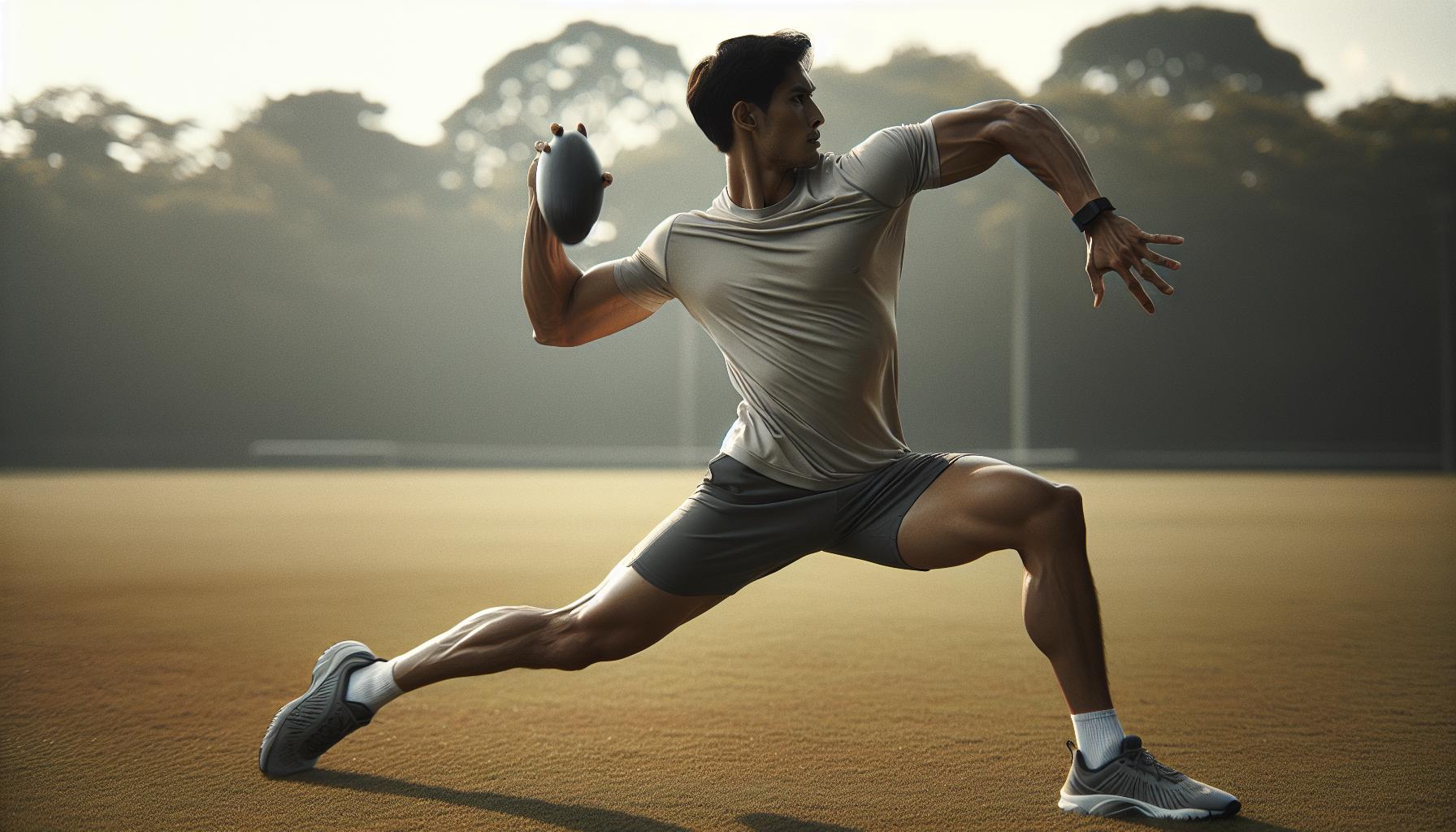
Essential Grip Techniques for Powerful Throws
Mastering the grip on your disc is one of the most crucial aspects of a successful sidearm throw, allowing you to maximize power, accuracy, and control. Many players overlook this detail, but a proper grip can mean the difference between a powerful, controlled throw and one that flails out wildly. Focusing on how you handle the disc sets up your entire throwing motion and influences the disc’s flight path.
To achieve optimal grip, it’s essential to keep in mind the recommended techniques that seasoned players utilize. Start by placing your index finger inside the disc’s rim, pressing firmly against the inside. The middle finger should lay snugly against the bottom of the disc, providing stability, while the thumb is firmly positioned on top of the disc for added control. This grip allows you to produce a clean snap-off the fingertips, which is vital for generating spin and distance. Curiously, some players opt to use their pointer finger extended along the flight plate in an “index finger poke” grip, which enhances precision during tight shots. Experiment with both styles to find what feels most comfortable and effective for you.
Considerations for Grip Pressure
The amount of grip pressure you apply to the disc is equally important. A relaxed grip can lead to a lack of control, while too much pressure may create tension that hinders your throw. A relaxed grip creates the ideal scenario for a smooth release. Aim for a grip that feels solid yet allows the disc to slide off your fingers seamlessly during the follow-through. Many players find that they have to reassess their grip pressure with each disc type, as heavier discs may require a firmer hold while lighter discs could be thrown with a bit less pressure.
Adjusting for Disc Types
Switching between different disc types and weights can make a significant difference in how you grip the disc. Here’s an overview of popular disc types and the grip modifications that can enhance your throw:
| Disc Type | Grip Adjustment | Reason |
|---|---|---|
| Distance Driver | Firm grip with index finger extended | To maximize speed and reduce wobble |
| Midrange | Moderate grip with a focus on accuracy | To ensure controlled flight path |
| Putters | Light grip with full finger contact | To encourage gentle release and stability |
As you refine your grip, it’s important to remember that practice makes perfect. Incorporate grip drills into your routine, throwing with different disc types to develop a feel for each style. Focus on consistency by replicating your grip every time you throw. As you become confident in your grip, you’ll find that your overall sidearm performance will improve, allowing you to tackle the course with strategic finesse. Ultimately, a well-executed sidearm throw begins with an intentional, practiced grip that will set the stage for your success on the course.
Step-by-Step Guide to Perfecting Your Sidearm Form
To truly elevate your disc golf game, perfecting your sidearm throw is crucial. This technique is not only about sheer power but also about finesse and precision. When executed correctly, a sidearm throw can outmaneuver obstacles and bring a new strategic element to your play. Here’s how you can develop a flawless sidearm form that will enhance your overall game strategy.
Starting Position
Begin by standing sideways to your target, with your feet shoulder-width apart. Your non-throwing shoulder should be facing the target, while your throwing arm is extended at a 90-degree angle. This stance maximizes your body’s rotational potential and prepares you for a powerful throw. Bend slightly at the knees to maintain balance and ensure you’re grounded for the motion ahead.
Pulling and Snapping the Disc
As you transition from the starting position, initiate the throw by pulling the disc towards your hip while keeping your elbow tight against your body. This movement engages your core and ensures a compact, explosive throw. Once the disc is near your hip, start rotating your torso and hips toward the target. This rotation is key; it generates the energy needed for a successful sidearm throw.
At this point, the most critical element comes into play: the snap. As your body rotates and your arm moves forward, focus on releasing the disc from your fingertips. The snap will generate the necessary spin for stability and distance. Your thumb should remain firmly pressed on top of the disc while your index and middle fingers provide guidance and control. Aim to release the disc when your arm is parallel to the ground, ensuring a flat and direct flight path.
Follow-through
Don’t overlook the follow-through; it’s just as crucial as the setup and execution. After releasing the disc, allow your arm to extend entirely in the direction of your target. This ensures you maintain balance and helps prevent straying off path. Your body should naturally shift weight onto your leading foot, completing the motion beautifully.
Practice Essentials
Improving your sidearm form requires consistent practice. Engage in drills that allow you to focus on each phase of the throw. Here are a couple of drills to incorporate into your routine:
- Mirror Drill: Find a mirror or video yourself to focus on your form and posture in real-time during the throw.
- Target Practice: Set up targets at various distances to refine your accuracy and speed.
Ultimately, developing your sidearm throw comes down to attention to detail and smooth mechanics. By honing each part of your technique, from stance to release, you’ll not only enjoy a more successful game but also develop the confidence to tackle any course with flair and strategy. Remember, every great player started where you are now-so embrace the learning curve and enjoy the journey!
Common Mistakes and How to Avoid Them
To truly master the sidearm throw in disc golf, it’s essential to recognize and address common mistakes that can sabotage your performance. Even seasoned players can fall into these pitfalls, leading to inconsistency and frustration on the course. By identifying these missteps and knowing how to correct them, you’ll be well on your way to executing powerful and precise sidearm shots.
One prevalent mistake is overreliance on arm strength rather than using the entire body. Many throwers tend to focus solely on their arm during the throw, neglecting the contributions of their core and legs. To overcome this, ensure to engage your hips and torso throughout the motion. Practice rotating your body as you initiate the throw, allowing your legs to drive power through your core and into your throwing arm. Focusing on your body’s mechanics will not only increase distance but also improve accuracy.
Another frequent error involves releasing the disc too early. This can lead to wobbly throws and decreased control. Aim to allow your arm to extend fully before releasing the disc. Visualize the release point as your arm moving parallel to the ground. A helpful drill is to practice your throwing motion slowly without a disc; this can help embed the feel of the correct follow-through. Once you’re comfortable, gradually increase your speed while maintaining your form.
A mistake that players often overlook is the grip on the disc. If your grip is too tight, it can lead to unnecessary tension in your arm, affecting the throw’s fluidity and causing inaccurate shots. Conversely, a grip that is too loose can result in the disc slipping from your fingers prematurely. To find the balance, practice holding the disc just firmly enough to maintain control while allowing your fingers to have enough movement to snap the disc effectively.
Lastly, many players struggle with maintaining a consistent stance. Inconsistent foot placement can lead to variations in your throws and hinder your ability to replicate successful shots. Start by establishing a routine for your stance, which should feel balanced and stable. A good practice is to find a comfortable throwing position, then try to replicate it each time you prepare to throw.
By actively working to avoid these common mistakes, you’ll refine your sidearm technique and enhance your performance on the course. Regular practice, mindfulness of your form, and a commitment to continual learning will all lead to significant improvements, helping you unleash the full potential of your sidearm throw. Remember, perfection is a process, and with each throw, you’re one step closer to elevating your game.
Choosing the Right Discs for Sidearm Throws
Choosing the right disc for your sidearm throw can significantly impact your performance and confidence on the course. Selecting a disc with the right weight, stability, and mold can either empower you to find those hidden lines or frustrate you when trying to achieve distance and accuracy. Understanding the fundamental characteristics of discs is crucial for any player looking to up their game.
When focusing on a sidearm shot, consider the stability of the disc. Discs are categorized primarily as stable, understable, or overstable. For beginners or players still developing their sidearm technique, understable discs can be forgiving, allowing for easier turns and longer flights before fading out. These discs help players learn the mechanics of a sidearm throw without the added pressure of trying to manage an overstable disc that might dump left for a right-handed thrower. Examples of excellent understable options include the Innova Leopard or the Discraft Buzzz SS, both of which deliver reliable flight patterns.
As you progress in your skills, transitioning to a more stable or overstable disc will provide better control and sharper lines on tighter fairways or into headwinds. Overstable discs typically finish with a stronger left motion, making them effective for sharp turns and predictable landings. Models like the Innova Firebird or the Dynamic Discs Freedom offer consistency for those stronger throws, allowing you to navigate obstacles effectively.
Disc Weight & Grip
Another factor impacting your sidearm throw is the weight of the disc. Generally, beginners may opt for a lighter disc (around 160-170 grams), which is easier to control and offers additional distance. As your proficiency grows, you might explore heavier discs (170-175 grams), which provide more stability and better performance in windy conditions. This slight increase in weight, combined with proper grip techniques, equips players to achieve greater accuracy and distance.
It’s also worth noting that the grip on the disc plays a vital role in a successful sidearm throw. Look for discs with a comfortable texture and rim width that fits your hand well. The right grip allows for a smooth release and can help prevent unwanted turnovers during your throw. Personal preference varies widely in the disc community, so experimenting with different molds and feels is part of discovering your ideal setup.
Lastly, insights from seasoned players offer a wealth of information when choosing discs. Many professional disc golfers often recommend having a small selection of discs dedicated to sidearm shots, ensuring they are equipped for various course challenges. Whether it’s for threading through trees or clearing hazards, the right disc can make all the difference in enhancing your performance and overall enjoyment of the game.
By carefully selecting the right discs for your sidearm throws, you can maximize your potential both in practice and on the course, gaining the confidence needed to tackle any challenging layout with poise and precision.
Analyzing Disc Flight Patterns for Sidearm Shots
Understanding how discs behave in the air is crucial for maximizing your sidearm throw’s effectiveness. Each disc has a unique flight pattern shaped by its stability, weight distribution, and design. When you can analyze and anticipate these flight characteristics, you can plan your throws with precision, turning even the most intricate course layouts into manageable challenges.
When you throw a disc sidearm, its flight path can be generally understood through several key phases: the hyzer, anhyzer, and flat releases.
Flight Path Breakdown
- Hyzer Release: A hyzer angle occurs when the disc is released with the top tilted away from the ground. This is particularly beneficial for right-handed throwers aiming to navigate tree-lined fairways. A well-executed hyzer with an overstable disc will result in a powerful, sweeping arc that lands predictably on the left side.
- Anhyzer Release: An anhyzer angle is when the disc is tilted downward, leading to an initial turn to the right before stabilizing. This release can be advanced for navigating obstacles or achieving longer distances as the disc bends back to its original flight path. It’s particularly useful in flex shots where you want the disc to penetrate deep yet come back from the right.
- Flat Release: A flat release keeps the disc level through the entire flight. This technique can yield a straight flight path, providing great distance and minimizing early fade. It’s ideal when you want to transition smoothly through the course without unnecessary turns.
Determining your optimal throw type based on the specific hole layout and wind conditions is essential. For instance, many players rely on understable discs when attempting to execute an anhyzer release. This synergy allows for longer carry and a more forgiving path through varying wind conditions. Conversely, overstable discs shine in manageable headwinds, as their resistance to turning ensures a crisp finish.
Evaluating Disc Stability and Your Throw
Moreover, when analyzing the combination of disc stability and your throwing technique, consider the interplay between your grip and the release mechanics. A tight grip with the right wrist angle can drastically affect how the disc responds to its intended path. The tactile feel promotes a consistent throw, leading to dependable performance whether you’re on a casual round or playing in a high-stakes tournament.
Finally, seasoned players often conduct their own on-course evaluations as part of their training regimen. They might categorize their discs based on how they perform under similar conditions, creating a reference guide for their go-to throws. Documenting disc performance after each throw can help you refine your approach and card memorable rounds with significantly fewer ‘what ifs.’
Mastering the analysis of disc flight patterns for sidearm throws not only enhances your skill but also deepens your appreciation for the sport. By recognizing how discs respond in various conditions and applying that knowledge to your game, you’ll confidently navigate any course with precision and flair. Happy throwing!
Tips for Practicing Your Sidearm Throw
To truly master the sidearm throw in disc golf, consistent and focused practice is essential. Just like any skill in sports, the key to improvement lies in repetition and refining your technique. Start by dedicating specific practice sessions to your sidearm throw, focusing on the mechanics of the throw rather than sheer power. A common misconception is that more strength translates to better distance; however, precision and form dominate in creating a reliable and effective throw.
One effective drill is to practice your grip and release separately. Begin by standing still and throwing without stepping, concentrating solely on your wrist snap and follow-through. This helps ingrained muscle memory without the added complexity of footwork. As you gain confidence, introduce foot movements into your routine by using a step-through or x-step approach. Incorporate both short and long-range throws to adjust your technique according to varying distances. Over time, examine your disc’s flight path and make note of any adjustments needed based on wind conditions and terrain.
To further enhance your practice, consider setting up targets at various distances. Using cones or marked spots on the ground can help you develop your accuracy while simulating real-course scenarios. Challenge yourself with varying angles-practice hyzer and anhyzer releases to understand how these positions affect your throw.
Another powerful tool for improvement is seeking feedback. Whether you’re playing with friends or recording your throws, capturing your technique can reveal insights that help you identify and rectify mistakes. Join a local disc golf community to share tips and gain valuable advice from experienced players. Many seasoned players are more than willing to share their knowledge, and a supportive community can significantly impact your progression in the sport.
As you refine your sidearm throw, keep in mind that success doesn’t come overnight. Embracing a mindset of persistence and patience will direct your focus and motivation towards improvement. Celebrate small victories along the way, such as mastering a specific angle or increasing your distance. With time, practice, and the right knowledge, your sidearm throw will evolve, transforming your overall disc golf game. Happy throwing!
Course Strategy: When to Use the Sidearm Technique
In the dynamic landscape of disc golf, strategic decision-making is just as crucial as technical proficiency. Knowing when to employ the sidearm throw can significantly influence your performance on the course. Often regarded as a tool for versatility and control, the sidearm is particularly effective in specific situations that can give you a competitive edge over your opponents.
One common scenario where the sidearm comes into play is when faced with tight doglegs or obstacles that require a sharp turn. The sidearm throw allows for a stronger angle control, making it easier to navigate around trees or bushes. Utilizing a sidearm can also deliver power while maintaining accuracy, ideal for getting around challenging course features. For example, a right-handed player may find that a sidearm throw easily curves around a left-turning dogleg, allowing for an unobstructed path to the basket.
Another strategic application for the sidearm throw is in windier conditions. The sidearm typically presents a lower profile flight path, which can reduce the disc’s susceptibility to gusts that might push an overhead throw off course. This characteristic makes it a reliable choice when playing in swirling or strong winds, where maintaining a steady trajectory is essential. Consider practicing sidearm shots in various wind conditions to become adept at adjusting your throw and disc selection accordingly.
Effective Situations for Using the Sidearm
- Navigating Obstacles: When approaching a critical line with trees or barriers, the sidearm’s natural curve can be advantageous.
- Pushing Through Wind: Low profiles help maintain control in challenging weather, ensuring predictable flight patterns.
- Creating Angles: Sidearm throws allow players to generate specific angles for better disc placement, particularly on sharp turns.
One often overlooked aspect of course strategy involves the terrain of the fairway. When dealing with uneven ground, such as slopes or inclines, the sidearm can offer greater stability and control, ensuring a confident release. Players may also find moments where a forehand throw leads to a better landing zone, giving them an opportunity for a clearer second shot.
Ultimately, integrating the sidearm throw into your game plan means more than simply adding another skill to your arsenal-it involves understanding the strategic implications of each throw and making calculated decisions based on the course layout and conditions. Embrace the versatility of this technique, and you’ll discover how it seamlessly enhances your overall approach to the game, making you not only a more adaptable player but also a formidable competitor on the course.
Incorporating Sidearm Throws into Your Game Plan
Incorporating a sidearm throw into your disc golf repertoire can be a game-changer, offering you versatility in your shots and the ability to tackle a variety of course challenges. Many players find themselves at a crossroads when faced with tight fairways or tricky wind conditions; this is where understanding how to strategically employ a sidearm throw can make all the difference. The ability to vary your throwing style not only keeps your opponents guessing but also allows you to play to your strengths on the course.
To effectively integrate sidearm throws into your game plan, start by assessing the specific holes and conditions you encounter during your rounds. For instance, on a course with numerous doglegs or obstacles, consciously choose to practice your sidearm shots. This technique enables you to maneuver around barriers and navigate sharp angles with greater control. Remember, choosing the right disc for these throws-typically one with a stable or overstable flight path-will help ensure that your throw glides smoothly while curving in the direction you desire.
Next, consider how different weather conditions might affect your strategy. Sidearm throws can be especially beneficial when playing in windy situations, as the lower flight profile can reduce wind drag. If you know the forecast calls for strong winds on the day of your game, prioritize practicing sidearm throws beforehand. Engage with fellow players to discuss which discs perform best in specific wind conditions, sharing insights on flight patterns and grip techniques that others have found effective.
- Assess Course Layout: Map out where sidearm shots can optimize your performance, such as on sharp doglegs or when approaching elevation changes.
- Adapt to Conditions: Be ready to shift your approach based on the wind, opting for sidearm throws when wind conditions challenge your alternatives.
- Practice with Purpose: Use practice rounds to dedicate time specifically to sidearm shots, honing your technique and developing muscle memory.
Finally, make it a priority to observe and learn from seasoned players. Watching how professionals incorporate sidearm throws into their game can offer valuable insights into timing, angle, and choice of disc. Engage in discussions at your local disc golf community or read interviews with pro players to grasp how they have integrated this technique into their strategies over time. By embracing the sidearm throw, you not only enhance your skills but also contribute to the growing narrative of disc golf as an exciting and competitive sport.
Insights from Pro Disc Golfers on Sidearm Techniques
In the world of disc golf, mastering the sidearm throw can significantly elevate a player’s game, and who better to turn to for insights than the professionals who have honed their craft on the course? Legendary players like Paul McBeth and Chris Dickerson have shared their perspectives on the nuances of sidearm throwing, emphasizing that it’s not just a technique; it’s a vital aspect of strategic gameplay that can dramatically affect your performance on the course.
One crucial element highlighted by many pros is the importance of disc selection. Different discs behave uniquely based on their design-weight, stability, and rim profile-making the right choice essential for a successful sidearm throw. For instance, McBeth prefers using a stable to overstable disc that can handle the torque of sidearm throws without flipping too much, which can lead to undesired results. Conversely, lighter discs can be too prone to wind conditions, while heavier options may not provide the same flickability when you need quick snaps on tight fairways.
Additionally, the pros stress the significance of mental preparation. Professional disc golfers like Paul Ulibarri often mention how visualization plays a critical role in executing sidearm throws. They recommend mentally rehearsing the specific shot shape and trajectory you want to achieve before you throw. This technique helps in building confidence and clarity when you step up to the tee, ensuring you have a clear target and a plan.
Furthermore, several pros advocate for consistent practice, emphasizing the value of refining technique over time. They suggest integrating sidearm drills into your regular practice routine. Engagements such as throwing sidearm shots at varying angles or experimenting with different disc weights and types can provide valuable feedback on your mechanics. As expressed by Jessica Weese, regular feedback-from fellow players or self-analysis-is essential for improvement. Recording your throws and comparing them against professional examples can also facilitate learning, helping you identify aspects in your form that may need adjustment.
Overall, the insights from professional disc golfers serve as a powerful reminder that while technical skills are crucial, the mindset, strategy, and consistent practice play equally vital roles in mastering the sidearm throw. Embrace these tips and watch as you integrate this technique into your game, making it a seamless addition to your shot repertoire.
Building Your Confidence: Mental Game for Sidearm Players
Building a strong mental game can be the difference between an average round and a standout performance, especially when it comes to executing sidearm throws in disc golf. While the mechanics of the throw are crucial, mental preparation often provides the foundation for confidence and consistency. Many seasoned players attest to the power of visualization, a technique that allows you to mentally rehearse each throw before it leaves your hand. Visualizing the flight path of your disc, the feel of your grip, and the snap of your wrist creates a mental blueprint that can enhance your actual performance on the course.
The Power of Visualization
When embarking on your disc golf journey, integrating visualization into your routine can exponentially improve your execution. Before you step up to the tee, take a moment to picture every aspect of your upcoming sidearm throw. Imagine the disc flying flawlessly through the air, cutting through wind resistance, and landing precisely where you intend. This exercise not only calms nerves but also reinforces muscle memory, making your physical execution more fluid and instinctive.
Consider the story of professional player Jessica Weese, who often credits her success to this very practice. She emphasizes the importance of seeing the throw in her mind before it happens, stating that doing so helps her approach every shot methodically. Following her lead, make it a habit to visualize not just the throw but the entire course layout. See yourself thriving during the round, handling obstacles confidently, and pulling off precise sidearm shots when needed.
Focus on Positive Self-Talk
Equally important in building confidence is the internal dialogue you engage in while preparing for each throw. Negative thoughts can sabotage your performance and amplify anxiety. Instead, practice positive self-talk! Remind yourself of your skills, your preparation, and your past successes. Phrases like “I’ve practiced this shot,” or “I can execute this throw” can change your mindset from doubt to determination. As you encounter challenges, retain an optimistic outlook that celebrates improvement over perfection, reinforcing your growth as a player.
Establish a Routine
Creating a consistent pre-throw routine not only serves to calm nerves but also fosters a sense of familiarity and control. Whether it involves focusing on your grip, taking a deep breath, or going through a specific number of practice swings, having a ritual can ground you amidst the pressures of competition. Many pros follow a tailored routine that prepares their body and mind for each unique shot, making it easier to execute effectively under pressure.
With a strong mental game, players can face the challenges of disc golf with assurance and clarity. By harnessing the techniques of visualization, positive self-talk, and routine establishment, you’ll not only improve your sidearm throwing skills but also develop essential mental resilience, making you a more formidable competitor on the course. Embrace these strategies, and watch as your confidence soars alongside your game.
Frequently Asked Questions
Q: What is the best stance for throwing a disc golf sidearm?
A: The best stance for a sidearm throw is the side-saddle stance, where your non-throwing side faces the target. This alignment allows for better torque and power generation. Position your feet shoulder-width apart for stability, and keep your knees slightly bent to maintain balance.
Q: How do I improve my sidearm throw distance in disc golf?
A: To improve distance on your sidearm throw, focus on hip rotation and follow-through. Engage your core for stability and ensure your arm extends fully during the throw. Practice with various disc weights to find what maximizes your distance while maintaining control.
Q: When should I use a sidearm throw in disc golf?
A: Use a sidearm throw when you encounter obstacles like trees or need to achieve a sharper angle. It’s also effective for approaching right-turning holes or when you need to navigate around a corner. Assess the course layout to choose the best strategy.
Q: What common mistakes do beginners make with sidearm throws?
A: Beginners often over-rely on their arm rather than engaging their whole body. They might also struggle with grip tension and release timing, which can lead to inconsistent throws. Focus on developing a relaxed grip and a smooth, coordinated motion.
Q: How can I practice my sidearm throw effectively?
A: Practice your sidearm throw by incorporating drills that focus on grip, stance, and follow-through. Use a wall to throw against or a target to improve accuracy. Regularly alternating between different discs can also enhance your adaptability on the course.
Q: What type of discs are best for sidearm throws?
A: The best discs for sidearm throws are typically overstable drivers and midrange discs. These discs provide better control and predictability during flight, especially when executing a sidearm throw. Test various brands to find the one that suits your style.
Q: How can I analyze my disc flight during sidearm throws?
A: Analyzing disc flight involves observing the angle and distance of your throw. Record your throws to assess how adjustments in form impact flight patterns. Focus on how different discs behave in the air, particularly their stability and glide characteristics.
Q: What mental strategies can enhance my sidearm throw performance?
A: Building confidence through visualization techniques can enhance performance in sidearm throws. Picture successful throws before stepping up to the tee and remain positive throughout your practice sessions. Develop a pre-throw routine for consistency and focus.
Final Thoughts
Now that you’ve mastered the sidearm throw, it’s time to hit the course and practice your skills! Remember, the key to improvement is consistent practice and adjusting your technique based on your experiences. If you’re looking to dive deeper into throwing mechanics, check out our guides on “Disc Golf Techniques for Beginners” and “Choosing the Right Equipment for Every Throw.”
Don’t forget to subscribe to our newsletter for exclusive tips and updates on upcoming disc golf tournaments! Have questions or want to share your progress? Leave a comment below-we love hearing from our community! Keep pushing your limits, and soon you’ll be unleashing pro shots like a seasoned player. Stay engaged and explore more resources to amplify your disc golf journey!
Get our latest guides, news, and insights highlighted in your Google Search & AI Overviews.