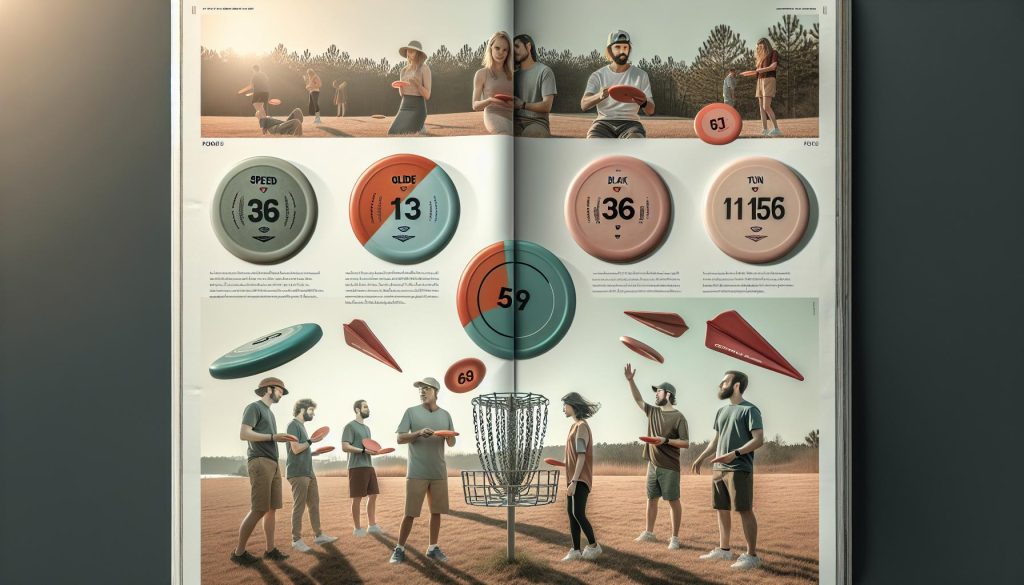
Did you know that understanding flight numbers can drastically improve your disc golf game? Just like a pilot relies on flight data, players can benefit from grasping the disc flight rating system. This guide breaks down how the four critical numbers on your disc-speed, glide, turn, and fade-impact performance and can help you select the perfect disc for your throwing style and the conditions you face on the course. Whether you’re a newcomer eager to enhance your skills or a seasoned player fine-tuning your gear, mastering this number system is essential. By the end, you’ll not only feel more confident in your disc choices but will also discover how these numbers can lead to better accuracy and distance in your throws. Join us as we explore the significance of disc flight numbers and unlock secrets to elevate your game.
Understanding the Basics of Disc Golf Flight Numbers
Understanding the flight numbers of discs is crucial for any player wishing to elevate their game. These numbers aren’t just arbitrary; they provide insights into how a disc will behave in the air, helping you make informed choices on the course. The traditional flight number system utilizes four key ratings: Speed, Glide, Turn, and Fade. Each of these ratings plays an essential role in understanding the characteristics and intended use of the disc.
The first number, Speed, ranges from 1 to 14, indicating how fast the disc can travel. A higher speed number signifies a disc that can cover distance quickly, making it suitable for long throws. The second number, Glide, ranges from 1 to 7 and describes how well the disc stays in the air; a disc with more glide will float longer, providing additional distance. Turn, the third number, varies from -5 to 1 and defines how the disc will behave when thrown; a negative turn indicates a tendency to curve to the right (for a right-hand backhand throw), while a neutral or positive rating suggests stability. Finally, Fade, which ranges from 0 to 5, describes how sharply the disc will curve at the end of its flight. A higher fade means a more pronounced turn back to the left, making it essential for control and approach shots.
Understanding these ratings allows players to choose discs suited to their throwing style and the specific conditions they face. For example, beginners might prefer discs with lower speed and higher glide, as they tend to be more forgiving and easier to control. In contrast, seasoned players often opt for high-speed drivers that require precise technique but offer greater distance potential.
In summary, mastering disc flight numbers equips players with the knowledge needed to navigate various throws and tailor their disc selection to their skill level, course conditions, and personal preferences. As you familiarize yourself with these ratings, you’ll find that they are indispensable tools in developing both your game and understanding of disc golf.
The Anatomy of a Disc Golf Flight Number
Understanding the true meaning behind disc golf flight numbers can be a game-changer for players of all skill levels. Each disc’s flight number is a crucial piece of information that allows you to predict how it will behave when thrown, helping you select the right disc for every situation on the course. The flight number system consists of four distinct ratings: Speed, Glide, Turn, and Fade, which together describe the performance of the disc in the air.
The first element, Speed, ranges from 1 to 14 and refers to how fast the disc can travel. High-speed discs, such as those rated at 13-14, are typically designed for experienced players who can generate the necessary throwing power. In contrast, beginners might benefit from slower discs (1-4), which are generally more control-friendly and easier to handle. Following speed, the Glide rating (1-7) indicates how long a disc can stay aloft during its flight. Discs with higher Glide ratings will maintain momentum and distance, making them ideal for achieving longer throws with less effort.
Next is the Turn measurement, which can range from -5 to 1. A negative Turn rating indicates that the disc will turn right for a right-handed backhand throw, while a positive rating indicates a more stable flight path. This characteristic is particularly helpful for creating specific shot shapes out on the course. Finally, the Fade rating (0-5) determines how sharply the disc will curve at the end of its flight. Discs with a higher Fade will hook sharply to the left, allowing for precision in approach and placement shots.
Understanding these flight numbers empowers you to choose discs that match your throwing style and the course conditions. For example, when faced with windy conditions, a disc with a lower Turn and higher Fade might help you maintain stability while navigating the elements. By familiarizing yourself with flight numbers, you can make informed decisions that enhance your performance, whether you’re just starting out or competing at a higher level.
Interpreting the Four Essential Flight Ratings
Understanding the nuances of flight ratings can significantly elevate your disc golf game. Each of the four essential flight ratings-Speed, Glide, Turn, and Fade-provides critical information about how a disc will behave in the air, helping you make informed choices during play. By mastering these ratings, you can tailor your disc selection to suit not only your throwing style but also the varying conditions of the courses you tackle.
Speed
The Speed rating indicates how fast a disc can fly and ranges from 1 to 14. A disc with a Speed rating of 13-14 is designed for pro-level players capable of generating power, while discs rated 1-4 cater to beginners or players looking for more manageable control. Choosing the right Speed disc is crucial; a disc that matches your ability ensures better distance and accuracy. For example, beginners might find a Speed 3 disc much easier to handle, especially when developing their technique.
Glide
Glide ratings, which run from 1 to 7, denote how long a disc can float in the air. Discs with high Glide ratings, such as 5-7, are ideal for achieving longer throws with less effort. These discs soar, maintaining their altitude longer and extending their distance. A common strategy among seasoned players is to select high-Glide discs for open fairways, where additional distance can lead to easier approach shots.
Turn
The Turn rating ranges from -5 to 1, indicating how a disc behaves during its flight. A negative Turn means the disc will curve right for a right-handed backhand throw, while a positive rating suggests a more stable flight. Understanding this rating is key for shot shaping. If you’re looking to perform a hyzer flip (where a disc flips up to level and then glides), a disc with a Turn of -1 to -3 is typically preferred. This ability to execute well-placed shot shapes can significantly enhance your versatility on the course.
Fade
Lastly, the Fade rating (0-5) defines how sharply a disc will hook left at the end of its flight. Discs with a high Fade are ideal for approaching tight corners and ensuring landing accuracy. For instance, when approaching a basket situated near a group of trees, a disc with a higher Fade can help you place your shot effectively.
By interpreting these four essential ratings, you not only refine your disc selection but also expand your overall strategy. This knowledge positions you to adapt your game to various conditions and challenges, making every round a little more manageable and enjoyable. Whether you’re placing a conservative approach or launching a powerful drive, each rating can guide your choices and improve your performance on the course.
The Impact of Weight on Disc Flight Performance
When it comes to disc golf, the weight of the disc plays a significant role in determining its flight characteristics and overall performance on the course. The choice of weight can influence distance, accuracy, and how well the disc handles various throwing styles and conditions. Understanding how weight impacts flight can help players make informed decisions to enhance their game.
Discs typically come in a range of weights, generally from 150 grams to around 180 grams. Heavier discs (above 175 grams) are often favored in windy conditions as they are less susceptible to being blown off course, providing more stability and predictability in flight. Conversely, lighter discs (around 150-160 grams) can be advantageous for beginners or for achieving maximum distance on less powerful throws. These discs tend to have greater glide, making it easier for less experienced players to get the hang of throwing successfully.
Another crucial factor is how weight affects the disc’s speed during release. A heavier disc may require more power to achieve optimal distance, while a lighter disc allows for less power but can still achieve significant distance due to its glide characteristics. This is particularly relevant when considering the player’s strength and skill level. For instance, a player who can generate high-speed throws might perform better with heavier discs, while those still mastering their techniques may find that lighter discs help them improve their accuracy and confidence on the course.
Furthermore, the weight of a disc can impact the shape of its flight path. Heavier discs may exhibit a more pronounced fade at the end of their flight, while lighter discs may turn more during flight, depending on their turn ratings. Players can exploit these characteristics to execute specific shots, making the right weight choice crucial for successful course navigation.
In conclusion, choosing the right weight for your disc depends on various factors, including your skill level, throwing power, and the specific conditions you face during gameplay. Experimenting with different weights can ultimately lead you to discover what feels right for your unique throwing style, allowing you to maximize your performance and enjoyment in the sport.
Comparing Flight Numbers: Stability and Control
Understanding the intricacies of disc flight numbers can profoundly impact a player’s performance on the course. Each flight number reflects a disc’s ability to handle various throwing techniques and environmental conditions, effectively acting as a roadmap for players seeking stability and control. The flight numbers are typically expressed in a four-number format: speed, glide, turn, and fade, and together, they define how a disc behaves when thrown.
To start, speed (the first number) indicates how fast a disc must be thrown to achieve its optimal distance. Fast discs (higher numbers) are generally more aerodynamic, suited for advanced players who can generate ample power. In contrast, glide (the second number) represents a disc’s ability to stay aloft; higher glide ratings mean the disc stays in the air longer, ideal for achieving extended flights with lower power throws. As players assess their capabilities, understanding these two elements is crucial for maximizing each throw’s potential.
Next are the aspects of turn and fade. The turn (the third number) showcases the disc’s ability to drift right (for right-handed backhand throws) during the initial part of its flight. A negative turn rating indicates more significant rightward movement, which can help advanced players shape specific shots. Conversely, fade (the fourth number) describes how sharply a disc will turn left at the end of its flight. Discs with high fade ratings provide stability and predictability, critical for navigating challenging courses and ensuring accuracy.
When comparing flight numbers, it is essential to recognize how these characteristics interact. For example, a disc with a high-speed and glide rating will excel in distance, while those with a higher fade provide control, especially during windier conditions. Players often experiment with different combinations of flight numbers to find what works best for their unique throwing styles, skill levels, and strategies on the course. By considering these elements, disc golfers can make informed decisions, enhancing both their enjoyment and proficiency in the game.
Choosing the Right Disc for Your Skill Level
Choosing the perfect disc for your skill level can be a game-changer in your disc golf journey. Understanding how flight numbers relate to your personal throwing style and experience is crucial for maximizing your performance on the course. For beginners, it often makes sense to start with discs that have lower speed ratings, typically ranging from 7 to 9. These discs are generally more forgiving, allowing novice players to achieve accurate and consistent flights without the need for advanced throwing techniques.
As you advance in your skills, gradually transitioning to faster discs-those with a speed rating of 10 or higher-can enhance your distance and control. Fast discs require a combination of strength and technique, and they are less forgiving on off-axis throws. You might explore glide ratings as well, opting for discs that boast a glide rating of 5 or greater, which will help you achieve longer flights even when your power isn’t at its peak.
Experienced players often seek discs with specific flight characteristics that match their strategic gameplay. Discs with negative turn ratings (-1 to -3) allow for rightward movement on a backhand throw, enabling advanced techniques like hyzer flips or anhyzer releases. Moreover, those seeking precision shots might lean towards discs with a higher fade (3 or more), which will maintain stability during their final flight, ensuring a predictable finish that can be navigated through tight, technical courses.
Ultimately, experimenting with different discs while considering your unique throwing style, strengths, and the specific conditions of the course is vital. Don’t hesitate to seek recommendations based on others’ experiences in the local disc golf community. By actively engaging in these explorations, you will not only improve your game but also deepen your appreciation for the nuances of this dynamic sport.
How Wind Affects Disc Flight Characteristics
Understanding how wind interacts with disc golf flight can transform the way you approach each throw. Wind is a challenging factor that can either enhance your performance or complicate your game, depending on its intensity and direction. It’s crucial to recognize how different wind conditions affect various discs, as this knowledge can significantly impact distance, stability, and control.
When throwing into a headwind, discs generally become less stable. This means discs that normally have a predictable flight may turn over (move right for backhand throws) more quickly, potentially leading to unwanted outcomes. In these conditions, choosing a disc with a higher stability rating or one that is overstable is advisable. These discs are designed to resist turning and will hold their line much better in the wind. Conversely, when throwing with a tailwind, the opposite occurs. The wind can add lift, causing discs to fly straighter and even increase distance, which makes it a perfect opportunity to use less stable or more neutral discs that provide longer flights.
Crosswinds present their own set of challenges. Depending on the wind’s angle, you might need to adjust your throwing style and the discs you choose. For instance, when throwing right to left in a crosswind, a disc with a slight anhyzer angle can help counteract the wind’s push and keep your throw on target. Players often experiment with their grip and angle of release to achieve the desired flight path under varied conditions, showcasing the dynamic nature of disc golf.
To better prepare for the wind, practice recognizing and adapting your throwing techniques based on specific weather patterns. Players often recommend observing how your favorite discs perform in different wind conditions during casual rounds. By noting the flight discrepancies caused by wind, you can develop a more instinctual understanding of how to adjust your strategies on the course.
Ultimately, embracing the wind can elevate both your skills and enjoyment of disc golf. By being proactive in selecting the right discs for current conditions and practicing your technique, you’ll find that wind isn’t just an obstacle; it can also be an opportunity to sharpen your game and demonstrate your adaptability as a player.
Advanced Techniques for Mastering Disc Flight
Mastering disc flight involves a blend of understanding the physical principles of how discs move and cultivating a keen awareness of your own throwing mechanics. One of the most crucial aspects to get right is the synergy between your disc choice and your throwing style. The flight number system provides a window into this, but true mastery comes from experimentation and practice.
Awareness of a disc’s characteristics-its speed, glide, turn, and fade-allows you to make informed decisions based on course conditions and your personal throwing style. Here are some advanced techniques to elevate your game:
Optimize Your Release Angle
Your release angle can drastically alter the disc’s flight path. Experimenting with angles such as flat, anhyzer (angled up), and hyzer (angled down) can yield different results even when using the same disc. For example, throwing a stable disc on a flat release can lead to a straight flight, while an anhyzer angle might turn it over initially before it fades back. Understanding how to manipulate these angles allows you greater control and adaptation to various course layouts and wind conditions.
Explore Different Grip Styles
The way you grip your disc impacts your control and ultimately the disc’s flight. A common advanced technique is the Power Grip, which provides maximum grip, ideal for distance shots. Alternatively, the Fan Grip can be effective for more controlled throws, allowing for greater finesse and touch. Don’t hesitate to experiment with these grips to find what feels comfortable and produces the best results for different types of throws.
Use Disc Weight Strategically
Disc weight is another factor that affects flight performance. Heavier discs tend to be more stable in wind and can carry further, while lighter discs often offer increased distance and easier maneuverability in tight spots. An advanced strategy is to carry a range of discs in various weights, allowing you to choose based on not just the shot type but also the day’s wind conditions and personal feel. For example, if you’re facing a stiff headwind, a heavier and more stable disc may be your best bet.
Practice Disc Selection Puzzles
Take time to set up real-world scenarios by simulating different shots and conditions during practice. Create a ‘disc selection puzzle’ where you identify the best disc for various types of shots such as tunnel throws, long distance drives, or skips. This not only reinforces your understanding of each disc’s flight numbers but also enhances your decision-making under pressure. The more you practice these situations, the more instinctive your choices will become during competitive play.
By mastering these advanced techniques and embracing ongoing experimentation, you’ll not only improve your disc golf skills but also deepen your appreciation for the strategic complexities of the game. Disc golf is not just about throwing a disc; it’s about understanding the dynamics of your tools and the environment, thereby turning challenges into opportunities for growth and success.
A Beginner’s Guide to Disc Golf Equipment
Choosing the right equipment is a fundamental step for anyone looking to dive into disc golf, a sport that beautifully merges athletic skill with camaraderie. To truly enjoy the game, it’s essential to understand the different types of discs and how the flight number system can guide your choices. Each disc is not just a tool but a carefully engineered instrument designed to shape your throwing experience, and recognizing how flight numbers reflect those designs is key to improvement.
The first piece of equipment you’ll need is a set of discs, which can be categorized into three primary types: drivers, midranges, and putters. Drivers are meant for long-distance throws and typically feature higher speed ratings. Midranges are versatile and ideal for a variety of shots, offering balanced glide and control. Finally, putters are designed for accuracy and are often used for short throws or when approaching the basket. Understanding the flight numbers associated with each disc type-speed, glide, turn, and fade-will help you select the perfect disc for different situations on the course.
Understanding Flight Numbers
The flight number system is a critical aspect of choosing the right disc. Speed indicates how fast the disc needs to be thrown to achieve its intended flight path, whereas glide represents how long the disc will stay in the air. Turn gauges the disc’s tendency to drift right (for right-handed backhand throws) during the initial flight, and fade describes how the disc will hook left when approaching the end of its flight. Familiarizing yourself with these ratings allows you to select discs that match your throwing style and the course conditions.
Practical Equipment Recommendations
As you begin your journey in disc golf, consider starting with a basic set of discs that cover the range of shots you’ll encounter. Here’s a simple progression you can follow:
- Driver: Look for a stable driver with a speed of around 9-13 and a reasonable glide. This will help reduce the number of errant throws as you master your throwing style.
- Midrange: A disc with a speed of 4-6 and good stability will suit a variety of throws. A midrange disc like a Buzz or a Roc can help refine your accuracy.
- Putter: Focus on a putter that feels good in your hand and has a low speed of 2-4. A disc like the Aviar or Pure is user-friendly for both putting and shorter approaches.
Transitioning to disc golf requires practice, experimentation, and patience. Each player will have unique preferences based on their grip, throwing style, and the distances they typically throw. Joining a local club or participating in casual rounds with friends can accelerate your learning process, providing valuable opportunities to try different discs and gauge how they perform in various scenarios.
In summary, by understanding the significance of the flight number system and systematically selecting your discs, you pave a rewarding path into the world of disc golf. It’s not just about the gear but about developing your skills with the right tools in hand, ensuring fun and success on the course. Happy throwing!
Top Tips for Enhancing Your Throwing Mechanics
When it comes to disc golf, mastering your throwing mechanics is critical to improving your overall game. A well-executed throw not only helps you achieve greater distance but also enhances accuracy and control, leading to better scores. Here are some top tips to enhance your throwing mechanics, allowing you to unlock the potential of your discs and navigate the course more effectively.
Start by refining your grip. A proper grip allows for better control and spin, influencing the disc’s flight path. Hold the disc firmly but not too tight, ensuring your fingers are positioned appropriately: the index finger should be along the outer rim, and the rest should sit underneath for support. Experiment with different grips to find one that feels comfortable and provides the most control. Once you’re comfortable with your grip, focus on your stance. Position your feet shoulder-width apart with your knees slightly bent, aligning your body towards the target. A strong stance will help you generate power from your legs and hips, essential for a clean throw.
Another key element is your throwing motion. Practice the “X-step” footwork, which involves a series of steps that help build momentum. Start with a small step back with your dominant foot, then use a crossover step with your non-dominant foot to shift your weight. As you pivot, your throwing arm should extend back before snapping forward in a controlled motion. Ensure that your follow-through is smooth-this means your arm continues its motion toward the target after releasing the disc. A good follow-through not only contributes to distance but also helps maintain balance and stability.
It’s also essential to understand how disc flight numbers relate to your throws. While experimenting with different discs, pay attention to their flight ratings-speed, glide, turn, and fade-and how these interact with your throwing style. For beginners, start with beginner-friendly discs that have a stable flight pattern. As you improve your mechanics and gain confidence, try introducing more advanced discs that offer unique flight characteristics. Keep in mind that adjusting the weight of the disc can also affect how it flies, so consider using lighter discs as you develop your skills before moving on to heavier options.
Lastly, incorporate practice drills into your routine to focus on specific mechanics. Simple exercises like standing still and practicing your arm motion or performing repeated throws at a target can significantly improve your precision. Moreover, seek feedback from experienced players or instructors; they can provide insights that might help you identify areas for improvement. By consistently working on these aspects of your game, you’ll find your throwing mechanics will not only enhance your performance but also make your time on the course more enjoyable. Embrace the learning process, and remember that every throw is an opportunity to grow!
Critical Strategies for Navigating Disc Golf Courses
When navigating a disc golf course, understanding the nuances of flight numbers can significantly affect your strategy and success. Each hole presents unique challenges, and being able to select the right disc based on its flight characteristics equips you to handle varying terrain, wind conditions, and layouts. By studying the topography of the course and the specific requirements of each hole, you can make informed decisions that play to your strengths and your discs’ capabilities.
Evaluate the Course Layout
Begin by thoroughly analyzing the course layout before your round. Take note of the following elements:
- Hole Length: Longer holes may require discs with greater distance potential, while shorter holes might be better suited to mid-range discs that offer accuracy.
- Elevation Changes: Elevated baskets or tee pads can significantly affect how your disc flies. A disc with good glide can help you capitalize on these changes.
- Obstacle Placements: Trees, water hazards, and other barriers can complicate your throw. Understanding your disc’s fade and turn ratings may help you navigate these obstacles effectively.
By familiarizing yourself with these course attributes, you can better determine which discs to carry and which flight numbers will best suit the challenges ahead.
Adjust for Weather Conditions
Weather plays a critical role in disc golf performance. Wind conditions can change the expected flight of a disc, so it’s vital to adjust your strategies accordingly. For example:
- Headwinds: Throwing into a headwind often requires a more stable disc with a lower turn rating. Opt for heavier, more overstable discs to combat the wind’s effect.
- Tailwinds: A disc with a higher glide rating can help you gain extra distance when throwing with a tailwind, making lighter or more understable discs a better option.
- Crosswinds: Understanding how your disc will behave in crosswinds means you might need to alter your launch angle or choose an overstable disc to maintain control.
Preparation for the weather can enhance your performance and lower your score, so practice throwing in different conditions to gauge how various discs respond.
Utilize Course Management Techniques
Effective course management is about recognizing opportunities and limitations. Here are strategies to help navigate the challenges:
- Play to Your Strengths: Focus on your most reliable throws and the discs that you throw best. Don’t deviate from your strengths just to impress; stick to what you know.
- Risk vs. Reward: Some holes may tempt players to go for risky shots. Evaluate whether risking a throw to reach a tight line is worth a potential score setback.
- Smart Layup Plays: If you’re in a challenging spot, consider playing it safe with a layup rather than risking a potential OB throw. A conservative approach can often save strokes over the course of a round.
These management strategies not only enhance your play but also build mental resilience, helping you stay focused and confident regardless of course challenges.
By integrating these strategies into your game plan while keeping the significance of flight numbers in mind, you can elevate your performance on the course. Embrace the strategic dimensions of disc golf; it’s not just about how far you throw, but how wisely you navigate the course!
Insights from Pro Players on Disc Flight Dynamics
Understanding how professional players approach disc flight dynamics can unlock new levels of performance for both casual players and serious competitors. Pros often emphasize the importance of precisely interpreting flight ratings, stating that a deep familiarity with a disc’s characteristics-its speed, glide, turn, and fade-can significantly affect shot selection in varying conditions. For instance, many advanced players carry multiple discs that match specific parameters, allowing for strategic decision-making based on course layout and weather conditions.
One insight shared by top players is the relationship between disc stability and shot execution. Experienced throwers often recommend a systematic approach to selecting discs based on their stability-overstable discs for headwinds and less stable discs for tailwinds. Pro players often describe how using overstable discs not only maintains control in windy conditions but can also achieve specific flight paths essential for navigating obstacles and tight fairways. This level of understanding can empower players to manage risks effectively, knowing when to trust a disc’s fade to land safely and accurately.
Additionally, many pros stress the significance of personal adjustment to disc weights and compositions. A common piece of advice is to experiment with discs of varying weights-lighter discs for finesse and control, heavier ones for consistent distance and stability. Pro players often share personal stories about transitioning to lighter discs during summer months to maximize draws in warmer conditions or adjusting their lineup based on specific courses that favor particular throws.
Incorporating these lessons into practice can set players on a path toward not just improving their game but also understanding the nuances of disc flight. By observing how top players interact with different discs and their ratings, players can enhance their own decision-making skills, harnessing the intricacies of flight ratings to outperform their competition. Discerning these insights deepens not only individual capability but also the collective appreciation for the sport as a legitimate athletic pursuit.
FAQ
Q: What are the four numbers in a disc golf flight number?
A: The four numbers in a disc golf flight number represent speed, glide, turn, and fade. Each number provides insights into how the disc will perform in flight, helping players select the right disc for their throwing style and conditions.
Q: How do disc golf flight numbers help me choose a disc?
A: Flight numbers allow players to understand the characteristics of a disc, ensuring they select one that matches their skill level and throwing style. Higher-speed discs are suited for advanced players, while beginners might prefer discs with more glide and stability.
Q: What does the ‘turn’ rating indicate in disc golf?
A: The ‘turn’ rating indicates how much a disc will curve to the right (for right-handed backhand throws) during its flight. A negative turn number means the disc turns right, while a zero or positive number indicates stability or a left curve.
Q: Why is it important to consider the weight of a disc in relation to its flight numbers?
A: The weight of a disc can significantly affect its performance, influencing its speed, stability, and distance. Heavier discs tend to fly more consistently in wind, while lighter discs can be easier to throw for beginners or in short distances.
Q: How does wind affect disc flight numbers?
A: Wind can impact how a disc behaves in the air. Crosswinds may exaggerate a disc’s turn or fade, while tailwinds can enhance distance. Understanding how to read flight numbers in windy conditions is crucial for making strategic throws.
Q: How do I interpret the stability of a disc based on its flight numbers?
A: Stability is primarily assessed through the turn and fade ratings. A disc with a high fade and low or negative turn is generally overstable, leading to sharper turns. Conversely, a disc with low fade and higher turn may be understable, making it easier for beginners to control.
Q: What role does glide play in disc performance?
A: Glide measures how long a disc can stay in the air before descending. Discs with higher glide ratings will maintain lift longer, making them effective for longer throws. Choosing a disc with appropriate glide can improve overall distance and throwing efficiency.
Q: Can I adjust my throwing technique to match different flight numbers?
A: Yes! Adjusting your throwing stance, angle, and power can align your technique with different flight numbers. Practicing with various discs will help you learn how to manipulate their flight based on their specific ratings, ultimately enhancing your skills on the course.
Wrapping Up
Now that you understand what flight numbers mean in disc golf, you’re better equipped to select the right disc for your throwing style and course conditions. Whether you’re aiming for distance, precision, or a combination of both, mastering these numbers can significantly enhance your game. Don’t miss out on further improving your skills-explore our detailed guides on throwing mechanics and equipment comparisons to optimize your performance.
Ready to take the next step? Consider signing up for our newsletter for exclusive tips and community news, or check out our extensive resources on disc golf strategies and professional insights. Join our growing community of disc golf enthusiasts and share your experiences or questions in the comments below. Remember, each round you play is an opportunity to refine your skills and enjoy this incredible sport even more!